Best Web Frameworks for Enterprise (2026): 5 Picks Checked on Vendor Pages
Shortlisting the best web frameworks for enterprise? 5 products compared on cost, free access and ideal buyer. Concise write-ups of every option. Details below.
- Editor's choiceNode.js
JavaScript across servers and tools
Starts atPricing on requestVisit nodejs.orgFull review - Great alternativeJakarta EE
Standards-based enterprise Java systems
Starts atPricing on requestVisit jakarta.eeFull review - Also considerSpring Boot
Large-scale Java backend services
Starts atPricing on requestVisit spring.ioFull review
Direct answer
Node.js is the first pick on this list for JavaScript across servers and tools. Look at Jakarta EE for standards-based enterprise Java systems, and at Spring Boot for large-scale Java backend services. The remaining 2 options are covered below with pricing notes and limits. None of these vendors publish plan prices, so pricing is on request for every option.
TL;DR:
- The list opens with Node.js, aimed at JavaScript across servers and tools.
- Jakarta EE comes with a trade-off: specification breadth can overwhelm.
- A permanent free plan is missing from all 5 tools, Node.js and Vue.js included; plan for a trial or a premium start.
- Every tool from Node.js to Vue.js works by quote, with no list price shown.
- For progressive adoption in existing apps, Vue.js is worth a look.
Last checked November 2026. Pricing on request: vendors did not publish plan prices when this guide was last checked (November 2026), so ask each vendor for a written quote.
Quick comparison
| Tool | Best for | Starts at | Free plan? | |
|---|---|---|---|---|
| Node.js | JavaScript across servers and tools | Pricing on request | Not stated | Visit |
| Jakarta EE | Standards-based enterprise Java systems | Pricing on request | Not stated | Visit |
| Spring Boot | Large-scale Java backend services | Pricing on request | Not stated | Visit |
 React | Adaptable component-based interfaces | Pricing on request | Not stated | Visit |
| Vue.js | Progressive adoption in existing apps | Pricing on request | Not stated | Visit |
Web Frameworks for Enterprise compared in detail
If you are comparing web frameworks for enterprise, this page covers 5 tools in one place: what each is best for, what it costs to start, whether it has a free plan, and the main limit to know about.
Node.js
Best for: JavaScript across servers and tools
Node.js is designed for JavaScript across servers and tools. It suits enterprises that want one language across frontend and backend, or that require light services and live features.
CPU-intensive work may need other services. No starting price is listed for Node.js here; confirm pricing on the vendor site. On free options: Not stated.
Limits to weigh: Async patterns need discipline.
- Large module ecosystem
- Cross-platform runtime
- Fragmented tooling choices
Jakarta EE
Best for: Standards-based enterprise Java systems
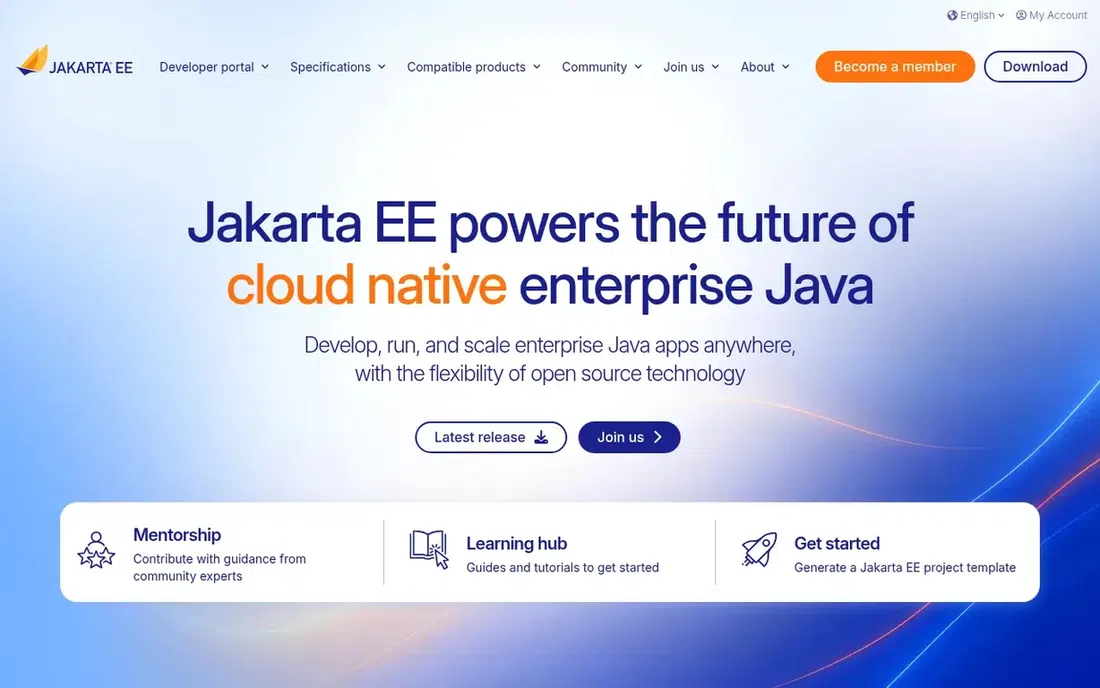
Jakarta EE works best for standards-based enterprise Java products. Jakarta Enterprise Edition is the open source continuation of Java EE, positioned as the cloud native path for enterprise Java. Beyond that, teams modernizing existing Java EE estates frequently use it to preserve investments whereas adopting cloud deployment models.
Honest limits: Needs a compatible runtime.
On top of that, since Jakarta EE is a specification, you still need a compatible runtime and supporting tooling, which layers on setup decisions. Its breadth can be daunting for small teams. This comparison lists no price for Jakarta EE; ask the vendor. On free options: Not stated.
- Cloud native focus
- Guards Java EE investment
- Specification breadth can overwhelm
Spring Boot
Best for: Large-scale Java backend services
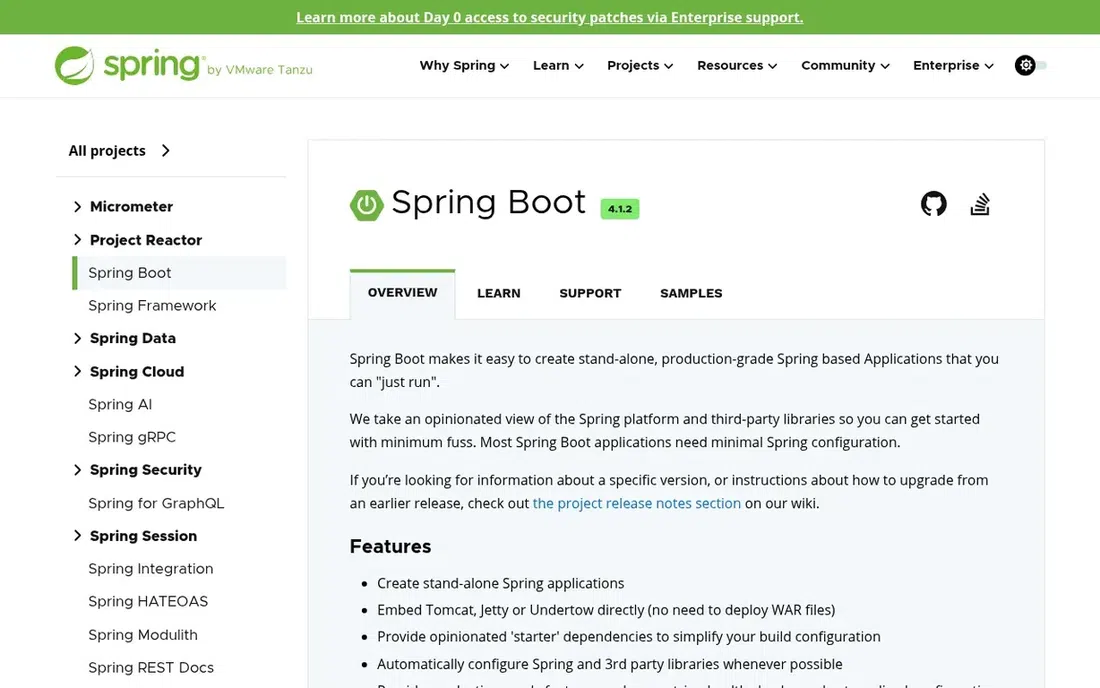
In short, Spring Boot is for large-scale Java backend services. Spring Boot builds on the Spring product to ease standing up Java applications, with conventions that cut boilerplate for typical enterprise patterns.
The main drawbacks: Configuration can feel heavy.
In practice, the framework assumes Java familiarity and can feel abstract for newcomers, and its adaptability means teams must set their own conventions. This comparison lists no price for Spring Boot; ask the vendor. Free plan details: Not stated.
- Broad integration support
- Capable production tooling
- Steep ramp-up time
React targets adaptable component-based interfaces. React describes itself as the library for web and native user interfaces, letting developers build interfaces from individual components written in JavaScript.
Downsides: Ecosystem churn.
In daily use, fast-moving ecosystem patterns can need continuing upkeep. Check the vendor site for React pricing; none is listed in this comparison. Trial and free access: Not stated.
- Component model
- Works for web and native
- Architecture choices left open
Vue.js
Best for: Progressive adoption in existing apps
Vue.js serves progressive adoption in existing apps. Its approachable syntax helps teams new to component-based development get productive.
Limits to weigh: Smaller enterprise footprint.
Its enterprise footprint is smaller than React's, which can matter for hiring. Check the vendor site for Vue.js pricing; none is listed in this comparison. On free options: Not stated.
- Progressive adoption path
- Clear official documentation
- Fewer opinionated conventions
How we compared the tools
We compared the tools on published pricing, free plan or trial availability, feature coverage for web frameworks for enterprise, and the limits each vendor documents. Seat minimums, billing terms and add-ons can move the real cost, so the starting prices here are a guide and not a quote. We ordered the tools by general fit, then by how clearly pricing is shown, then by free access. A buyer with unusual needs may reorder them.
What to check before you buy
- Confirm the entry price with every vendor: no tool from Node.js to Vue.js shows a fixed starting price.
- Before choosing Node.js, weigh its main limit: async patterns need discipline.
- Make sure Spring Boot lets you export your data in a format another tool can read.
- Ask the daily users to test React on a live task before you roll it out to everyone.
- Test the integrations you rely on with Jakarta EE before committing; some connectors sit on upper tiers.
FAQ
Can I try these tools before paying?
Not by default. None of the tools, from Node.js to Vue.js, lists a free plan or a free trial here, so ask each vendor for a demo before committing.
Does any tool for web frameworks for enterprise here have a free plan?
A permanent free plan is not offered by Node.js, Vue.js or the other tools here. Plan a short evaluation period instead.
Do these tools publish their prices?
No. None of the tools, from Node.js to Vue.js, shows a fixed starting price here, so budget time for quotes.
How are the tools for web frameworks for enterprise ordered?
Node.js sits first and Vue.js last because the order follows typical fit for web frameworks for enterprise, then price clarity and free access. It is a judgement call, so read each profile for fit and limits.
Sources
- https://nodejs.org
- https://jakarta.ee
- https://spring.io/projects/spring-boot
- https://react.dev
- https://vuejs.org