Best PHP Web Frameworks for Enterprise for 2026: Our 5 Vetted Picks
Best PHP web frameworks for enterprise, compared. 5 tools with published prices, free plans and limits. Hidden costs and gaps are flagged. Pick with confidence.
- Editor's choiceYii
Performance-focused MVC application development
Starts atPricing on requestVisit yiiframework.comFull review - Great alternativeSymfony
Component-driven apps, APIs and microservices
Starts atPricing on requestVisit symfony.comFull review - Also considerZend Framework
Legacy projects tied to its ecosystem
Starts atPricing on requestVisit framework.zend.comFull review
Direct answer
If you need performance-focused MVC application development, Yii is the first tool to look at here. Symfony fits Component-driven apps, APIs and microservices; Zend Framework fits legacy projects tied to its ecosystem. All 5 tools are compared below on fit, free plan and limits. None of these vendors publish plan prices, so pricing is on request for every option.
TL;DR:
- Yii takes the first slot, best suited to performance-focused MVC application development.
- Pricing across the list, from Yii to Laminas, is by quote only.
- Yii, Laminas and the 3 others all need a premium plan or a trial, since no free plan is listed.
- Laminas suits enterprise components and middleware microframework.
- The main caution on Zend Framework: successor project is the active path.
Last checked November 2026. Pricing on request: vendors did not publish plan prices when this guide was last checked (November 2026), so ask each vendor for a written quote.
Quick comparison
| Tool | Best for | Starts at | Free plan? | |
|---|---|---|---|---|
| Yii | Performance-focused MVC application development | Pricing on request | Not stated | Visit |
| Symfony | Component-driven apps, APIs and microservices | Pricing on request | Not stated | Visit |
| Zend Framework | Legacy projects tied to its ecosystem | Pricing on request | Not stated | Visit |
| Laravel | Teams wanting a full-featured, expressive stack | Pricing on request | Not stated | Visit |
| Laminas | Enterprise components and middleware microframework | Pricing on request | Not stated | Visit |
Our 5 picks for PHP web frameworks for enterprise
LinkVetted compared 5 tools for PHP web frameworks for enterprise. The goal is a practical shortlist: published prices, free plan facts, best-fit use cases and honest limits for every entry.
Yii
Best for: Performance-focused MVC application development
Think of Yii for performance-focused MVC application development. Yii is a mature, component-based PHP framework built around the MVC pattern and widely known for efficient performance.
What to check first: Smaller ecosystem than top stacks.
Also, if broad external integration and a large talent pool are decisive, compare the more widely adopted stacks first. Enterprises evaluating alternatives to the largest stacks may consider Yii when performance and a clear MVC structure are priorities. This comparison lists no price for Yii; ask the vendor. Free plan details: Not stated.
- Component-based structure
- Known for efficient performance
- Less marketing visibility
Symfony
Best for: Component-driven apps, APIs and microservices
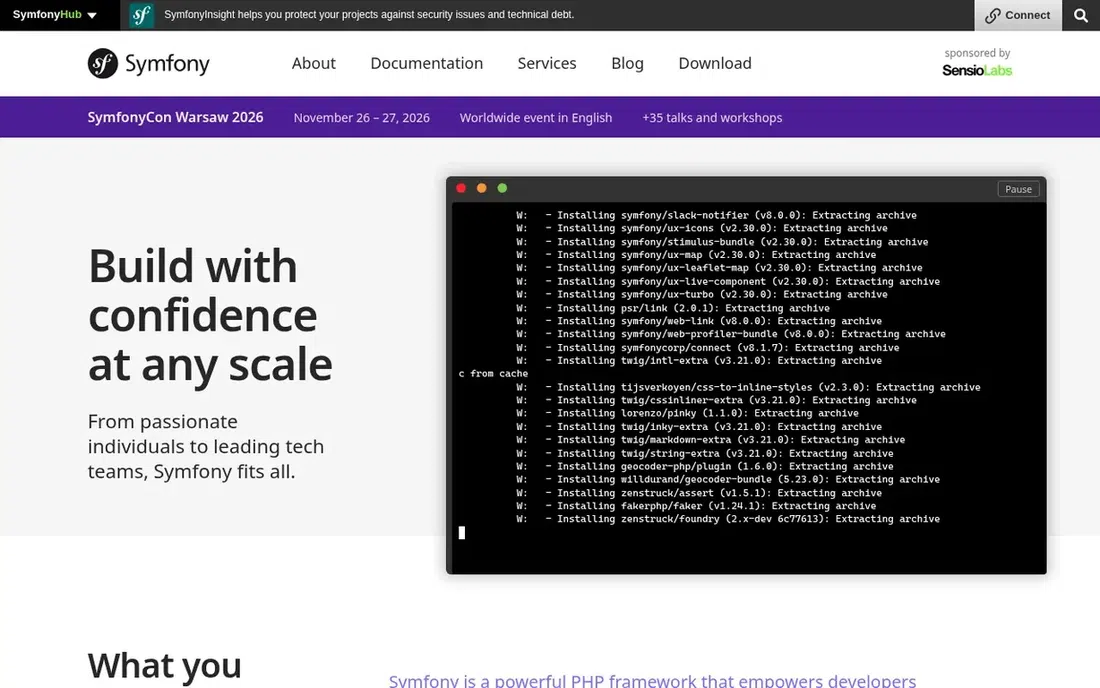
For Component-driven apps, APIs and microservices, Symfony is a natural candidate. That dual nature makes it attractive to enterprises that want to share components across services or adopt pieces incrementally.
Also, Symfony tends to demand more setup and architectural decisions at the start, which can slow teams seeking fast defaults. In practice, if you prefer a framework that makes numerous choices for you and ships with wide built-in tooling, Laravel may be the simpler starting point. Check the vendor site for Symfony pricing; none is listed in this comparison. As for free access: Not stated.
Trade-offs to know: Steeper curve for newcomers.
- Suits APIs and microservices
- Reusable PHP packages
- More configuration to learn
Zend Framework
Best for: Legacy projects tied to its ecosystem
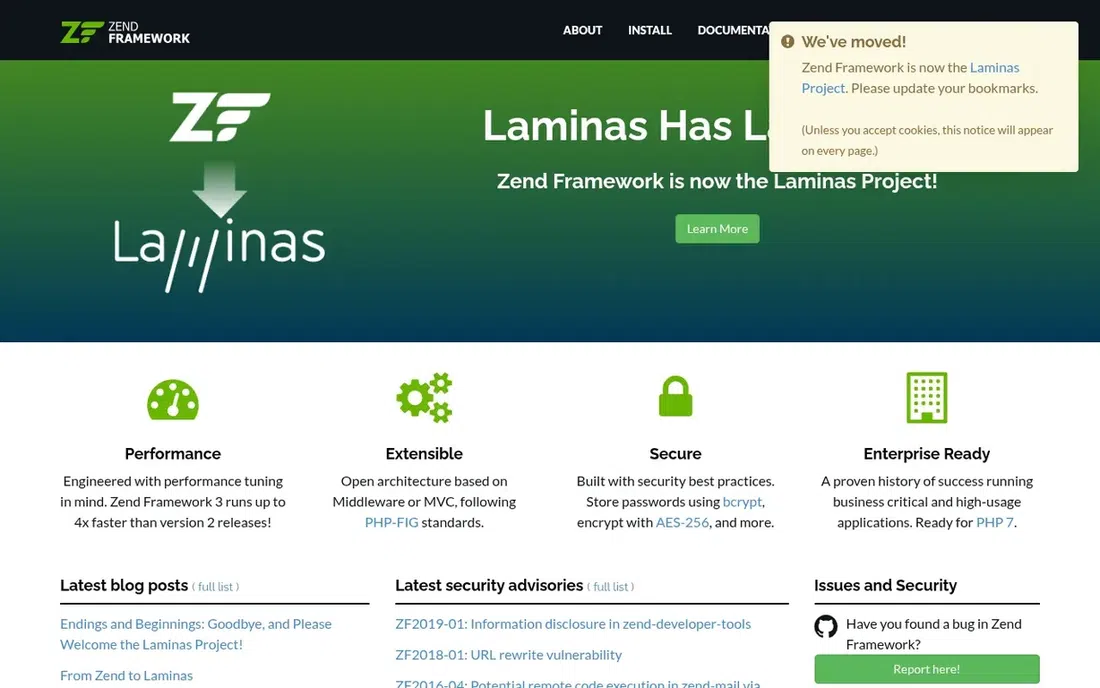
Pick Zend Framework if this describes you: legacy projects tied to its ecosystem. For new enterprise builds, it is typically treated as a predecessor to consider alongside its community continuation instead of a fresh starting point. Also, choose Zend Framework primarily when you are supporting or planning the migration of an existing codebase rather than greenfield development.
Since the ecosystem has moved toward Laminas as the community-supported continuation, new projects are usually better served by that successor. Zend Framework is a long-established PHP framework with a component-oriented design that has been used in enterprise settings. Its official site remains the project reference point. This comparison lists no price for Zend Framework; ask the vendor. As for free access: Not stated.
Where it falls short: Older guidance may not apply.
- Long-established PHP framework
- Component-oriented design
- Successor project is the active path
Laravel
Best for: Teams wanting a full-featured, expressive stack
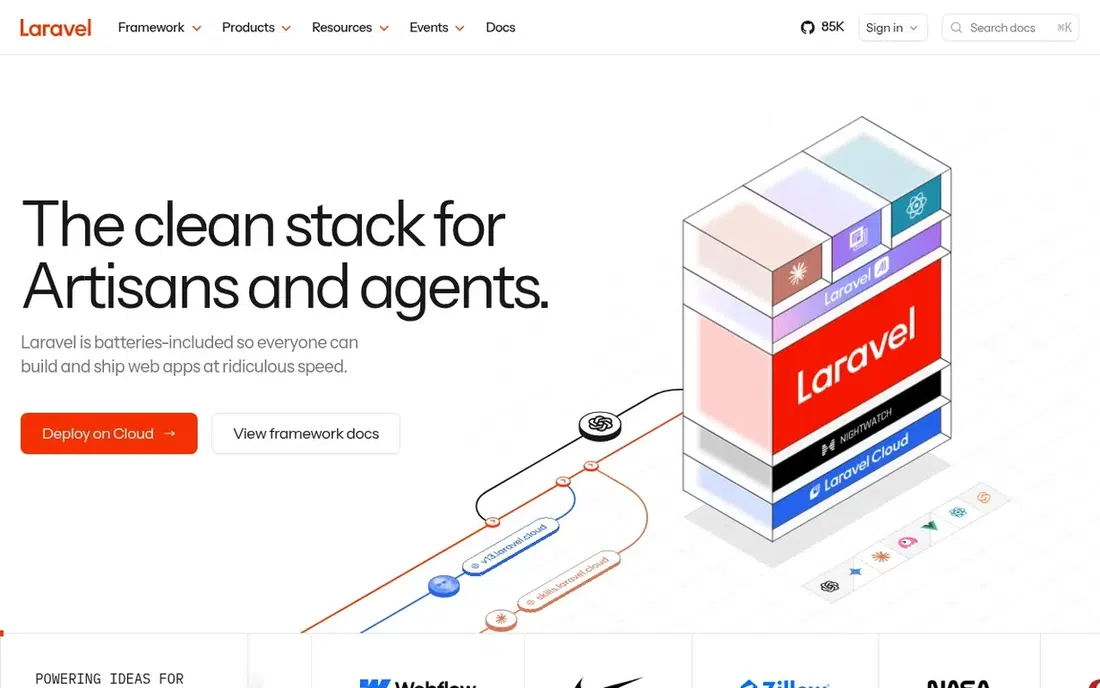
Laravel is aimed squarely at teams wanting a full-featured, expressive stack. Laravel describes itself as the clean stack for artisans and agents, a framework for building modern web apps and AI agents. It emphasizes expressive syntax and built-in tools so teams can ship rapidly.
Honest limits: Conventions may not suit every team.
More specifically, for enterprise groups that want an opinionated, batteries-included foundation with a wide ecosystem, Laravel is a natural first stop and suits teams that value developer experience alongside delivery speed. Also, since Laravel bundles plenty of features, very small services can feel overbuilt. Teams with strict architectural preferences may find its conventions limiting. Pricing for Laravel is not stated here, so ask the vendor for current figures. Trial and free access: Not stated.
- Expressive
- Clean syntax
- Heavy feature set for small apps
Laminas
Best for: Enterprise components and middleware microframework
Laminas works best for enterprise components and middleware microframework. Laminas hands you building blocks, so teams must assemble and govern more themselves compared to a batteries-included framework.
Beyond that, Laminas describes itself as enterprise-ready, open-source PHP components plus the Mezzio middleware microframework, and as the community-supported continuation of Zend Framework. Beyond that, enterprises with modular architectures, middleware-based APIs or existing Zend Framework investments will find it a natural fit. No starting price is listed for Laminas here; confirm pricing on the vendor site. Free options: Not stated.
Drawbacks to consider: Needs assembling pieces yourself.
- Community-supported and open source
- Enterprise-ready components
- Less bundled than full stacks
How the list was put together
LinkVetted used vendor pricing pages and product documentation as the base, then compared plans, free access and documented limits for 5 tools. Where a price is missing, the vendor does not list one publicly or ties it to a quote. Always confirm before budgeting. Tools are placed by general fit for PHP web frameworks for enterprise, with price clarity and free access as tie-breakers. A different team can reasonably rank them differently.
A buyer's checklist
- Confirm the entry price with every vendor: no tool from Yii to Laminas shows a fixed starting price.
- Before choosing Yii, weigh its main limit: smaller ecosystem than top stacks.
- Make sure Symfony lets you export your data in a format another tool can read.
- Confirm minimum seats and billing terms with Laravel before you commit to an annual plan.
- Map your must-have features to a specific Laminas plan before you compare prices.
FAQ
Does any tool for PHP web frameworks for enterprise here have a free plan?
A permanent free plan is not offered by Yii, Laminas or the other tools here. Plan a short evaluation period instead.
Do these tools publish their prices?
No. None of the tools, from Yii to Laminas, shows a fixed starting price here, so budget time for quotes.
Is Yii the right pick for everyone comparing PHP web frameworks for enterprise?
No single tool suits every team. Yii comes first because it fits performance-focused MVC application development, while Symfony suits Component-driven apps, APIs and microservices and Zend Framework suits legacy projects tied to its ecosystem. Match the tool to your own size, budget and workflow before deciding.
How are the tools for PHP web frameworks for enterprise ordered?
The order follows typical fit for PHP web frameworks for enterprise, with Yii first and Laminas last, then price clarity and free access. It is editorial judgement, not a score, so another team could rank the tools differently.
Which PHP framework is a good match for large enterprise applications?
For most readers this guide would start with Yii, built for performance-focused MVC application development. Symfony is the alternative for Component-driven apps, APIs and microservices, and Zend Framework for legacy projects tied to its ecosystem. The right answer depends on budget and workflow.
Sources
- https://www.yiiframework.com
- https://symfony.com
- https://framework.zend.com
- https://laravel.com
- https://getlaminas.org