Choosing PHP Web Frameworks in 2026: 5 Options Compared
Comparing the best PHP web frameworks? 5 contenders, each with entry cost, free tier and best-fit buyer. Plus the drawbacks of each tool. Easy to scan.
- Editor's choiceCakePHP
Rapid MVC web application development
Starts atPricing on requestVisit cakephp.orgFull review - Great alternativeLaminas
Enterprise PHP components and middleware
Starts atPricing on requestVisit getlaminas.orgFull review - Also considerSymfony
Enterprise apps, APIs and microservices
Starts atPricing on requestVisit symfony.comFull review
Direct answer
This list puts CakePHP first for Rapid MVC web application development. For a different need, Laminas covers enterprise PHP components and middleware and Symfony covers enterprise apps, APIs and microservices. Details and limits for the rest of the 5 tools are below. None of these vendors publish plan prices, so pricing is on request for every option.
TL;DR:
- CakePHP is the opening pick, best for Rapid MVC web application development.
- Neither CakePHP nor Laravel, nor any of the other 3 tools, has a permanent free plan; trials and quotes are the norm.
- No starting price is shown for any of the 5 tools, CakePHP and Laravel included, so plan time for sales calls.
- Laravel is the one to check for full-stack web apps and AI agents.
Last checked November 2026. Pricing on request: vendors did not publish plan prices when this guide was last checked (November 2026), so ask each vendor for a written quote.
Quick comparison
| Tool | Best for | Starts at | Free plan? | |
|---|---|---|---|---|
| CakePHP | Rapid MVC web application development | Pricing on request | Not stated | Visit |
| Laminas | Enterprise PHP components and middleware | Pricing on request | Not stated | Visit |
| Symfony | Enterprise apps, APIs and microservices | Pricing on request | Not stated | Visit |
| CodeIgniter | Small, light web applications | Pricing on request | Not stated | Visit |
| Laravel | Full-stack web apps and AI agents | Pricing on request | Not stated | Visit |
Every option for PHP web frameworks explained
LinkVetted put together this guide to PHP web frameworks for readers who want a clear shortlist without reading every vendor page. It compares 5 tools on starting price, free plans, who each one suits and where each one falls short.
CakePHP
Best for: Rapid MVC web application development
Choose CakePHP for Rapid MVC web application development. CakePHP is an open-source web framework that emphasizes rapid development and the model-view-controller pattern.
Watch-outs: Less modern tooling than some rivals.
CakePHP's conventions can feel restrictive if your project deviates from usual patterns. Its tooling and ecosystem are less broad than some newer frameworks. CakePHP shows no starting price here, so confirm the cost on the vendor site. Free options: Not stated.
- MVC conventions
- Beginner-friendly manual
- Conventions may feel rigid
Laminas
Best for: Enterprise PHP components and middleware
Laminas is built with enterprise PHP components and middleware in mind. It is a good fit for complicated, enterprise-grade applications.
Watch-outs: Less beginner-friendly.
Also, Laminas can be complicated and less beginner-friendly than lighter frameworks. Its component-based nature may need more setup and architectural decisions. Laminas shows no starting price here, so confirm the cost on the vendor site. Trial and free access: Not stated.
- Community-supported continuation of Zend Framework
- Enterprise-ready components
- Complicated for small projects
Symfony
Best for: Enterprise apps, APIs and microservices
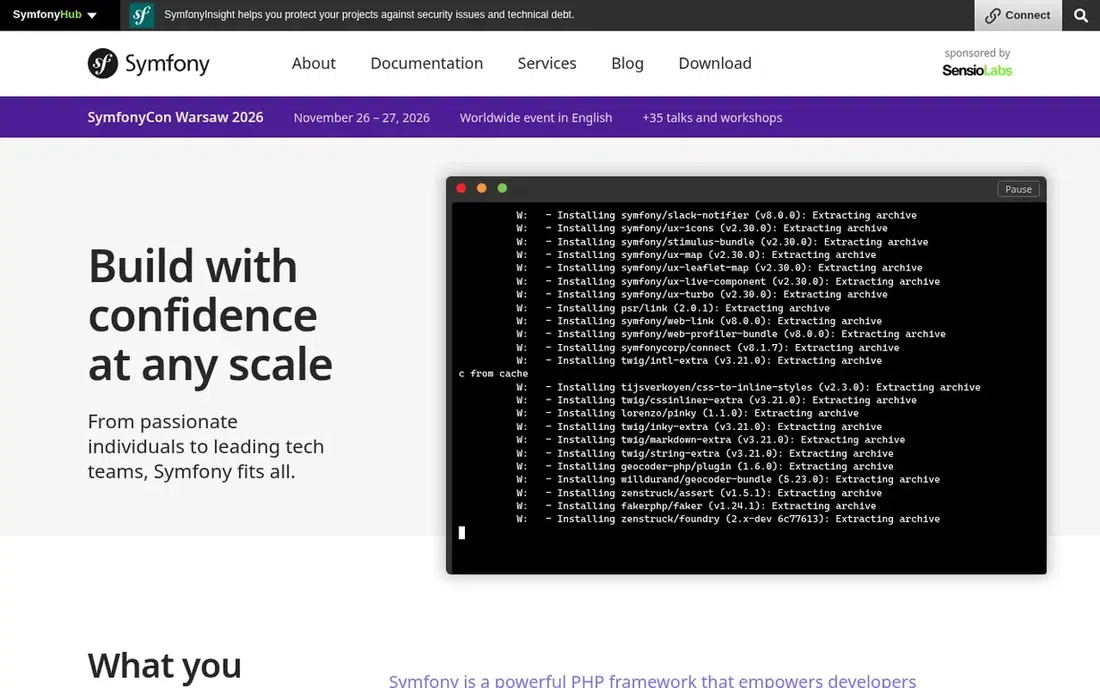
Choose Symfony for enterprise apps, APIs and microservices. Teams seeking minimal setup might prefer a micro framework, while those needing broad structure will find Symfony well suited. Beyond that, Symfony is a high-performance PHP framework and a set of reusable components for web applications, APIs, microservices and CLI apps.
Limits to weigh: Steeper ramp-up time.
Its components are widely reused across the PHP ecosystem, making it a solid choice for complicated systems. For everyday use, Symfony's adaptability includes more configuration and a steeper ramp-up time than lighter frameworks. Beyond that, for small prototypes or straightforward APIs, it may feel heavy. This comparison lists no price for Symfony; ask the vendor. Free access: Not stated.
- Reusable PHP components
- Fits APIs
- More configuration for straightforward projects
CodeIgniter
Best for: Small, light web applications
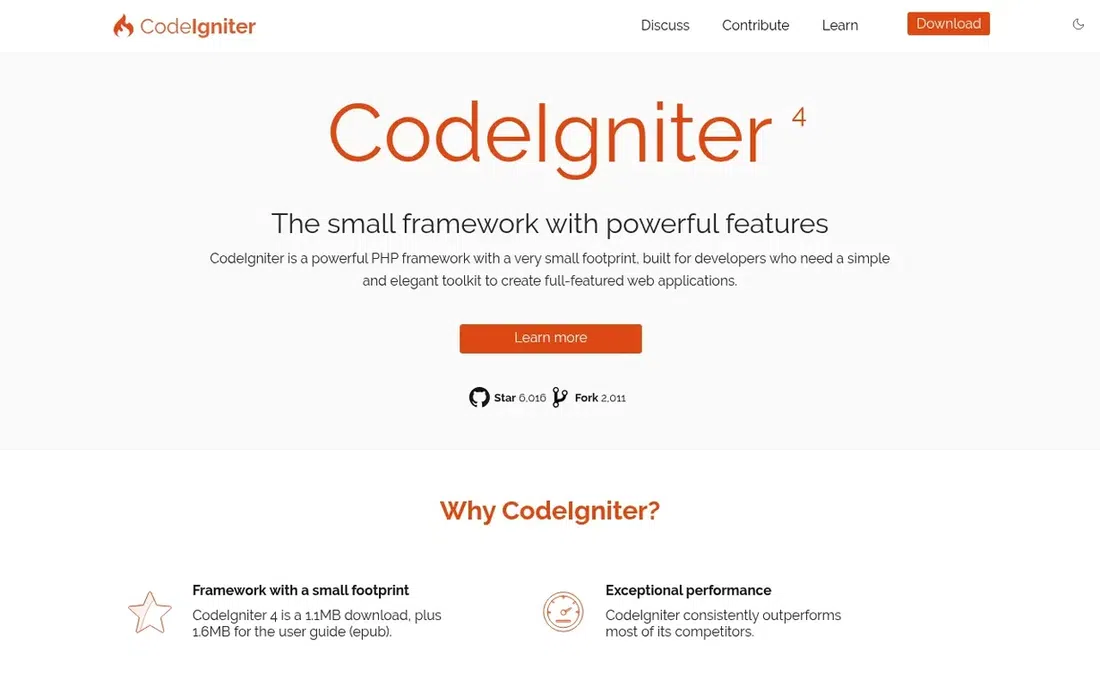
For small, lightweight web applications, CodeIgniter is a natural candidate. It is a solid fit for small to medium projects, prototypes and teams that prefer minimal configuration and clear conventions.
The main drawbacks: Fewer built-in features than full-stack frameworks.
CodeIgniter provides fewer built-in tools than bigger full-stack frameworks, so some features may need extra libraries or custom code. For projects needing broad integrated tooling or advanced AI capabilities, a fuller framework like Laravel may be more appropriate. CodeIgniter does not show a starting price in this comparison, so check the vendor site for current pricing. Free options: Not stated.
- Straightforward setup
- Small footprint
- Less emphasis on modern AI or agent tooling
Laravel
Best for: Full-stack web apps and AI agents
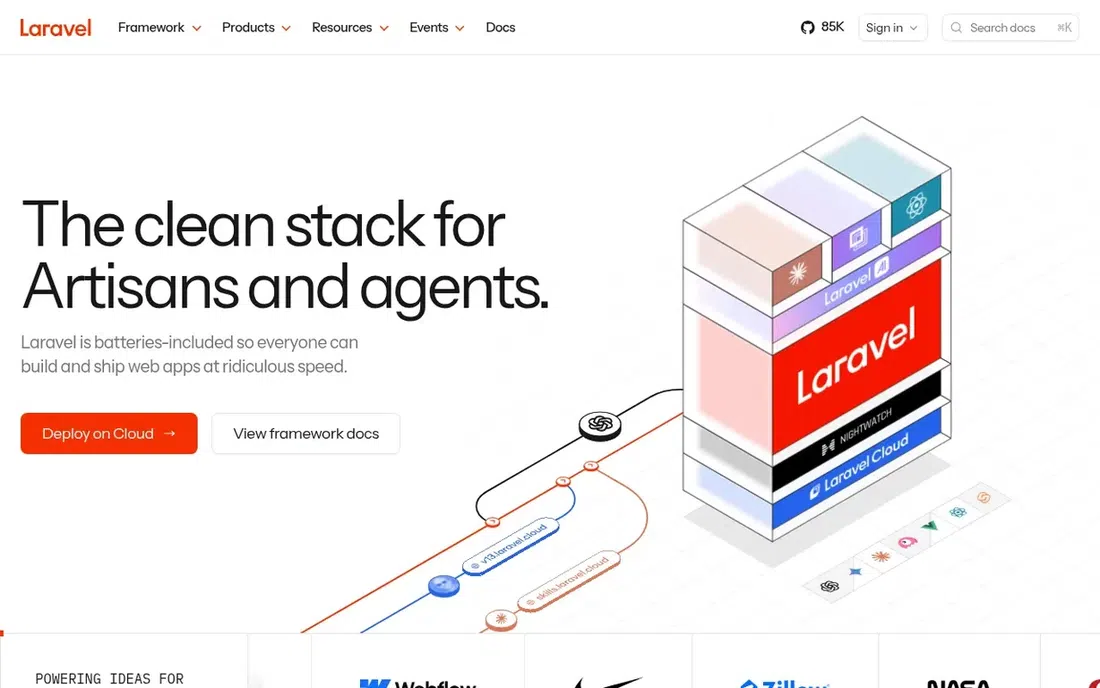
Laravel targets full-stack web apps and AI agents. Laravel can be more than needed for tiny services or teams that prefer minimal dependencies. Its opinionated approach may need adaptation if your project follows very different architectural patterns.
From a buyer's view, for light APIs or microservices, a smaller framework might be a better fit. Laravel is a full-stack PHP framework for building modern web applications and AI agents. Its expressive syntax and built-in tools aim to help developers ship rapidly. Pricing for Laravel is not stated here, so ask the vendor for current figures. As for free access: Not stated.
What to check first: Opinionated conventions may not suit all teams.
- Clean syntax
- Capable ecosystem for modern apps
- Can feel heavy for small APIs
Our selection method
LinkVetted looked at what each vendor publishes: pricing, plan limits, feature coverage for PHP web frameworks and stated drawbacks. No hands-on testing is claimed. Seat minimums, billing terms and add-ons can move the real cost, so the starting prices here are a guide and not a quote. Position on the page reflects fit for a typical buyer first, with price clarity and free access breaking ties. Treat it as a guide, not a ruling.
Things to verify first
- Confirm the entry price with every vendor: no tool from CakePHP to Laravel shows a fixed starting price.
- Before choosing CakePHP, weigh its main limit: conventions may feel rigid.
- Pick one real project and run it in CakePHP first; a small pilot shows fit faster than a checklist.
- Add up seats, add-ons and usage charges for Laravel before comparing it with cheaper entries.
- Before rolling out CodeIgniter, verify the integrations your workflow depends on.
FAQ
How are the tools for PHP web frameworks ordered?
CakePHP sits first and Laravel last because the order follows typical fit for PHP web frameworks, then price clarity and free access. It is a judgement call, so read each profile for fit and limits.
Can I try these tools before paying?
Not by default. None of the tools, from CakePHP to Laravel, lists a free plan or a free trial here, so ask each vendor for a demo before committing. Each of the 5 options in this PHP web frameworks guide has its own card above with the price, free plan and limits.
Do these tools publish their prices?
No. None of the tools, from CakePHP to Laravel, shows a fixed starting price here, so budget time for quotes. All 5 picks in this PHP web frameworks comparison list a starting price, free plan details and the main limits on their cards above.
Which PHP framework is a good match for beginners?
CakePHP is the pick this page puts first, mainly for Rapid MVC web application development. If your situation differs, Laminas suits enterprise PHP components and middleware, and Symfony suits enterprise apps, APIs and microservices. Compare price and limits before you decide.
Does any tool for PHP web frameworks here have a free plan?
A permanent free plan is not offered by CakePHP, Laravel or the other tools here. Plan a short evaluation period instead.
Sources
- https://cakephp.org
- https://getlaminas.org
- https://symfony.com
- https://codeigniter.com
- https://laravel.com