Best PHP Web Frameworks for Remote Teams in 2026: Prices, Free Plans and 5 Picks
Best PHP web frameworks for remote teams: 5 tools compared on price, free plans and fit. Strengths and weak spots are spelled out. Current for November 2026.
- Editor's choiceCakePHP
Teams wanting convention over configuration
Starts atPricing on requestVisit cakephp.orgFull review - Great alternativeSlim Framework
Building light APIs and microservices
Starts atPricing on requestVisit slimframework.comFull review - Also considerSymfony
Complicated, long-term enterprise projects
Starts atPricing on requestVisit symfony.comFull review
Direct answer
Start with CakePHP if you need teams wanting convention over configuration. Slim Framework is better for building light APIs and microservices, and Symfony is better for complicated, long-term enterprise projects. The remaining 2 options are covered below with pricing notes and limits. None of these vendors publish plan prices, so pricing is on request for every option.
TL;DR:
- Top of the list is CakePHP, which targets teams wanting convention over configuration.
- No starting price is shown for any of the 5 tools, CakePHP and Laravel included, so plan time for sales calls.
- For teams wanting an all-in-one toolkit, Laravel is worth a look.
- Before buying CakePHP, weigh this: less adaptable for custom setups.
- None of the 5 tools, from CakePHP to Laravel, has a free plan, so budget for a subscription or use a trial.
Last checked November 2026. Pricing on request: vendors did not publish plan prices when this guide was last checked (November 2026), so ask each vendor for a written quote.
Quick comparison
| Tool | Best for | Starts at | Free plan? | |
|---|---|---|---|---|
| CakePHP | Teams wanting convention over configuration | Pricing on request | Not stated | Visit |
| Slim Framework | Building light APIs and microservices | Pricing on request | Not stated | Visit |
| Symfony | Complicated, long-term enterprise projects | Pricing on request | Not stated | Visit |
| Laminas | Enterprise teams needing standards compliance | Pricing on request | Not stated | Visit |
| Laravel | Teams wanting an all-in-one toolkit | Pricing on request | Not stated | Visit |
The full PHP web frameworks for remote teams list
If you are comparing PHP web frameworks for remote teams, this page covers 5 tools in one place: what each is best for, what it costs to start, whether it has a free plan, and the main limit to know about.
CakePHP
Best for: Teams wanting convention over configuration
CakePHP is a good fit for teams wanting convention over configuration. CakePHP's conventions can limit flexibility for highly custom projects, and it may lack some of the modern features found in newer frameworks.
Pricing for CakePHP is not stated here, so ask the vendor for current figures. As for free access: Not stated.
Honest limits: Less adaptable for custom setups.
- MVC architecture
- Beginner-friendly manual
- Fewer modern features
Slim Framework
Best for: Building light APIs and microservices
Slim Framework serves building light APIs and microservices. Slim is a PHP microframework that helps developers rapidly write straightforward yet capable web applications and APIs. Its minimalistic design and support for PSR-7 HTTP messages make it a very good choice for remote teams building microservices or API-centric projects where speed and simplicity are paramount.
Slim does not offer the full-stack features of bigger frameworks. So teams may have to integrate extra components for tasks like authentication or database access. Also, for monolithic applications with deep requirements, a full-stack framework like Laravel is more appropriate. Slim Framework shows no starting price here, so confirm the cost on the vendor site. Trial and free access: Not stated.
Limits to weigh: Lacks full-stack features.
- A strong match for APIs
- Minimal and quick
- Needs more manual setup
Symfony
Best for: Complicated, long-term enterprise projects
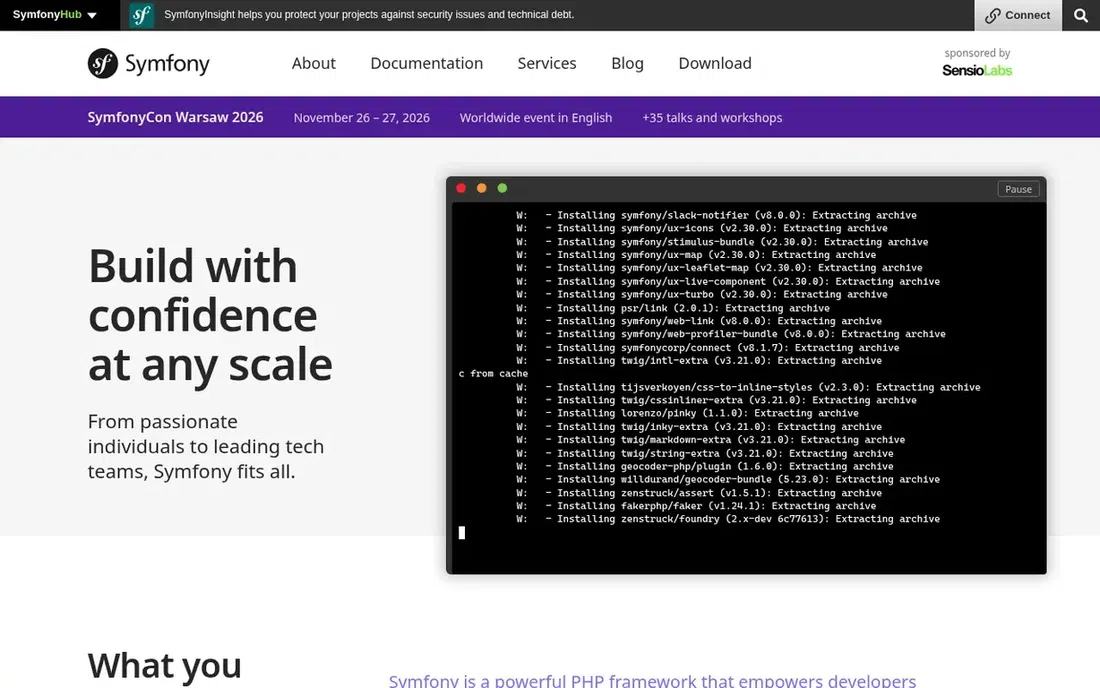
Symfony serves complicated, long-term enterprise projects. The framework's adaptability includes a steeper ramp-up time and more configuration compared with lighter alternatives.
Limits to weigh: Configuration can be verbose.
Its modular design and adherence to standards make it well-suited for remote teams working on large, long-term projects that need stability and maintainability. No starting price is listed for Symfony here; confirm pricing on the vendor site. Free access: Not stated.
- Adaptable architecture
- Reusable components
- Steeper ramp-up time
Laminas
Best for: Enterprise teams needing standards compliance
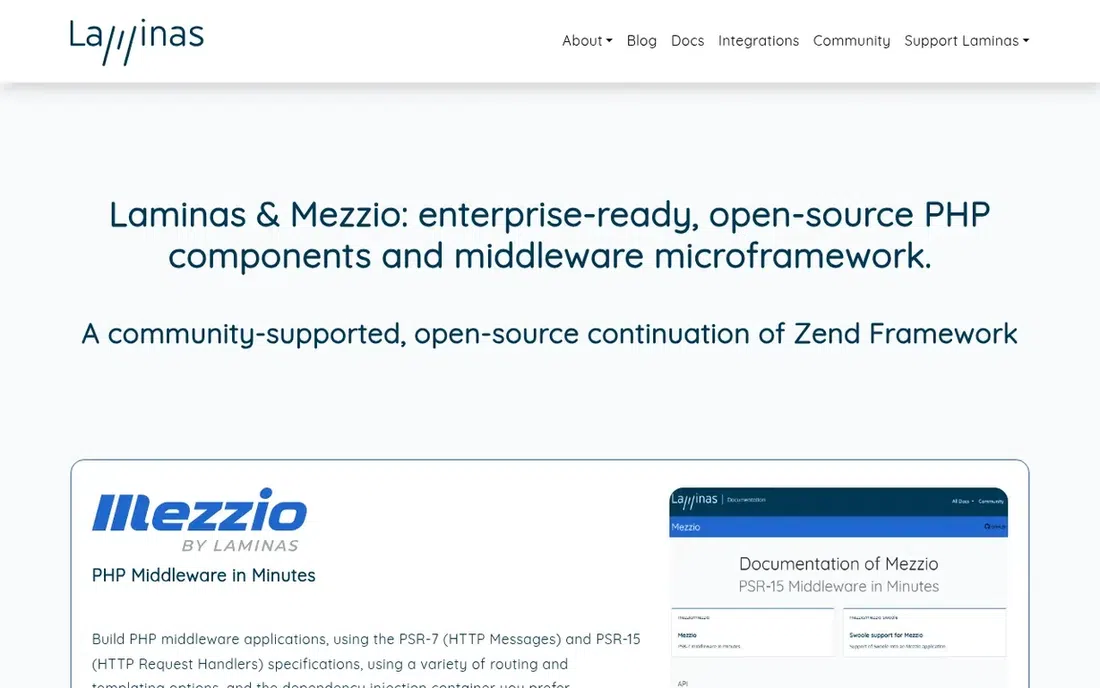
Choose Laminas for enterprise teams needing standards compliance. Laminas is a collection of enterprise-ready, open-source PHP components and a middleware microframework (Mezzio).
Laminas may lack the modern developer conveniences and vibrant ecosystem of newer frameworks like Laravel. As a community-supported continuation of Zend Framework, it provides a stable, standards-focused foundation for remote teams building complicated applications that need long-term support. Pricing for Laminas is not stated here, so ask the vendor for current figures. Free options: Not stated.
Where it falls short: Less modern tooling.
- Enterprise-ready components
- Middleware microframework choice
- Smaller ecosystem than Laravel
Laravel
Best for: Teams wanting an all-in-one toolkit
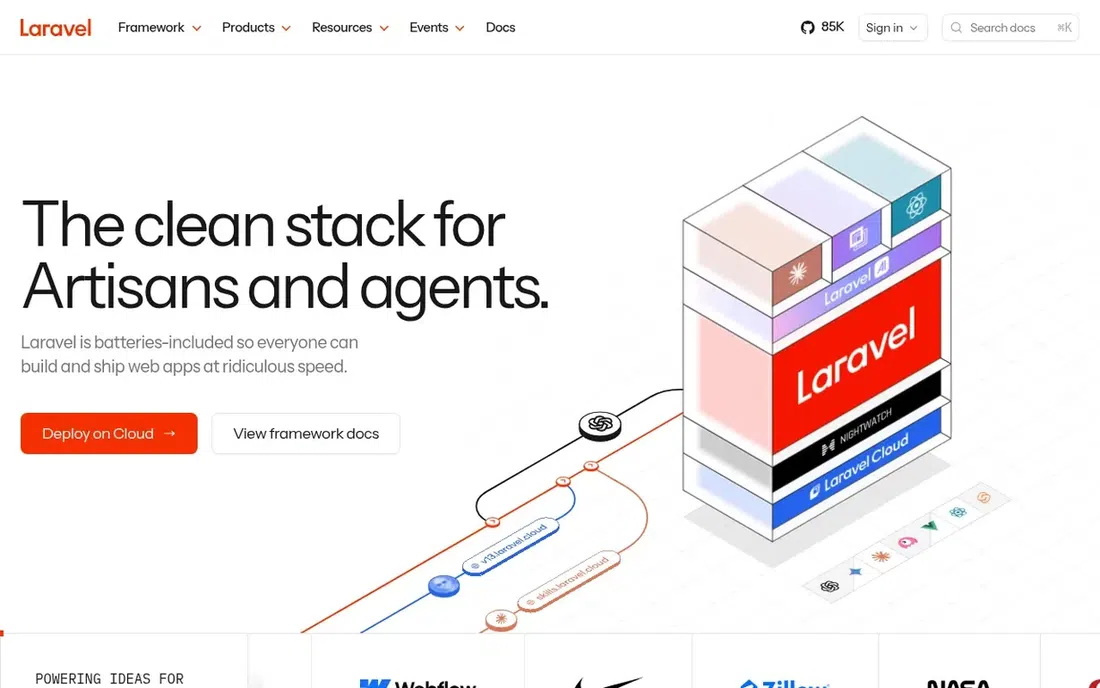
Laravel serves teams wanting an all-in-one toolkit. It emphasizes developer productivity with an expressive syntax and a rich set of built-in tools, making it a capable choice for remote teams that require to ship features rapidly and maintain consistency across distributed contributors.
Worth adding: if you need a lighter footprint or fewer dependencies, consider a microframework like Slim instead. This comparison lists no price for Laravel; ask the vendor. Free access: Not stated.
Points against: Opinionated structure may not suit all.
- Readable syntax
- Expressive
- Can be heavy for small projects
How the list was put together
The comparison looks at four things: starting price, free access, how well the feature set matches PHP web frameworks for remote teams, and the main limit of each tool. Treat prices as a snapshot: vendors change plans often, so check the vendor site for the figure that applies today. The ranking is editorial: typical fit first, then clear pricing, then free access. If your needs are unusual, read the profiles rather than relying on position.
A buyer's checklist
- Confirm the entry price with every vendor: no tool from CakePHP to Laravel shows a fixed starting price.
- Before choosing CakePHP, weigh its main limit: less adaptable for custom setups.
- Pick one real project and run it in Laminas first; a small pilot shows fit faster than a checklist.
- Look at which plan of Laravel unlocks the features you need; entry tiers are often cut down.
- Test how quickly CakePHP answers a pre-sales question; it hints at how support will feel later.
FAQ
Does any tool for PHP web frameworks for remote teams here have a free plan?
No tool in this list, CakePHP and Laravel included, has a permanent free plan. Trials and quotes are the usual route, so plan a short evaluation period.
Which PHP framework is best for remote teams with mixed skill levels?
The first pick on this list is CakePHP, because it suits teams wanting convention over configuration. Slim Framework is better for building light APIs and microservices, and Symfony for complicated, long-term enterprise projects. Check price and limits against your own needs before choosing.
Can I try these tools before paying?
Not by default. None of the tools, from CakePHP to Laravel, lists a free plan or a free trial here, so ask each vendor for a demo before committing.
Is CakePHP the right pick for everyone comparing PHP web frameworks for remote teams?
No single tool suits every team. CakePHP comes first because it fits teams wanting convention over configuration, while Slim Framework suits building lightweight APIs and microservices and Symfony suits complex, long-term enterprise projects. Match the tool to your own size, budget and workflow before deciding.
Do these tools publish their prices?
No. None of the tools, from CakePHP to Laravel, shows a fixed starting price here, so budget time for quotes.
Sources
- https://cakephp.org
- https://www.slimframework.com
- https://symfony.com
- https://getlaminas.org
- https://laravel.com