Java Web Frameworks for Remote Teams in 2026: The 5 Best Options Side by Side
Best java web frameworks for remote teams in 2026: 5 contenders with entry costs and free tiers. Each tool is judged on the same checks. Clear verdicts.
- Editor's choiceVert.x
Reactive, event-driven JVM applications
Starts atPricing on requestVisit vertx.ioFull review - Great alternativeJakarta EE
Standards-focused enterprise modernization
Starts atPricing on requestVisit jakarta.eeFull review - Also considerSpring Boot
Wide ecosystem and hiring pool
Starts atPricing on requestVisit spring.ioFull review
Direct answer
For Reactive, event-driven JVM applications, Vert.x is where this list starts. Jakarta EE is the stronger choice for standards-focused enterprise modernization, while Spring Boot suits wide ecosystem and hiring pool. Free plan facts and limits for all 5 tools follow. None of these vendors publish plan prices, so pricing is on request for every option.
TL;DR:
- Vert.x is the opening pick, best for Reactive, event-driven JVM applications.
- Vert.x, Quarkus and the 3 others all sell by quote; expect sales conversations before you see a price.
- Quarkus fits quick startup and cloud-native deployment.
- Vert.x, Quarkus and the 3 others all need a premium plan or a trial, since no free plan is listed.
- What to know about Vert.x first: Asynchronous style is harder to onboard.
Last checked November 2026. Pricing on request: vendors did not publish plan prices when this guide was last checked (November 2026), so ask each vendor for a written quote.
Quick comparison
| Tool | Best for | Starts at | Free plan? | |
|---|---|---|---|---|
| Vert.x | Reactive, event-driven JVM applications | Pricing on request | Not stated | Visit |
| Jakarta EE | Standards-focused enterprise modernization | Pricing on request | Not stated | Visit |
| Spring Boot | Wide ecosystem and hiring pool | Pricing on request | Not stated | Visit |
| Dropwizard | Straightforward, opinionated REST services | Pricing on request | Not stated | Visit |
| Quarkus | Quick startup and cloud-native deployment | Pricing on request | Not stated | Visit |
Java Web Frameworks for Remote Teams compared in detail
This LinkVetted guide covers 5 java web frameworks for remote teams. Each profile lists a starting price, free plan details, strengths and drawbacks, so you can drop poor fits quickly.
Vert.x
Best for: Reactive, event-driven JVM applications
Vert.x is aimed squarely at Reactive, event-driven JVM applications. Eclipse Vert.x is a toolkit for building reactive applications on the JVM.
Teams without reactive experience may find the learning investment significant. Beyond that, if your application is a straightforward CRUD service, a more conventional framework will likely be simpler to maintain. Check the vendor site for Vert.x pricing; none is listed in this comparison. Free access: Not stated.
Where it is weaker: Needs discipline to avoid blocking the event loop.
- Light core
- Deals with plenty of concurrent connections
- Asynchronous style is harder to onboard
Jakarta EE
Best for: Standards-focused enterprise modernization
For standards-focused enterprise modernization, Jakarta EE is a natural candidate. It suits organizations that value long-term stability and portability over rapid framework churn.
Its pace can trail fast-moving frameworks, and the ecosystem feels less turnkey to newcomers. Pricing for Jakarta EE is not stated here, so ask the vendor for current figures. Free plan details: Not stated.
Points against: Specification work can lag behind fast-moving frameworks.
- Vendor-neutral specification
- Open source enterprise standard
- Needs a compatible runtime to be productive
Spring Boot
Best for: Wide ecosystem and hiring pool
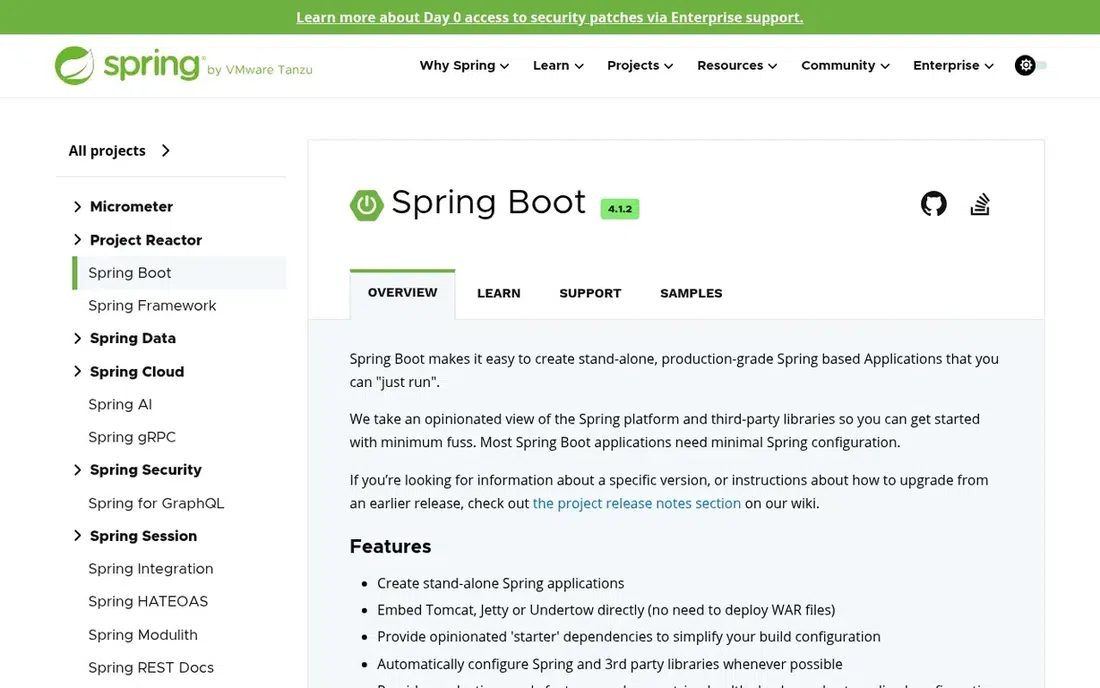
Spring Boot is aimed squarely at wide ecosystem and hiring pool. For remote teams, its biggest advantage is shared familiarity: new contributors are likely to have seen it before, and documentation and examples are simple to find.
The tradeoff is weight. This comparison lists no price for Spring Boot; ask the vendor. Free options: Not stated.
Trade-offs to know: Can feel heavy for very small services.
- Broad documentation and community knowledge
- Broad choice of integrations and libraries
- Default startup and memory footprint are higher than lean frameworks
Dropwizard
Best for: Straightforward, opinionated REST services
Dropwizard targets straightforward, opinionated REST services. Dropwizard bundles well-known Java libraries into an opinionated framework for building RESTful web services. Its value for remote teams is predictability: fewer architectural decisions to debate and a conventional operational model.
More specifically, the opinionated approach becomes a constraint when requirements diverge from the bundled defaults. Its ecosystem and community are smaller than Spring's, so unusual needs may need custom work. Worth adding: teams planning wide integration work should weigh Spring Boot or Quarkus instead. This comparison lists no price for Dropwizard; ask the vendor. On free options: Not stated.
Main advantages: Decent fit for focused REST services. Trade-offs to know: Less adaptable for unusual requirements.
- Opinionated bundle of proven libraries
- Straightforward operational model
- Smaller ecosystem than Spring
Quarkus
Best for: Quick startup and cloud-native deployment
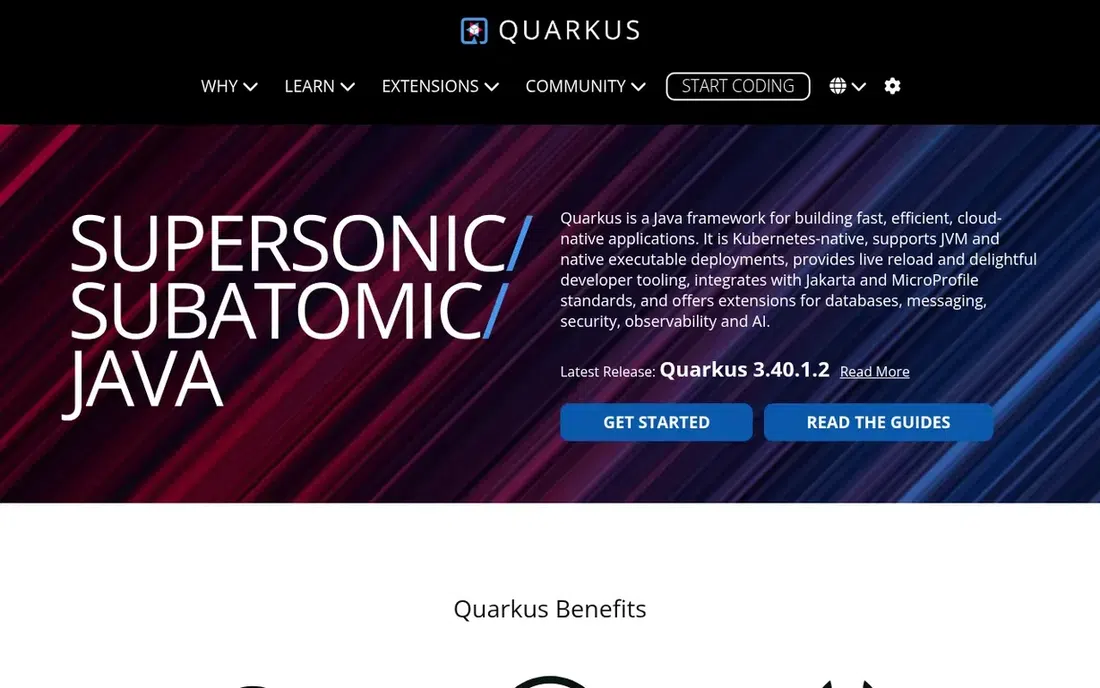
Quarkus makes the most sense for quick startup and cloud-native deployment. If your team values maximum library coverage over startup speed, Spring Boot is the safer choice.
The main drawbacks: Smaller ecosystem than older frameworks.
Live reload and developer tooling help remote developers iterate rapidly without long rebuild cycles. For everyday use, the ecosystem is smaller than Spring's, so some integrations need more custom work. This comparison lists no price for Quarkus; ask the vendor. Free access: Not stated.
- Kubernetes-native design
- Supports JVM and native executable deployments
- Native builds add tooling complexity
How these tools were picked
We compared the tools on published pricing, free plan or trial availability, feature coverage for java web frameworks for remote teams, and the limits each vendor documents. Treat prices as a snapshot: vendors change plans often, so check the vendor site for the figure that applies today. The ranking is editorial: typical fit first, then clear pricing, then free access. If your needs are unusual, read the profiles rather than relying on position.
A buyer's checklist
- Ask each vendor, from Vert.x to Quarkus, for a written quote; none of them publishes a starting price.
- Read the limits listed for Vert.x first: Asynchronous style is harder to onboard.
- Ask Spring Boot about contract length, onboarding fees and user minimums before you sign.
- Check whether the features you need in Vert.x sit on the entry plan or only on higher tiers.
- Run a one or two week pilot of Jakarta EE with the people who will use it every day.
FAQ
Can I try these tools before paying?
Not by default. None of the tools, from Vert.x to Quarkus, lists a free plan or a free trial here, so ask each vendor for a demo before committing. All 5 picks in this Java web frameworks for remote teams comparison list a starting price, free plan details and the main limits on their cards above.
Which Java framework is easiest for a distributed team to adopt?
Teams with solid container and cloud-native experience may find Quarkus similarly approachable. The right answer relies on your existing skills and deployment model.
Do these tools publish their prices?
No. None of the tools, from Vert.x to Quarkus, shows a fixed starting price here, so budget time for quotes. For the full picture, the cards above cover all 5 entries of this Java web frameworks for remote teams list, including price, free plan and limits.
Is Jakarta EE still relevant for new projects?
It is a specification, so you also choose a compatible runtime. Teams starting fresh without standards constraints frequently find Spring Boot or Quarkus quicker to get moving.
Is Vert.x the right pick for everyone comparing java web frameworks for remote teams?
No single tool suits every team. Vert.x comes first because it fits Reactive, event-driven JVM applications, while Jakarta EE suits standards-focused enterprise modernization and Spring Boot suits broad ecosystem and hiring pool. Match the tool to your own size, budget and workflow before deciding.
Does any tool for java web frameworks for remote teams here have a free plan?
No tool in this list, Vert.x and Quarkus included, has a permanent free plan. Trials and quotes are the usual route, so plan a short evaluation period.
Sources
- https://vertx.io
- https://jakarta.ee
- https://spring.io/projects/spring-boot
- https://www.dropwizard.io
- https://quarkus.io