Best Java Web Frameworks for 2026: Our 5 Vetted Picks
Best java web frameworks in 2026: 5 tools with starting prices, free plans and limits. Price notes and drawbacks come with each one. Reviewed in November 2026.
- Editor's choiceQuarkus
Cloud-native applications with quick startup needs
Starts atSee websiteVisit quarkus.ioFull review - Great alternativeVaadin
Enterprise web apps with Java-only UI
Starts at$175 per developer a monthVisit vaadin.comFull review - Also considerJakarta EE
Enterprise Java standardization and modernization
Starts atSee websiteVisit jakarta.eeFull review
Direct answer
This list puts Quarkus first for cloud-native applications with quick startup needs. Listed starting prices: Vaadin from $175 per developer a month. If your case is different, Vaadin suits enterprise web apps with Java-only UI and Jakarta EE suits enterprise Java standardization and modernization. The other 2 tools in the list cover narrower or pricier cases.
TL;DR:
- This list starts with Quarkus, which is built for cloud-native applications with quick startup needs.
- The main caution on Quarkus: smaller ecosystem than Spring Boot.
- For the cheapest start, look at Vaadin: $175 per developer per month.
- Just one of the 5 tools, Vaadin, has a free plan.
Last checked November 2026. Prices and plan details were read from the vendors' own pages in November 2026; vendors change plans often, so confirm the current price on the vendor site before you buy.
Quick comparison
| Tool | Best for | Starts at | Free plan? | |
|---|---|---|---|---|
| Quarkus | Cloud-native applications with quick startup needs | See website | Not stated | Visit |
| Vaadin | Enterprise web apps with Java-only UI | $175 per developer a month | Yes | Visit |
| Jakarta EE | Enterprise Java standardization and modernization | See website | Not stated | Visit |
| Play Framework | High-velocity web apps with Java and Scala | See website | Not stated | Visit |
| Spring Boot | Enterprise applications with wide ecosystem needs | See website | Not stated | Visit |
The best java web frameworks
LinkVetted compared 5 java web frameworks. The goal is a practical shortlist: published prices, free plan facts, best-fit use cases and honest limits for every entry.
Quarkus
Best for: Cloud-native applications with quick startup needs
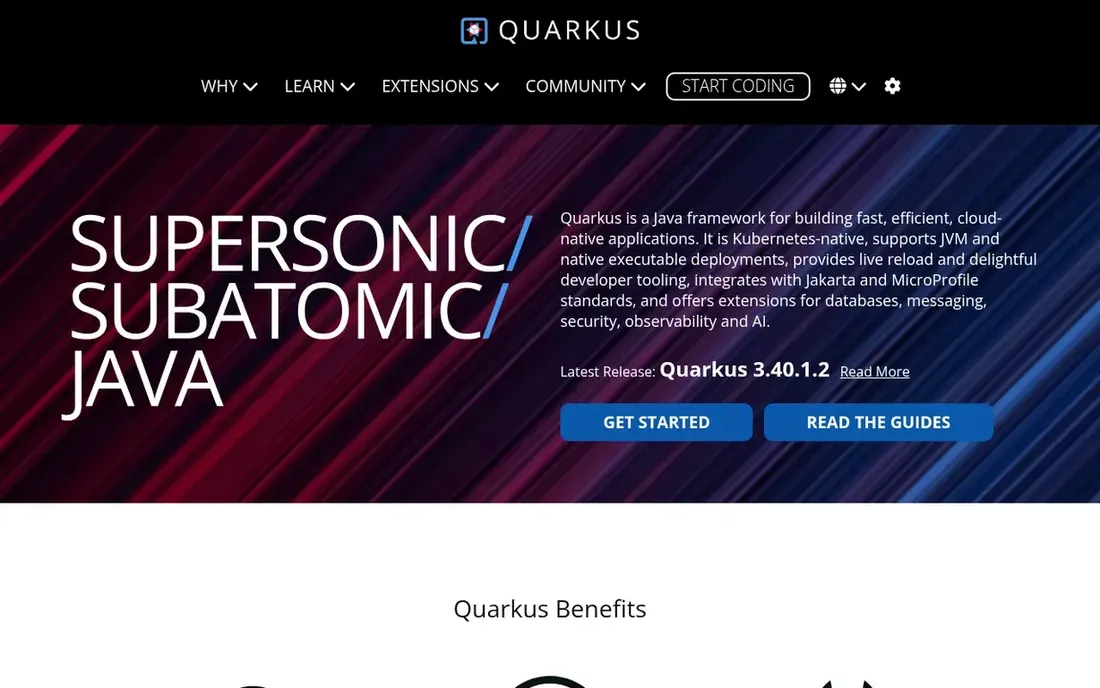
Quarkus is designed for cloud-native applications with quick startup needs. Quarkus is designed for building quick, efficient, cloud-native Java applications.
It fits teams targeting containerized environments where startup time and memory efficiency are critical. No starting price is listed for Quarkus here; confirm pricing on the vendor site. As for free access: Not stated.
Trade-offs to know: Smaller ecosystem than Spring Boot.
- Quick startup and low memory usage
- Supports JVM and native executable deployments
- Native compilation can add complexity
Vaadin
Best for: Enterprise web apps with Java-only UI
Vaadin is designed for enterprise web apps with Java-only UI. If you need fine-grained control over the frontend, consider a more traditional framework like Spring Boot with a separate frontend.
For everyday use, Vaadin's server-side rendering approach may introduce latency for highly interactive applications, and customization can be restricted compared with JavaScript frameworks. Entry price for Vaadin: $175 per developer per month. Vaadin has a free plan.
The main drawbacks: Less adaptable for highly custom UIs.
- Built-in security features
- Unified Java stack for UI and backend
- Server-side rendering can increase latency
Jakarta EE
Best for: Enterprise Java standardization and modernization
Jakarta EE is built with enterprise Java standardization and modernization in mind. It offers a standardized product with strong enterprise features, backed by the Eclipse Foundation.
More specifically, for simpler or more agile projects, consider Spring Boot or Quarkus. Also, Jakarta EE can be complicated to configure and may have a slower innovation cycle compared with lighter frameworks. This comparison lists no price for Jakarta EE; ask the vendor. Free access: Not stated.
Honest limits: Slower innovation cycle than some frameworks.
- Open source and vendor-neutral
- Backed by the Eclipse Foundation
- Can be complicated to set up
Play Framework
Best for: High-velocity web apps with Java and Scala
For high-velocity web apps with Java and Scala, Play Framework is a natural candidate. It provides hot reload and a reactive model, making it a good match for projects that need rapid development and high performance.
Play has a steeper ramp-up time, notably for developers new to Scala or reactive programming. Beyond that, if you prefer a more conventional approach with broader support, Spring Boot might be a better choice. Play Framework shows no starting price here, so confirm the cost on the vendor site. On free options: Not stated.
Drawbacks to consider: Steeper ramp-up time for beginners.
- Supports both Java and Scala
- High performance and scalability
- Smaller community than Spring
Spring Boot
Best for: Enterprise applications with wide ecosystem needs
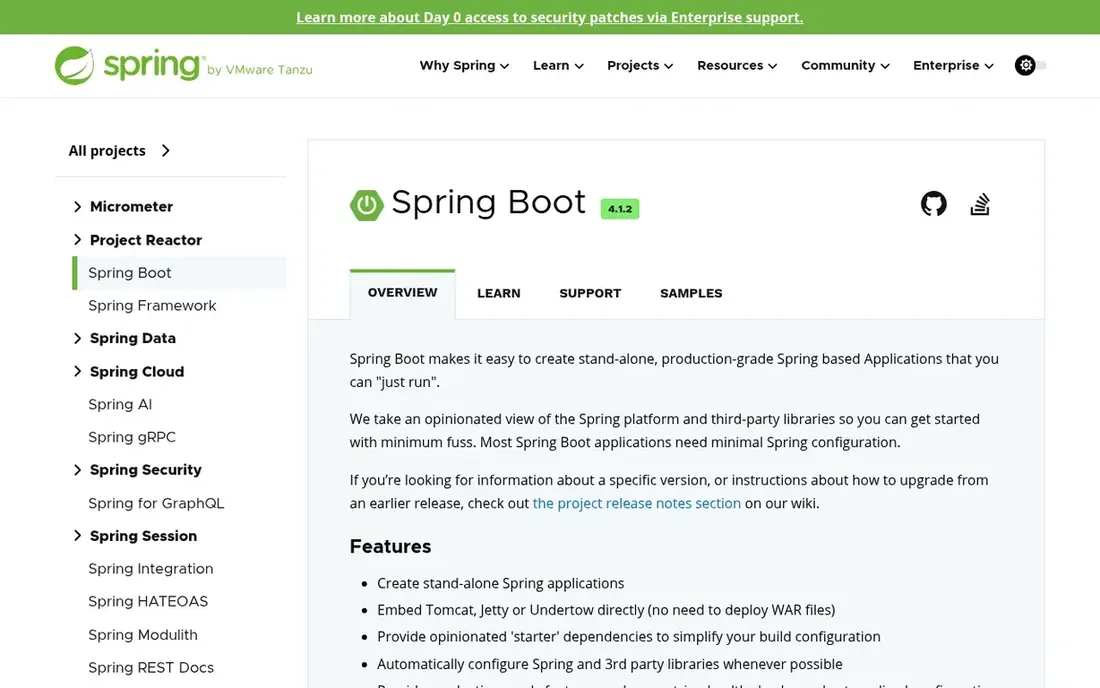
Spring Boot works best for enterprise applications with wide ecosystem needs. Spring Boot is a widely used framework for building stand-alone, production-grade Spring applications.
That said, Spring Boot can be overkill for small applications and may have a steeper learning curve for beginners. Its memory footprint is usually higher than that of light frameworks. Spring Boot does not show a starting price in this comparison, so check the vendor site for current pricing. Free options: Not stated.
Downsides: Can be complicated for straightforward use cases.
- Eases configuration with auto-configuration
- Deep ecosystem and community support
- Higher memory footprint compared with light frameworks
How these tools were picked
For each of the 5 tools we noted price, free plan or trial, fit for java web frameworks and the main limit, using vendor pages and documentation. Seat minimums, billing terms and add-ons can move the real cost, so the starting prices here are a guide and not a quote. Position on the page reflects fit for a typical buyer first, with price clarity and free access breaking ties. Treat it as a guide, not a ruling.
A buyer's checklist
- Ask Quarkus, Jakarta EE, Play Framework and Spring Boot for a written quote, since no starting price is shown.
- Look at the free plan from Vaadin closely: its caps decide whether it is usable for real work.
- Before choosing Quarkus, weigh its main limit: smaller ecosystem than Spring Boot.
- Involve the people who will use Play Framework daily; a short pilot beats a long feature checklist.
- Make sure Quarkus lets you export your data in a format another tool can read.
FAQ
What is the difference between Jakarta EE and Spring Boot?
Jakarta EE is a standardized enterprise Java product with vendor-neutral specifications, whereas Spring Boot is a specific framework that eases Spring application development. Jakarta EE is well suited to standards-based enterprise systems, whereas Spring Boot supplies rapid development with a vast ecosystem.
Can I try these tools before paying?
Often, yes. Vaadin has a free plan. Use your own data and a real task during the test, and check what the free tier or trial limits before you rely on it.
Do these tools publish their prices?
Not all of them. Quarkus, Jakarta EE, Play Framework and Spring Boot publish no starting price, so expect a quote request for those. The rest, Vaadin included, show a starting price, though seats and billing terms still change the final cost.
Is Quarkus the right pick for everyone comparing java web frameworks?
No single tool suits every team. Quarkus comes first because it fits cloud-native applications with fast startup needs, while Vaadin suits enterprise web apps with Java-only UI and Jakarta EE suits enterprise Java standardization and modernization. Match the tool to your own size, budget and workflow before deciding.
How are the tools for java web frameworks ordered?
Quarkus sits first and Spring Boot last because the order follows typical fit for java web frameworks, then price clarity and free access. It is a judgement call, so read each profile for fit and limits.
Sources
- https://quarkus.io
- https://vaadin.com
- https://jakarta.ee
- https://www.playframework.com
- https://spring.io/projects/spring-boot