5 Java Popular Frameworks Worth Shortlisting in 2026
Need the best java popular frameworks? We compare 5 tools on cost, free access and who each suits. Each pick comes with its main catch. Checked this month.
- Editor's choiceVert.x
Reactive applications on the JVM
Starts atPricing on requestVisit vertx.ioFull review - Great alternativePlay Framework
Scalable web apps in Java and Scala
Starts atPricing on requestVisit playframework.comFull review - Also considerSpring Boot
General-purpose Java application development
Starts atPricing on requestVisit spring.ioFull review
Direct answer
Vert.x is the first pick on this list for reactive applications on the JVM. For a different need, Play Framework covers scalable web apps in Java and Scala and Spring Boot covers general-purpose Java application development. Details and limits for the rest of the 5 tools are below. None of these vendors publish plan prices, so pricing is on request for every option.
TL;DR:
- Number one here is Vert.x, a fit for reactive applications on the JVM.
- Neither Vert.x nor Quarkus, nor any of the other 3 tools, has a permanent free plan; trials and quotes are the norm.
- Jakarta EE comes with a trade-off: specification work layers on overhead.
- Every tool from Vert.x to Quarkus works by quote, with no list price shown.
Last checked November 2026. Pricing on request: vendors did not publish plan prices when this guide was last checked (November 2026), so ask each vendor for a written quote.
Quick comparison
| Tool | Best for | Starts at | Free plan? | |
|---|---|---|---|---|
| Vert.x | Reactive applications on the JVM | Pricing on request | Not stated | Visit |
| Play Framework | Scalable web apps in Java and Scala | Pricing on request | Not stated | Visit |
| Spring Boot | General-purpose Java application development | Pricing on request | Not stated | Visit |
| Jakarta EE | Standards-based enterprise Java modernization | Pricing on request | Not stated | Visit |
| Quarkus | Cloud-native apps with native executables | Pricing on request | Not stated | Visit |
Java Popular Frameworks profiles
LinkVetted compared 5 java popular frameworks. The goal is a practical shortlist: published prices, free plan facts, best-fit use cases and honest limits for every entry.
Vert.x
Best for: Reactive applications on the JVM
Vert.x is a good fit for reactive applications on the JVM. Eclipse Vert.x is a toolkit for building reactive applications on the JVM, centered on an event-driven, non-blocking model. In daily use, choose Vert.x when reactive throughput is the priority.
From a buyer's view, the asynchronous style is harder for newcomers than conventional blocking code, and Vert.x provides you fewer opinions about project structure. If your team prefers straightforward request handling with lots of built-in conventions, a fuller framework may be simpler. Pricing for Vert.x is not stated here, so ask the vendor for current figures. Free access: Not stated.
Main advantages: Fits high-concurrency services.
What to check first: Less structure from day one.
- Reactive
- Runs on the JVM
- Asynchronous style is harder to learn
Play Framework
Best for: Scalable web apps in Java and Scala
Play Framework was built for scalable web apps in Java and Scala. If you need strict standards alignment or a purely microservice-oriented toolkit, another framework may fit better.
Limits to weigh: Scala overlap can confuse teams.
Pricing for Play Framework is not stated here, so ask the vendor for current figures. Trial and free access: Not stated.
- Designed for modern web apps
- Supports Java and Scala
- Different model from servlet stacks
Spring Boot
Best for: General-purpose Java application development
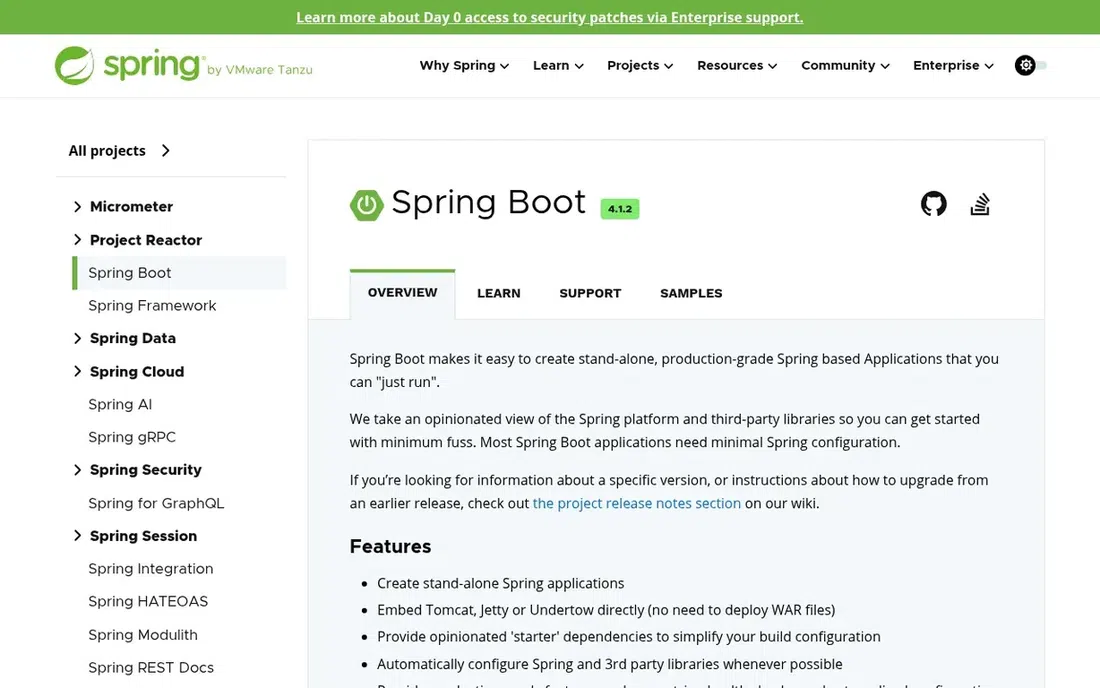
Spring Boot was built for general-purpose Java application development. Spring Boot builds on the wider Spring family to make Java applications simpler to start and run, with the project positioning itself as a way to level up your Java code.
Worth adding: the breadth that makes Spring Boot adaptable also means more concepts to absorb, and smaller services can feel over-structured. No starting price is listed for Spring Boot here; confirm pricing on the vendor site. On free options: Not stated.
The main drawbacks: Can feel heavy for tiny services.
- Wide ecosystem and documentation
- Solid fit for numerous application types
- Large surface area to learn
Jakarta EE
Best for: Standards-based enterprise Java modernization
Jakarta EE is built with standards-based enterprise Java modernization in mind. Jakarta Enterprise Edition is described as the open source future of cloud native enterprise Java, positioned to protect investments in Java EE and modernize enterprise systems. It is a specification with several implementations instead of a single product.
Points against: Needs a compatible runtime.
Also, pick Jakarta EE when portability and long-term enterprise standards outweigh convenience. Teams wanting one opinionated, batteries-included framework may prefer a single-vendor choice. Pricing for Jakarta EE is not stated here, so ask the vendor for current figures. Free access: Not stated.
- Cloud-native enterprise direction
- Open source enterprise standard
- Specification work layers on overhead
Quarkus
Best for: Cloud-native apps with native executables
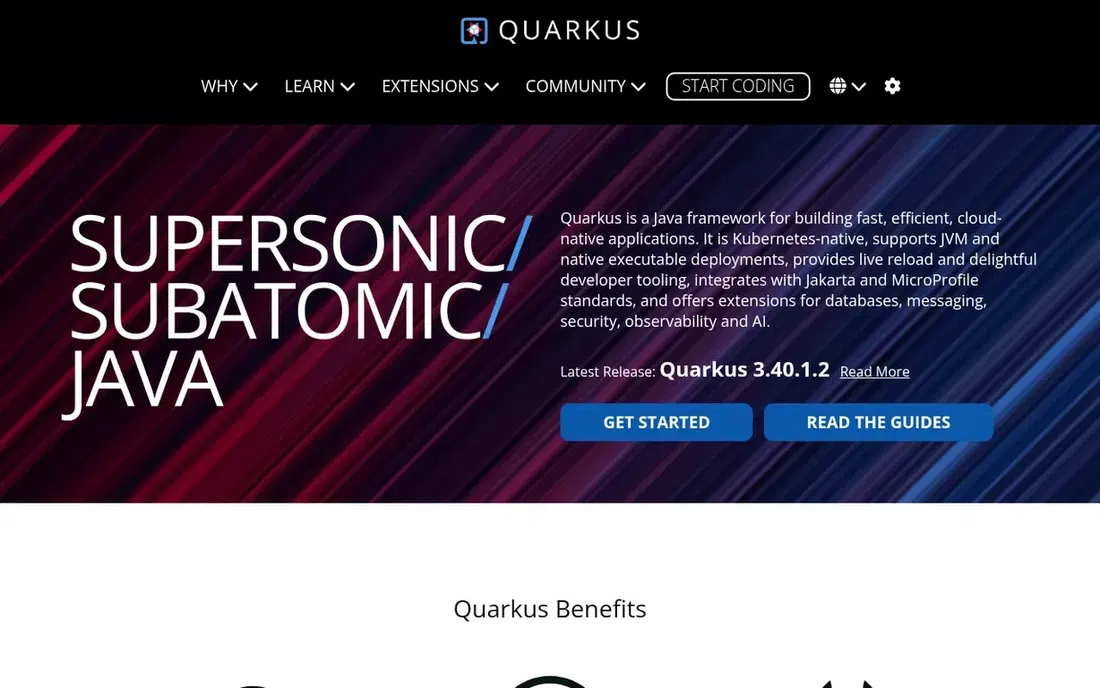
Where Quarkus fits: cloud-native apps with native executables. Quarkus describes itself as a Java framework for building quick, efficient, cloud-native applications. It is Kubernetes-native, supports both JVM and native executable deployments, and offers live reload plus developer tooling geared toward a smooth inner loop.
Limits to weigh: Native builds add complexity.
If you need a very conventional enterprise standard or the widest possible library coverage, another choice may be safer. Native executable builds introduce additional tooling and build steps that teams must plan for, and the ecosystem is younger than long-established enterprise stacks. No starting price is listed for Quarkus here; confirm pricing on the vendor site. Free access: Not stated.
- Live reload developer tooling
- JVM and native executable deployment
- Newer ecosystem than older frameworks
How these tools were picked
For each of the 5 tools we noted price, free plan or trial, fit for java popular frameworks and the main limit, using vendor pages and documentation. Figures are shown as the vendors publish them. Billing terms, seat minimums and add-ons can change the real cost. The order reflects how well each tool fits the most common buying scenario for java popular frameworks, then price clarity, then free plan access. It is a starting point, not a verdict.
Pre-purchase checklist
- Confirm the entry price with every vendor: no tool from Vert.x to Quarkus shows a fixed starting price.
- Before choosing Vert.x, weigh its main limit: Asynchronous style is harder to learn.
- Test how quickly Vert.x answers a pre-sales question; it hints at how support will feel later.
- Check how data leaves Spring Boot: formats, limits and whether exports are available on every plan.
- Confirm the exact Quarkus plan that includes your must-have features.
FAQ
How are the java popular frameworks ordered?
Vert.x sits first and Quarkus last because the order follows typical fit for java popular frameworks, then price clarity and free access. It is a judgement call, so read each profile for fit and limits.
Which Java framework is a good match for beginners?
This list starts with Vert.x, which fits reactive applications on the JVM. For other needs, Play Framework is aimed at scalable web apps in Java and Scala, and Spring Boot at general-purpose Java application development. Check each tool's price and main limit first.
Is Jakarta EE a framework or a specification?
Jakarta EE is an open source enterprise Java specification supported by the Eclipse Foundation, and it needs a compatible runtime to use. Teams wanting a single opinionated framework may prefer another choice.
Do these tools publish their prices?
No. None of the tools, from Vert.x to Quarkus, shows a fixed starting price here, so budget time for quotes.
Is Vert.x the right pick for everyone comparing java popular frameworks?
No single tool suits every team. Vert.x comes first because it fits reactive applications on the JVM, while Play Framework suits scalable web apps in Java and Scala and Spring Boot suits general-purpose Java application development. Match the tool to your own size, budget and workflow before deciding.
Can I try these tools before paying?
Not by default. None of the tools, from Vert.x to Quarkus, lists a free plan or a free trial here, so ask each vendor for a demo before committing.
Sources
- https://vertx.io
- https://www.playframework.com
- https://spring.io/projects/spring-boot
- https://jakarta.ee
- https://quarkus.io