Top 5 Java Frameworks for Web Development for 2026 (Prices and Free Plans)
Best java frameworks for web development in 2026: 5 contenders with entry costs and free tiers. Weaknesses are named for every tool. Current for November 2026.
- Editor's choiceMicronaut
Modular microservices and serverless apps
Starts atSee websiteVisit micronaut.ioFull review - Great alternativeJakarta EE
Enterprise Java standardization
Starts atSee websiteVisit jakarta.eeFull review - Also considerSpring Boot
Enterprise-grade Java web applications
Starts atSee websiteVisit spring.ioFull review
Direct answer
Our first pick is Micronaut, best for modular microservices and serverless apps. Listed starting prices: Vaadin from $175 per developer a month. Jakarta EE fits enterprise Java standardization; Spring Boot fits enterprise-grade Java web applications. The other 2 tools in the list cover narrower or pricier cases.
TL;DR:
- Number one here is Micronaut, a fit for modular microservices and serverless apps.
- The main caution on Jakarta EE: needs a compatible runtime.
- Just one of the 5 tools, Vaadin, has a free plan.
- For high-velocity web apps with Java and Scala, Play Framework is worth a look.
- Vaadin has the lowest monthly starting price in this list: $175 per developer per month.
Last checked November 2026. Prices and plan details were read from the vendors' own pages in November 2026; vendors change plans often, so confirm the current price on the vendor site before you buy.
Quick comparison
| Tool | Best for | Starts at | Free plan? | |
|---|---|---|---|---|
| Micronaut | Modular microservices and serverless apps | See website | Not stated | Visit |
| Jakarta EE | Enterprise Java standardization | See website | Not stated | Visit |
| Spring Boot | Enterprise-grade Java web applications | See website | Not stated | Visit |
| Vaadin | Server-side UI development in Java | $175 per developer a month | Yes | Visit |
| Play Framework | High-velocity web apps with Java and Scala | See website | Not stated | Visit |
The 5 tools in detail
LinkVetted compared 5 tools for java frameworks for web development. The goal is a practical shortlist: published prices, free plan facts, best-fit use cases and honest limits for every entry.
Micronaut
Best for: Modular microservices and serverless apps
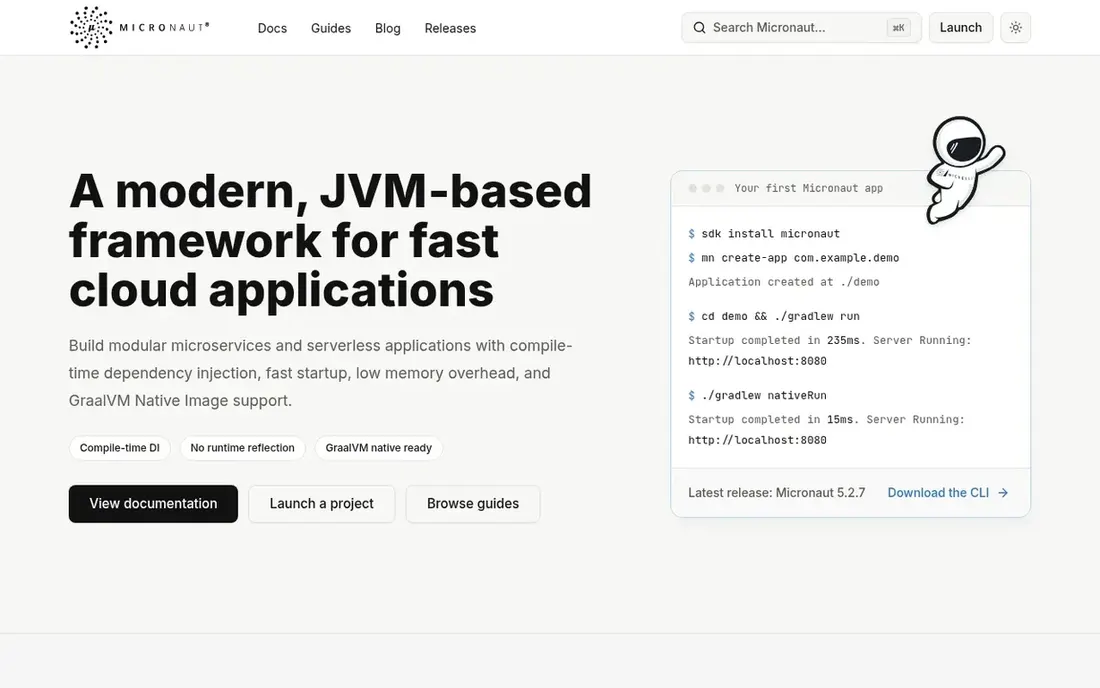
Micronaut targets modular microservices and serverless apps. Micronaut is a modern, JVM-based, full-stack framework for building modular, easily testable microservice and serverless applications. It centres on low overhead and quick startup, making it a good match for teams building distributed systems.
Drawbacks to consider: Fewer learning resources available.
As a newer framework, it has fewer learning resources and a smaller community compared with Spring Boot. If you prefer a more established ecosystem, Spring Boot may be the safer choice. Micronaut shows no starting price here, so confirm the cost on the vendor site. On free options: Not stated.
- Full-stack framework for JVM
- Easily testable modular design
- Less established than Spring
Jakarta EE
Best for: Enterprise Java standardization
Pick Jakarta EE if this describes you: enterprise Java standardization. If you want a simplified, convention-based setup, Spring Boot might be more suitable.
Jakarta EE shows no starting price here, so confirm the cost on the vendor site. Trial and free access: Not stated.
Where it is weaker: Configuration can be verbose.
- Open source and vendor-neutral
- Cloud-native enterprise Java focus
- Needs a compatible runtime
Spring Boot
Best for: Enterprise-grade Java web applications
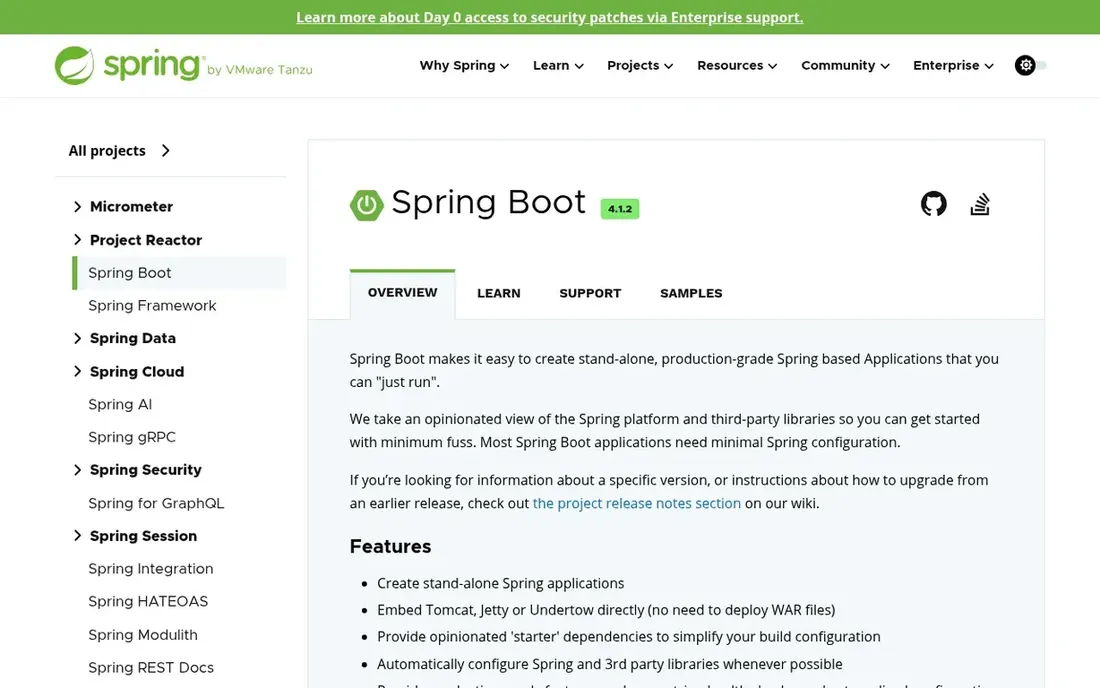
Spring Boot works best for enterprise-grade Java web applications. It eases configuration and provides a wide set of integrations, making it a typical choice for enterprise teams and developers who want a proven, full-featured foundation.
Its thorough nature can introduce complexity and higher resource usage for light applications. No starting price is listed for Spring Boot here; confirm pricing on the vendor site. Trial and free access: Not stated.
The main drawbacks: Higher memory footprint than some alternatives.
- Convention over configuration cuts setup
- Capable community and integration support
- Can feel heavy for small projects
Vaadin
Best for: Server-side UI development in Java
Vaadin targets server-side UI development in Java. Vaadin is an open-source Java web framework for building modern enterprise applications with a unified stack, built-in security, and enterprise-grade UI components.
Honest limits: UI approach may not fit all architectures.
Worth adding: Vaadin is primarily centred on server-side UI development, so it may not be the best fit for API-first or light microservices. What you pay to start with Vaadin: $175 per developer per month. Vaadin includes a free tier.
- Built-in security features
- Enterprise-grade UI components
- Less suited for API-only services
Play Framework
Best for: High-velocity web apps with Java and Scala
Where Play Framework fits: high-velocity web apps with Java and Scala. It gives you a reactive, non-blocking model and supports both languages, making it right for teams that value developer productivity.
Also, if you prefer a more traditional, widely adopted stack, Spring Boot may be a better fit. Check the vendor site for Play Framework pricing; none is listed in this comparison. On free options: Not stated.
Trade-offs to know: Reactive model has a ramp-up time.
- High-velocity development model
- Scalable and modern architecture
- Smaller community than Spring
How we chose
We compared the tools on published pricing, free plan or trial availability, feature coverage for java frameworks for web development, and the limits each vendor documents. Treat prices as a snapshot: vendors change plans often, so check the vendor site for the figure that applies today. We ordered the tools by general fit, then by how clearly pricing is shown, then by free access. A buyer with unusual needs may reorder them.
Before you commit
- Ask Micronaut, Jakarta EE, Spring Boot and Play Framework for a written quote, since no starting price is shown.
- Look at the free plan from Vaadin closely: its caps decide whether it is usable for real work.
- Before choosing Micronaut, weigh its main limit: less established than Spring.
- The entry price of Play Framework is only the starting point; model the full cost with seats and extras.
- Verify that exporting from Vaadin is possible on your plan and covers all your records.
FAQ
What is the difference between Jakarta EE and Spring Boot?
Jakarta EE is a standardized set of enterprise Java APIs requiring a compatible runtime, whereas Spring Boot is an opinionated framework with built-in defaults. More specifically, Spring Boot commonly gives you quicker setup, whereas Jakarta EE emphasizes portability and vendor neutrality.
How are the tools for java frameworks for web development ordered?
Micronaut sits first and Play Framework last because the order follows typical fit for java frameworks for web development, then price clarity and free access. It is a judgement call, so read each profile for fit and limits.
Is Micronaut the right pick for everyone comparing java frameworks for web development?
No single tool suits every team. Micronaut comes first because it fits modular microservices and serverless apps, while Jakarta EE suits enterprise Java standardization and Spring Boot suits enterprise-grade Java web applications. Match the tool to your own size, budget and workflow before deciding.
Which options for java frameworks for web development have a free plan?
Vaadin is the only tool in this list with a free plan. Free plans usually cap users, projects or features, so check the limits on the vendor page.
Do these tools publish their prices?
Not all of them. Micronaut, Jakarta EE, Spring Boot and Play Framework publish no starting price, so expect a quote request for those. The rest, Vaadin included, show a starting price, though seats and billing terms still change the final cost.
Is Spring Boot right for beginners?
Spring Boot is widely used and has broad documentation and community support, which can help beginners. Even so, its breadth can be overwhelming, so starting with more straightforward projects is advisable.
Sources
- https://micronaut.io
- https://jakarta.ee
- https://spring.io/projects/spring-boot
- https://vaadin.com
- https://www.playframework.com