Best Python Web Frameworks for Remote Teams for 2026: Our 5 Vetted Picks
Weighing the best python web frameworks for remote teams? We lined up 5 products by cost, free access and fit. Each pick lists its main limit. Prices included.
- Editor's choiceFalcon
Minimal, quick, and secure APIs
Starts atPricing on requestVisit falconframework.orgFull review - Great alternativeTornado
Long-lived connections and live features
Starts atPricing on requestVisit tornadoweb.orgFull review - Also considerPyramid
Apps that grow from small to large
Starts atPricing on requestVisit trypyramid.comFull review
Direct answer
Falcon is the first pick on this list for minimal, quick, and secure APIs. Alternatives: Tornado for long-lived connections and live features, and Pyramid for apps that grow from small to large. Free plan facts and limits for all 5 tools follow. None of these vendors publish plan prices, so pricing is on request for every option.
TL;DR:
- Falcon takes the first slot, best suited to minimal, quick, and secure APIs.
- No starting price is shown for any of the 5 tools, Falcon and Flask included, so plan time for sales calls.
- None of the 5 tools, from Falcon to Flask, has a free plan, so budget for a subscription or use a trial.
- Before buying Pyramid, weigh this: more decisions required up front.
- For minimal services and rapid prototypes, Flask is worth a look.
Last checked November 2026. Pricing on request: vendors did not publish plan prices when this guide was last checked (November 2026), so ask each vendor for a written quote.
Quick comparison
| Tool | Best for | Starts at | Free plan? | |
|---|---|---|---|---|
| Falcon | Minimal, quick, and secure APIs | Pricing on request | Not stated | Visit |
| Tornado | Long-lived connections and live features | Pricing on request | Not stated | Visit |
| Pyramid | Apps that grow from small to large | Pricing on request | Not stated | Visit |
| Django | Full-featured, convention-driven web projects | Pricing on request | Not stated | Visit |
| Flask | Minimal services and rapid prototypes | Pricing on request | Not stated | Visit |
Python Web Frameworks for Remote Teams, one by one
If you are comparing python web frameworks for remote teams, this page covers 5 tools in one place: what each is best for, what it costs to start, whether it has a free plan, and the main limit to know about.
Falcon
Best for: Minimal, quick, and secure APIs
Falcon was built for minimal, quick, and secure APIs. Falcon is a minimal, quick, and secure web framework for Python, pitched at building REST APIs and microservices. Its lean design appeals to remote teams that want predictable performance and a small, auditable code surface.
Where it is weaker: Fewer built-in conveniences.
Choose Falcon when minimalism and API performance are central, and a larger framework would add unnecessary weight. Falcon gives you fewer built-in conveniences than full-stack frameworks, so teams may have to add libraries for typical tasks. Its ecosystem is smaller, which can mean fewer examples for unusual requirements. Falcon shows no starting price here, so confirm the cost on the vendor site. Free access: Not stated.
- Decent fit for REST APIs
- Emphasis on security and reliability
- Smaller ecosystem than mainstream frameworks
Tornado
Best for: Long-lived connections and live features
Tornado is designed for long-lived connections and live features. Tornado's async model predates modern asyncio conventions, so developers familiar with newer frameworks may face a ramp-up time. Its ecosystem for typical web tasks is smaller than that of general-purpose frameworks.
Choose Tornado when live networking is the core requirement instead of a conventional website. Its built-in server can ease deployment for these workloads. No starting price is listed for Tornado here; confirm pricing on the vendor site. Free access: Not stated.
Honest limits: Smaller ecosystem for typical web tasks.
- Comes with its own web server
- Designed for asynchronous networking
- Older async style differs from asyncio norms
Pyramid
Best for: Apps that grow from small to large
Pyramid works best for apps that grow from small to large. Pyramid is a light framework meant to take small web apps into big web apps.
Downsides: Smaller community than mainstream choices.
It gives you adaptable routing and configuration, letting teams choose components as needs grow. Its community is smaller than those of Django or Flask, so fewer ready-made answers may be available. This comparison lists no price for Pyramid; ask the vendor. On free options: Not stated.
- Adaptable component choices
- Scales from small to large applications
- More decisions required at the start
Django
Best for: Full-featured, convention-driven web projects
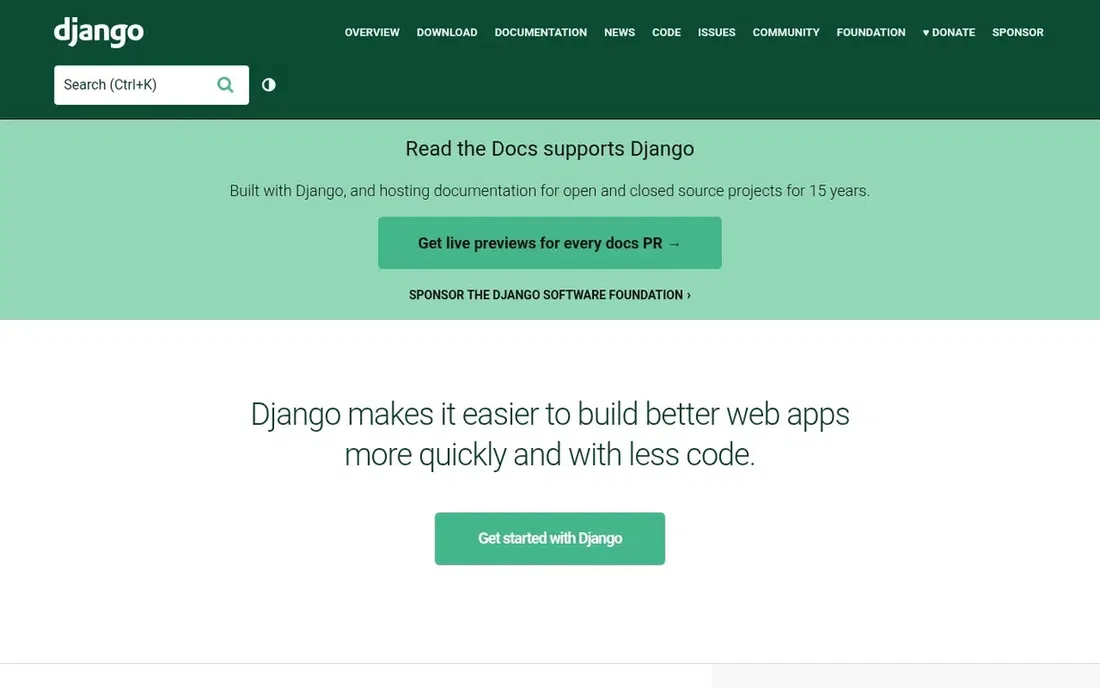
For full-featured, convention-driven web projects, Django is a natural candidate. Django is a full-stack framework that ships with an ORM, an admin interface, authentication, and plenty of other components. For a minimal footprint or a purely async API, a lighter framework may be a better fit.
In practice, the framework's size can slow down very small services or prototypes. Its opinions may clash with teams that prefer assembling their own stack. Choose Django when shared conventions and built-in features matter more than minimalism. Check the vendor site for Django pricing; none is listed in this comparison. Free options: Not stated.
Watch-outs: Less flexible for unconventional architectures.
- Solid conventions aid team consistency
- Mature documentation and ecosystem
- Can feel heavy for small services
Flask
Best for: Minimal services and rapid prototypes
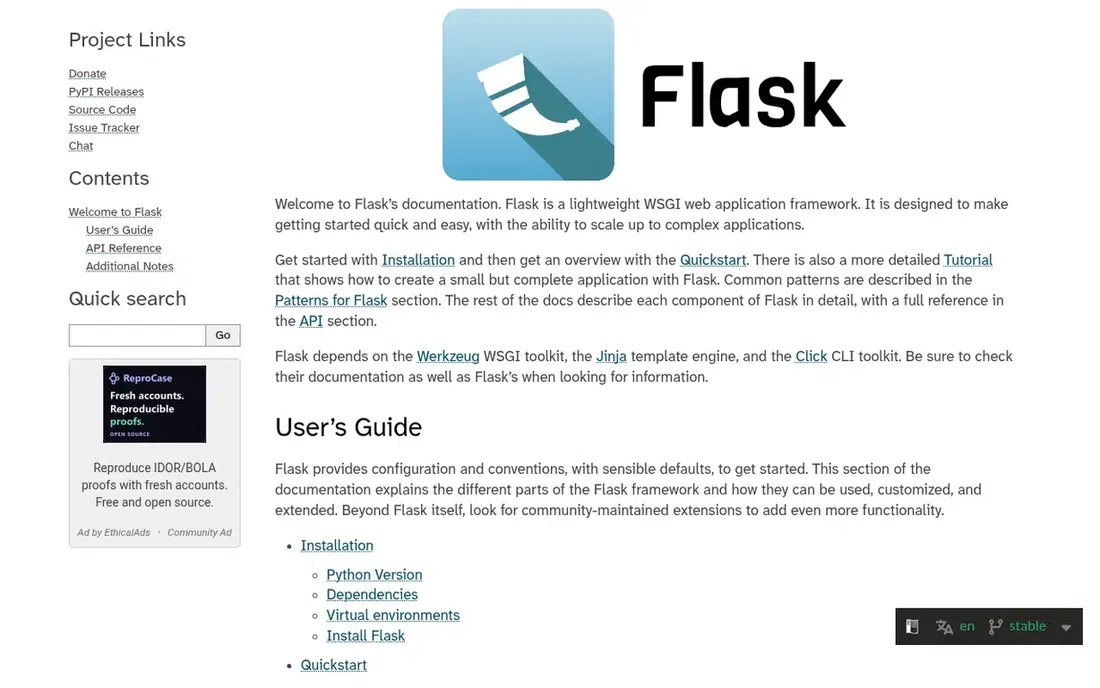
Flask is built with minimal services and rapid prototypes in mind. Its simplicity makes it simple for remote developers to read and contribute to a codebase without learning a large framework.
Since Flask leaves numerous decisions to the team, bigger projects can drift without clear internal standards, and extension choices add maintenance work. It is less suited to teams that want a ready-made structure for complicated applications. This comparison lists no price for Flask; ask the vendor. Free options: Not stated.
Where it is weaker: Fewer built-in conventions.
- Quick to learn for new team members
- A decent match for small APIs and prototypes
- Teams must choose and maintain extensions
Selection criteria
We compared the tools on published pricing, free plan or trial availability, feature coverage for python web frameworks for remote teams, and the limits each vendor documents. Figures are shown as the vendors publish them. Billing terms, seat minimums and add-ons can change the real cost. The ranking is editorial: typical fit first, then clear pricing, then free access. If your needs are unusual, read the profiles rather than relying on position.
Pre-purchase checklist
- Ask each vendor, from Falcon to Flask, for a written quote; none of them publishes a starting price.
- Before choosing Falcon, weigh its main limit: fewer built-in conveniences.
- Let daily users try Falcon on real work; their feedback beats any feature checklist.
- List the apps you already depend on and check that Django supports each one on the plan you would buy.
- Ask Tornado about contract length, onboarding fees and user minimums before you sign.
FAQ
Does any tool for python web frameworks for remote teams here have a free plan?
No tool in this list, Falcon and Flask included, has a permanent free plan. Trials and quotes are the usual route, so plan a short evaluation period.
Can I try these tools before paying?
Not by default. None of the tools, from Falcon to Flask, lists a free plan or a free trial here, so ask each vendor for a demo before committing.
Do these tools publish their prices?
No. None of the tools, from Falcon to Flask, shows a fixed starting price here, so budget time for quotes.
How are the tools for python web frameworks for remote teams ordered?
The order follows typical fit for python web frameworks for remote teams, with Falcon first and Flask last, then price clarity and free access. It is editorial judgement, not a score, so another team could rank the tools differently.
Which Python framework is a good match for a remote team new to web development?
For most readers this guide would start with Falcon, built for minimal, quick, and secure APIs. Tornado is the alternative for long-lived connections and live features, and Pyramid for apps that grow from small to large. The right answer depends on budget and workflow.
Sources
- https://falconframework.org
- https://www.tornadoweb.org
- https://trypyramid.com
- https://www.djangoproject.com
- https://flask.palletsprojects.com