Choosing Augmented Reality SDK Software for Enterprise in 2026: 5 Options Compared
Searching for the best augmented reality SDK software for enterprise? Here are 5 options with prices and free plans. Real limits included. Pick with confidence.
- Editor's choice
 8th Wall
Open source web-based AR and 3D
Starts atSee websiteVisit 8thwall.comFull review - Great alternativeWikitude
Cross-platform AR SDK integration
Starts atSee websiteVisit wikitude.comFull review - Also considerARKit
IOS and iPadOS enterprise deployments
Starts atSee websiteVisit developer.apple.comFull review
Direct answer
Start with 8th Wall if you need open source web-based AR and 3D. Listed starting prices: Unity from $210.00 per month. Wikitude is the stronger choice for cross-platform AR SDK integration, while ARKit suits iOS and iPadOS enterprise deployments. The other 2 tools in the list cover narrower or pricier cases.
TL;DR:
- 8th Wall is the opening pick, best for open source web-based AR and 3D.
- Unity is the one to check for cross-platform AR and XR builds.
- Neither 8th Wall nor Unity, nor any of the other 3 tools, has a permanent free plan; trials and quotes are the norm.
- Check the limits for ARCore before you commit: tied to Google's ecosystem.
Last checked November 2026. Prices and plan details were read from the vendors' own pages in November 2026; vendors change plans often, so confirm the current price on the vendor site before you buy.
Quick comparison
| Tool | Best for | Starts at | Free plan? | |
|---|---|---|---|---|
| 8th Wall | Open source web-based AR and 3D | See website | Not stated | Visit |
| Wikitude | Cross-platform AR SDK integration | See website | Not stated | Visit |
| ARKit | IOS and iPadOS enterprise deployments | See website | Not stated | Visit |
| ARCore | Android and cross-device AR foundations | See website | Not stated | Visit |
 Unity | Cross-platform AR and XR builds | $210.00 per month | Free trial | Visit |
Augmented Reality SDK Software for Enterprise, one by one
Choosing augmented reality SDK software for enterprise usually comes down to price, fit and limits. This LinkVetted guide sets 5 tools side by side on those three points, with the facts kept short and checkable.
In short, 8th Wall is for open source web-based AR and 3D. That orientation appeals to enterprises that want web-delivered AR without asking users to install a native app, which can ease campaigns, training links and internal demos.
Trade-offs to know: Needs confirmation of current project status.
Choose 8th Wall when browser delivery and open tooling are priorities over native system depth. Pricing for 8th Wall is not stated here, so ask the vendor for current figures. As for free access: Not stated.
- Focus on immersive AR and interactive 3D
- Open source positioning
- Web AR relies on device browser support
Wikitude
Best for: Cross-platform AR SDK integration
Wikitude targets cross-platform AR SDK integration. Wikitude is positioned as a cross-platform augmented reality SDK, which makes it relevant for enterprises that want to add AR features into existing mobile applications without committing to a single operating system. In daily use, teams building image recognition, location-based or overlay experiences have historically looked to SDKs like this for integration-friendly tooling.
Where it shines: Established AR tooling.
In daily use, teams needing the broadest native product backing may prefer ARCore or ARKit, and those wanting full rendering control may lean toward an engine. From a buyer's view, verify details on the vendor site. In daily use, since vendor pages and support terms change, confirm current system coverage and maintenance status straight before committing. This comparison lists no price for Wikitude; ask the vendor. Free options: Not stated.
Drawbacks to consider: Less prominent in recent system news.
- Cross-platform SDK positioning
- Suited to app integration
- Needs vendor confirmation of current support
ARKit
Best for: IOS and iPadOS enterprise deployments
Think of ARKit for iOS and iPadOS enterprise deployments. ARKit is Apple's framework for building augmented reality experiences on iOS and iPadOS, which Apple describes as among the biggest AR systems.
In daily use, the obvious limit is product scope: ARKit does not handle Android or other devices, so mixed-device fleets need a second path. Teams wanting one codebase across products commonly look to a cross-platform engine instead. ARKit shows no starting price here, so confirm the cost on the vendor site. On free options: Not stated.
Honest limits: Apple products only.
- Clear developer documentation
- Large iOS and iPadOS user base
- Needs Apple tooling
ARCore
Best for: Android and cross-device AR foundations
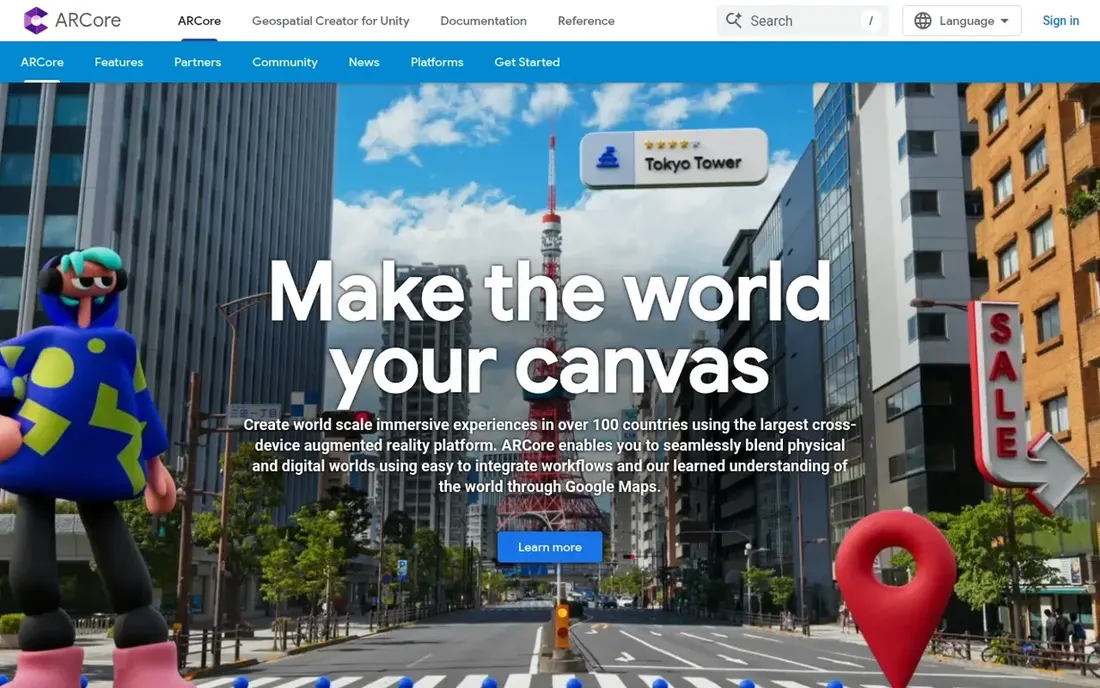
ARCore targets Android and cross-device AR foundations. Consider ARCore first when Android reach and Google ecosystem alignment matter most. Since it is a system SDK, teams needing deep iOS parity will normally pair it with Apple's equivalent or a cross-platform engine.
Downsides: Less direct for Apple-only builds.
ARCore is Google's system for building augmented reality experiences that blend digital content with the physical world. Its documentation points developers toward tools for creating world-scale, immersive AR, making it a sensible starting point for enterprise teams whose users are largely on Android or who want a widely documented foundation. This comparison lists no price for ARCore; ask the vendor. Free plan details: Not stated.
- Supports world-scale immersive experiences
- Backed by Google's developer documentation
- Tied to Google's ecosystem
Unity was built for cross-platform AR and XR builds. For enterprise AR, it gives you a single workflow for teams that require rich 3D content, simulation or multi-platform deployment instead of a narrow AR layer.
Reasons to shortlist it: Builds for mobile, desktop.
In daily use, Unity is a widely used 3D engine for developing, deploying and expanding applications across mobile, PC, console and XR, including industrial use cases. The starting price for Unity: $210.00 per month. Free plan details: Free trial. Points against: Needs engine expertise.
- Console and XR
- Mature 3D engine workflow
- Heavier than a focused AR SDK
How we compared the tools
LinkVetted looked at what each vendor publishes: pricing, plan limits, feature coverage for augmented reality SDK software for enterprise and stated drawbacks. No hands-on testing is claimed. Where a price is missing, the vendor does not list one publicly or ties it to a quote. Always confirm before budgeting. We ordered the tools by general fit, then by how clearly pricing is shown, then by free access. A buyer with unusual needs may reorder them.
Before you commit
- Get a written quote from 8th Wall, Wikitude, ARKit and ARCore; the list shows no starting price for them.
- Use real work to test the free trial from Unity, rather than a demo project.
- Before choosing 8th Wall, weigh its main limit: web AR relies on device browser support.
- Before rolling out Wikitude, verify the integrations your workflow depends on.
- Look at the renewal terms for Unity: auto-renewal, notice periods and price changes can matter more than the first-year price.
FAQ
When should a team choose Unity over a dedicated AR SDK?
Unity makes sense when the project needs rich 3D content, XR support or deployment across numerous systems from one engine. A dedicated SDK is normally lighter when you only need AR features inside an existing mobile app.
What is the cheapest option for augmented reality SDK software for enterprise in this list?
On published monthly entry prices, Unity is the lowest here at $210.00 per month. Entry price is only part of the cost, because seats, add-ons and billing terms can change the total. Prices, free plan details and limits for all 5 tools in this Augmented reality SDK software for enterprise roundup sit on the individual cards above.
How are the tools for augmented reality SDK software for enterprise ordered?
8th Wall sits first and Unity last because the order follows typical fit for augmented reality SDK software for enterprise, then price clarity and free access. It is a judgement call, so read each profile for fit and limits.
Do these tools publish their prices?
Not all of them. 8th Wall, Wikitude, ARKit and ARCore publish no starting price, so expect a quote request for those. The rest, Unity included, show a starting price, though seats and billing terms still change the final cost.
Does any tool for augmented reality SDK software for enterprise here have a free plan?
No tool in this list, 8th Wall and Unity included, has a permanent free plan. Unity offer a trial. Trials and quotes are the usual route, so plan a short evaluation period.
Sources
- https://www.8thwall.com
- https://www.wikitude.com
- https://developer.apple.com/augmented-reality
- https://developers.google.com/ar
- https://unity.com