Best Enterprise Cloud Service Comparison in 2026: 8 Providers Compared
Our best enterprise cloud service comparison for 2026 covers AWS, Azure, Google Cloud and more on pricing, services, hybrid options and free tiers in detail.
- Editor's choice
 Amazon Web Services
Widest service range
Starts atSee websiteVisit aws.amazon.comFull review - Great alternative
 Microsoft Azure
Microsoft-heavy enterprises
Starts atSee websiteVisit azure.microsoft.comFull review - Also consider
 Google Cloud
Data, AI and Kubernetes
Starts atSee websiteVisit cloud.google.comFull review
TL;DR:
- AWS is our pick for most enterprises, with the widest service catalogue and the deepest global reach.
- Azure wins for Microsoft-heavy organisations, thanks to hybrid tools and licence benefits for Windows and SQL Server workloads.
- Google Cloud is the strongest choice for data analytics, AI and Kubernetes, with simpler sustained-use discounts.
- Oracle Cloud and IBM Cloud suit specific enterprise workloads, including databases and regulated industries, rather than general use.
- Headline prices mislead: egress, support and licence costs often matter more than the hourly compute rate.
Quick comparison
| Tool | Best for | Starts at | Free plan? | |
|---|---|---|---|---|
| Amazon Web Services | Widest service range | See website | Yes | Visit |
| Microsoft Azure | Microsoft-heavy enterprises | See website | Yes | Visit |
| Google Cloud | Data, AI and Kubernetes | See website | Yes | Visit |
 IBM Cloud | Regulated and hybrid workloads | See website | Yes | Visit |
 Oracle Cloud Infrastructure | Database-heavy enterprises | See website | Yes | Visit |
 Alibaba Cloud | Asia-Pacific reach | See website | Yes | Visit |
 DigitalOcean | Simpler cloud projects | See website | Yes | Visit |
 Akamai Cloud | Predictable pricing fans | See website | Yes | Visit |
The best enterprise cloud services compared
Enterprise cloud choice is rarely about one service. It is about service breadth, global regions, hybrid options, AI tools, support quality and the total bill once data leaves the cloud. These eight providers all run production enterprise workloads today, but they suit different starting points.
AWS is the default enterprise cloud for a reason. Its catalogue covers compute, storage, databases, analytics, machine learning and industry tools in more depth than any rival, and its partner network means most enterprise software already runs well on it. A free tier lets teams test core services before committing, and reserved pricing cuts costs for steady workloads.
The honest costs are complexity and egress. Bills combine compute, storage, data transfer, support and dozens of smaller charges, so finance teams need cost tooling from day one. Egress fees in particular punish workloads that serve large amounts of data out. If your team has cloud skills or a good partner, AWS gives you the most room to grow.
- Largest service catalogue
- Most global regions
- Mature enterprise support and partner network
- Pricing is complex
- Egress and support costs add up
- Console can overwhelm new teams
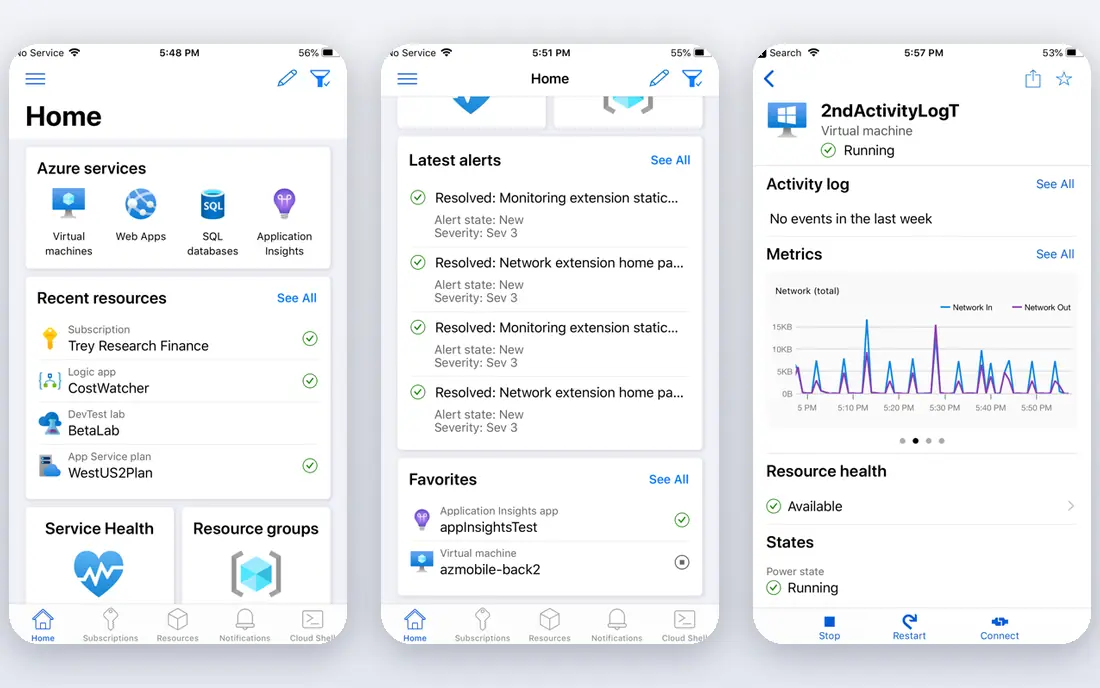
Azure is the natural pick if your organisation already runs Windows Server, Active Directory, SQL Server or Microsoft 365. Azure Arc extends management to on-premises servers, hybrid benefit can cut Windows and SQL Server licence costs sharply, and identity ties to Entra ID simplify sign-on and access control. A 200 dollar credit plus free services helps teams trial it.
Azure is not automatically cheaper. Its pricing is just as layered as AWS, and savings depend on your licence position and commitments. Service maturity also varies: core compute and data services are strong, while some newer offerings trail AWS equivalents. For Microsoft estates, though, the integration value usually outweighs those caveats.
- Best hybrid story with Azure Arc
- Licence benefits for Windows and SQL Server
- Deep Microsoft 365 ties
- Pricing complexity rivals AWS
- Some services lag AWS in maturity
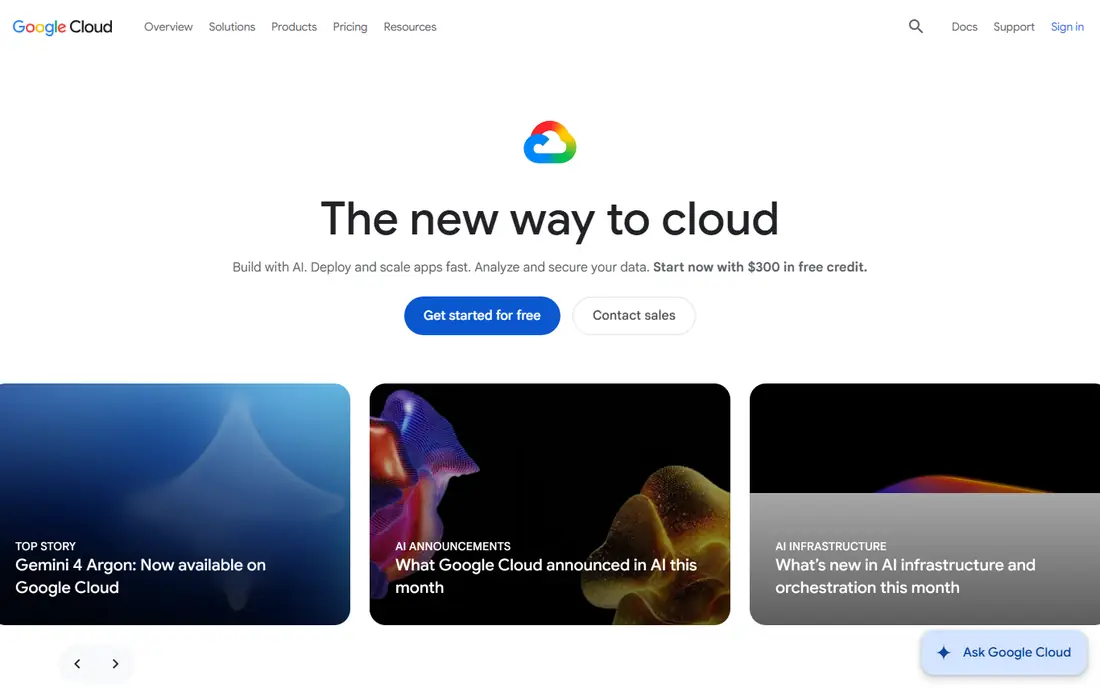
Google Cloud is the pick for data-heavy and AI-heavy work. BigQuery handles large analytical queries with little tuning, Vertex AI covers model training and serving, and Google Kubernetes Engine is widely regarded as the most polished managed Kubernetes service. Sustained-use discounts apply automatically when a VM runs most of the month, which simplifies pricing for steady workloads. A 300 dollar credit helps new accounts trial services.
Its catalogue is smaller than AWS, and some enterprise buyers find fewer local partners or industry-specific services. Pricing for egress can also bite, as with other hyperscalers. If analytics, AI or Kubernetes sit at the centre of your product, Google Cloud deserves to lead your shortlist.
- Strong BigQuery analytics
- Vertex AI and TPUs
- GKE is a leading managed Kubernetes service
- Smaller service catalogue than AWS
- Enterprise partner network is thinner in some regions
IBM Cloud suits enterprises that need hybrid deployment and strict control, especially in finance, healthcare and government-adjacent work. Its OpenShift-based platform runs consistently across on-premises and cloud environments, and IBM support teams understand regulated workloads well. A free tier covers basic services for trials.
The trade-off is scale. IBM has fewer regions and a narrower service catalogue than AWS, Azure or Google Cloud, so teams building consumer-scale products may hit gaps. For a regulated enterprise modernising existing IBM or Red Hat estates, however, IBM Cloud is a credible and often better-fitting choice than a general hyperscaler.
- Strong hybrid and regulated industry focus
- Red Hat OpenShift ties
- Enterprise support depth
- Smaller public cloud footprint than the top three
- Service range is narrower
Oracle Cloud Infrastructure, often called OCI, is the strongest home for Oracle Database and Oracle applications. Autonomous Database reduces admin work, performance for database workloads is a genuine strength, and its Always Free tier is more generous than most rivals, covering compute and database capacity at no cost within limits. That makes trials cheap and honest.
Outside Oracle workloads, its appeal narrows. The partner ecosystem and third-party service range are smaller, and teams with no Oracle estate may find AWS or Azure easier to staff. If Oracle databases anchor your business, OCI should be compared head to head with your current platform before any other provider.
- Strong Oracle database performance
- Generous Always Free tier
- Competitive pricing for database workloads
- Ecosystem is Oracle-centric
- Fewer third-party services than AWS or Azure
Alibaba Cloud is the leading choice for enterprises serving customers across China and the wider Asia-Pacific region. Its regional coverage, local compliance support and competitive pricing give it an edge where the top three have thinner footprints. A free trial helps teams test core compute and storage services.
For US or European enterprises with no Asia-Pacific focus, Alibaba Cloud is harder to justify. Its partner network and enterprise support presence are smaller outside Asia, and some buyers need extra compliance review. Treat it as a regional specialist: excellent where its regions matter, less compelling as a general global default.
- Strong Asia-Pacific region coverage
- Competitive compute pricing
- Broad service set in its home markets
- Smaller presence and partner network in the US and Europe
- Compliance review needed for some buyers
DigitalOcean appeals to enterprises that want cloud without hyperscaler complexity for a defined project. Droplets, managed databases, Kubernetes and app hosting are priced simply and set up quickly, and its documentation is unusually clear. That simplicity suits product teams, internal tools and smaller enterprise workloads that do not need hundreds of services.
It is not a like-for-like replacement for AWS or Azure at large enterprise scale. Compliance options, hybrid tooling and specialised services are thinner, and very large workloads may outgrow it. Use DigitalOcean where simplicity and predictable billing matter more than service breadth, and keep hyperscalers for your core platform.
- Simple pricing and interface
- Fast setup for virtual machines and managed databases
- Good docs
- Enterprise service range is narrower
- Fewer compliance and hybrid options than hyperscalers
Akamai Cloud, formerly Linode, combines straightforward virtual machines and managed services with Akamai edge network reach. Pricing is easier to predict than hyperscaler bills, which finance teams appreciate, and performance for web and content workloads is strong. Trials and free credits help teams validate a workload before migrating.
Like DigitalOcean, it cannot match the hyperscalers on service breadth or enterprise-specific tooling. Organisations needing managed AI platforms, deep analytics suites or complex hybrid setups will likely need a larger provider. For web-facing workloads where cost predictability matters, Akamai Cloud is a solid, underrated option.
- Clear, predictable pricing
- Strong global edge network
- Good performance for web workloads
- Service catalogue is smaller than hyperscalers
- Enterprise tooling is less deep
How we picked these
We compared official service catalogues, pricing pages, region lists and documentation, plus independent total-cost comparisons published in 2026. We weighted service breadth, hybrid options, data and AI strength, support, free tiers and real-world billing traps such as egress. Prices are listed as see website because enterprise cloud bills depend on instance type, region, commitments and data transfer, so a single starting price would mislead.
How to compare enterprise clouds fairly
Price the same workload on each provider: same virtual machine size, same storage, same database, same monthly data transfer out, and same support tier. Run that workload for a month if you can, since list prices hide egress and API charges. Check region availability for your customers, data residency rules for your industry, and whether your existing licences transfer. Finally, cost the team: a cheaper cloud that your engineers cannot run well is not cheaper.
Watch egress, support and licences
Egress is the classic surprise bill, since serving data to users costs far more than storing it. Support tiers also vary widely, from basic forums to paid business support with fast response times. Licence transfer rules, especially for Windows, SQL Server and Oracle, can swing a three-year total by hundreds of thousands of dollars. Get all three in writing before you sign a commitment.
FAQ
Which enterprise cloud is cheapest?
It depends on your workload. Google Cloud often wins for steady compute thanks to automatic sustained-use discounts, Azure wins for Microsoft-licensed workloads, and AWS wins when reserved pricing and service breadth matter. Price your exact workload, including egress and support, rather than trusting a headline hourly rate.
Should a large company use more than one cloud?
Many do, running different workloads where each provider is strongest, but multi-cloud adds management and integration cost. A single primary cloud with a second provider for a specific workload, such as analytics or a regional presence, is a common middle path. Avoid splitting one application across clouds unless you have a clear resilience reason.
What is the difference between AWS, Azure and Google Cloud?
AWS has the widest service range, Azure fits Microsoft estates and hybrid setups best, and Google Cloud leads on analytics, AI and Kubernetes. All three run global, enterprise-grade infrastructure. Your existing software, licences and team skills usually decide more than raw feature lists.
Do enterprise clouds offer free tiers?
Yes. AWS, Azure, Google Cloud, IBM Cloud and Oracle Cloud all offer free tiers or trial credits, with Oracle Always Free among the most generous. Free tiers cover limited capacity and time, so they suit trials and small projects rather than production workloads. Check expiry terms before you build on them.
How long does an enterprise cloud migration take?
Small workloads can move in weeks, while a full enterprise platform migration often takes six to eighteen months, including testing, security review and staff training. A phased move, starting with a low-risk workload, reduces risk and gives your team time to learn the new platform before critical systems move.