Realistic Java Frameworks in 2026: The 6 Best Options Side by Side
Comparing the best realistic java frameworks? 6 contenders, each with entry cost, free tier and best-fit buyer. Concise write-ups of every option. Plain facts.
- Editor's choicePlay Framework
Scalable web apps in Java and Scala
Starts atPricing on requestVisit playframework.comFull review - Great alternativeJakarta EE
Enterprise Java standardization and modernization
Starts atPricing on requestVisit jakarta.eeFull review - Also considerDropwizard
Opinionated REST services with operational focus
Starts atPricing on requestVisit dropwizard.ioFull review
Direct answer
If you need scalable web apps in Java and Scala, Play Framework is the first tool to look at here. For a different need, Jakarta EE covers enterprise Java standardization and modernization and Dropwizard covers Opinionated REST services with operational focus. Free plan facts and limits for all 6 tools follow. None of these vendors publish plan prices, so pricing is on request for every option.
TL;DR:
- Play Framework sits first on this list: scalable web apps in Java and Scala.
- A permanent free plan is missing from all 6 tools, Play Framework and Quarkus included; plan for a trial or a premium start.
- Quarkus suits cloud-native apps with native executable goals.
- Play Framework, Quarkus and the 4 others all sell by quote; expect sales conversations before you see a price.
Last checked November 2026. Pricing on request: vendors did not publish plan prices when this guide was last checked (November 2026), so ask each vendor for a written quote.
Quick comparison
| Tool | Best for | Starts at | Free plan? | |
|---|---|---|---|---|
| Play Framework | Scalable web apps in Java and Scala | Pricing on request | Not stated | Visit |
| Jakarta EE | Enterprise Java standardization and modernization | Pricing on request | Not stated | Visit |
| Dropwizard | Opinionated REST services with operational focus | Pricing on request | Not stated | Visit |
| Spring Boot | General-purpose Spring application development | Pricing on request | Not stated | Visit |
| Vert.x | Reactive, non-blocking JVM applications | Pricing on request | Not stated | Visit |
| Quarkus | Cloud-native apps with native executable goals | Pricing on request | Not stated | Visit |
Tool-by-tool breakdown
LinkVetted compared 6 realistic java frameworks. The goal is a practical shortlist: published prices, free plan facts, best-fit use cases and honest limits for every entry.
Play Framework
Best for: Scalable web apps in Java and Scala
In short, Play Framework is for scalable web apps in Java and Scala. Play Framework is presented as a high-velocity web framework for building modern and scalable web apps with Java and Scala.
It appeals to groups already comfortable with Scala or functional patterns. No starting price is listed for Play Framework here; confirm pricing on the vendor site. Free access: Not stated.
Limits to weigh: Different conventions than servlet-based stacks.
- High-velocity development model
- Designed for modern scalable web apps
- Scala option layers on team skill needs
Jakarta EE
Best for: Enterprise Java standardization and modernization
Jakarta EE is aimed squarely at enterprise Java standardization and modernization. Jakarta EE is described as the open source future of cloud native enterprise Java, pitched at protecting investments in Java EE whereas modernizing enterprise applications.
Since it is a specification, you still choose and operate a compatible implementation, which brings a decision step. Teams wanting a single batteries-included framework may find Spring Boot or Quarkus more direct. Pricing for Jakarta EE is not stated here, so ask the vendor for current figures. Free access: Not stated.
What to check first: Specification-driven setup can feel formal.
- Vendor-neutral specification
- Path to modernize existing Java EE work
- Needs a compatible runtime
Dropwizard
Best for: Opinionated REST services with operational focus
Where Dropwizard fits: Opinionated REST services with operational focus. Dropwizard is a framework for building RESTful web services that brings together well-known Java libraries into one opinionated stack.
This comparison lists no price for Dropwizard; ask the vendor. As for free access: Not stated.
Limits to weigh: Smaller modern ecosystem than Spring.
- Bundles typical service concerns
- Straightforward REST service structure
- Less adaptable for unusual architectures
Spring Boot
Best for: General-purpose Spring application development
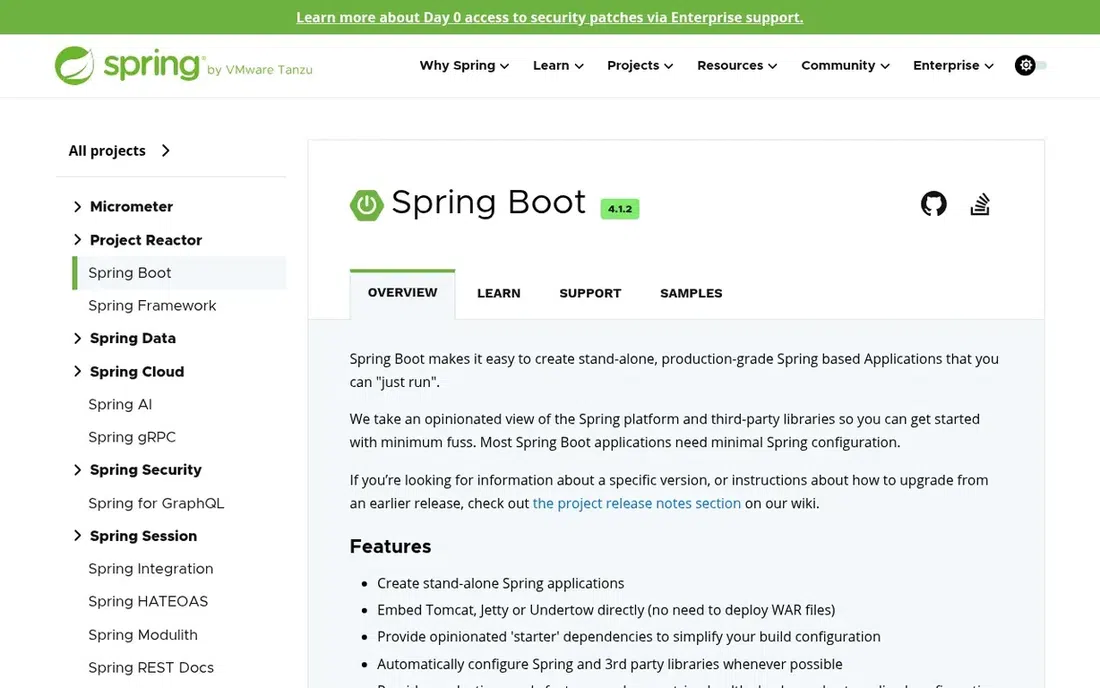
Think of Spring Boot for general-purpose Spring application development. Spring Boot is the opinionated entry point to the Spring ecosystem, built to let you stand up Java applications with minimal configuration.
Trade-offs to know: Startup and memory profile may not suit native-first goals.
It does well when you expect to lean on Spring libraries over time. Spring Boot shows no starting price here, so confirm the cost on the vendor site. Free options: Not stated.
- Solid fit for teams already using Spring
- Convention-based setup for common needs
- Can feel heavy for small services
Vert.x
Best for: Reactive, non-blocking JVM applications
Vert.x serves Reactive, non-blocking JVM applications. Eclipse Vert.x is a toolkit for reactive applications on the JVM, built around non-blocking, event-driven handling.
Upsides: Reactive programming model.
The main drawbacks: Steeper ramp-up time.
If your team prefers straightforward request handling, Spring Boot or Dropwizard may be a better fit. Also, the reactive style demands care: blocking calls can undermine the model, and the ramp-up time is steeper than convention-based frameworks. Pricing for Vert.x is not stated here, so ask the vendor for current figures. On free options: Not stated.
- Non-blocking event-driven design
- Runs on the JVM
- Needs discipline around blocking calls
Quarkus
Best for: Cloud-native apps with native executable goals
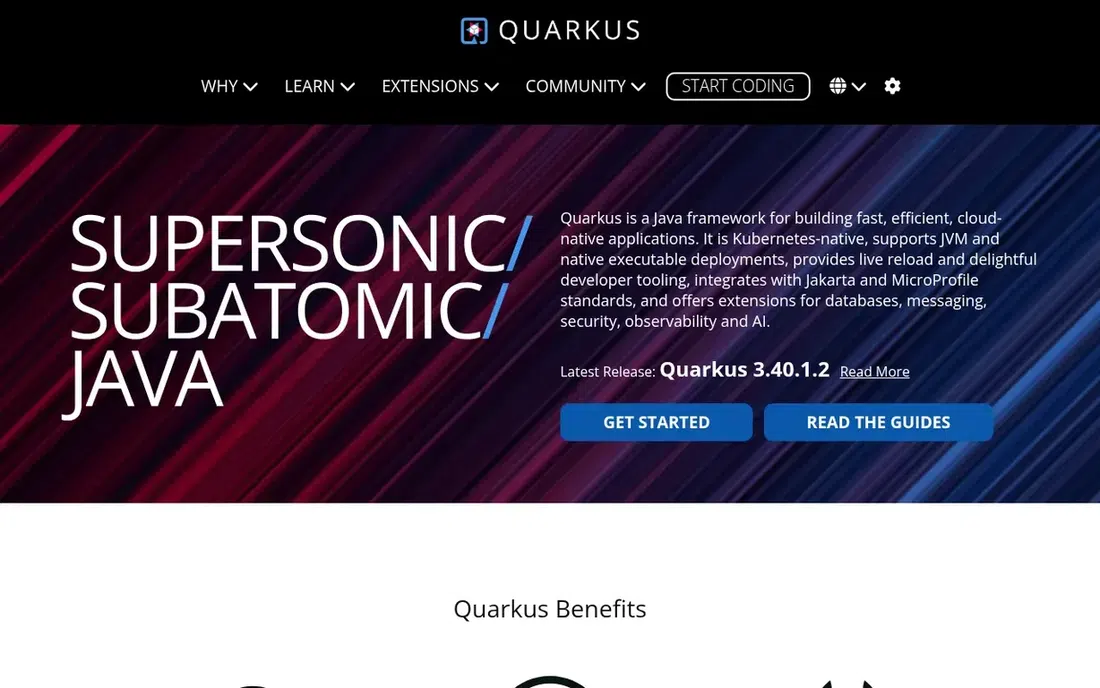
Choose Quarkus for cloud-native apps with native executable goals. Quarkus is a Java framework for building quick, efficient, cloud-native applications.
Honest limits: Native builds add build-time complexity.
Also, native compilation introduces additional build steps and can constrain which libraries work smoothly, so teams with heavy external dependencies should verify extension support first. Pricing for Quarkus is not stated here, so ask the vendor for current figures. Free access: Not stated.
- Kubernetes-native design
- JVM and native executable deployments
- Some libraries need specific extensions
Our selection method
LinkVetted used vendor pricing pages and product documentation as the base, then compared plans, free access and documented limits for 6 tools. Where a price is missing, the vendor does not list one publicly or ties it to a quote. Always confirm before budgeting. Tools are placed by general fit for realistic java frameworks, with price clarity and free access as tie-breakers. A different team can reasonably rank them differently.
Questions to settle before buying
- Ask each vendor, from Play Framework to Quarkus, for a written quote; none of them publishes a starting price.
- Read the limits listed for Play Framework first: different conventions than servlet-based stacks.
- Look at the help docs and support options for Quarkus before you commit.
- Check the integration list for Jakarta EE against the tools you run today, and note which ones need a higher plan.
- Involve the people who will use Dropwizard daily; a short pilot beats a long feature checklist.
FAQ
Does any tool for realistic java frameworks here have a free plan?
No tool in this list, Play Framework and Quarkus included, has a permanent free plan. Trials and quotes are the usual route, so plan a short evaluation period.
Is Play Framework the right pick for everyone comparing realistic java frameworks?
No single tool suits every team. Play Framework comes first because it fits scalable web apps in Java and Scala, while Jakarta EE suits enterprise Java standardization and modernization and Dropwizard suits Opinionated REST services with operational focus. Match the tool to your own size, budget and workflow before deciding.
Can I try these tools before paying?
Not by default. None of the tools, from Play Framework to Quarkus, lists a free plan or a free trial here, so ask each vendor for a demo before committing.
Do these tools publish their prices?
No. None of the tools, from Play Framework to Quarkus, shows a fixed starting price here, so budget time for quotes.
When should I choose Quarkus over Spring Boot?
Quarkus is worth considering when Kubernetes-native operation, native executable deployment and quick developer feedback loops are central to your goals. Verify extension support for your dependencies first.
Sources
- https://www.playframework.com
- https://jakarta.ee
- https://www.dropwizard.io
- https://spring.io/projects/spring-boot
- https://vertx.io
- https://quarkus.io