5 RDF Databases for Startups Worth Shortlisting in 2026
Comparing the best RDF databases for startups? 5 contenders, each with entry cost, free tier and best-fit buyer. Prices and drawbacks included. No filler.
- Editor's choiceAllegroGraph
Knowledge graph system with neuro-symbolic AI
Starts atSee websiteVisit allegrograph.comFull review - Great alternativeAmazon Neptune
Completely managed graph database on AWS
Starts atSee websiteVisit aws.amazon.comFull review - Also consider
 Neo4j
Connected data queries at scale
Starts at$0.09 per GB per hourVisit neo4j.comFull review
Direct answer
AllegroGraph leads the list, best for knowledge graph system with neuro-symbolic AI. Listed starting prices: Neo4j from $0.09 per GB per hour. Amazon Neptune is the stronger choice for completely managed graph database on AWS, while Neo4j suits connected data queries at scale. The full list of 5 tools follows, with prices and free plan facts.
TL;DR:
- AllegroGraph is the opening pick, best for knowledge graph system with neuro-symbolic AI.
- For adaptable multi-model data management, MarkLogic is worth a look.
- A free plan is available from 2 of the 5 tools: Amazon Neptune, Neo4j.
- Pricing for AllegroGraph, Amazon Neptune, GraphDB and MarkLogic is quote-based, which adds a sales step before you can compare cost.
- Before buying GraphDB, weigh this: requires semantic modeling skills.
Last checked November 2026. Prices and plan details were read from the vendors' own pages in November 2026; vendors change plans often, so confirm the current price on the vendor site before you buy.
Quick comparison
| Tool | Best for | Starts at | Free plan? | |
|---|---|---|---|---|
| AllegroGraph | Knowledge graph system with neuro-symbolic AI | See website | Not stated | Visit |
| Amazon Neptune | Completely managed graph database on AWS | See website | Yes | Visit |
| Neo4j | Connected data queries at scale | $0.09 per GB per hour | Yes | Visit |
| GraphDB | Semantic graph database with quick queries | See website | Not stated | Visit |
| MarkLogic | Adaptable multi-model data management | See website | Free trial | Visit |
RDF Databases for Startups, one by one
Short on time? The summary and table above give the quick view of 5 RDF databases for startups, and the profiles that follow give the detail behind each entry.
AllegroGraph
Best for: Knowledge graph system with neuro-symbolic AI
AllegroGraph is aimed squarely at knowledge graph product with neuro-symbolic AI. Startups exploring AI-driven analytics can use it to combine symbolic reasoning with graph data.
The system's complexity could slow initial deployment. AllegroGraph's advanced AI features may need specialized knowledge, making it less approachable for startups without AI expertise. This comparison lists no price for AllegroGraph; ask the vendor. On free options: Not stated.
The main drawbacks: Needs AI and graph expertise.
- Integrates neuro-symbolic AI
- Knowledge graph product
- Complicated feature set may overwhelm beginners
Amazon Neptune
Best for: Completely managed graph database on AWS
Amazon Neptune makes the most sense for completely managed graph database on AWS. Amazon Neptune is a quick, fully managed database service powering graph use cases like identity graphs, knowledge graphs, and fraud detection.
In practice, startups without AWS experience may face a ramp-up time. Worth adding: Neptune is tightly coupled to AWS, which may limit portability or increase costs for multi-cloud strategies. Amazon Neptune shows no starting price here, so confirm the cost on the vendor site. Amazon Neptune has a free plan.
Trade-offs to know: Tied to AWS infrastructure.
- Completely managed service
- Connects with AWS ecosystem
- May need AWS expertise

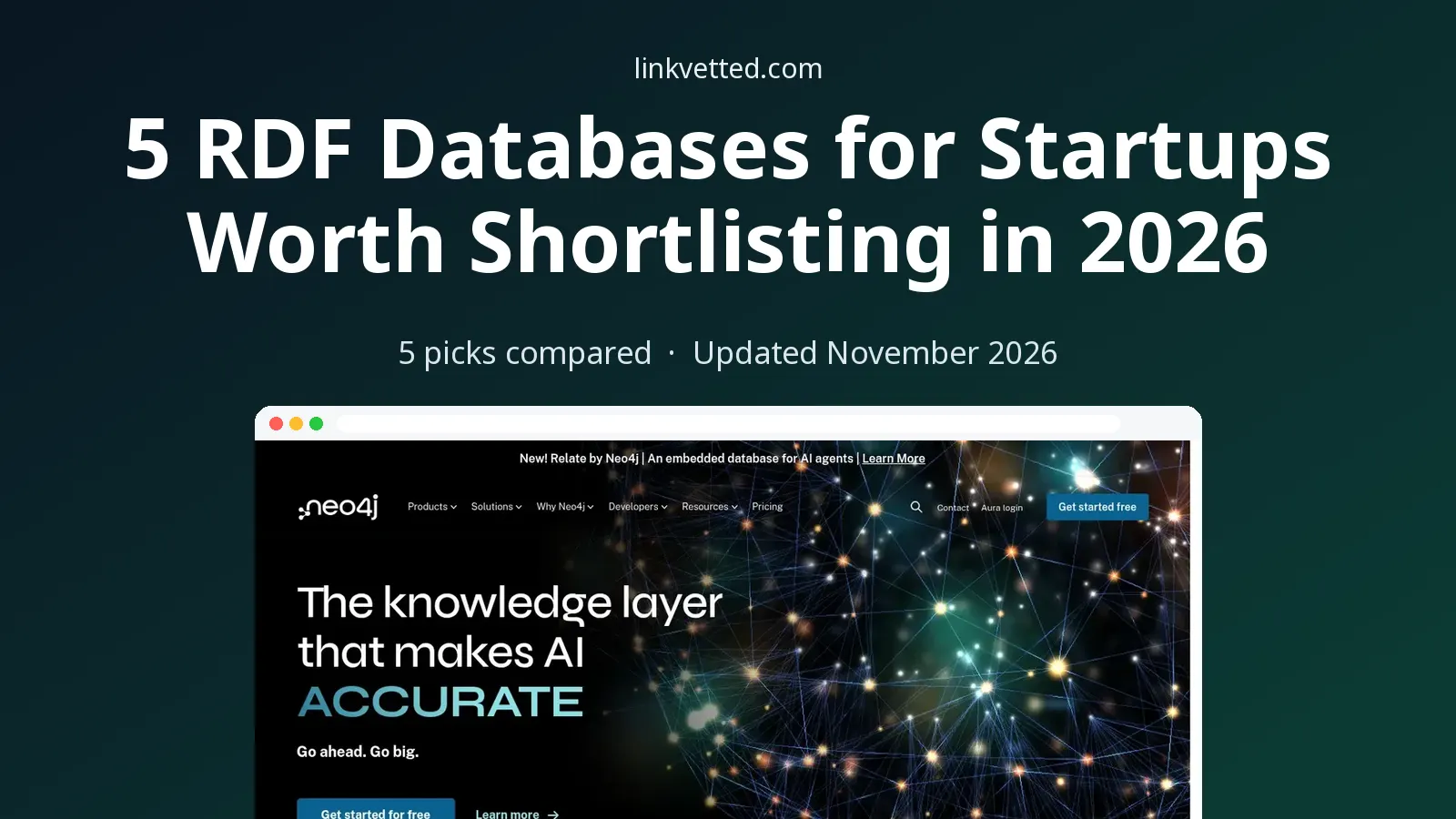
Neo4j was built for connected data queries at scale. If RDF compliance is essential, consider GraphDB or AllegroGraph instead. In practice, startups building applications around connected data, for example recommendation engines or network analysis, can benefit from its native graph model.
It supports graph traversal and pattern matching for rich relationship queries. Its query language differs from SPARQL. Neo4j starts at: $0.09 per GB per hour. Free access exists with Neo4j.
What to check first: May need extras for full RDF support.
- Scales with connected data
- Capable complicated queries
- Native graph model differs from RDF
GraphDB
Best for: Semantic graph database with quick queries
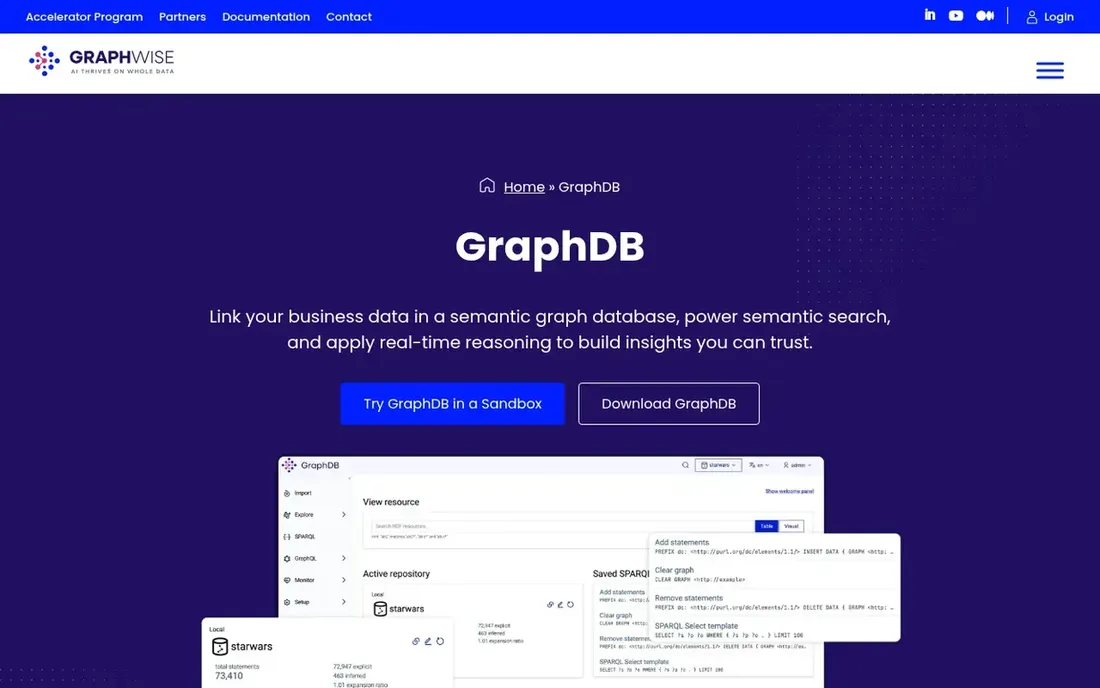
GraphDB was built for semantic graph database with fast queries. It helps startups extract meaning from unstructured data for analytics and cost reduction.
Points against: Needs semantic modeling skills.
More specifically, if you need a more straightforward graph store without semantic layers, consider Neo4j or a managed service instead. Also, GraphDB may need expertise in RDF and SPARQL to model data effectively. GraphDB shows no starting price here, so confirm the cost on the vendor site. As for free access: Not stated.
- Quick query performance
- Extracts meaning from unstructured data
- May need tuning for large datasets
MarkLogic
Best for: Adaptable multi-model data management
MarkLogic is designed for adaptable multi-model data management. It suits teams that require a unified system for heterogeneous data.
Where it is weaker: Needs data modeling effort.
For a lighter RDF-specific choice, consider GraphDB or Amazon Neptune. No starting price is listed for MarkLogic here; confirm pricing on the vendor site. Free options: Free trial.
- Multi-model data product
- Manages complicated data challenges
- Enterprise-oriented may be heavy for startups
How we chose
What to confirm before you sign up
- Confirm the entry price on the vendor page. For AllegroGraph, Amazon Neptune, GraphDB and MarkLogic that means a quote rather than a fixed price.
- Read the fine print on the free plans from Amazon Neptune and Neo4j; seat, project and feature caps differ.
- Take the trial from MarkLogic and push a live task through it before you pay.
- Before choosing AllegroGraph, weigh its main limit: complicated feature set may overwhelm beginners.
- Compare total cost, not headline price: for MarkLogic, add extra seats, add-ons and any usage-based charges.
- A short pilot of AllegroGraph with your real workflow tells you more than a feature table.
FAQ
Is AllegroGraph the right pick for everyone comparing RDF databases for startups?
No single tool suits every team. AllegroGraph comes first because it fits knowledge graph platform with neuro-symbolic AI, while Amazon Neptune suits fully managed graph database on AWS and Neo4j suits connected data queries at scale. Match the tool to your own size, budget and workflow before deciding.
Do these tools publish their prices?
Not all of them. AllegroGraph, Amazon Neptune, GraphDB and MarkLogic publish no starting price, so expect a quote request for those. The rest, Neo4j included, show a starting price, though seats and billing terms still change the final cost.
What factors should startups prioritize when evaluating RDF databases?
Startups should prioritize ease of setup, query performance for expected workloads, support for RDF and SPARQL standards, and integration with existing tools. Scalability and total cost of ownership are also important, though pricing details should be confirmed straight with vendors.
Can I try these tools before paying?
Often, yes. Amazon Neptune and Neo4j have a free plan and MarkLogic offers a free trial. Use your own data and a real task during the test, and check what the free tier or trial limits before you rely on it. Each of the 5 options in this RDF databases for startups guide has its own card above with the price, free plan and limits.
Can startups use Amazon Neptune for RDF data?
Yes, Amazon Neptune supports RDF and SPARQL, making it right for RDF workloads. As a fully managed AWS service, it can cut operational overhead, but startups should consider AWS dependency and potential costs before adopting it.
Which options for RDF databases for startups have a free plan?
On this list, Amazon Neptune and Neo4j include a free plan. Caps on seats, usage or features are common, so test the free plan against your real workload. One other tool offers a trial instead. All 5 picks in this RDF databases for startups comparison list a starting price, free plan details and the main limits on their cards above.
Sources
- https://allegrograph.com
- https://aws.amazon.com/neptune
- https://neo4j.com
- https://www.ontotext.com/products/graphdb
- https://www.progress.com/marklogic