Best RDF Databases for Enterprise (2026): 5 Picks Checked on Vendor Pages
5 products for the best RDF databases for enterprise, ranked by fit, with starting costs and free tiers. Plain-spoken summaries throughout. See which fits.
- Editor's choice
 Neo4j
Property graph intelligence at scale
Starts at$0.09 per GB per hourVisit neo4j.comFull review - Great alternativeStardog
Knowledge graph semantic layer for AI
Starts atSee websiteVisit stardog.comFull review - Also considerAmazon Neptune
Managed graph database on AWS
Starts atSee websiteVisit aws.amazon.comFull review
Direct answer
This list puts Neo4j first for property graph intelligence at scale. Listed starting prices: Neo4j from $0.09 per GB per hour. Stardog fits knowledge graph semantic layer for AI; Amazon Neptune fits managed graph database on AWS. The remaining 2 options are covered below with prices and limits.
TL;DR:
- Top of the list is Neo4j, which targets property graph intelligence at scale.
- For Stardog, Amazon Neptune, MarkLogic and GraphDB, you have to request a quote because no starting price is shown.
- For semantic analytics on unstructured data, GraphDB is worth a look.
- 2 of 5 tools offer a free plan: Neo4j, Amazon Neptune.
Last checked November 2026. Prices and plan details were read from the vendors' own pages in November 2026; vendors change plans often, so confirm the current price on the vendor site before you buy.
Quick comparison
| Tool | Best for | Starts at | Free plan? | |
|---|---|---|---|---|
| Neo4j | Property graph intelligence at scale | $0.09 per GB per hour | Yes | Visit |
| Stardog | Knowledge graph semantic layer for AI | See website | Not stated | Visit |
| Amazon Neptune | Managed graph database on AWS | See website | Yes | Visit |
| MarkLogic | Adaptable multi-model enterprise data | See website | Free trial | Visit |
| GraphDB | Semantic analytics on unstructured data | See website | Not stated | Visit |
RDF Databases for Enterprise compared in detail
LinkVetted put together this guide to RDF databases for enterprise for readers who want a clear shortlist without reading every vendor page. It compares 5 tools on starting price, free plans, who each one suits and where each one falls short.
Neo4j serves property graph intelligence at scale. Confirm semantic web support and integration details on the vendor site, and weigh whether graph intelligence features outweigh a narrower RDF focus.
In practice, Neo4j is a graph intelligence product that links data as it is stored and supports feature-rich, complex queries at scale and speed. Neo4j starts at: $0.09 per GB per hour. Neo4j offers a free plan.
What to check first: RDF support needs checking.
- Data connected as stored
- Complicated queries at scale
- Property graph focus
Stardog
Best for: Knowledge graph semantic layer for AI
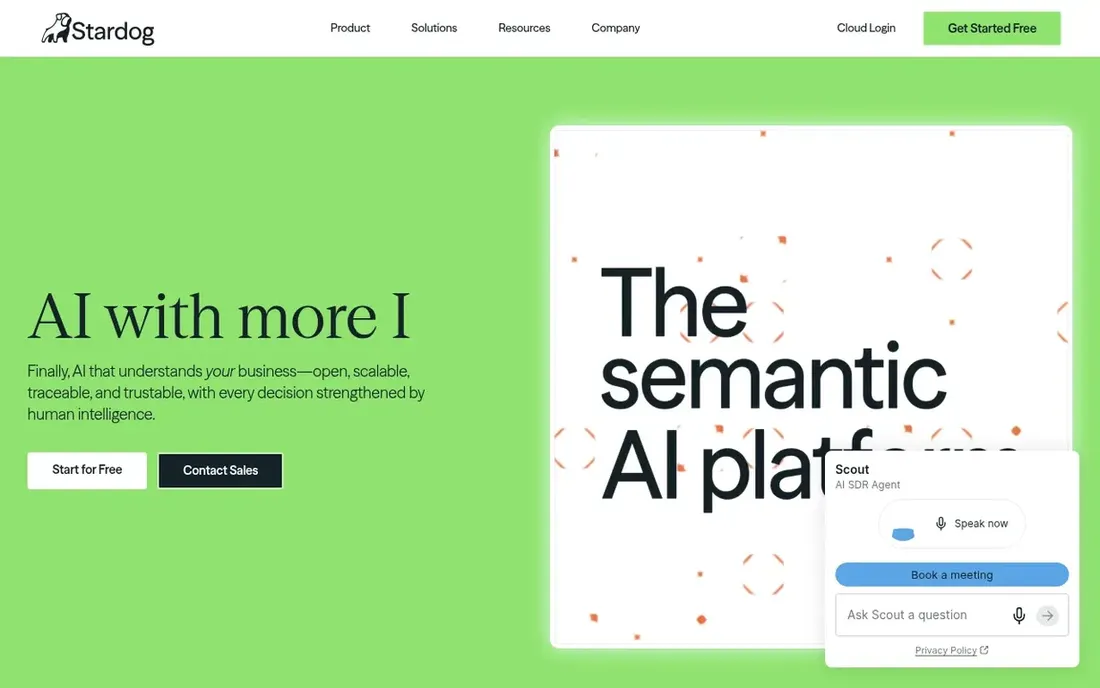
Stardog makes the most sense for knowledge graph semantic layer for AI. Stardog presents a knowledge graph powered semantic layer that unifies enterprise data and activates the existing stack for better AI.
Drawbacks to consider: RDF depth needs confirmation.
In daily use, Stardog's messaging leans heavily toward AI and semantic layer scenarios. So teams seeking a bare RDF store with minimal abstraction may find it more than needed. No starting price is listed for Stardog here; confirm pricing on the vendor site. Free plan details: Not stated.
- Activates existing stack for AI
- Knowledge graph powered semantic layer
- Positioned around AI use cases
Amazon Neptune
Best for: Managed graph database on AWS
Amazon Neptune is aimed squarely at managed graph database on AWS. Confirm which graph models and query languages fit your workload, and review how managed constraints affect your operational and governance requirements before adopting it.
It suits enterprises already on AWS that want to avoid operating graph infrastructure themselves and need a managed service for connected data workloads at cloud scale. Amazon Neptune shows no starting price here, so confirm the cost on the vendor site. Free access exists with Amazon Neptune.
Downsides: Tied to AWS environment.
- Quick graph queries
- Supports knowledge and identity graphs
- Managed model limits control
MarkLogic
Best for: Adaptable multi-model enterprise data
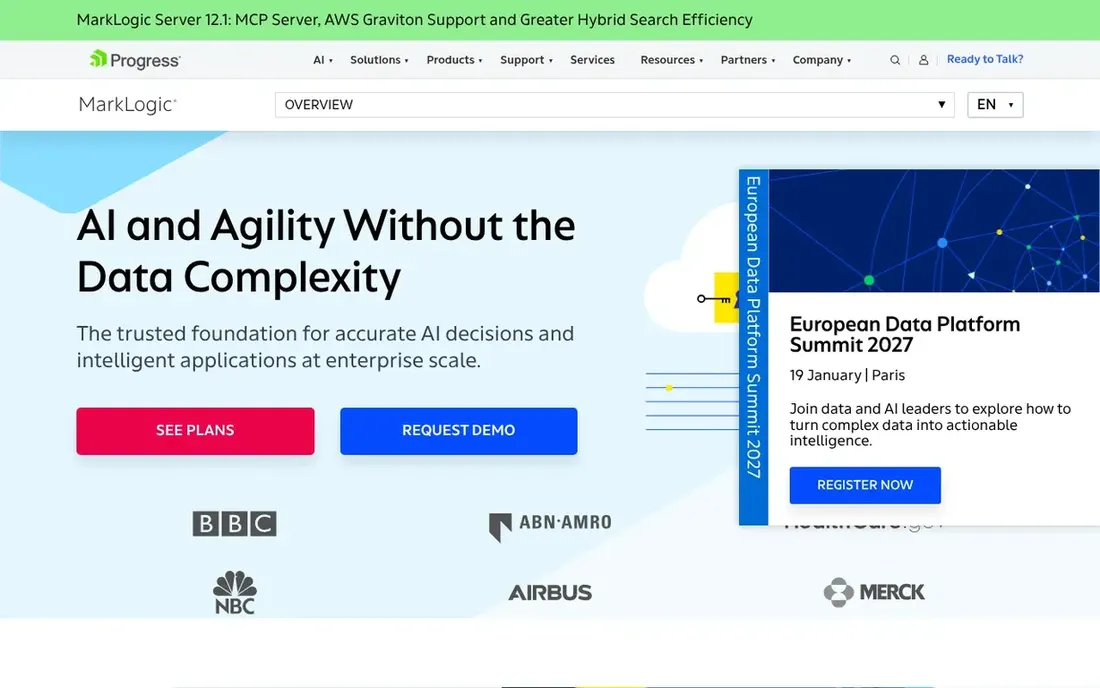
MarkLogic is a good fit for adaptable multi-model enterprise data. MarkLogic, now under Progress, is described as an adaptable, AI-ready multi-model data management system for solving complicated data challenges and unlocking more value.
This comparison lists no price for MarkLogic; ask the vendor. Free plan details: Free trial.
The main drawbacks: Broader product to evaluate.
- Multi-model data management
- Deals with complicated data challenges
- Not RDF-only
GraphDB
Best for: Semantic analytics on unstructured data
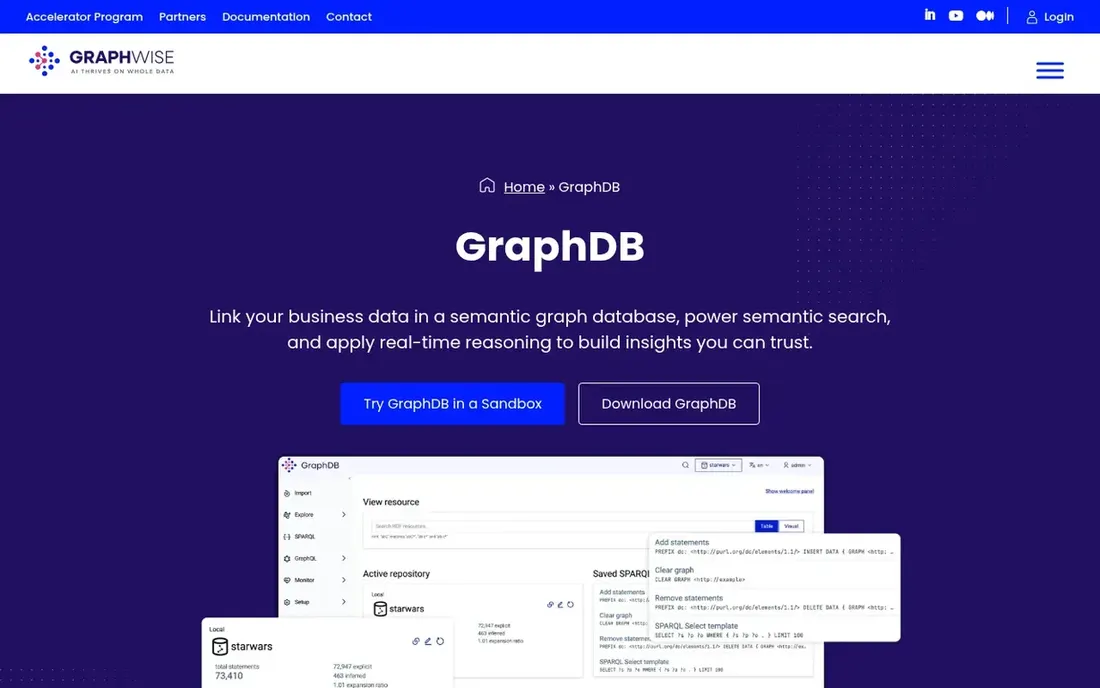
GraphDB targets semantic analytics on unstructured data. Its stated focus is extracting meaning from unstructured data for analytics and lowering costs.
It fits teams that want a dedicated RDF store for knowledge modeling and semantic search instead of a general-purpose multi-model system, particularly where analytics on mixed content is the goal. GraphDB does not show a starting price in this comparison, so check the vendor site for current pricing. Free access: Not stated.
The main drawbacks: Enterprise fit needs review.
- Quick semantic queries
- Semantic linking of data
- RDF-centric scope
Selection criteria
Selection started from tools commonly considered for RDF databases for enterprise, then narrowed to 5 that have clear pricing information or a clear quote process. Figures are shown as the vendors publish them. Billing terms, seat minimums and add-ons can change the real cost. The ranking is editorial: typical fit first, then clear pricing, then free access. If your needs are unusual, read the profiles rather than relying on position.
Pre-purchase checklist
- Ask Stardog, Amazon Neptune, MarkLogic and GraphDB for a written quote, since no starting price is shown.
- Check what the free option really includes: Neo4j and Amazon Neptune offer a free plan, and usage caps differ.
- Take the trial from MarkLogic and push a live task through it before you pay.
- Before choosing Neo4j, weigh its main limit: property graph focus.
- Pick one real project and run it in Neo4j first; a small pilot shows fit faster than a checklist.
- Confirm the exact Amazon Neptune plan that includes your must-have features.
FAQ
How do RDF databases differ from property graph databases?
RDF databases use triples and semantic standards like SPARQL, which fits knowledge modeling and data integration. Some products support both models, so confirm which suits your use case.
Can I try these tools before paying?
Often, yes. Neo4j and Amazon Neptune have a free plan and MarkLogic offers a free trial. Use your own data and a real task during the test, and check what the free tier or trial limits before you rely on it.
What should enterprises look for in a RDF database?
Focus on standards support, query performance for your data shapes, governance and access control, and how well the database connects with existing systems.
Can a knowledge graph semantic layer replace a RDF database?
A semantic layer for example Stardog's sits over existing data and brings together it for AI and analytics, whereas a RDF database keeps and queries the graph itself. Numerous enterprises use both together, so evaluate whether you need storage, a layer, or a combination.
Which options for RDF databases for enterprise have a free plan?
On this list, Neo4j and Amazon Neptune include a free plan. Caps on seats, usage or features are common, so test the free plan against your real workload. One other tool offers a trial instead.
How are the tools for RDF databases for enterprise ordered?
The order follows typical fit for RDF databases for enterprise, with Neo4j first and GraphDB last, then price clarity and free access. It is editorial judgement, not a score, so another team could rank the tools differently.
Sources
- https://neo4j.com
- https://www.stardog.com
- https://aws.amazon.com/neptune
- https://www.progress.com/marklogic
- https://www.ontotext.com/products/graphdb