Best RDF Databases for Remote Teams for 2026: Our 5 Vetted Picks
Best RDF databases for remote teams: 5 tools compared on price, free plans and fit. Virtuoso comes first for loosely coupled AI and data spaces. Prices checked.
- Editor's choiceVirtuoso
Loosely coupled AI and data spaces
Starts atSee websiteVisit virtuoso.openlinksw.comFull review - Great alternativeAmazon Neptune
Completely managed graph database service
Starts atSee websiteVisit aws.amazon.comFull review - Also considerMarkLogic
Multi-model data management
Starts atSee websiteVisit progress.comFull review
Direct answer
Our first pick is Virtuoso, best for loosely coupled AI and data spaces. Listed starting prices: Neo4j from $0.09 per GB per hour. Amazon Neptune fits fully managed graph database service; MarkLogic fits multi-model data management. All 5 tools are compared below on price, free plan and limits.
TL;DR:
- Top of the list is Virtuoso, which targets loosely coupled AI and data spaces.
- For semantic graph analytics and linking, GraphDB is worth a look.
- No starting price is published for Virtuoso, Amazon Neptune, MarkLogic and GraphDB; expect a quote.
- A free plan is available from 2 of the 5 tools: Amazon Neptune, Neo4j.
Last checked November 2026. Prices and plan details were read from the vendors' own pages in November 2026; vendors change plans often, so confirm the current price on the vendor site before you buy.
Quick comparison
| Tool | Best for | Starts at | Free plan? | |
|---|---|---|---|---|
| Virtuoso | Loosely coupled AI and data spaces | See website | Not stated | Visit |
| Amazon Neptune | Completely managed graph database service | See website | Yes | Visit |
| MarkLogic | Multi-model data management | See website | Free trial | Visit |
 Neo4j | Graph intelligence product | $0.09 per GB per hour | Yes | Visit |
| GraphDB | Semantic graph analytics and linking | See website | Not stated | Visit |
The best RDF databases for remote teams
If you are comparing RDF databases for remote teams, this page covers 5 tools in one place: what each is best for, what it costs to start, whether it has a free plan, and the main limit to know about.
Virtuoso
Best for: Loosely coupled AI and data spaces
Virtuoso makes the most sense for loosely coupled AI and data spaces. Virtuoso is a versatile engine that lets AI agents query SQL, knowledge graphs, files, and APIs in a harmonized, access-controlled manner without data duplication.
What to check first: Complicated feature set could overwhelm new users.
Beyond that, Virtuoso's wide capabilities might be more than a team needs for entry-level RDF storage, and its complexity may need dedicated expertise. Worth adding: consider a more straightforward RDF database if your requirements are restricted to standard graph queries. Check the vendor site for Virtuoso pricing; none is listed in this comparison. On free options: Not stated.
- Supports AI agents via MCP and LLM
- Unified engine for SQL, graphs, files, APIs
- May need technical expertise to deploy
Amazon Neptune
Best for: Completely managed graph database service
Pick Amazon Neptune if this describes you: completely managed graph database service. Amazon Neptune is a quick, completely managed graph database service on AWS, powering use cases for example identity graphs, knowledge graphs, and fraud detection.
Evaluate if vendor lock-in or restricted customization is a concern for your remote team's architecture. No starting price is listed for Amazon Neptune here; confirm pricing on the vendor site. Amazon Neptune offers a free plan.
What to check first: May have restricted customization compared with self-hosted choices.
- Quick performance for graph use cases
- Supports identity and knowledge graphs
- Tied to AWS ecosystem
MarkLogic
Best for: Multi-model data management
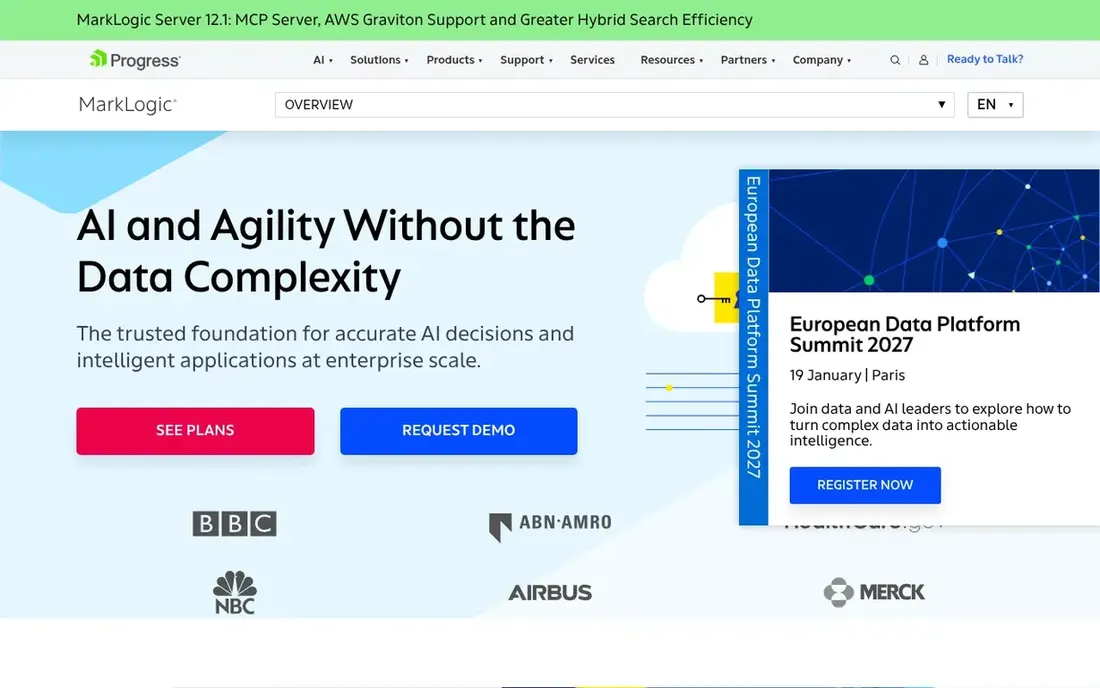
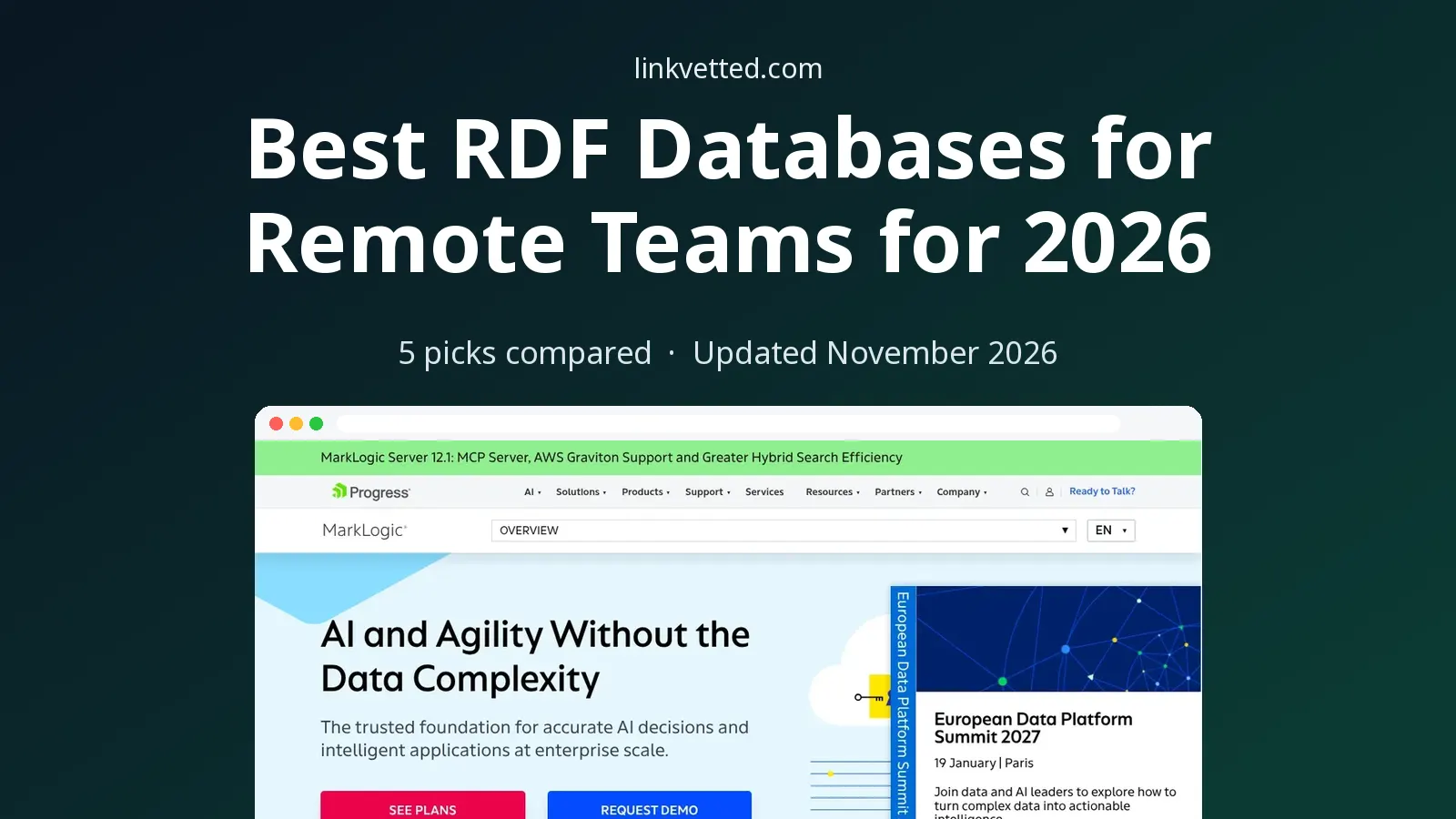
MarkLogic was built for multi-model data management. MarkLogic is a multi-model data management system that solves complicated data challenges and unlocks value from diverse data.
Trade-offs to know: Needs configuration for optimal RDF performance.
From a buyer's view, MarkLogic might be more thorough than teams needing only RDF capabilities, potentially adding unnecessary complexity. Consider more straightforward RDF-focused databases if your use case is strictly semantic graph storage and querying. No starting price is listed for MarkLogic here; confirm pricing on the vendor site. Free access: Free trial.
- Takes care of complicated data challenges
- AI-ready data management
- May be overkill for pure RDF workloads
Neo4j is designed for graph intelligence system. Neo4j is a graph intelligence system that links data as it is stored and performs feature-rich, complicated queries at scale and speed. It is frequently associated with property graphs instead of native RDF.
Limits to weigh: RDF support may need extras.
In practice, Neo4j's core strength is in property graphs. So teams requiring native RDF and SPARQL support may need extra tooling or consider RDF-native alternatives. It may be less ideal for pure semantic web applications. The starting price for Neo4j: $0.09 per GB per hour. Neo4j has a free plan.
- Feature-rich complicated queries at scale
- Connects data as stored
- Primarily a property graph database
GraphDB
Best for: Semantic graph analytics and linking
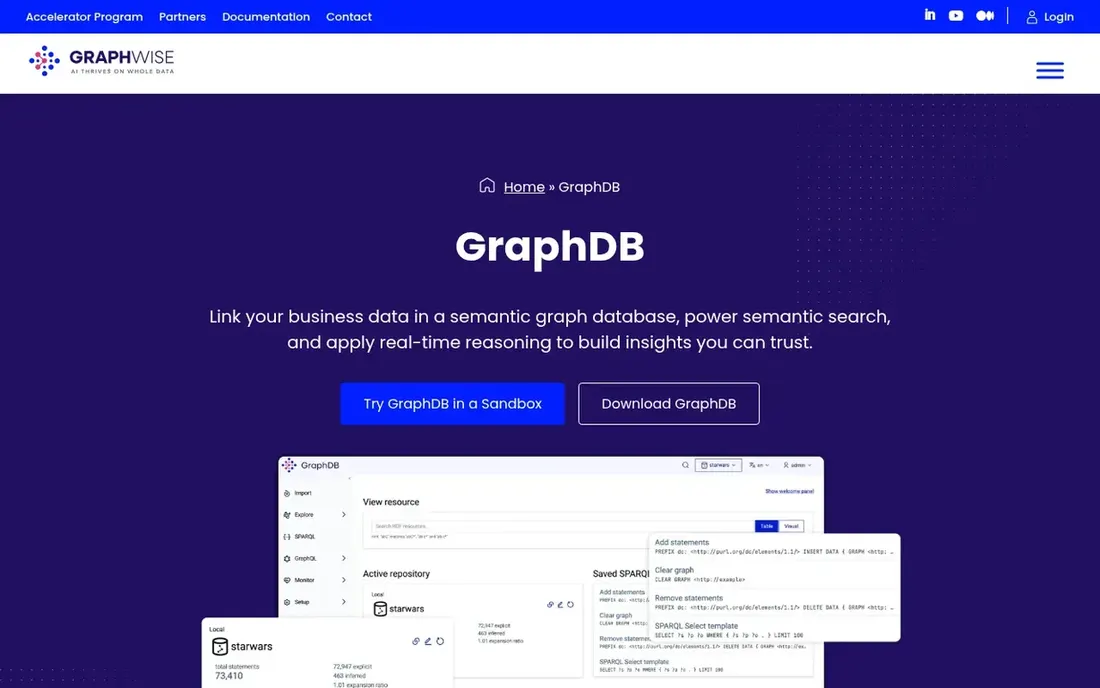
GraphDB works best for semantic graph analytics and linking. GraphDB may be less suitable if your team needs a multi-model database that deals with diverse data formats beyond RDF.
No starting price is listed for GraphDB here; confirm pricing on the vendor site. As for free access: Not stated.
Honest limits: Focused primarily on semantic graph use cases.
- Semantic linking capabilities
- Supports extraction from unstructured data
- May need expertise in RDF and SPARQL
How the list was put together
We compared the tools on published pricing, free plan or trial availability, feature coverage for RDF databases for remote teams, and the limits each vendor documents. Where a price is missing, the vendor does not list one publicly or ties it to a quote. Always confirm before budgeting. The ranking is editorial: typical fit first, then clear pricing, then free access. If your needs are unusual, read the profiles rather than relying on position.
Things to verify first
- Confirm the entry price on the vendor page. For Virtuoso, Amazon Neptune, MarkLogic and GraphDB that means a quote rather than a fixed price.
- Read the fine print on the free plans from Amazon Neptune and Neo4j; seat, project and feature caps differ.
- Take the trial from MarkLogic and push a live task through it before you pay.
- Read the limits listed for Virtuoso first: may need technical expertise to deploy.
- Map your must-have features to a specific GraphDB plan before you compare prices.
- Ask Virtuoso whether prices are locked for the first term and what happens at renewal.
FAQ
Can I try these tools before paying?
Often, yes. Amazon Neptune and Neo4j have a free plan and MarkLogic offers a free trial. Use your own data and a real task during the test, and check what the free tier or trial limits before you rely on it.
Do these tools publish their prices?
Not all of them. Virtuoso, Amazon Neptune, MarkLogic and GraphDB publish no starting price, so expect a quote request for those. The rest, Neo4j included, show a starting price, though seats and billing terms still change the final cost.
Which options for RDF databases for remote teams have a free plan?
On this list, Amazon Neptune and Neo4j include a free plan. Caps on seats, usage or features are common, so test the free plan against your real workload. One other tool offers a trial instead.
How does Amazon Neptune differ from other RDF databases?
This can be advantageous for remote teams already in the AWS ecosystem, whereas other databases may offer more customization or on-premises choices.
Is Virtuoso the right pick for everyone comparing RDF databases for remote teams?
No single tool suits every team. Virtuoso comes first because it fits loosely coupled AI and data spaces, while Amazon Neptune suits fully managed graph database service and MarkLogic suits multi-model data management. Match the tool to your own size, budget and workflow before deciding.
Sources
- https://virtuoso.openlinksw.com
- https://aws.amazon.com/neptune
- https://www.progress.com/marklogic
- https://neo4j.com
- https://www.ontotext.com/products/graphdb