Best REST API Alternatives in 2026: 9 Styles and Protocols Compared
Explore the best REST API alternatives in 2026, including GraphQL, gRPC, tRPC, SOAP, WebSockets, Kafka, and event driven styles for each use case. today.
- Editor's choice
 GraphQL
Flexible front end queries
Starts atFreeVisit graphql.orgFull review - Great alternative
 gRPC
Fast internal microservices
Starts atFreeVisit grpc.ioFull review - Also consider
 tRPC
Type safe TypeScript APIs
Starts atFreeVisit trpc.ioFull review
TL;DR:
- We frame this guide plainly as API styles, protocols, and platforms that replace REST for given use cases, not as one drop in copy of REST.
- GraphQL fits front ends that need flexible, client shaped data, while gRPC fits fast service to service calls inside a backend.
- WebSockets, Kafka, and webhooks fit push and event driven work where polling a REST endpoint wastes effort.
- SOAP still matters when a partner or regulator requires a strict contract, even though it is heavy for new public APIs.
- The best choice follows the constraint: public consumers, internal speed, flexible queries, strict contracts, or live updates.
Quick comparison
| Tool | Best for | Starts at | Free plan? | |
|---|---|---|---|---|
| GraphQL | Flexible front end queries | Free | Yes | Visit |
| gRPC | Fast internal microservices | Free | Yes | Visit |
| tRPC | Type safe TypeScript APIs | Free | Yes | Visit |
 SOAP | Strict enterprise contracts | Free | Yes | Visit |
 Socket.IO | Live bidirectional apps | Free | Yes | Visit |
 Apache Kafka | Event driven data flow | Free | Yes | Visit |
 JSON-RPC | Simple remote calls | Free | Yes | Visit |
 OData | Queryable data services | Free | Yes | Visit |
 Falcor | Single model data fetching | Free | Yes | Visit |
The best REST API alternatives
REST remains a good default for public APIs, but it is not the best answer for every problem. This guide covers API styles and protocols that replace REST for given use cases, and states that framing clearly: each option below solves a different constraint, from live updates to strict contracts to type safe internal calls. Use them as alternatives to REST API design where the use case fits, and keep REST where it still fits best.
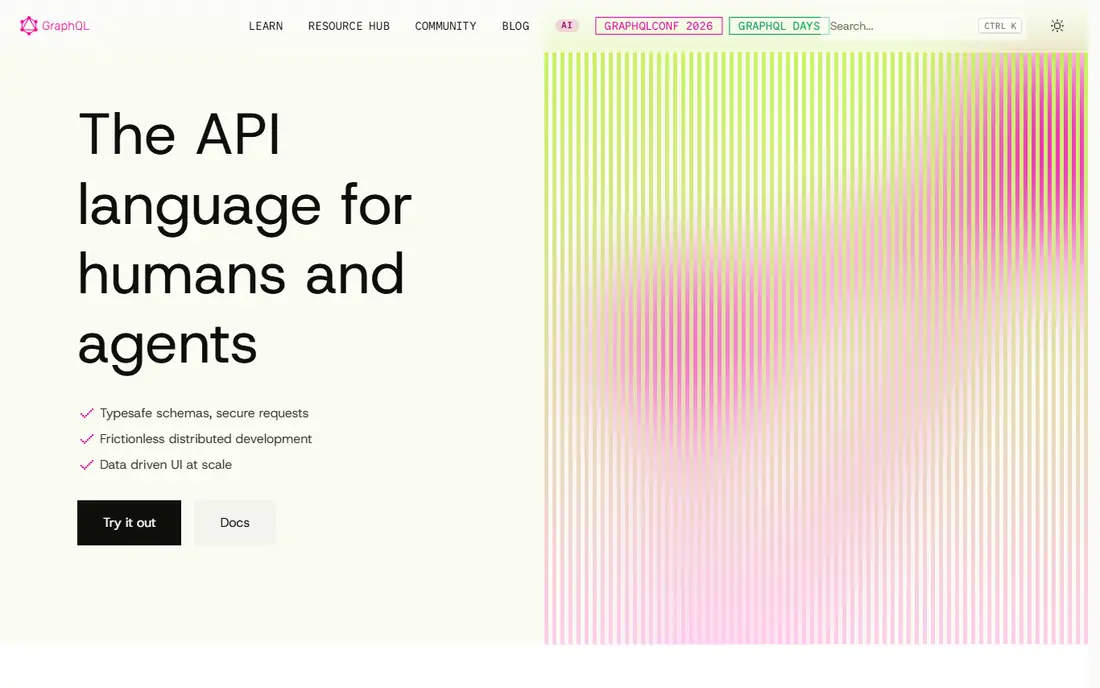
GraphQL lets a client send one query that describes exactly the data it needs, instead of calling several REST endpoints and receiving fixed shapes. That helps mobile and web front ends where screens change often and different views need different field combinations. The typed schema also helps tooling, documentation, and client code generation.
The honest catch is operational. Because many queries hit one endpoint, HTTP caching by URL does not work the same way as with REST, and a deeply nested query can trigger many database calls. Teams need query depth limits, persisted queries or caching layers, and careful authorisation on every field. With those controls in place, GraphQL is one of the strongest REST API alternatives for complex front ends.
- Clients request exact fields
- One endpoint serves many screens
- Typed schema supports tooling
- Caching needs extra work
- Deep queries can overload a server without limits
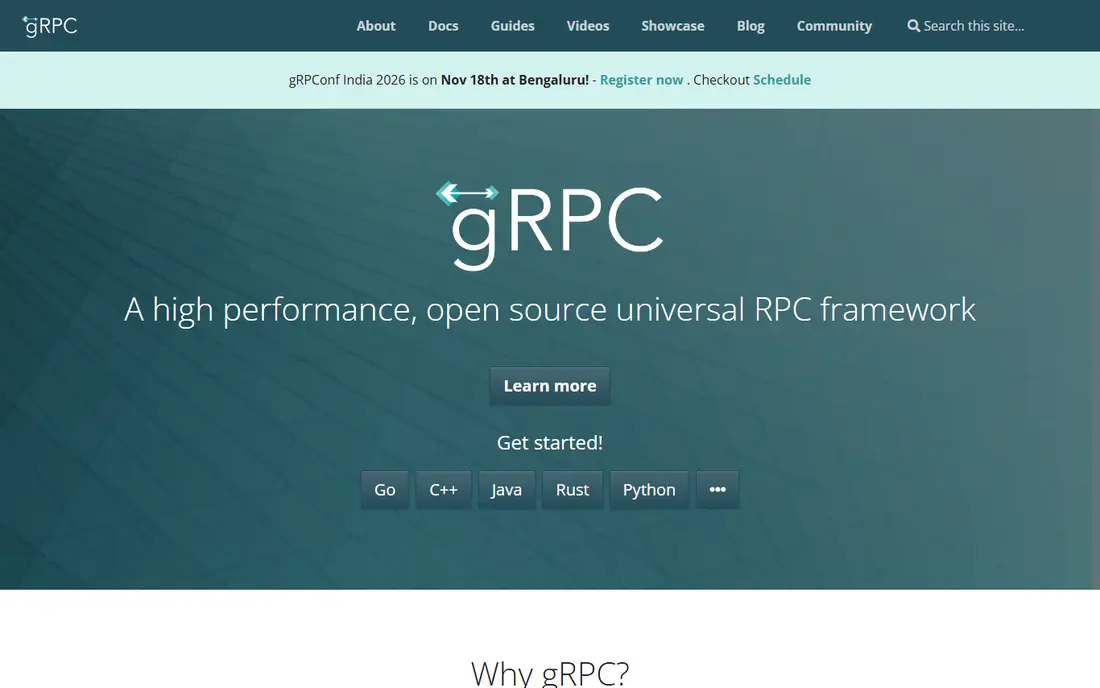
gRPC is a remote procedure call framework that uses Protocol Buffers and HTTP/2. It generates typed clients and servers, supports streaming in both directions, and keeps payloads compact. Those traits make it well suited to service to service calls inside a backend, where both sides are under your control and performance matters.
It is less friendly as a public API. Browsers do not speak gRPC natively, and partners who expect JSON over HTTP will need a gateway or a separate REST or GraphQL layer. Use gRPC where internal speed and strong typing matter most, and expose a different style at the edge when outside developers need access.
- Binary Protobuf payloads
- HTTP/2 streaming
- Generated clients in many languages
- Weak browser support without a gateway
- Harder to inspect than JSON
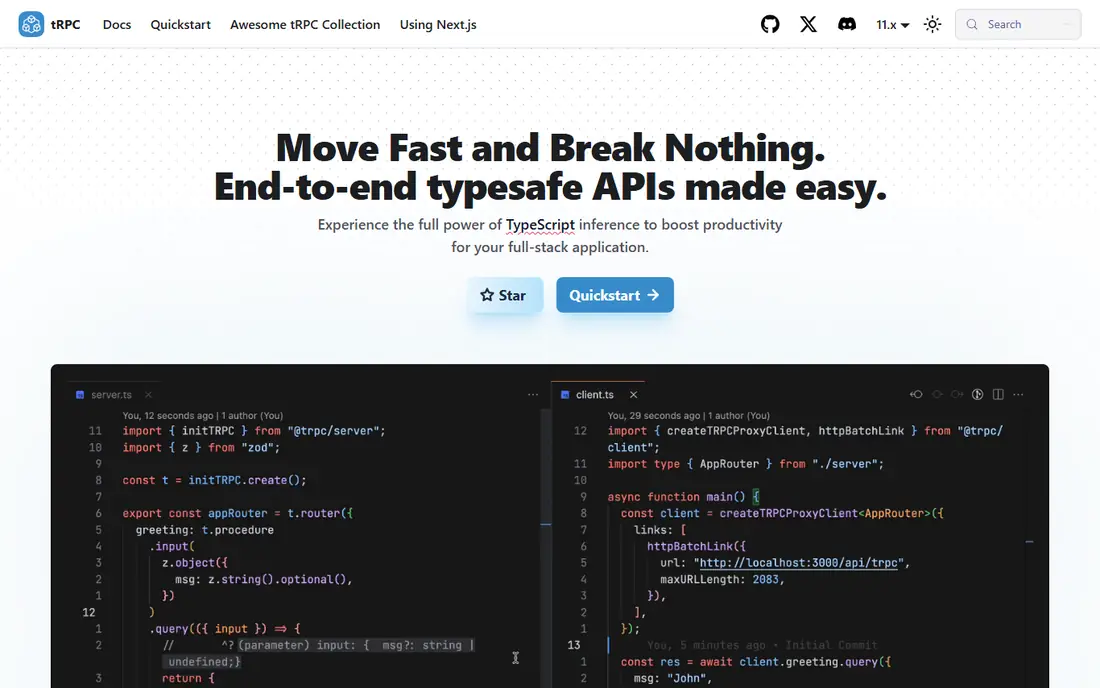
tRPC lets TypeScript teams call server procedures directly from the client with full type safety, without writing a separate schema or generating clients by hand. If the server changes a return type, the client code reflects it during development. That removes a whole class of mismatch bugs that REST teams often catch only at runtime.
The scope is narrower than GraphQL or gRPC. It works best when one team owns both the front end and the back end in TypeScript. Public APIs for many languages, or teams with mixed stacks, will usually need REST, GraphQL, or gRPC instead. For a full stack TypeScript product, tRPC can replace much of the REST layer with less boilerplate.
- End to end type safety without a schema file
- Simple setup for TypeScript teams
- Good developer experience
- Best for TypeScript on both ends
- Less suited to public third party APIs
SOAP is a protocol based on XML messages, with a formal contract described in WSDL. It supports standards for security, transactions, and reliable messaging, which is why banks, government systems, and older healthcare platforms still require it. When a partner hands you a WSDL and expects SOAP, that contract is the job, and REST is not a substitute.
For a new public API you control, SOAP is usually the wrong choice in 2026. Messages are verbose, tooling feels dated, and most web and mobile developers expect JSON. Treat SOAP as a compatibility alternative: keep it for integrations that demand it, and use a modern style for everything else.
- Formal WSDL contracts
- Built in security and reliability standards
- Widely required in regulated sectors
- Verbose XML
- Heavy tooling
- Poor fit for new consumer facing APIs
Socket.IO builds on WebSockets to give applications a persistent, two way channel between client and server. That makes it a natural fit for chat, collaborative editing, live dashboards, and multiplayer features, where the server must push updates the moment something changes. Polling a REST endpoint on a timer cannot match that immediacy without waste.
State is the trade off. Long lived connections need careful handling when servers scale, restart, or sit behind load balancers. Socket.IO also does not replace a data API on its own; most apps still need REST, GraphQL, or another style for fetching and saving records. Pair it with a query API, and use it for the live layer.
- Persistent two way communication
- Rooms and namespaces
- Fallbacks for older networks
- Stateful connections need scaling care
- Not a substitute for queryable APIs
Kafka replaces request response calls with an event log in many architectures. Services publish events to topics, and other services consume them when ready, replay them if needed, and scale independently. That pattern suits order processing, audit trails, analytics feeds, and systems where several consumers need the same change.
It is not a simple REST swap. Running Kafka well takes operational skill, and a basic create or read operation becomes harder to reason about than a single HTTP call. Use Kafka when decoupling, replay, and multiple consumers matter. Keep REST or GraphQL for simple synchronous operations that need an immediate answer.
- Durable event log
- Many consumers can read the same events
- Strong streaming ecosystem
- Operational complexity
- Overkill for simple request response work
JSON-RPC is a light remote procedure call format: the client sends a method name, parameters, and an id, and the server returns a result or an error. It is easy to understand, easy to test with plain JSON, and useful for action oriented work where calling a named operation feels more natural than modelling a resource. Internal tools and simple services often benefit from that clarity.
It lacks the discovery and documentation conventions that REST with OpenAPI or GraphQL with a schema provide. As the method list grows, teams need their own docs and versioning discipline, or the API becomes hard to follow. For small, internal, action based services, JSON-RPC is a clean REST alternative. For large public APIs, a schema based style scales better.
- Tiny, clear method call format
- JSON payloads
- Easy to implement and test
- No standard discovery
- Tight coupling between client and server names
OData is a standard for building queryable data APIs over HTTP. Clients can filter, sort, page, expand related data, and select fields using a shared query language, rather than waiting for a vendor to add a new REST endpoint for each combination. That helps reporting tools, spreadsheets, and data heavy clients that need flexible access to a dataset.
Full OData support is a larger implementation job than a handful of REST endpoints, and open ended queries need limits to protect the database. It fits best when the core job is exposing structured data for querying, especially in Microsoft centred environments where tooling support is strong. For action heavy workflows, RPC or GraphQL may be clearer.
- Standard query options for filtering and paging
- Good for data heavy clients
- Metadata describes the model
- Complex to implement fully
- Clients can craft expensive queries without limits
Falcor, created at Netflix, treats all of an application's data as one virtual JSON graph. Clients request the paths they need, and Falcor batches and caches those requests efficiently. Like GraphQL, it aims to cut the over fetching and under fetching problems of fixed REST endpoints, but it uses a path based model instead of a query language.
Adoption is the main risk. GraphQL has a far larger community, more libraries, and more hiring familiarity in 2026. Falcor still earns a place for teams that like its model, already use it, or want a single graph without adopting GraphQL. New teams should compare it with GraphQL carefully before choosing the smaller ecosystem.
- One virtual JSON graph for all data
- Clients request paths they need
- Reduces round trips
- Smaller community than GraphQL
- Fewer modern tools and examples
How we picked these
We compared official specifications, documentation, and project pages for styles and protocols that are actively usable in October 2026 and that genuinely replace REST for a defined use case. We excluded pure API management products, because this guide is about the style itself, and we kept a mix of query, RPC, messaging, and live communication models. Where a style is a free specification rather than a paid product, we marked pricing as Free and pointed to its official home.
How to choose a REST alternative
Start by naming the constraint that REST fails. If front ends need many field combinations, shortlist GraphQL or Falcor. If internal services need speed and typing, shortlist gRPC or tRPC. If updates must arrive live, shortlist Socket.IO or Kafka. If a partner demands a contract, SOAP may not be optional. Naming the constraint first stops teams from picking a fashionable style for the wrong job.
Keep a hybrid where it helps
Most real systems use more than one style. A common pattern is REST or GraphQL at the public edge, gRPC between internal services, and WebSockets or Kafka for live and event driven work. That mix is not a failure of discipline; it reflects different needs in different parts of a system. Document which style owns each boundary, so new developers do not have to guess.
Check caching, security, and versioning
Each alternative changes how you cache, secure, and version an API. GraphQL needs query limits and field level authorisation. gRPC needs a gateway for browsers. Kafka needs schema and retention policies. SOAP needs contract management. Test those concerns early, because they often decide whether a style is practical, not whether it looks elegant in a demo.
FAQ
What are the best alternatives to REST API design?
GraphQL is the best general alternative for flexible front ends, gRPC for internal microservices, and Socket.IO or Kafka for live and event driven work. SOAP remains the best choice when a strict contract is required. There is no single winner, because each style solves a different problem.
Is GraphQL a replacement for REST?
GraphQL can replace REST for many front end data needs, especially when screens need custom field combinations. It does not replace REST everywhere, because REST still offers simpler HTTP caching and a lower learning curve for simple CRUD APIs and public endpoints.
When should I use gRPC instead of REST?
Use gRPC for service to service calls inside your own infrastructure when performance, streaming, and generated typed clients matter. Use REST or GraphQL at the public edge, where browsers and third party developers expect JSON and simple HTTP tooling.
Are API alternatives to REST free?
The specifications and open source implementations in this guide are free to use. Managed platforms built on them, such as hosted GraphQL gateways or Kafka services, charge separately. Check the vendor page for any managed service you add on top of a free protocol.
Can I mix REST with these alternatives?
Yes, and most teams do. A system might expose REST for public CRUD, GraphQL for a complex front end, gRPC internally, and WebSockets for live updates. The key is to keep each boundary clear and to document which style is used where.