Best Columnar Databases for Startups in 2026: Prices, Free Plans and 5 Picks
Comparing the best columnar databases for startups? 5 contenders, each with entry cost, free tier and best-fit buyer. Real limits included. Checked this month.
- Editor's choice
 SingleStore
Live apps plus analytics
Starts atSee websiteVisit singlestore.comFull review - Great alternative
 Databricks
Unified data, analytics and AI
Starts atSee websiteVisit databricks.comFull review - Also consider
 Google BigQuery
Managed autonomous data and AI
Starts atSee websiteVisit cloud.google.comFull review
Direct answer
If you need live apps plus analytics, SingleStore is the first tool to look at here. Listed starting prices: ClickHouse from $0.056 per unit per hour. Databricks is the stronger choice for unified data, analytics and AI, while Google BigQuery suits managed autonomous data and AI. The other 2 tools in the list cover narrower or pricier cases.
TL;DR:
- SingleStore sits first on this list: live apps plus analytics.
- Pricing for SingleStore, Databricks, Google BigQuery and Amazon Redshift is quote-based, which adds a sales step before you can compare cost.
- For quick open live analytics, ClickHouse is worth a look.
- Neither SingleStore nor ClickHouse, nor any of the other 3 tools, has a permanent free plan; trials and quotes are the norm.
- One limit worth knowing about Google BigQuery: deep Google Cloud alignment.
Last checked November 2026. Prices and plan details were read from the vendors' own pages in November 2026; vendors change plans often, so confirm the current price on the vendor site before you buy.
Quick comparison
| Tool | Best for | Starts at | Free plan? | |
|---|---|---|---|---|
| SingleStore | Live apps plus analytics | See website | Not stated | Visit |
| Databricks | Unified data, analytics and AI | See website | Not stated | Visit |
| Google BigQuery | Managed autonomous data and AI | See website | Not stated | Visit |
 Amazon Redshift | AWS-centered managed warehouses | See website | Not stated | Visit |
| ClickHouse | Quick open live analytics | $0.056 per unit per hour | Free trial | Visit |
5 columnar databases for startups in detail
If you are comparing columnar databases for startups, this page covers 5 tools in one place: what each is best for, what it costs to start, whether it has a free plan, and the main limit to know about.
SingleStore works best for live apps plus analytics. SingleStore is described as a live database for AI, apps and analytics, offering live reads and writes, one engine for transactions and analytics, and open data access. Pick SingleStore when low-latency reads and writes for live applications are central to the product.
Where it is weaker: Broader than a pure warehouse.
In practice, teams with a straightforward warehouse use case may prefer a narrower tool. On top of that, startups building products that require fresh data served to users whereas also supporting analytical queries frequently consider it. Pricing for SingleStore is not stated here, so ask the vendor for current figures. As for free access: Not stated.
- Open data access
- Live reads and writes
- May be more than straightforward reporting needs
Databricks was built for unified data, analytics and AI. Databricks provides a unified product for data, analytics and AI, with a data-centric approach that aims to ease ETL, data warehousing, governance and AI work in one place.
Trade-offs to know: Needs some product skills.
Beyond that, startups with narrow, straightforward reporting needs may find a more straightforward warehouse sufficient. The breadth of the system can be a lot for a very small team, and getting value from it typically assumes some data engineering skill. This comparison lists no price for Databricks; ask the vendor. Free plan details: Not stated.
- Comes with governance features
- Eases ETL and warehousing
- Wide scope can overwhelm
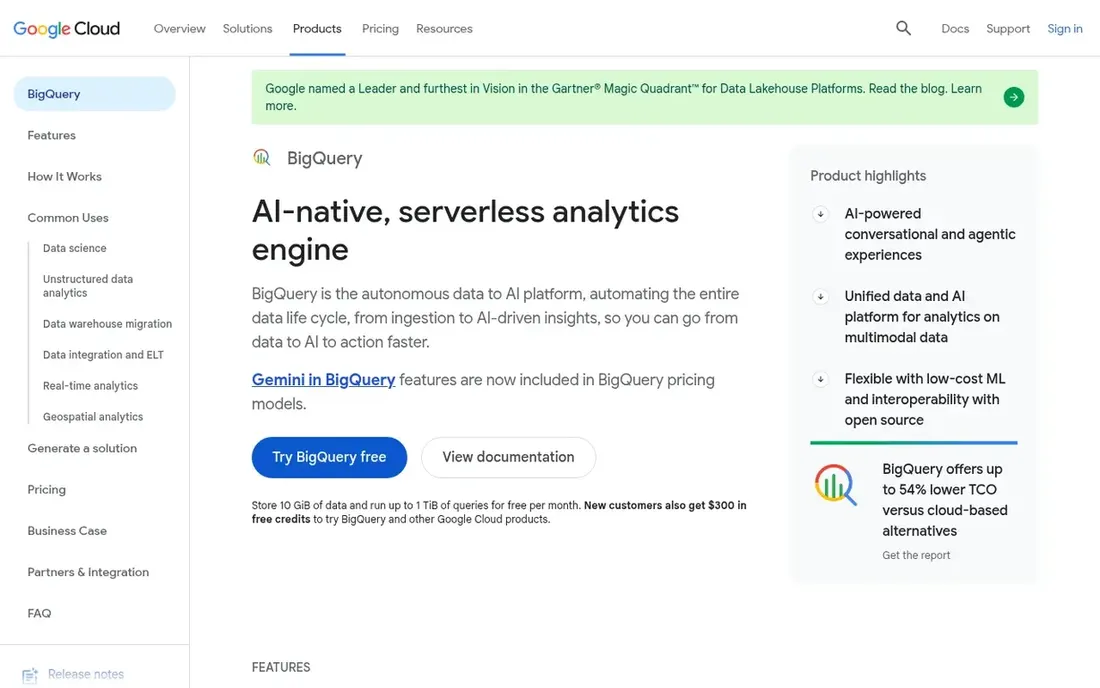
Think of Google BigQuery for managed autonomous data and AI. BigQuery is described as an autonomous data and AI product that automates the whole data life cycle so teams can move from data to AI to action quicker.
For everyday use, for startups without a dedicated product team, that automation can lower the operational burden of running a warehouse. This comparison lists no price for Google BigQuery; ask the vendor. On free options: Not stated.
Downsides: Less control over internals.
- Ties data work to AI workflows
- Automates much of the data life cycle
- Deep Google Cloud alignment
Amazon Redshift serves AWS-centered managed warehouses. Startups already building on AWS commonly treat it as the default warehouse since it sits close to the rest of their cloud services. Its value is most solid within the AWS ecosystem, so startups on other clouds may find integration less natural.
Watch-outs: Warehouse tuning still matters.
Pick Redshift when your stack is AWS-centered and you want a managed SQL warehouse instead of a broader data and AI system. Warehouse design and tuning still deserve attention as data grows. Pricing for Amazon Redshift is not stated here, so ask the vendor for current figures. Free access: Not stated.
- Completely managed cloud data warehouse
- Straightforward analysis of all your data
- Best fit inside AWS
ClickHouse
Best for: Quick open live analytics
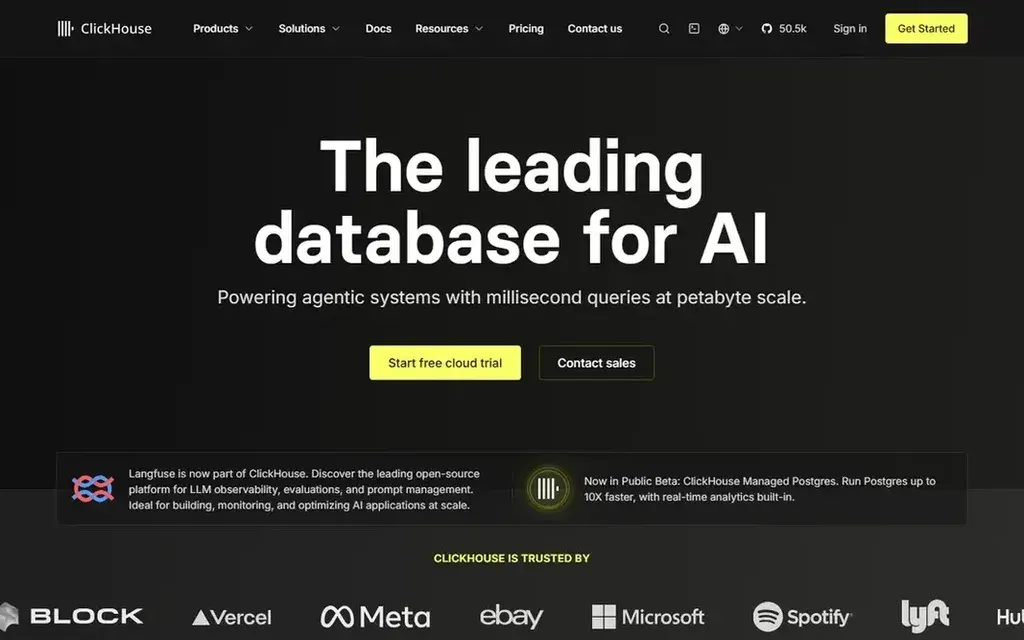
ClickHouse is built with quick open live analytics in mind. ClickHouse is an open, composable system for data-intensive workloads, spanning real-time analytics, transactions, observability, security and AI engineering. In practice, startups that expect heavy event or log volumes and want direct control over an analytics engine commonly shortlist it.
Beyond that, since it is a product instead of a turnkey warehouse, it can demand more operational attention and schema design work from a small team. Startups with little data engineering capacity, or those wanting the vendor to automate most lifecycle tasks, may prefer a managed alternative. Starting cost for ClickHouse: $0.056 per unit per hour. As for free access: Free trial.
Trade-offs to know: Needs tuning knowledge.
- Handles analytics
- Observability and AI
- Operational choices can multiply
How we compared the tools
Selection started from tools commonly considered for columnar databases for startups, then narrowed to 5 that have clear pricing information or a clear quote process. Seat minimums, billing terms and add-ons can move the real cost, so the starting prices here are a guide and not a quote. Tools are placed by general fit for columnar databases for startups, with price clarity and free access as tie-breakers. A different team can reasonably rank them differently.
Questions to settle before buying
- Get a written quote from SingleStore, Databricks, Google BigQuery and Amazon Redshift; the list shows no starting price for them.
- Take the trial from ClickHouse and push a live task through it before you pay.
- Read the limits listed for SingleStore first: broader than a pure warehouse.
- Check whether Google BigQuery bills monthly or annually, and what cancelling early costs.
- Test the integrations you rely on with Databricks before committing; some connectors sit on upper tiers.
FAQ
When does a combined transactional and analytical database make sense?
If the product needs fresh data served to users whereas also supporting analytical queries, a combined engine like SingleStore can ease the architecture.
Can a startup begin with serverless querying and add a warehouse later?
A serverless service for example Athena lets teams query data where it already lives with minimal setup, which is handy early on. As analytical demands grow and become always-on, plenty of teams then move core workloads to a dedicated warehouse.
Do these tools publish their prices?
Not all of them. SingleStore, Databricks, Google BigQuery and Amazon Redshift publish no starting price, so expect a quote request for those. The rest, ClickHouse included, show a starting price, though seats and billing terms still change the final cost.
Can I try these tools before paying?
Often, yes. ClickHouse offers a free trial. Use your own data and a real task during the test, and check what the free tier or trial limits before you rely on it. For the full picture, the cards above cover all 5 entries of this Columnar databases for startups list, including price, free plan and limits.
Does any tool for columnar databases for startups here have a free plan?
No tool in this list, SingleStore and ClickHouse included, has a permanent free plan. ClickHouse offer a trial. Trials and quotes are the usual route, so plan a short evaluation period.
Should a startup pick a managed warehouse or a self-managed engine?
Managed choices for example BigQuery and Redshift cut operational work, which suits lean teams. Self-managed or open engines such as ClickHouse offer more control and tuning potential but assume infrastructure skills.
Sources
- https://www.singlestore.com
- https://www.databricks.com
- https://cloud.google.com/bigquery
- https://aws.amazon.com/redshift
- https://clickhouse.com