5 Python and Django Developers Software for Enterprise Worth Shortlisting in 2026
5 tools for the best python and django developers software for enterprise, compared on pricing, free plans and best-fit use. Real limits included. Facts only.
- Editor's choice
 Sentry
Application performance monitoring and error tracking
Starts at$26 per monthVisit sentry.ioFull review - Great alternativeDjango
Rapid web application development
Starts atSee websiteVisit djangoproject.comFull review - Also consider
 GitHub
Collaborative code hosting and CI/CD
Starts at$4 per user per monthVisit github.comFull review
Direct answer
This list puts Sentry first for application performance monitoring and error tracking. Listed starting prices: Sentry from $26 per month, GitHub from $4 per user per month and Docker from $9 per user a month. Django is the stronger choice for rapid web application development, while GitHub suits collaborative code hosting and CI/CD. The other 2 tools in the list cover narrower or pricier cases.
TL;DR:
- Sentry takes the first slot, best suited to application performance monitoring and error tracking.
- PyCharm is the one to check for professional Python and Django development.
- A free plan is available from 3 of the 5 tools: Sentry, GitHub, Docker.
- The cheapest monthly starting price in the list is $4 per user per month, offered by GitHub.
- One limit worth knowing about Django: monolithic by nature, which may not suit microservices.
Last checked November 2026. Prices and plan details were read from the vendors' own pages in November 2026; vendors change plans often, so confirm the current price on the vendor site before you buy.
Quick comparison
| Tool | Best for | Starts at | Free plan? | |
|---|---|---|---|---|
| Sentry | Application performance monitoring and error tracking | $26 per month | Yes | Visit |
| Django | Rapid web application development | See website | Not stated | Visit |
| GitHub | Collaborative code hosting and CI/CD | $4 per user per month | Yes | Visit |
 Docker | Containerization and secure environments | $9 per user a month | Yes | Visit |
 PyCharm | Professional Python and Django development | See website | Not stated | Visit |
Python and Django Developers Software for Enterprise profiles
Choosing python and django developers software for enterprise usually comes down to price, fit and limits. This LinkVetted guide sets 5 tools side by side on those three points, with the facts kept short and checkable.
Think of Sentry for application performance monitoring and error tracking. Sentry is an application performance monitoring and error tracking system that helps developers identify and resolve issues in production. It offers clear error reports and performance insights, enabling teams to maintain application health.
Worth adding: whereas it gives you solid monitoring, it is not a full observability suite and may complement other tools. Beyond that, organizations seeking full monitoring for Python and Django applications will find Sentry valuable for error tracking and performance insights. Sentry cost at the entry level: $26 per month. A free plan is available with Sentry.
Drawbacks to consider: Can produce high volumes of data requiring filtering.
- Plugs into numerous development tools
- Performance monitoring for web applications
- May need configuration to cut noise
Django
Best for: Rapid web application development
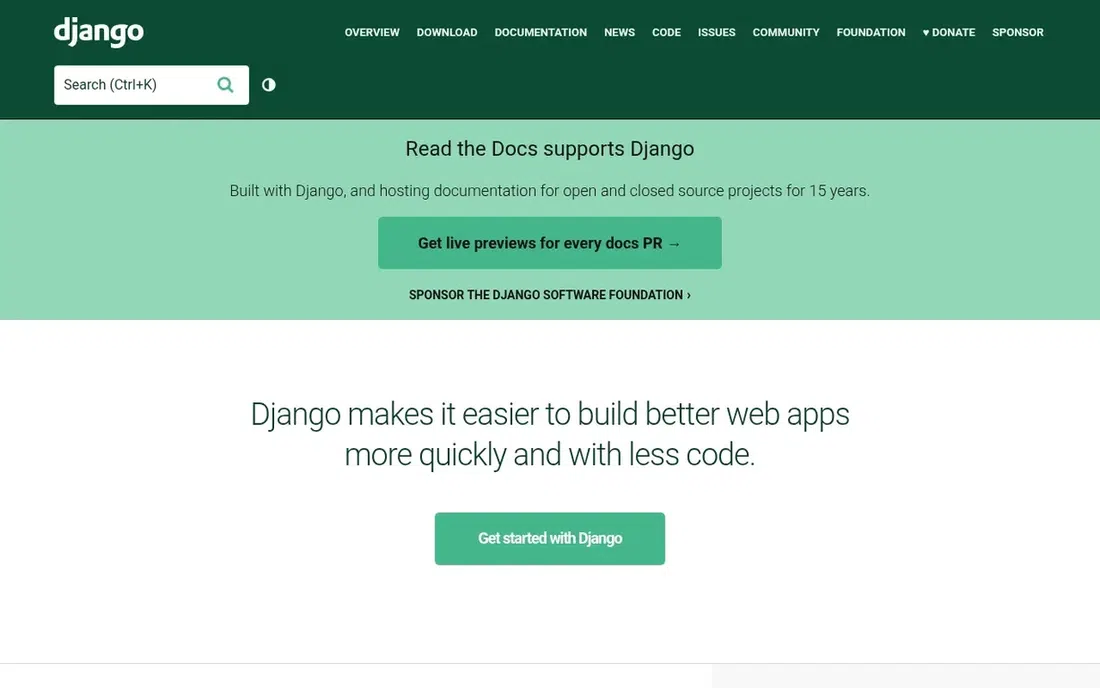
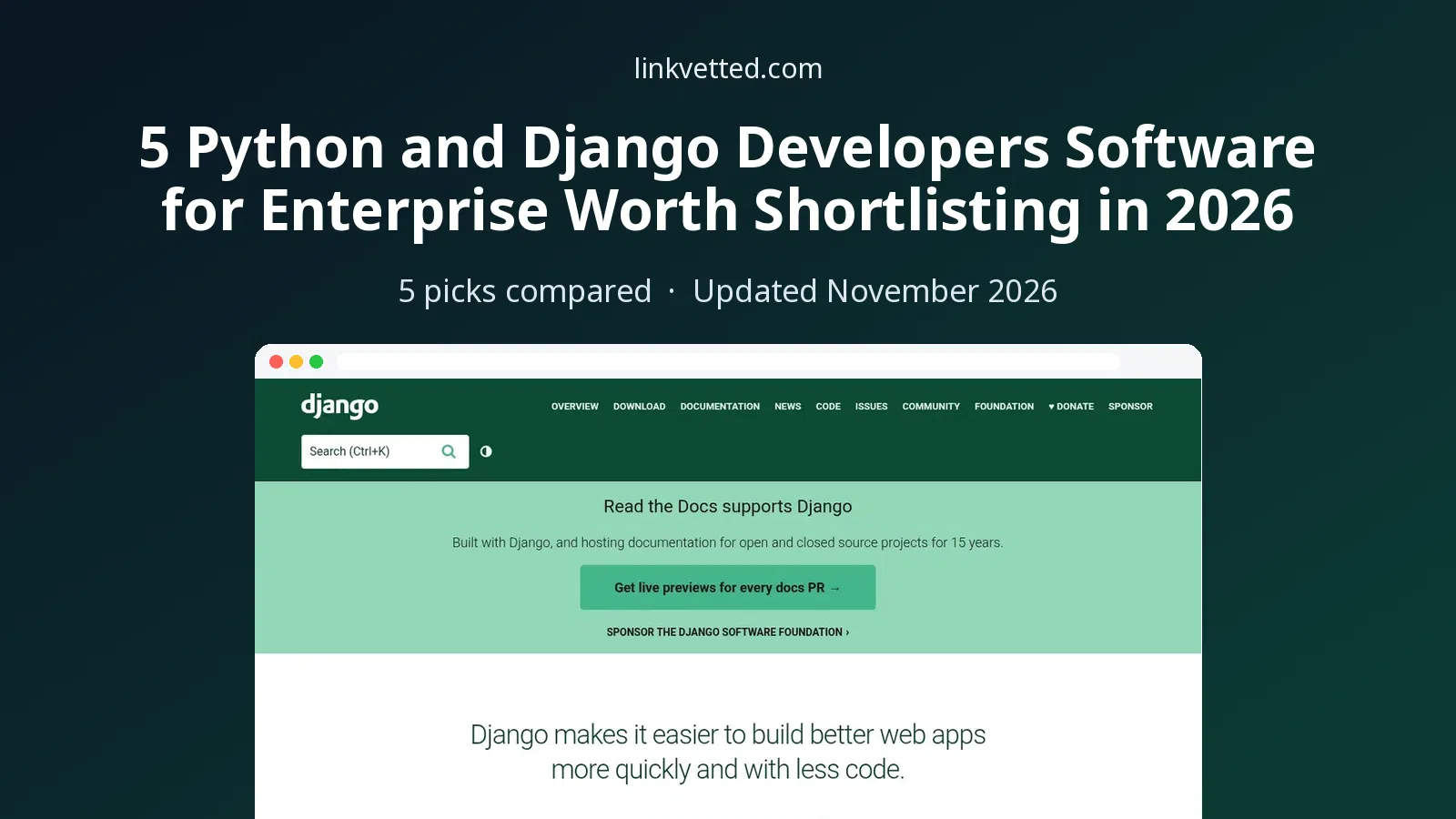
Django serves rapid web application development. Django is a high-level Python web framework that promotes rapid development and clean, pragmatic design. It contains an object-relational mapper, authentication, and an admin interface, which can accelerate the creation of enterprise web applications.
Honest limits: Monolithic by nature, which may not suit microservices.
Its conventions help cut decision fatigue and support long-term project stability. Teams needing a more light or asynchronous framework might explore alternatives, but for plenty of enterprise applications, Django gives you a dependable foundation with deep documentation and community resources. Django's monolithic approach may not be well suited to organizations building microservices or requiring highly specialized architectures. It also assumes familiarity with Python and its ecosystem. Check the vendor site for Django pricing; none is listed in this comparison. Free plan details: Not stated.
- Encourages clean
- Batteries-included framework with ORM and admin
- Needs Python knowledge to use fully
Pick GitHub if this describes you: collaborative code hosting and CI/CD. Whereas GitHub provides a solid set of features, some advanced capabilities may need extra setup or familiarity. More specifically, GitHub is a system for version control and collaboration using Git, with extra features for CI/CD, project management, and code review.
Drawbacks to consider: Advanced features may need configuration.
It is widely used in enterprises for hosting repositories and managing development workflows. Its broad integration ecosystem makes it a central hub for plenty of development pipelines. Worth adding: organizations with strict data residency requirements might have to evaluate self-hosted options. Even so, for teams seeking a well-known system with wide community support and integrated tooling, GitHub remains a typical choice for enterprise collaboration. The starting price for GitHub: $4 per user per month. GitHub includes a free tier.
- AI-powered features for code review and automation
- Widely adopted product with large community
- Dependent on internet connectivity for full functionality
Docker makes the most sense for Containerization and secure environments. Docker is a product for building, running, and sharing containerized applications. It supplies secure sandboxes and governance for modern software, including AI agents.
The main drawbacks: Networking and storage can be complicated to configure.
Docker helps enterprises achieve consistency across development, testing, and production environments by packaging applications and dependencies into containers. This can ease deployment and boost resource efficiency, making it a foundational tool for cloud-native development. Adopting Docker commonly involves learning container orchestration and networking concepts, which can be a hurdle for teams new to containers. The starting price for Docker: $9 per user per month. Docker includes a free tier.
- Broad ecosystem and tooling
- Supports secure sandboxes for AI agents
- Needs understanding of container orchestration
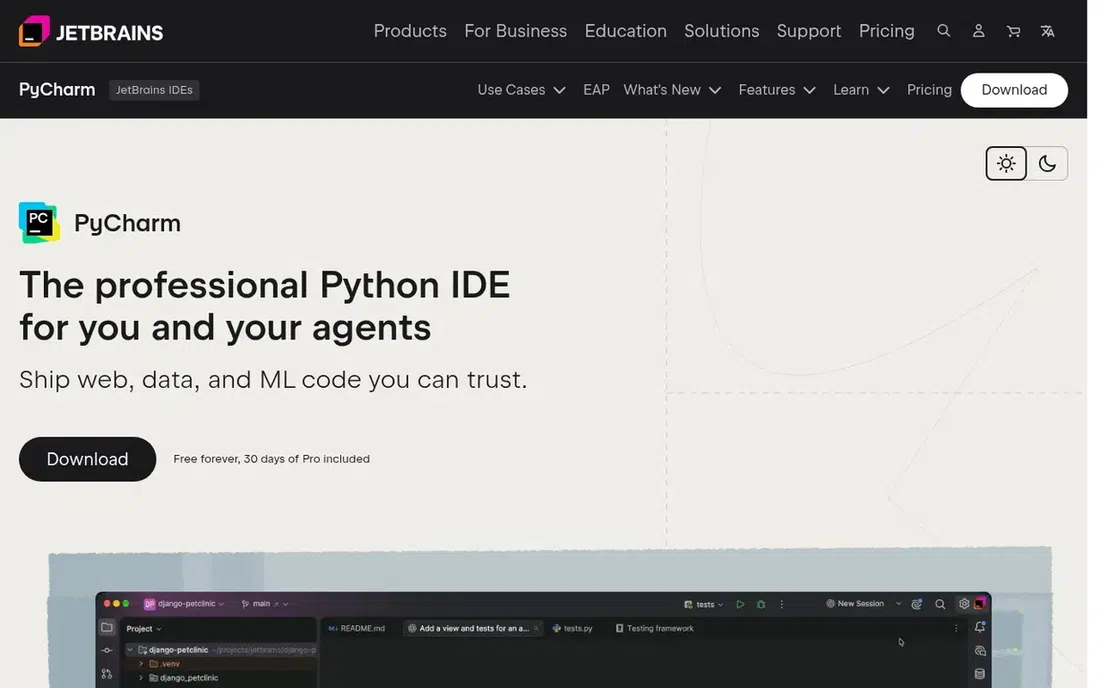
In short, PyCharm is for professional Python and Django development. PyCharm is a professional integrated development environment (IDE) centred on Python, with features that support web development, data science, and machine learning. It supplies code analysis, refactoring, and debugging capabilities that help teams maintain code quality in enterprise settings.
Watch-outs: May need configuration for non-Python stacks.
Beyond that, the IDE is made for developers who want a full toolset from day one, especially for Django projects where template debugging and database tools are integrated. Also, teams that prefer a light, highly configurable editor might consider alternatives. Even so, for organizations standardized on Python and Django, PyCharm supplies a cohesive environment that can cut setup time and boost consistency across development teams. PyCharm does not show a starting price in this comparison, so check the vendor site for current pricing. As for free access: Not stated.
- ML workflows
- Built-in support for web, data
- Resource-intensive compared with light editors
Our selection method
Pricing pages, product documentation and feature lists were the main sources, and every entry carries at least one honest drawback. Plan names, prices and limits change often. Treat the figures here as a starting point and verify them with the vendor. The order reflects how well each tool fits the most common buying scenario for python and django developers software for enterprise, then price clarity, then free plan access. It is a starting point, not a verdict.
What to confirm before you sign up
- Confirm the entry price on the vendor page. For Django and PyCharm that means a quote rather than a fixed price.
- Check what the free option really includes: Sentry, GitHub and Docker offer a free plan, and usage caps differ.
- Before choosing Sentry, weigh its main limit: can generate high volumes of data requiring filtering.
- Map your must-have features to a specific GitHub plan before you compare prices.
- Pick one real project and run it in Sentry first; a small pilot shows fit faster than a checklist.
FAQ
How are the tools for python and django developers software for enterprise ordered?
Sentry sits first and PyCharm last because the order follows typical fit for python and django developers software for enterprise, then price clarity and free access. It is a judgement call, so read each profile for fit and limits.
What is the cheapest option for python and django developers software for enterprise in this list?
On published monthly entry prices, GitHub is the lowest here at $4 per user per month. Entry price is only part of the cost, because seats, add-ons and billing terms can change the total. Prices, free plan details and limits for all 5 tools in this Python and Django developers software for enterprise roundup sit on the individual cards above.
Do these tools publish their prices?
Not all of them. Django and PyCharm publish no starting price, so expect a quote request for those. The rest, Sentry included, show a starting price, though seats and billing terms still change the final cost.
Is Sentry the right pick for everyone comparing python and django developers software for enterprise?
No single tool suits every team. Sentry comes first because it fits application performance monitoring and error tracking, while Django suits rapid web application development and GitHub suits collaborative code hosting and CI/CD. Match the tool to your own size, budget and workflow before deciding.
Which tool is a good match for Django development in an enterprise?
Start with Sentry if you need application performance monitoring and error tracking. Django is the better match for rapid web application development, and GitHub for collaborative code hosting and CI/CD. The best choice depends on budget, team size and workflow.
Sources
- https://sentry.io
- https://www.djangoproject.com
- https://github.com
- https://www.docker.com
- https://www.jetbrains.com/pycharm