6 Link Building Reporting Tools Worth Shortlisting in 2026
A practical comparison of the best link building reporting tools for 2026, covering what each tool reports, who it fits and what to check before you buy.
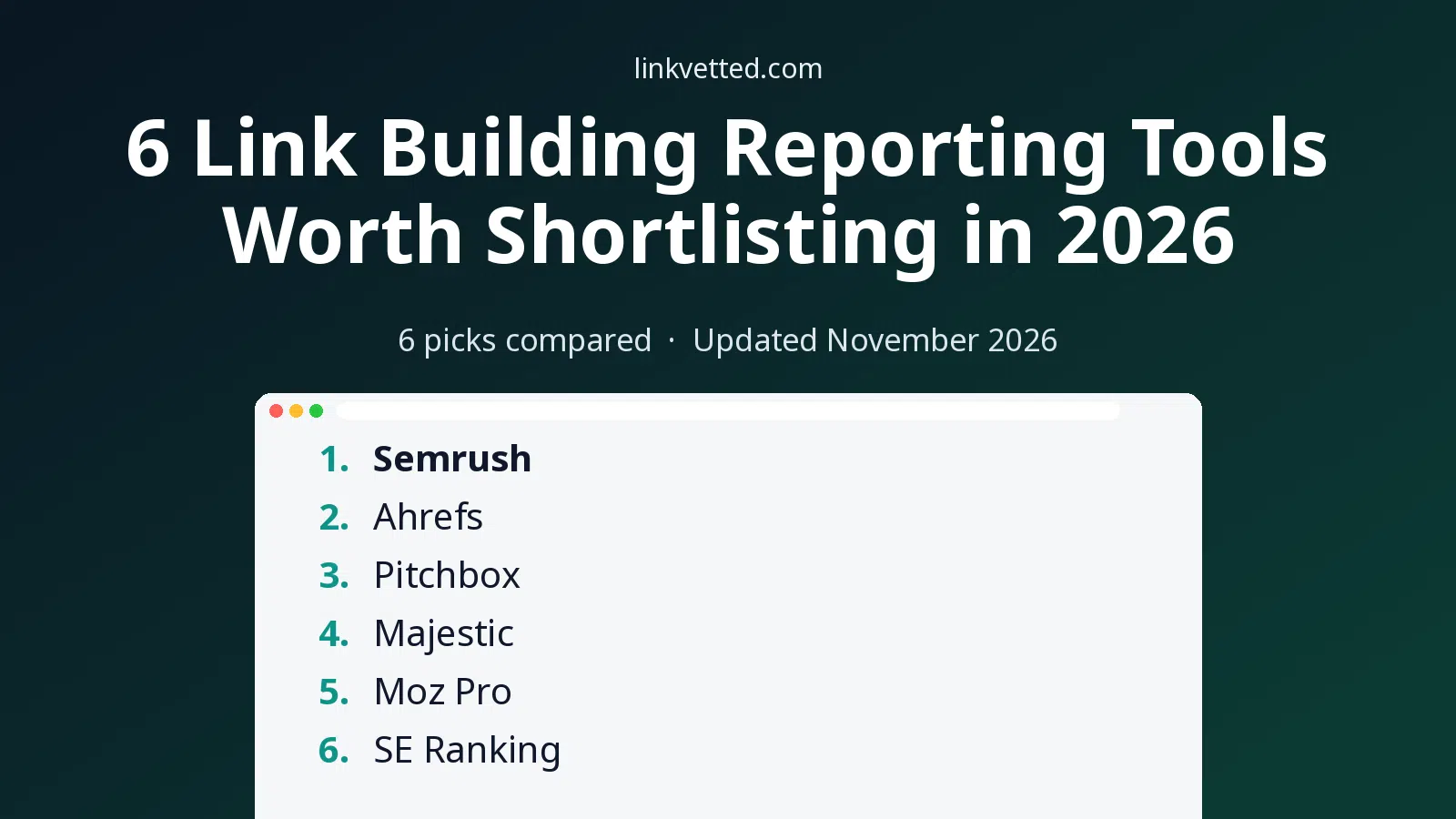
- Editor's choice
 Semrush
All-in-one backlink and campaign reporting
Starts atSee websiteVisit semrush.comFull review - Great alternative
 Ahrefs
Backlink monitoring and clean exports
Starts atSee websiteVisit ahrefs.comFull review - Also consider
 Pitchbox
Outreach and placement reporting
Starts atSee websiteVisit pitchbox.comFull review
Direct answer
My first pick is Semrush because its backlink database, Link Building Tool and client-ready PDF reports cover the whole reporting cycle in one place. For agencies that want campaign and outreach tracking alongside link data, Pitchbox is the stronger fit. If you mainly need to monitor links you already earned and export clean reports, Ahrefs is the one I would shortlist next. The right choice depends on whether you report on prospecting, outreach or live link health.
TL;DR:
- Pick a reporting tool based on what you report on most: prospecting, outreach activity or live backlink health.
- Tools with client-facing PDF exports save time if you send monthly reports to clients.
- Backlink index size and refresh speed matter more than the number of dashboard widgets.
- Outreach tools report on emails and placements, while backlink tools report on links that already exist.
- Check export formats and API access before you commit, because reporting often happens outside the tool.
Last checked November 2026. Plan prices are not quoted in this guide because they change often; see each vendor's own pricing page for current figures before you buy.
Quick comparison
| Tool | Best for | Starts at | Free plan? | |
|---|---|---|---|---|
| Semrush | All-in-one backlink and campaign reporting | See website | No free plan | Visit |
| Ahrefs | Backlink monitoring and clean exports | See website | No free plan | Visit |
| Pitchbox | Outreach and placement reporting | See website | Not stated | Visit |
 Majestic | Link history and trust flow data | See website | No free plan | Visit |
 Moz Pro | Simple reports for small teams | See website | Free trial | Visit |
 SE Ranking | Budget-friendly client reporting | See website | Free trial | Visit |
The best link building reporting tools compared
I put this comparison together from vendor documentation, public product pages and published feature lists. I did not run hands-on tests, so treat it as a starting shortlist rather than a lab result. Each tool below is judged on how well it turns link building work into reports you can actually send or act on.
Semrush is a broad SEO platform, and its backlink and link building modules are the parts that matter here. It fits agencies and in-house teams that want one login for research, outreach tracking and reporting. The Link Building Tool keeps prospects, outreach status and confirmed links in a single pipeline, which makes monthly reporting less manual.
For reporting, Semrush lets you build PDF reports from backlink data, including new and lost links, referring domains and authority metrics. You can schedule reports and share them with clients or stakeholders. The campaign view also shows progress against outreach stages, so a report can cover both activity and results rather than just a link count.
The main limit is cost and complexity. Smaller teams may find the full suite more than they need, and some limits depend on the plan tier. If you only need a simple backlink export, a lighter tool may be enough.
- Large backlink database
- Built-in Link Building Tool
- Client-ready PDF reports
- Higher tiers needed for full limits
- Interface can feel crowded
Ahrefs is best known for its backlink data, and that is exactly what makes it useful for reporting. It suits SEOs who need to show link growth, lost links and referring domain changes over time. The Site Explorer backlink views and the dashboard features give you a clear picture of what changed and when.
Reporting in Ahrefs centres on filtering and exporting backlink data, then presenting it in your own template or in the built-in reports. You can track new and lost links, filter by attributes, and export to CSV for a client report. Alerts help you catch link losses between reporting cycles.
The drawback is that Ahrefs is not an outreach tool. It reports on links that exist, not on emails sent or placements in progress. Some features also use credits, so heavy reporting can hit limits. If you need a full outreach pipeline, pair it with a dedicated tool.
- Strong backlink index
- Clear new and lost link tracking
- Flexible exports
- Credit limits on some features
- No built-in outreach CRM
Pitchbox is an outreach and link building platform rather than a backlink database. It fits agencies and teams that run regular blogger and publisher outreach and need to report on campaign progress. The workflow covers prospect lists, email sequences, replies and confirmed placements.
For reporting, Pitchbox tracks campaign activity such as emails sent, replies and placements won. That makes it useful for showing clients the work behind link building, not just the final links. You can report on pipeline status and placement outcomes, which is often what clients ask about during a campaign.
The limit is that Pitchbox does not replace a backlink index. It will not show you the full link profile of a domain or monitor lost links across the web. If your reporting is mostly about live link health, you need a backlink tool alongside it.
- Built for outreach campaigns
- Tracks placements and status
- Reporting on campaign activity
- Not a backlink index
- Less useful without active outreach
Majestic is one of the older link intelligence services, and it still has a strong following for link audits and history. It fits SEOs who value link metrics such as Trust Flow and Citation Flow and want to look at a domain's link past. Its historical data is a real reason people keep it in their stack.
For reporting, Majestic provides backlink reports you can export and use in audits. You can review referring domains, anchor text and link history, then present findings in your own format. It is more of a data source than a report builder, so expect to do some formatting yourself.
The main drawback is the interface, which feels dated next to newer tools, and the reporting is less polished. If you want a modern dashboard and client-ready reports out of the box, look elsewhere. If you want link history and trust metrics, it is worth a look.
- Long-running link history
- Trust Flow and Citation Flow metrics
- Useful for link audits
- Dated interface
- Less polished reporting
Moz Pro is a well-known SEO suite with a backlink tool and reporting features. It fits small teams and freelancers who want clear metrics without a steep learning curve. Domain Authority and Page Authority are familiar to clients, which can make reports easier to explain.
For link building reporting, Moz Pro shows backlinks, referring domains and link growth, and lets you build reports you can share. The interface is approachable, so a small team can produce a monthly report without much setup. It works well as a first reporting tool.
The limit is depth. Moz's link index is generally smaller than the largest rivals, and advanced filters are fewer. Large agencies with heavy link campaigns may outgrow it. For smaller clients and simpler reporting, it is a reasonable choice.
- Easy to understand metrics
- Straightforward reports
- Good for beginners
- Smaller link index than rivals
- Less depth for large campaigns
SE Ranking is an SEO platform with backlink monitoring and a report builder aimed at agencies. It fits smaller agencies and freelancers who need to send client reports without paying for a top-tier suite. The platform covers rank tracking, backlinks and reporting in one place.
For link building reporting, SE Ranking lets you monitor new and lost backlinks, review referring domains and build branded reports for clients. The report builder is a practical feature for agencies that send the same report to many clients each month. You can also export data if you prefer your own template.
The limits are depth and index size compared with the largest backlink tools. Advanced link filters are fewer, so very technical link audits may need another tool. For routine client reporting on a budget, it is a sensible option.
- Accessible pricing tiers
- Client-friendly report builder
- Backlink monitoring included
- Fewer advanced link filters
- Smaller index than top rivals
How I chose
I chose these tools by reading vendor documentation, public product pages and published feature lists, then matching each one to common link building reporting needs. I did not run hands-on tests, so I am not claiming measured accuracy or speed. The goal was to cover the different jobs a report has to do: prospecting, outreach, link monitoring and client delivery.
I also weighed limits, because a reporting tool is only useful if it fits your workflow. Some tools are strong on backlink data but weak on outreach, and others are the reverse. I noted who should skip each tool so you can rule options out quickly. Where a feature or plan detail was unclear from public sources, I left it out rather than guess.
What to check before you buy
- Confirm the tool reports on the exact stage you need: prospecting, outreach activity, live links or all three.
- Check export formats (CSV, PDF, API) and whether scheduled client reports are included.
- Look at how often backlink data refreshes, since stale data weakens any report.
- Check plan limits on rows, projects and report exports, not just the headline features.
- Ask whether lost link alerts are included, because link loss is a common client question.
- Confirm the tool covers the markets and languages your clients operate in.
FAQ
What is the best link building reporting tool overall?
Semrush is my first pick because it combines a backlink database, a link building pipeline and client-ready reports in one platform. That said, the best tool depends on your workflow. If outreach reporting matters most, Pitchbox is a strong fit. If you mainly monitor live links, Ahrefs is worth shortlisting.
Do I need a separate outreach tool for reporting?
Not always, but often yes. Backlink tools report on links that already exist, while outreach tools report on emails, replies and placements in progress. If clients ask about campaign activity, a dedicated outreach tool gives you that data. If they only care about final links, a backlink tool may be enough.
Can I report on link building with a free plan?
Free plans are limited for link building reporting. Most tools offer a free trial rather than a lasting free plan, and trials usually cap exports and data. For regular client reporting you should expect to pay for a plan. Check trial limits before you rely on one for a live client report.
How often should I send link building reports?
Monthly is common for client reporting, with alerts for major link losses in between. The right cadence depends on campaign pace and client expectations. A monthly report plus a simple lost-link alert keeps clients informed without flooding them. Confirm the schedule with the client before you set up automated reports.
What should a link building report include?
A useful report covers new links, lost links, referring domain changes and the status of outreach activity. It should also note the metrics you agreed with the client, such as authority or relevance. Keep it short and consistent, and include a plain summary of what changed since the last report.
Sources
- https://www.semrush.com
- https://ahrefs.com
- https://pitchbox.com
- https://majestic.com
- https://moz.com
- https://seranking.com
Related guides
- Best Building Energy Simulation Software (2026): 5 Picks Checked on Vendor Pages
- The 5 Best Permit Tracking Software for Municipal Building Departments in 2026, Ranked
- Platforms for Building Data Pipelines in 2026: The 5 Best Options Side by Side
- Best Alternatives to Spreadsheet-Based Reporting (2026): 5 Picks Checked on Vendor Pages