6 Best JavaScript Web Frameworks for 2026, Vetted and Compared
Best JavaScript web frameworks in 2026: 6 tools with starting prices, free plans and limits. Fit and flaws are laid out for each entry. Read before you buy.
- Editor's choice
 Svelte
Lean apps with less boilerplate
Starts atPricing on requestVisit svelte.devFull review - Great alternativeNuxt
Full-stack Vue apps with sensible defaults
Starts atPricing on requestVisit nuxt.comFull review - Also considerVue.js
Gradual adoption and approachable templates
Starts atPricing on requestVisit vuejs.orgFull review
Direct answer
Start with Svelte if you need lean apps with less boilerplate. Nuxt is the stronger choice for full-stack Vue apps with sensible defaults, while Vue.js suits gradual adoption and approachable templates. Details and limits for the rest of the 6 tools are below. None of these vendors publish plan prices, so pricing is on request for every option.
TL;DR:
- Top of the list is Svelte, which targets lean apps with less boilerplate.
- Svelte, Next.js and the 4 others all need a premium plan or a trial, since no free plan is listed.
- Next.js fits full-stack React apps with built-in rendering.
- Pricing across the list, from Svelte to Next.js, is by quote only.
- A fair warning about Vue.js: fewer built-in conventions than a full framework.
Last checked November 2026. Pricing on request: vendors did not publish plan prices when this guide was last checked (November 2026), so ask each vendor for a written quote.
Quick comparison
| Tool | Best for | Starts at | Free plan? | |
|---|---|---|---|---|
| Svelte | Lean apps with less boilerplate | Pricing on request | Not stated | Visit |
| Nuxt | Full-stack Vue apps with sensible defaults | Pricing on request | Not stated | Visit |
| Vue.js | Gradual adoption and approachable templates | Pricing on request | Not stated | Visit |
 Ember.js | Ambitious apps needing solid conventions | Pricing on request | Not stated | Visit |
 React | Component-based UI across web and native | Pricing on request | Not stated | Visit |
| Next.js | Full-stack React apps with built-in rendering | Pricing on request | Not stated | Visit |
Our 6 JavaScript web frameworks
LinkVetted put together this guide to JavaScript web frameworks for readers who want a clear shortlist without reading every vendor page. It compares 6 tools on starting price, free plans, who each one suits and where each one falls short.
Svelte is designed for lean apps with less boilerplate. The ecosystem around Svelte is smaller than those of React or Vue, so some integrations and hiring pools are narrower.
Pricing for Svelte is not stated here, so ask the vendor for current figures. Trial and free access: Not stated.
Best features of Svelte: Compact.
Drawbacks to consider: Fewer ready-made integrations in some areas.
- Friendly developer experience
- Compiles away framework overhead
- Smaller surrounding ecosystem than React
Nuxt
Best for: Full-stack Vue apps with sensible defaults
For full-stack Vue apps with sensible defaults, Nuxt is a natural candidate. Nuxt describes itself as the full-stack Vue framework, offering file-based routing, auto-imports and server-side rendering already configured. In daily use, projects that require rendering adaptability and a clear project layout will find the defaults useful.
The framework pairs naturally with Vue skills already on the team. As for the details, developers who want minimal abstraction may prefer Svelte, whereas React-focused teams should look at Next.js for a comparable full-stack experience. This comparison lists no price for Nuxt; ask the vendor. Free plan details: Not stated.
Where it is weaker: Brings conventions on top of Vue.
- File-based routing from day one
- Auto-imports cut boilerplate
- Best value only if you use Vue
Vue.js
Best for: Gradual adoption and approachable templates
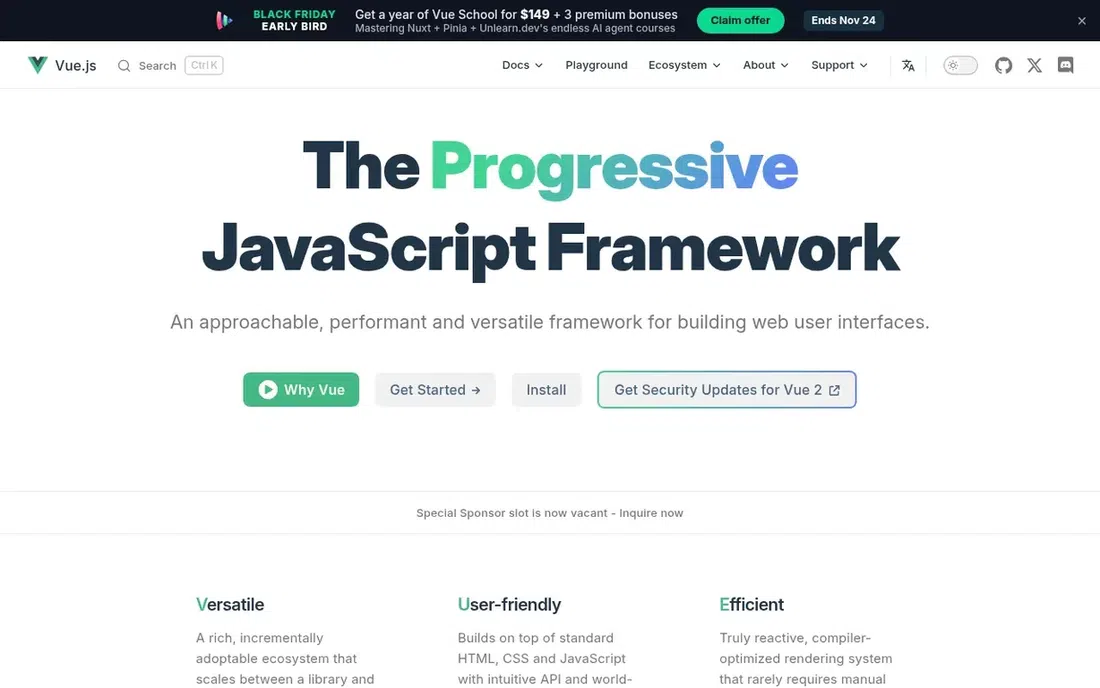
For gradual adoption and approachable templates, Vue.js is a natural candidate. Vue.js calls itself the progressive JavaScript framework, meaning you can introduce it into an existing page and scale up as needs grow.
No starting price is listed for Vue.js here; confirm pricing on the vendor site. Free options: Not stated.
Where it is weaker: Fewer built-in conventions than a full framework.
- Readable template syntax
- Progressive framework you can adopt incrementally
- Ecosystem choices can vary between teams
Ember.js is a good fit for ambitious apps needing solid conventions. Ember.js describes itself as a framework for ambitious web developers, built to help teams be productive from day one with developer ergonomics in mind.
Ember.js does not show a starting price in this comparison, so check the vendor site for current pricing. As for free access: Not stated.
Watch-outs: Steeper ramp-up time for newcomers.
- Productive defaults from day one
- Friendly APIs made for ergonomics
- Smaller mindshare than React or Vue
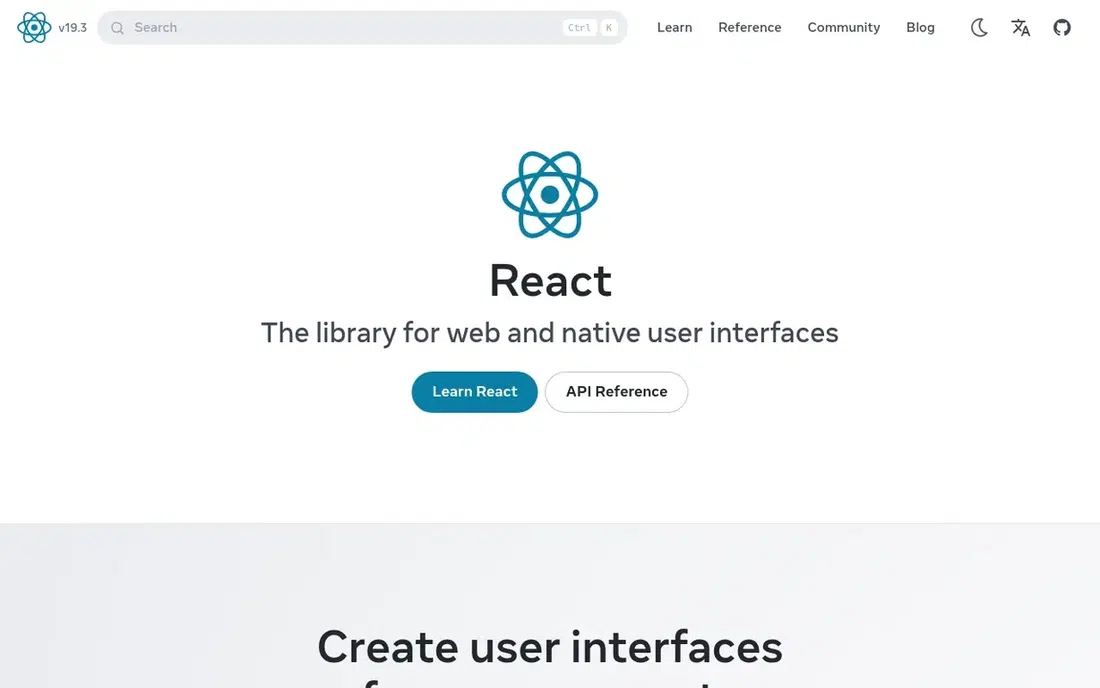
Think of React for Component-based UI across web and native. It is designed so components written by different people can be combined smoothly.
Worth adding: since React is a library instead of a complete framework, you assemble much of the surrounding architecture yourself, which can slow teams that want conventions decided for them. React does not show a starting price in this comparison, so check the vendor site for current pricing. Free access: Not stated.
Downsides: Not a full framework on its own.
- Large surrounding ecosystem
- Works for web and native interfaces
- Routing and data choices are yours to make
Next.js
Best for: Full-stack React apps with built-in rendering
Next.js works best for full-stack React apps with built-in rendering. Next.js is described as the full-stack React framework for the web, extending React with routing, rendering and server-side capabilities.
Beyond that, adopting Next.js means learning framework-specific conventions on top of React itself, which brings complexity for straightforward static sites. Next.js shows no starting price here, so confirm the cost on the vendor site. Free options: Not stated.
Trade-offs to know: Brings framework concepts beyond React.
- Solid fit for production web apps
- Full-stack framework built on React
- Tied closely to the React ecosystem
How we compared the tools
A buyer's checklist
- Ask each vendor, from Svelte to Next.js, for a written quote; none of them publishes a starting price.
- Read the limits listed for Svelte first: smaller surrounding ecosystem than React.
- Find out whether the entry plan of Next.js covers your must-haves or only a trimmed-down version.
- Before rolling out Ember.js, verify the integrations your workflow depends on.
- Ask React whether prices are locked for the first term and what happens at renewal.
FAQ
Is React a framework or a library?
React describes itself as a library for building user interfaces from components, not a complete framework. Teams usually add routing and other tooling around it, or choose a React-based framework such as Next.js for a more complete structure.
Is Svelte the right pick for everyone comparing JavaScript web frameworks?
No single tool suits every team. Svelte comes first because it fits lean apps with less boilerplate, while Nuxt suits full-stack Vue apps with sensible defaults and Vue.js suits gradual adoption and approachable templates. Match the tool to your own size, budget and workflow before deciding.
How are the tools for JavaScript web frameworks ordered?
The order follows typical fit for JavaScript web frameworks, with Svelte first and Next.js last, then price clarity and free access. It is editorial judgement, not a score, so another team could rank the tools differently.
Do these tools publish their prices?
No. None of the tools, from Svelte to Next.js, shows a fixed starting price here, so budget time for quotes.
Does any tool for JavaScript web frameworks here have a free plan?
A permanent free plan is not offered by Svelte, Next.js or the other tools here. Plan a short evaluation period instead.
Sources
- https://svelte.dev
- https://nuxt.com
- https://vuejs.org
- https://emberjs.com
- https://react.dev
- https://nextjs.org