6 Best Hybrid Cloud Management Platforms for 2026, Vetted and Compared
Shortlisting the best hybrid cloud management platforms? 6 products compared on cost, free access and ideal buyer. Pros and cons for every tool. No filler.
- Editor's choiceNutanix Prism
Straightforward hypervisor and VM management
Starts atPricing on requestVisit nutanix.comFull review - Great alternativeIBM Cloud Pak for Multicloud Management
Multicloud operations in IBM environments
Starts atPricing on requestVisit ibm.comFull review - Also considerAWS Outposts
On-premises workloads with AWS consistency
Starts atPricing on requestVisit aws.amazon.comFull review
Direct answer
Nutanix Prism comes first here, mainly for straightforward hypervisor and VM management. IBM Cloud Pak for Multicloud Management is the stronger choice for Multicloud operations in IBM environments, while AWS Outposts suits on-premises workloads with AWS consistency. Details and limits for the rest of the 6 tools are below. None of these vendors publish plan prices, so pricing is on request for every option.
TL;DR:
- Nutanix Prism sits first on this list: straightforward hypervisor and VM management.
- What to know about IBM Cloud Pak for Multicloud Management first: portfolio navigation can be complicated.
- Nutanix Prism, Red Hat OpenShift and the 4 others all sell by quote; expect sales conversations before you see a price.
- AWS Outposts stands alone as the one tool in this list with a free plan.
Last checked November 2026. Pricing on request: vendors did not publish plan prices when this guide was last checked (November 2026), so ask each vendor for a written quote.
Quick comparison
| Tool | Best for | Starts at | Free plan? | |
|---|---|---|---|---|
| Nutanix Prism | Straightforward hypervisor and VM management | Pricing on request | Not stated | Visit |
| IBM Cloud Pak for Multicloud Management | Multicloud operations in IBM environments | Pricing on request | Not stated | Visit |
| AWS Outposts | On-premises workloads with AWS consistency | Pricing on request | Yes | Visit |
| Google Anthos | Kubernetes-centric hybrid management | Pricing on request | Not stated | Visit |
| HPE GreenLake | Unified hybrid operations and data security | Pricing on request | Not stated | Visit |
 Red Hat OpenShift | Application modernization across environments | Pricing on request | Not stated | Visit |
Our 6 hybrid cloud management platforms
Short on time? The summary and table above give the quick view of 6 hybrid cloud management platforms, and the profiles that follow give the detail behind each entry.
Nutanix Prism
Best for: Straightforward hypervisor and VM management
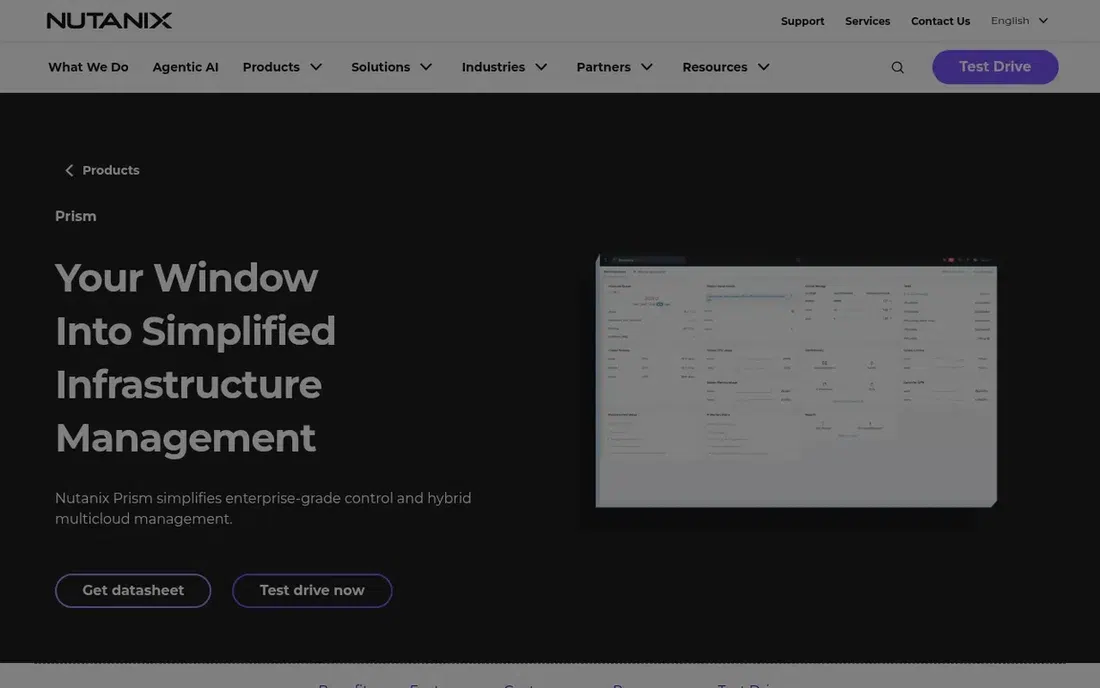
Nutanix Prism makes the most sense for simple hypervisor and VM management. Nutanix Prism is described as the control plane that eases and simplifies typical workflows, making hypervisor and VM setup as simple as checking email.
Where it falls short: Best fit within Nutanix environments.
Prism's strength is infrastructure workflow simplification, so it is not positioned as a wide application modernization or multicloud governance system. Pricing for Nutanix Prism is not stated here, so ask the vendor for current figures. Free plan details: Not stated.
- Simplified typical workflows
- Single control plane view
- Narrower scope than full cloud systems
IBM Cloud Pak for Multicloud Management
Best for: Multicloud operations in IBM environments
Where IBM Cloud Pak for Multicloud Management fits: Multicloud operations in IBM environments. IBM Cloud Pak for Multicloud Management is offered through IBM's product catalog as a multicloud management offering.
It fits organizations already working within IBM software and services that want management capabilities aligned with that portfolio instead of assembling separate tools. This comparison lists no price for IBM Cloud Pak for Multicloud Management; ask the vendor. Free plan details: Not stated.
Watch-outs: Value relies on IBM stack alignment.
- Multicloud management focus
- Suits IBM-aligned estates
- Portfolio navigation can be complicated
AWS Outposts
Best for: On-premises workloads with AWS consistency
Think of AWS Outposts for on-premises workloads with AWS consistency. AWS Outposts lets you run AWS infrastructure and services on premises for a consistent hybrid experience.
What to check first: On-premises capacity must be planned.
On top of that, teams that must run multiple clouds under one policy framework should consider Azure Arc instead. Beyond that, Outposts is an extension of AWS instead of a neutral management layer, so multicloud governance is restricted. Check the vendor site for AWS Outposts pricing; none is listed in this comparison. You can start on AWS Outposts without paying.
- Runs AWS services on premises
- Supports hybrid architectures
- Tied to AWS services
Google Anthos
Best for: Kubernetes-centric hybrid management
Google Anthos targets Kubernetes-centric hybrid management. Organizations without Kubernetes expertise may find Prism or GreenLake a gentler operational starting point.
Worth adding: Google Anthos is closely tied to Google Kubernetes Engine, described as a completely managed Kubernetes service with the full Kubernetes API, autoscaling, release channels and multi-cluster support. For everyday use, Anthos assumes container-centric operations, so traditional VM-heavy estates may need extra tooling. This comparison lists no price for Google Anthos; ask the vendor. Trial and free access: Not stated.
Watch-outs: Kubernetes skills required.
- Multi-cluster support
- Built around managed Kubernetes
- Less suited to non-container workloads
HPE GreenLake
Best for: Unified hybrid operations and data security
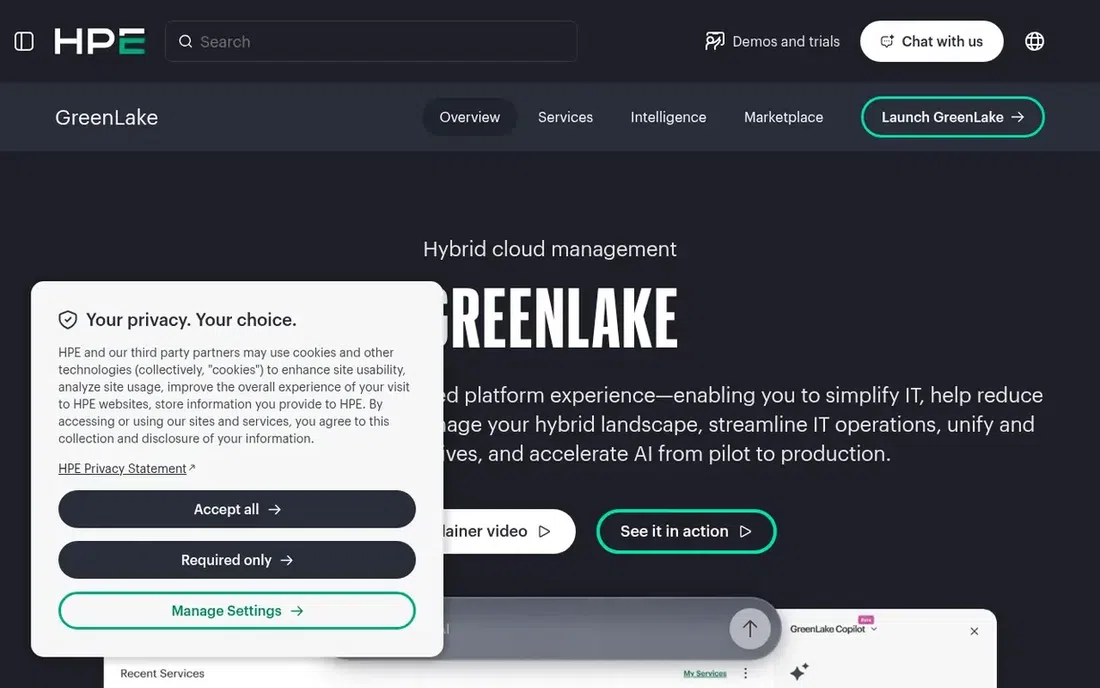
HPE GreenLake works best for unified hybrid operations and data security. HPE GreenLake is presented as a way to ease IT, cut costs, unify and secure data and accelerate AI whereas optimizing hybrid cloud operations.
Watch-outs: Vendor-specific ecosystem.
In practice, teams that primarily have to govern cloud-native applications across providers might weigh OpenShift or Anthos instead. GreenLake's value is tied to the HPE ecosystem, so mixed-vendor estates may find integration less smooth. This comparison lists no price for HPE GreenLake; ask the vendor. As for free access: Not stated.
- Optimizes hybrid cloud operations
- Brings together and secures data
- Wide scope may need planning
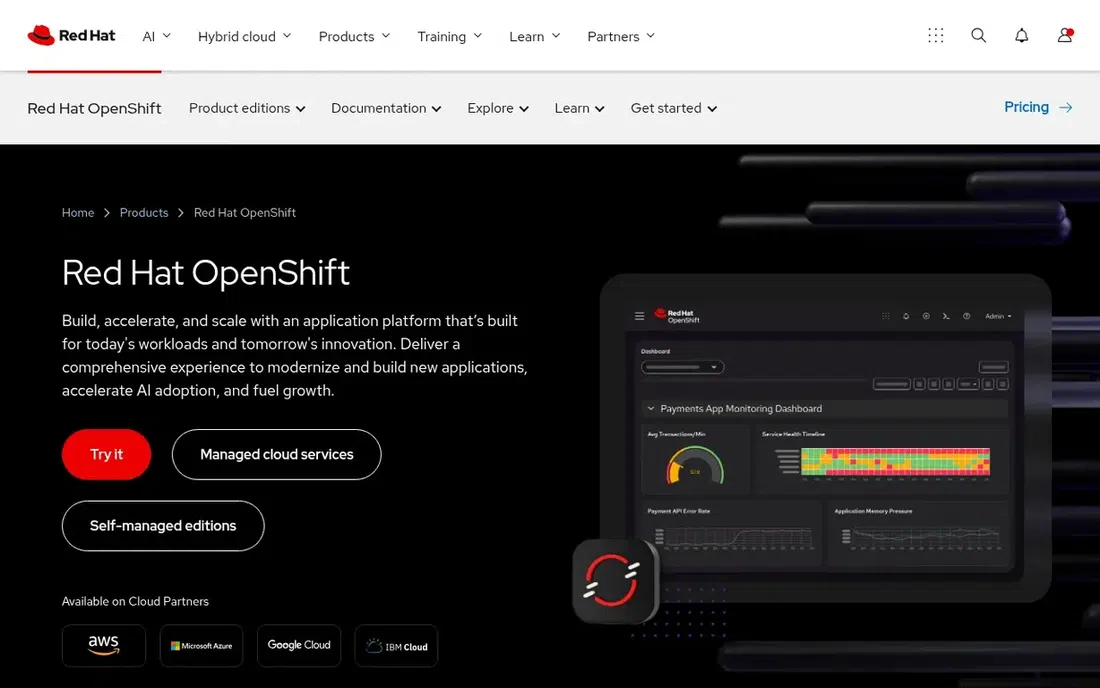
Red Hat OpenShift is aimed squarely at application modernization across environments. If your priority is straightforward virtual machine administration instead of application systems, a control plane like Nutanix Prism may be a better starting point.
The main drawbacks: Product depth can mean a ramp-up time.
In practice, since it centers on applications, OpenShift may not include every infrastructure or cost-management need on its own, and its breadth can need dedicated skills. Teams planning container-based workloads and developer workflows will find the most value here. This comparison lists no price for Red Hat OpenShift; ask the vendor. Trial and free access: Not stated.
- Supports modernization and AI adoption
- Consistent experience across environments
- Focused more on applications than infrastructure
What went into this list
Pricing pages, product documentation and feature lists were the main sources, and every entry carries at least one honest drawback. Seat minimums, billing terms and add-ons can move the real cost, so the starting prices here are a guide and not a quote. The order reflects how well each tool fits the most common buying scenario for hybrid cloud management platforms, then price clarity, then free plan access. It is a starting point, not a verdict.
A buyer's checklist
- Ask each vendor, from Nutanix Prism to Red Hat OpenShift, for a written quote; none of them publishes a starting price.
- Look at the free plan from AWS Outposts closely: its caps decide whether it is usable for real work.
- Before choosing Nutanix Prism, weigh its main limit: narrower scope than full cloud systems.
- Find out whether the entry plan of Nutanix Prism covers your must-haves or only a trimmed-down version.
- Run a one or two week pilot of Red Hat OpenShift with the people who will use it every day.
FAQ
Is Nutanix Prism the right pick for everyone comparing hybrid cloud management platforms?
No single tool suits every team. Nutanix Prism comes first because it fits simple hypervisor and VM management, while IBM Cloud Pak for Multicloud Management suits Multicloud operations in IBM environments and AWS Outposts suits on-premises workloads with AWS consistency. Match the tool to your own size, budget and workflow before deciding.
Which options for hybrid cloud management platforms have a free plan?
AWS Outposts is the only tool in this list with a free plan. Free plans usually cap users, projects or features, so check the limits on the vendor page.
Should I choose a cloud-native tool or a neutral platform?
Neutral or infrastructure-focused products like Prism and GreenLake may suit mixed estates better. Match the choice to how numerous providers you actually use.
How are the tools for hybrid cloud management platforms ordered?
The order follows typical fit for hybrid cloud management platforms, with Nutanix Prism first and Red Hat OpenShift last, then price clarity and free access. It is editorial judgement, not a score, so another team could rank the tools differently.
Can I try these options before paying?
Often, yes. AWS Outposts has a free plan. Use your own data and a real task during the test, and check what the free tier or trial limits before you rely on it.
Sources
- https://www.nutanix.com/products/prism
- https://www.ibm.com/products/cloud-pak-for-multicloud-management
- https://aws.amazon.com/outposts
- https://cloud.google.com/anthos
- https://www.hpe.com/us/en/greenlake.html
- https://www.redhat.com/en/technologies/cloud-computing/openshift