Best Cloud Management Platforms in 2026: 8 Platforms Compared
Compare the best cloud management platforms for cost, governance, and multi-cloud control, with pricing notes and the best fit for FinOps and platform teams.
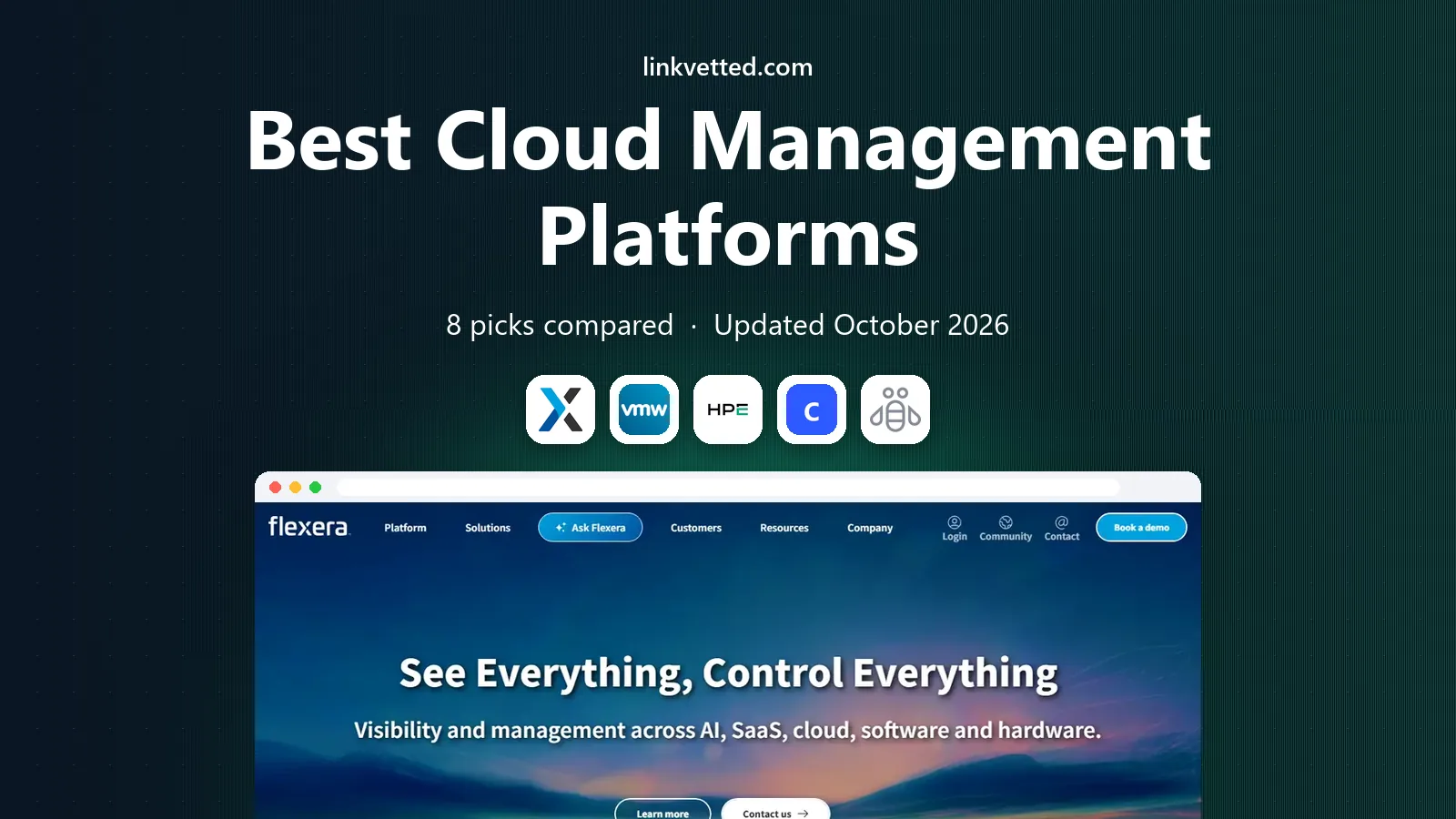
- Editor's choice
 Flexera One
Hybrid IT governance at scale
Starts atSee websiteVisit flexera.comFull review - Great alternative
 VMware Tanzu CloudHealth
FinOps cost reporting
Starts atSee websiteVisit vmware.comFull review - Also consider
 Morpheus
Hybrid provisioning and automation
Starts atSee websiteVisit morpheusdata.comFull review
TL;DR:
- Flexera One is our pick for large enterprises that need cloud, SaaS, and license costs governed together.
- VMware Tanzu CloudHealth suits FinOps teams that want spend-tier pricing and strong cost reporting.
- Morpheus and CloudBolt suit teams that need provisioning and automation, not just cost reports.
- Most enterprise platforms are quote-based, so budget by cloud spend and module scope, not by a headline price.
Quick comparison
| Tool | Best for | Starts at | Free plan? | |
|---|---|---|---|---|
| Flexera One | Hybrid IT governance at scale | See website | Free trial | Visit |
| VMware Tanzu CloudHealth | FinOps cost reporting | See website | Free trial | Visit |
| Morpheus | Hybrid provisioning and automation | See website | Free trial | Visit |
 CloudBolt | Enterprise provisioning and cost control | See website | Free trial | Visit |
 IBM Turbonomic | Automated resource optimization | See website | Free trial | Visit |
 CloudZero | Cost per customer and feature | See website | Free trial | Visit |
 Scalr | Terraform-focused cloud management | Free | Yes | Visit |
 IBM Cloudability | Multi-cloud cost visibility | See website | Free trial | Visit |
The best cloud management platforms
Cloud management platforms do different jobs: some control cost, some automate provisioning, and some govern policy across clouds. The platforms below cover those jobs, from FinOps reporting to full hybrid automation, so pick based on whether cost, control, or speed is your main problem.

Flexera One combines cloud cost optimization with software asset and SaaS management, which helps large firms see cloud spend alongside license costs. It offers rightsizing, idle resource detection, commitment planning, and policy automation across AWS, Azure, and Google Cloud. That scope suits regulated firms that need one governance view.
Setup is the catch. Data normalization, tagging cleanup, and policy tuning take staff time, and pricing is negotiated by scope. Small teams will find it heavy and costly. For large enterprises with complex hybrid estates, Flexera One is our top pick.
- Broad cost and license visibility
- Many automation policies
- Strong integrations
- Quote-only pricing
- Setup and data cleanup take time
CloudHealth, now VMware Tanzu CloudHealth, is a FinOps-focused platform for cost visibility, allocation, budgets, and optimization recommendations. It helps finance and engineering teams agree on who spent what, by product, team, or business unit. Marketplace listings tie price to monthly cloud spend tiers, which makes budgeting more predictable than pure usage pricing.
Tagging quality still decides value. Without consistent tags, cost allocation reports will be messy, and setup takes effort. Pricing also grows with cloud spend, so large estates should model tiers carefully. For FinOps teams that need trusted cost reports, CloudHealth is a strong choice.
- Strong cost allocation and reporting
- Spend-tier plans
- AWS Marketplace listing
- Enterprise pricing scales with cloud spend
- Setup needs clean tagging
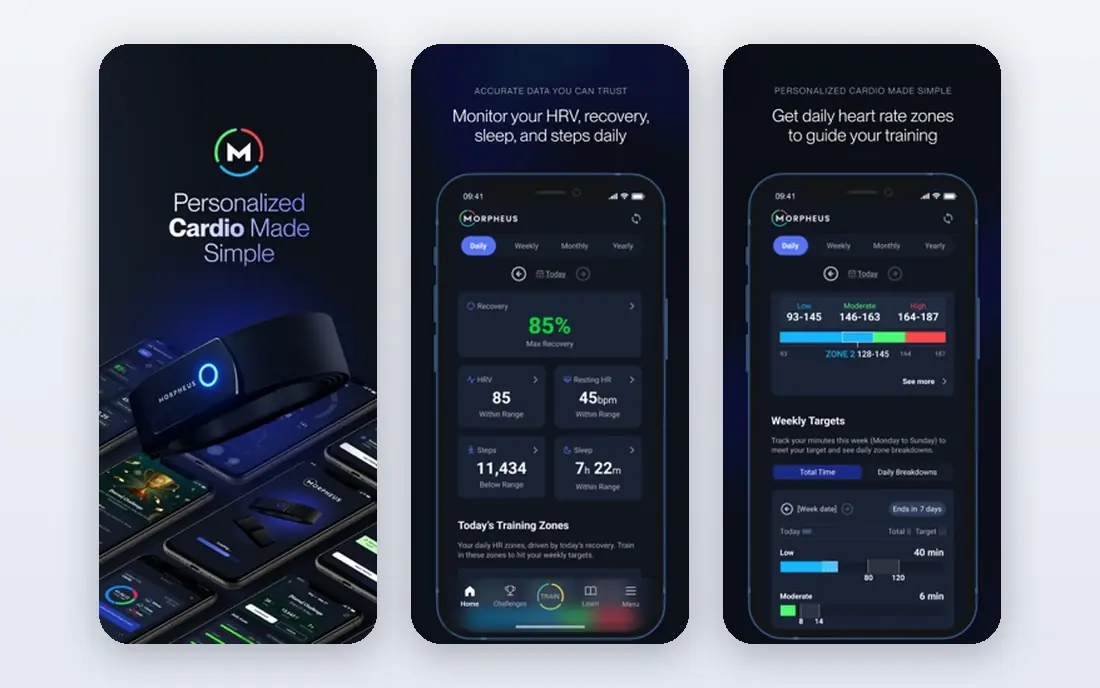
Morpheus focuses on provisioning and lifecycle management across public clouds, VMware, and private infrastructure, with automation, governance, and cost controls built in. Teams can offer a self-service catalog for developers while keeping policy, approvals, and budgets in place. That balance suits hybrid IT teams that need speed without losing control.
Full automation takes design work, and pricing is often quoted by scope. It is less of a pure FinOps reporting tool than CloudHealth or CloudZero. If your main problem is slow, manual provisioning across clouds, Morpheus should be on your shortlist.
- Multi-cloud provisioning
- Hybrid and private cloud support
- Automation workflows
- Quote-based pricing for many deals
- Learning curve for full automation
CloudBolt combines self-service provisioning with cost management and governance for large enterprises. Developers can request resources through a catalog, while IT keeps control over budgets, policies, and approvals. It supports AWS, Azure, Google Cloud, and private clouds, which helps firms that run a mix.
Implementation needs planning, especially for catalog design and policy rules. Pricing is enterprise and quote-based, so smaller teams may find it costly. For large firms that want provisioning plus cost control in one platform, CloudBolt is a solid option.
- Self-service provisioning
- Cost management
- Hybrid cloud support
- Enterprise pricing
- Implementation needs planning
IBM Turbonomic analyzes application demand and automatically recommends or applies resource changes to cut waste while protecting performance. It works across cloud, virtual, and container environments, and it ties optimization decisions to application needs rather than simple utilization thresholds. That application focus helps teams that worry automation will harm performance.
Trust is the hurdle. Teams should start with recommendations only, then enable automation in stages. Pricing is enterprise and quote-based. For firms that want optimization to run continuously, not just as a monthly report, Turbonomic is a strong pick.
- Automated rightsizing
- Application-aware optimization
- Broad platform support
- Enterprise focus
- Recommendations need trust before full automation
CloudZero stands out for cost allocation without heavy tagging work. It can map shared and untagged costs to customers, features, teams, or products, which helps SaaS firms understand unit economics. Its pricing model is tied to cloud spend tiers, with rates that fall as spend grows, making it easier to model than some rivals.
It is mainly a cost intelligence platform, not a provisioning tool, so teams that need catalogs and automation should pair it with another system. Still, for FinOps teams that need trusted cost-per-customer data fast, CloudZero is one of the best options here.
- Granular cost per customer and feature
- Works without perfect tagging
- Clear pricing model
- Less provisioning depth
- Enterprise tiers still need a sales conversation
Scalr focuses on Terraform-based infrastructure management, with workspaces, policies, cost controls, and run management for teams that already use Terraform. It helps platform teams govern infrastructure as code without building a full internal platform. A free tier makes it easy for small teams to start.
Scope is narrower than Flexera One or Morpheus, since Scalr is built around Terraform workflows rather than general cloud provisioning. Non-Terraform teams will get less value. If Terraform is your standard, Scalr is a focused and affordable cloud management choice.
- Terraform workflow support
- Policy controls
- Free tier for small teams
- Narrower scope than full cloud platforms
- Best for Terraform users
IBM Cloudability, part of IBM Apptio, offers multi-cloud cost visibility, budgeting, forecasting, and allocation for large firms. It suits FinOps teams that need consistent reports across AWS, Azure, and Google Cloud, with links to broader technology business management. Its heritage in cost management gives it depth in reporting and planning.
Pricing is enterprise and quote-based, and the interface can feel dense until a team learns its reporting model. Smaller firms may prefer CloudZero or Scalr for speed. For large firms that already use Apptio or IBM tools, Cloudability is a natural fit.
- Multi-cloud cost reporting
- Budgeting and forecasting
- Apptio heritage
- Enterprise pricing
- Interface can feel dense for new FinOps teams
How we picked these
We compared official feature pages, pricing pages, and public documentation for cloud management platforms that were actively sold in 2026. We favored platforms that cover multi-cloud cost, governance, or provisioning, with a trial or published model where available. We left out single-cloud native tools and pure monitoring tools that do not manage cost or provisioning.
What to check before you buy
Start with tagging and account structure. No platform can allocate costs cleanly if tags, accounts, and projects are inconsistent. Run a tagging cleanup pilot on one cloud account before you sign a large contract, and measure how much waste each platform finds in that pilot.
Cost model and module scope
Ask what is included in the base price and what needs an extra module. Some vendors charge by cloud spend, some by users or resources, and some by modules. Get a written quote for your spend tier, account count, and required modules, plus renewal terms.
Automation trust and governance
Decide which actions can run automatically and which need approval. Rightsizing, shutdown schedules, and policy enforcement save money, but they can also break workloads if rules are too broad. Start with reports and approvals, then automate in stages with rollback checks.
Before you sign, test cost reporting on one real cloud account with messy tags and shared services. That test will show whether a platform can allocate shared costs in a way finance trusts, or whether it simply repeats the same unclear totals you already get from your cloud provider. Ask the vendor to explain one surprising cost line in plain terms. If it cannot, the reports will not help you in a budget meeting.
FAQ
What is the best cloud management platform?
Flexera One is our pick for large enterprises that need cloud, SaaS, and license governance together. CloudHealth and CloudZero suit FinOps cost teams, while Morpheus and CloudBolt suit provisioning and automation. The best choice depends on whether cost, governance, or speed is your main goal.
How much do cloud management platforms cost?
Most enterprise platforms are quote-based and scale with cloud spend, users, or modules. CloudHealth marketplace tiers have started around $45,000 per year for a set spend tier in public listings, while Scalr offers a free tier. Always get a quote for your exact spend and scope.
What is the difference between FinOps and cloud management?
FinOps focuses on cloud cost visibility, allocation, and optimization. Cloud management is broader, covering provisioning, governance, policy, and lifecycle management as well as cost. Many platforms do both, but some lean heavily toward one side.
Do I need a cloud management platform for one cloud?
Not always. Native tools from AWS, Azure, or Google Cloud may be enough for a single cloud with simple needs. A third-party platform helps most when you run multiple clouds, need cost per customer, or want unified governance and provisioning.
Which platform works best with Terraform?
Scalr is built for Terraform workflows, with workspaces, policies, and run management. Morpheus and CloudBolt also support Terraform-based provisioning as part of broader catalogs. If Terraform is your standard, start with Scalr and compare catalog depth.