The 6 Best Headless Ecommerce Software for Small Business in 2026, Ranked
Compare 6 picks for the best headless ecommerce software for small business, with prices, free plans and who each fits. Details on cost, catches and fit.
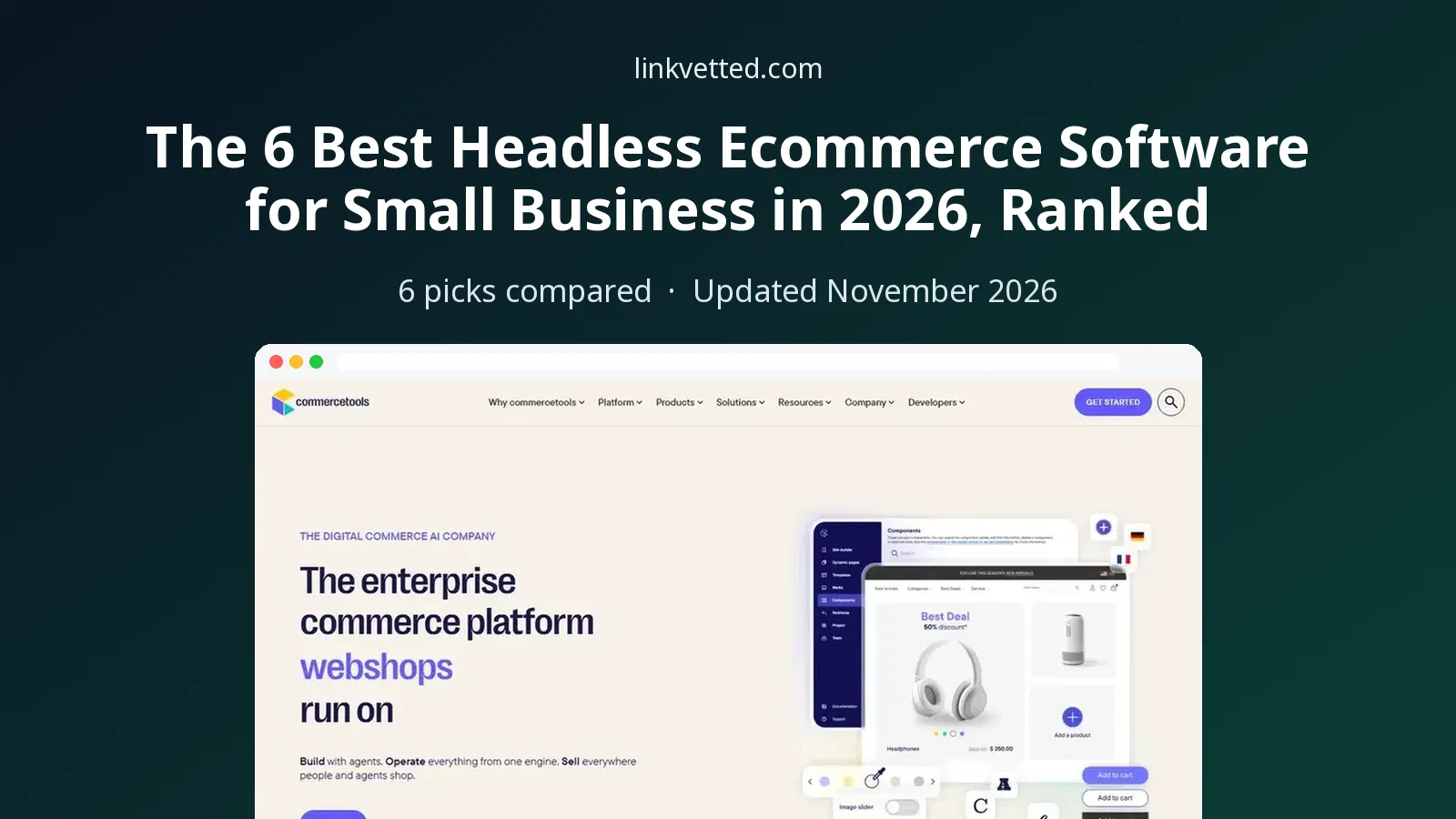
- Editor's choice
 Medusa
Developers wanting open-source commerce control
Starts at$29 per monthVisit medusajs.comFull review - Great alternative
 Fabric
AI shopping visibility and catalog enrichment
Starts atSee websiteVisit fabric.incFull review - Also consider
 commercetools
Enterprise-grade AI and multi-channel commerce
Starts atSee websiteVisit commercetools.comFull review
Direct answer
If you need developers wanting open-source commerce control, Medusa is the first tool to look at here. Listed starting prices: Medusa from $29 per month and Shopify from $19 a month. If your case is different, Fabric suits AI shopping visibility and catalog enrichment and commercetools suits enterprise-grade AI and multi-channel commerce. Details, prices and limits for the rest of the 6 tools are below.
TL;DR:
- The list opens with Medusa, aimed at developers wanting open-source commerce control.
- Medusa is the only tool of the 6 with a free plan.
- A fair warning about commercetools: targeted at bigger operations.
- Salesforce Commerce Cloud fits companies already in the Salesforce ecosystem.
- Shopify has the lowest monthly starting price in this list: $19 per month.
Last checked November 2026. Prices and plan details were read from the vendors' own pages in November 2026; vendors change plans often, so confirm the current price on the vendor site before you buy.
Quick comparison
| Tool | Best for | Starts at | Free plan? | |
|---|---|---|---|---|
| Medusa | Developers wanting open-source commerce control | $29 per month | Yes | Visit |
| Fabric | AI shopping visibility and catalog enrichment | See website | Not stated | Visit |
| commercetools | Enterprise-grade AI and multi-channel commerce | See website | Free trial | Visit |
 BigCommerce | Expanding brands selling across regions and channels | See website | Not stated | Visit |
 Shopify | Small firms wanting hosted headless commerce | $19 a month | Free trial | Visit |
 Salesforce Commerce Cloud | Firms already in the Salesforce ecosystem | See website | Not stated | Visit |
Headless Ecommerce Software for Small Business, one by one
Choosing headless ecommerce software for small business usually comes down to price, fit and limits. This LinkVetted guide sets 6 tools side by side on those three points, with the facts kept short and checkable.
Medusa makes the most sense for developers wanting open-source commerce control. Firms without developer resources may find the operational burden significant compared to hosted products. Pick Medusa when customization and ownership outweigh the convenience of a managed service.
Beyond that, Medusa is an open-source agentic commerce system described as the most adaptable commerce product for agents and developers. It offers a configurable foundation for building headless storefronts and commerce flows. Starting cost for Medusa: $29 per month. You can start on Medusa without paying.
Drawbacks to consider: Self-managed infrastructure.
- Adaptable for agents and developers
- Open-source product
- Needs developer resources
Fabric was built for AI shopping visibility and catalog enrichment. Choose it when AI visibility is a priority and you already have a commerce foundation in place. Fabric concentrates on reimagining merchandising for AI shopping, enriching product catalogs so answer engines can recommend your brand and tracking AI visibility.
Instead of a complete commerce backend, it complements an existing storefront with catalog and visibility tools. Worth adding: Fabric is not a full replacement for a commerce system, so it fits best alongside one. Fabric shows no starting price here, so confirm the cost on the vendor site. Free plan details: Not stated.
What to check first: Narrower commerce scope than full systems.
- Tracks AI visibility
- Focus on answer-engine recommendations
- Best as part of a broader stack
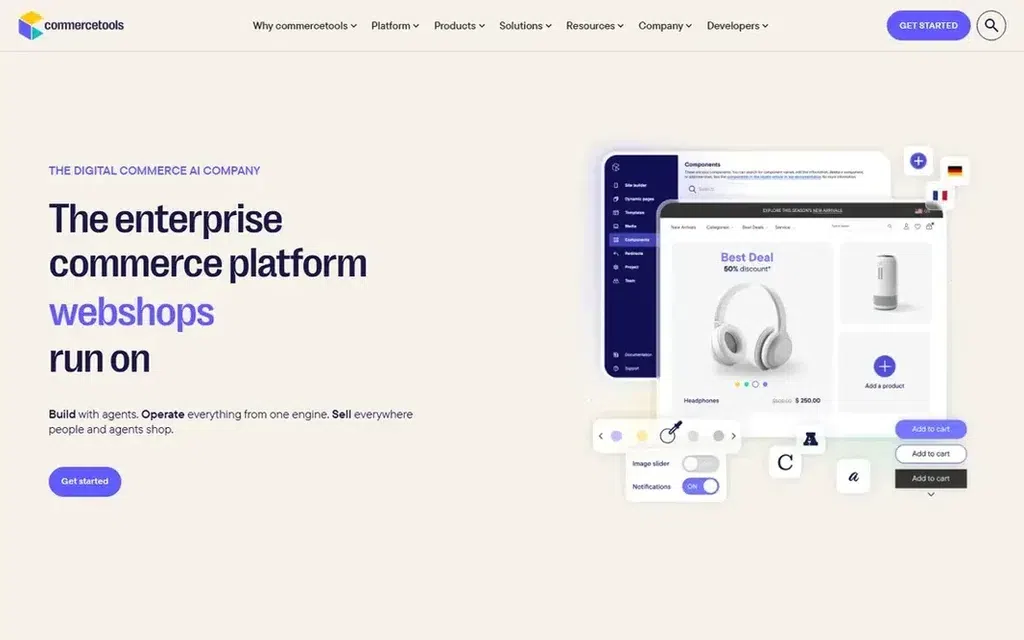
commercetools is a good fit for enterprise-grade AI and multi-channel commerce. commercetools positions itself as a digital commerce AI company, offering enterprise commerce infrastructure for AI agents and experiences across online, in-store, in-chat, and agent-to-agent channels from one unified engine.
Drawbacks to consider: Pitched at bigger operations.
It fits organizations that require a composable backend to power plenty of touchpoints. commercetools shows no starting price here, so confirm the cost on the vendor site. Free options: Free trial.
- Enterprise infrastructure
- Unified commerce engine
- Needs significant technical resources
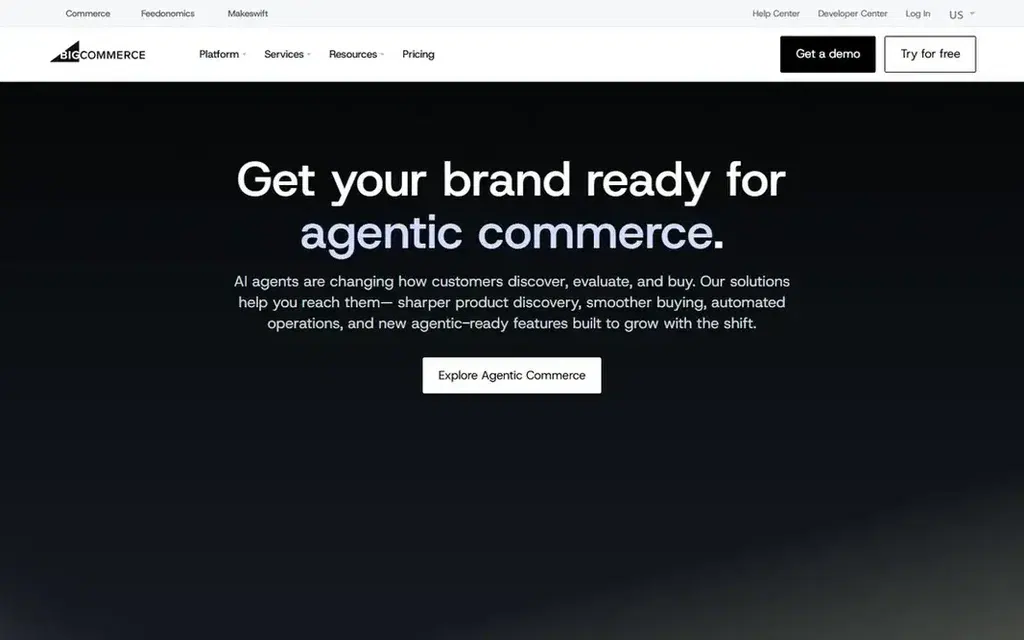
In short, BigCommerce is for growing brands selling across regions and channels. Consider BigCommerce when scalability and channel breadth are priorities instead of minimal configuration.
Beyond that, BigCommerce describes itself as commerce made for momentum, offering a scalable foundation for selling across brands, regions, and channels. The system can feel heavy for a business with a straightforward catalog and no plans for multi-channel expansion. No starting price is listed for BigCommerce here; confirm pricing on the vendor site. As for free access: Not stated.
Where it is weaker: Can be complicated for very small catalogs.
- Multi-channel selling support
- Scalable single foundation
- Advanced setups may need developer help

Shopify works best for small firms wanting hosted headless commerce. Shopify is a hosted commerce system that merges storefront tools with backend management for inventory, orders, and channels. Its APIs allow developers to build custom headless frontends whereas the system manages core commerce operations.
Watch-outs: Customization can need app extras.
Since Shopify is hosted, you have restricted capacity to modify the underlying platform, and advanced customization frequently relies on external apps. Choose Shopify when speed and managed operations matter more than full infrastructure control. Starting cost for Shopify: $19 per month. On free options: Free trial.
- All-in-one commerce system
- AI-assisted business tools
- Less control over backend infrastructure
Pick Salesforce Commerce Cloud if this describes you: companies already in the Salesforce ecosystem. Salesforce Commerce Cloud is a commerce product from Salesforce that supports B2B and B2C selling with headless capabilities.
For everyday use, the product can unify shopping experiences with other Salesforce tools, which appeals to teams planning a broader customer system. In daily use, consider it when integration with Salesforce CRM and service tools is a core requirement. Check the vendor site for Salesforce Commerce Cloud pricing; none is listed in this comparison. On free options: Not stated.
Trade-offs to know: Implementation can be complex.
- Supports B2B and B2C commerce
- Integrated with Salesforce products
- Best value when using Salesforce CRM
How the list was put together
LinkVetted looked at what each vendor publishes: pricing, plan limits, feature coverage for headless ecommerce software for small business and stated drawbacks. No hands-on testing is claimed. Figures are shown as the vendors publish them. Billing terms, seat minimums and add-ons can change the real cost. Tools are placed by general fit for headless ecommerce software for small business, with price clarity and free access as tie-breakers. A different team can reasonably rank them differently.
A buyer's checklist
- Ask Fabric, commercetools, BigCommerce and Salesforce Commerce Cloud for a written quote, since no starting price is shown.
- Look at the free plan from Medusa closely: its caps decide whether it is usable for real work.
- Use real work to test the free trial from commercetools and Shopify, rather than a demo project.
- Read the limits listed for Medusa first: requires developer resources.
- Verify that exporting from commercetools is possible on your plan and covers all your records.
- Ask Fabric whether prices are locked for the first term and what happens at renewal.
FAQ
Which options for headless ecommerce software for small business have a free plan?
Medusa is the only tool in this list with a free plan. Free plans usually cap users, projects or features, so check the limits on the vendor page. Several others offer a trial instead.
Is Shopify a decent headless choice for small teams?
Shopify supplies APIs that support headless storefronts whereas managing core commerce operations for you. It is a capable starting point if you value managed operations over full control.
What is the cheapest option for headless ecommerce software for small business in this list?
On published monthly entry prices, Shopify is the lowest here at $19 per month. Entry price is only part of the cost, because seats, add-ons and billing terms can change the total. All 6 picks in this headless ecommerce software for small business comparison list a starting price, free plan details and the main limits on their cards above.
How are the tools for headless ecommerce software for small business ordered?
Medusa sits first and Salesforce Commerce Cloud last because the order follows typical fit for headless ecommerce software for small business, then price clarity and free access. It is a judgement call, so read each profile for fit and limits.
Can I try these tools before paying?
Often, yes. Medusa has a free plan and commercetools and Shopify offer a free trial. Use your own data and a real task during the test, and check what the free tier or trial limits before you rely on it.
When should a small business consider Medusa?
Medusa is an open-source product made for developers who want full control over their commerce stack. For everyday use, small companies with in-house technical resources may choose it for customization and ownership.
Sources
- https://medusajs.com
- https://fabric.inc
- https://commercetools.com
- https://www.bigcommerce.com
- https://www.shopify.com
- https://www.salesforce.com/products/commerce-cloud