Best AEO Tools for Ecommerce in 2026: 8 Platforms Compared
We compared the best aeo tools for ecommerce on AI visibility, product tracking, pricing, and ease of use to help stores earn citations in AI answers.
- Editor's choice
 Profound
Enterprise ecommerce visibility
Starts at$99 per monthVisit tryprofound.comFull review - Great alternative
 Goodie
Ecommerce teams needing attribution
Starts at$295 per monthVisit higoodie.comFull review - Also consider
 Otterly.AI
Small stores on a budget
Starts at$29 per monthVisit otterly.aiFull review
TL;DR:
- The best aeo platforms for ecommerce track product and category prompts, not only brand mentions, because shoppers ask AI assistants for specific items.
- Entry prices in this group range from about 29 dollars per month to several hundred dollars per month, so prompt limits matter more than the headline price.
- Stores already using Semrush or HubSpot may get useful AI visibility without buying a separate specialist tool.
- Daily or frequent tracking helps a store spot a lost citation quickly, while weekly tracking can be enough for a small catalog.
Quick comparison
| Tool | Best for | Starts at | Free plan? | |
|---|---|---|---|---|
| Profound | Enterprise ecommerce visibility | $99 per month | Free trial | Visit |
| Goodie | Ecommerce teams needing attribution | $295 per month | Free trial | Visit |
| Otterly.AI | Small stores on a budget | $29 per month | Free trial | Visit |
 Peec AI | Product level tracking | See website | Free trial | Visit |
 Semrush AI Visibility Toolkit | Teams already using Semrush | $99 per month | No | Visit |
 HubSpot AEO | HubSpot users | $50 per month | No | Visit |
 Writesonic | Tracking plus content creation | $79 per month | Free trial | Visit |
 Scrunch | Technical AI search checks | $250 per month | Free trial | Visit |
The best AEO tools for ecommerce
We looked for tools that help an online store appear in AI answers for shopping questions, product comparisons, and buying advice. The eight below cover different budgets and catalog sizes.
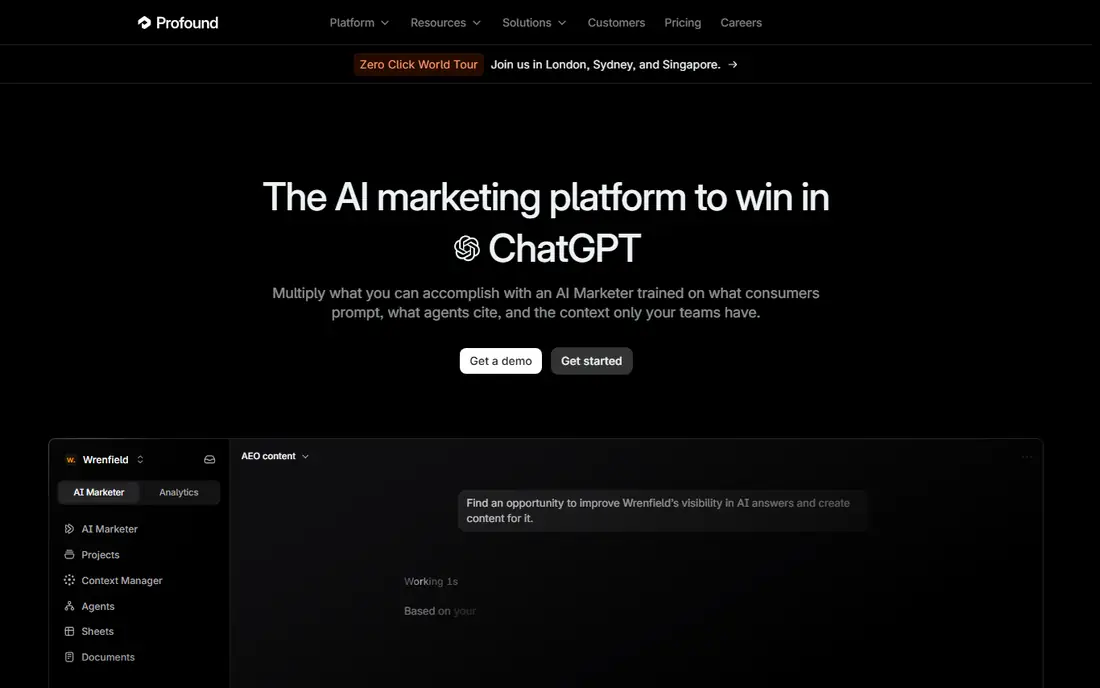
Profound is our pick for larger ecommerce brands that need to watch many prompts across ChatGPT, Gemini, Perplexity, and Google AI Overviews. Its reports show where a brand is cited, where competitors appear instead, and which sources AI systems rely on. For a store with hundreds of products, that competitor view is often more useful than a single visibility score.
The catch is scale. The entry plan covers a limited set of prompts, and a serious ecommerce program usually needs a higher tier. Small stores should start with the trial and test only their highest revenue categories first. If the reports do not change buying or content decisions within a month, a cheaper tool may serve the store just as well.
- Broad engine coverage
- Product visibility features
- Strong reporting for large teams
- Higher tiers cost far more than the entry plan
- Setup can feel heavy for a small store
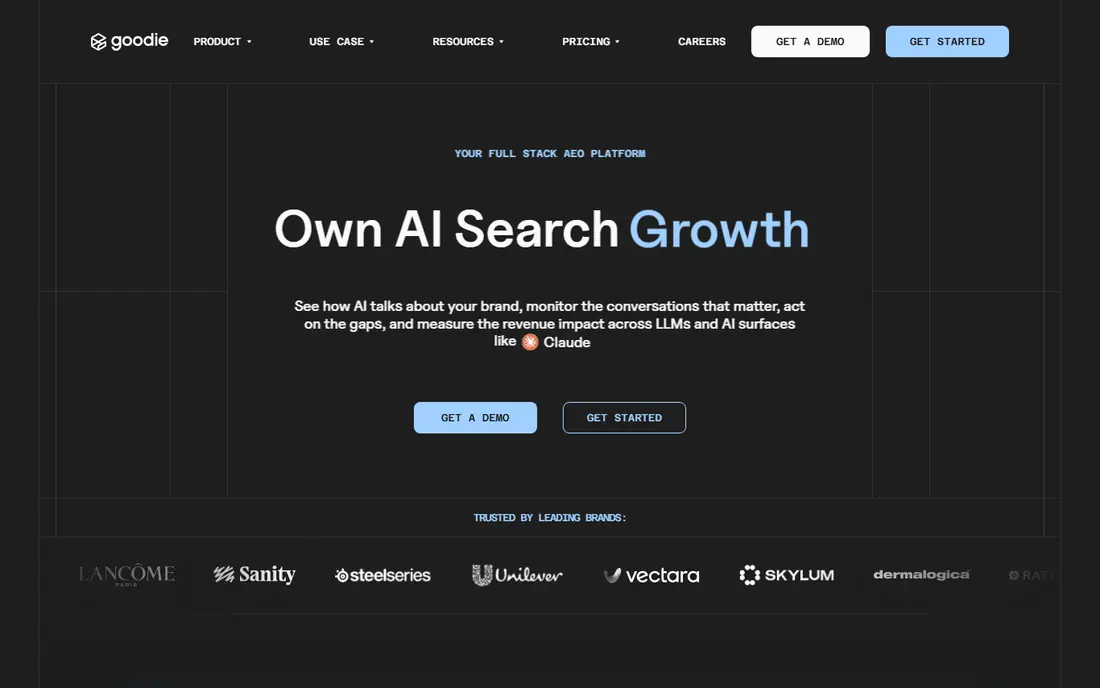
Goodie stands out for ecommerce because it connects AI visibility to revenue questions, not only to mentions. Its Agentic Commerce Suite looks at how AI shopping agents find and recommend specific products, which matters when a shopper asks for a best vacuum or a best running shoe rather than a brand name. Teams can also link results to analytics tools to check whether AI traffic converts.
That depth comes at a price. The Core plan is aimed at smaller programs, while the commerce features that most stores want sit higher up. We would recommend Goodie to stores that already see meaningful traffic from AI answers and need to prove which products benefit. Stores still testing the channel should compare its entry plan with Otterly.AI first.
- SKU level agentic commerce visibility on higher plans
- Daily updates
- Attribution integrations
- Entry plan covers fewer engines
- Pro pricing is a big jump for midsize stores
Otterly.AI is the easiest place to start if a store owner wants proof that AI search matters before spending hundreds of dollars per month. It tracks brand mentions and citations across major AI engines and presents the results in a plain dashboard. A small Shopify or WooCommerce store can set up a handful of buying prompts in an afternoon and watch the trend over a few weeks.
The trade off is depth. Otterly.AI does not replace a full content or analytics suite, and its lowest plan will feel small once a catalog grows. Still, for a first test, low cost and clarity beat a long feature list. Use it to learn which categories AI systems already mention, then decide whether a larger platform is worth the upgrade.
- Low entry price
- Simple setup
- Clear prompt tracking
- Fewer advanced commerce features
- Prompt limits are tight on the cheapest plan
Peec AI fits ecommerce better than many general AEO tools because it can track products, not only the store brand. A store can import a catalog and see which individual items AI assistants recommend for a given question. That detail helps merchandising teams fix missing product details, weak descriptions, or pages that AI systems skip.
Peec AI also works well for agencies and multi market stores, since seats and countries are generous on some plans. The downside is that pricing details require a closer look at the current plan page, and costs rise with prompt volume. Before buying, list the top 50 products by revenue and confirm that the chosen plan covers those prompts plus the main category questions.
- Catalog import from Shopify or CSV
- SKU level prompt tracking
- Unlimited seats on some plans
- Pricing is less transparent than budget rivals
- Enterprise features sit on higher tiers
Semrush AI Visibility Toolkit makes sense for stores that already pay for Semrush for keyword research, audits, and rank tracking. It adds AI visibility data to a workflow the team already knows, so there is less training and less dashboard hopping. The toolkit shows AI Overview presence, share of voice, and gaps against competitors.
As a standalone AEO purchase, it is less attractive. The toolkit is an add on, and the entry allowance of 25 prompts will not cover a large catalog. Stores that only want AEO data, and do not use the rest of Semrush, should compare Profound or Peec AI. Stores already inside Semrush should try the add on before adding another vendor.
- Fits inside a familiar SEO suite
- Competitor context
- AI Overview detection
- Priced as an add on to a Semrush plan
- Prompt allowance is limited at entry level
HubSpot AEO is a practical choice for ecommerce brands that run marketing, content, and customer data in HubSpot. It surfaces content, technical, and citation opportunities and ties them to pages the team can edit in the same system. That short path from insight to fix is valuable for small marketing teams without a dedicated SEO specialist.
The limit is scope. HubSpot AEO is priced per brand, so multi brand stores should model the total cost carefully. It is also not the deepest standalone AEO tracker in this list. If the store already lives in HubSpot, the convenience is real. If it does not, a specialist tool will usually give more prompt coverage for the same money.
- Works inside HubSpot
- Prioritized recommendations
- Useful for content teams
- Priced per brand
- Less deep for stores outside HubSpot
Writesonic appeals to ecommerce teams that need both measurement and new content. It tracks AI visibility and then helps writers create or improve pages aimed at the prompts where the store is missing. For a store that publishes buying guides, comparison pages, and category content, that combined workflow can save time.
Buyers should read the plan details carefully. Content only pricing is lower than GEO pricing, so the total for a full AEO program is higher than the first price many shoppers see. We like Writesonic for teams that will actually publish the recommended pages. Teams that only want a dashboard should pick a tracker first and add content tools later if needed.
- Combines GEO tracking with content tools
- Action oriented recommendations
- Familiar content workflow
- GEO features cost more than content only plans
- Pricing tiers can confuse new buyers
Scrunch is built for teams that want to know whether AI systems can find, read, and cite each page. It checks retrievability and citability at page level and gives recommendations that developers and content editors can act on. For a large ecommerce site with faceted navigation, thin category pages, or blocked product data, those checks can surface problems a simple mention tracker would miss.
The price puts Scrunch out of reach for many small stores. It makes most sense for midsize and large sites where a single lost category citation can affect many products. Smaller stores can get similar early value from Otterly.AI or HubSpot AEO, then move to Scrunch when technical fixes become the main bottleneck.
- Page level AI accessibility checks
- Clear optimization recommendations
- Suited to larger sites
- High entry price for small stores
- More technical than some rivals
How we picked these
We compared official feature pages, pricing pages, and public reviews for AEO and GEO platforms that serve ecommerce stores. We favored tools that track product level prompts, cover the major AI engines, and publish at least some pricing or trial terms. We excluded tools that only offered agency services with no self serve product, and tools that could not show a clear ecommerce use case.
What to check before you pay
Start with your best selling categories, not your whole catalog. Write down the exact questions shoppers ask AI assistants, such as best gifts under 50 dollars or best waterproof hiking boots for wide feet, then check whether each tool tracks those prompts. Confirm how often data refreshes, which engines are included on the plan you would actually buy, and whether product pages or only brand pages are tracked.
Next, check the data behind each score. A good tool shows the stored answer, the cited sources, and the prompt history, so the team can trust a change in the score. Also check export options and integrations, because AEO data is most useful when it reaches the content calendar and the analytics reports. Finally, set a review date. If the tool has not led to at least a few published page fixes within 60 days, the plan is too large or the prompts are wrong.
Questions to ask on a demo
Ask how the tool handles product variants, out of stock items, and regional pricing, since ecommerce answers change with those details. Ask whether AI shopping results are included, not only chat answers. Ask what happens when a prompt limit is reached, and whether unused prompts roll over. These answers often matter more than a demo dashboard.
FAQ
What are the best aeo platforms for ecommerce?
The best aeo platforms for ecommerce combine brand tracking with product level tracking, so a store can see which items AI assistants recommend. Profound and Goodie suit larger stores, Peec AI suits catalog heavy stores, and Otterly.AI suits small stores testing the channel. The right choice depends on catalog size, prompt volume, and whether the store already uses Semrush or HubSpot.
How is AEO different from normal SEO for a store?
Normal SEO focuses on rankings in search results, while AEO focuses on mentions and citations inside AI generated answers. A product page can rank well in Google and still be absent from a ChatGPT shopping answer. AEO tools track the prompts shoppers actually ask, the sources cited, and the wording AI systems use about each product.
How many prompts should an ecommerce store track?
Start with 20 to 50 prompts covering best selling categories, top products, and common comparison questions. Add prompts only when the team can act on the results, such as fixing a product page or writing a buying guide. Tracking thousands of prompts without a content plan wastes budget and hides the signals that matter.
Can a small store benefit from AEO tools?
Yes, if the store picks a low cost plan and focuses on a narrow set of high value prompts. A small store does not need enterprise reporting to learn that AI systems cite a competitor buying guide instead of its own category page. That single insight can justify a few page improvements that also help normal search traffic.
Do AEO tools replace SEO tools?
No. AEO tools add AI answer data, but stores still need keyword research, technical audits, and backlink data from SEO tools. Many teams run both, or use a combined tool such as Semrush. Treat AEO as an extra channel report, not a replacement for the basics of site speed, product data, and clear category pages.