Top 6 Headless Ecommerce Software for Remote Teams for 2026 (Prices and Free Plans)
Best headless ecommerce software for remote teams in 2026: 6 contenders with entry costs and free tiers. Every pick includes one clear drawback. See which fits.
- Editor's choice
 Adobe Commerce
B2B and B2C teams needing composable experiences
Starts atPricing on requestVisit business.adobe.comFull review - Great alternative
 Shopware
Teams building configurable responsive storefronts
Starts atPricing on requestVisit shopware.comFull review - Also consider
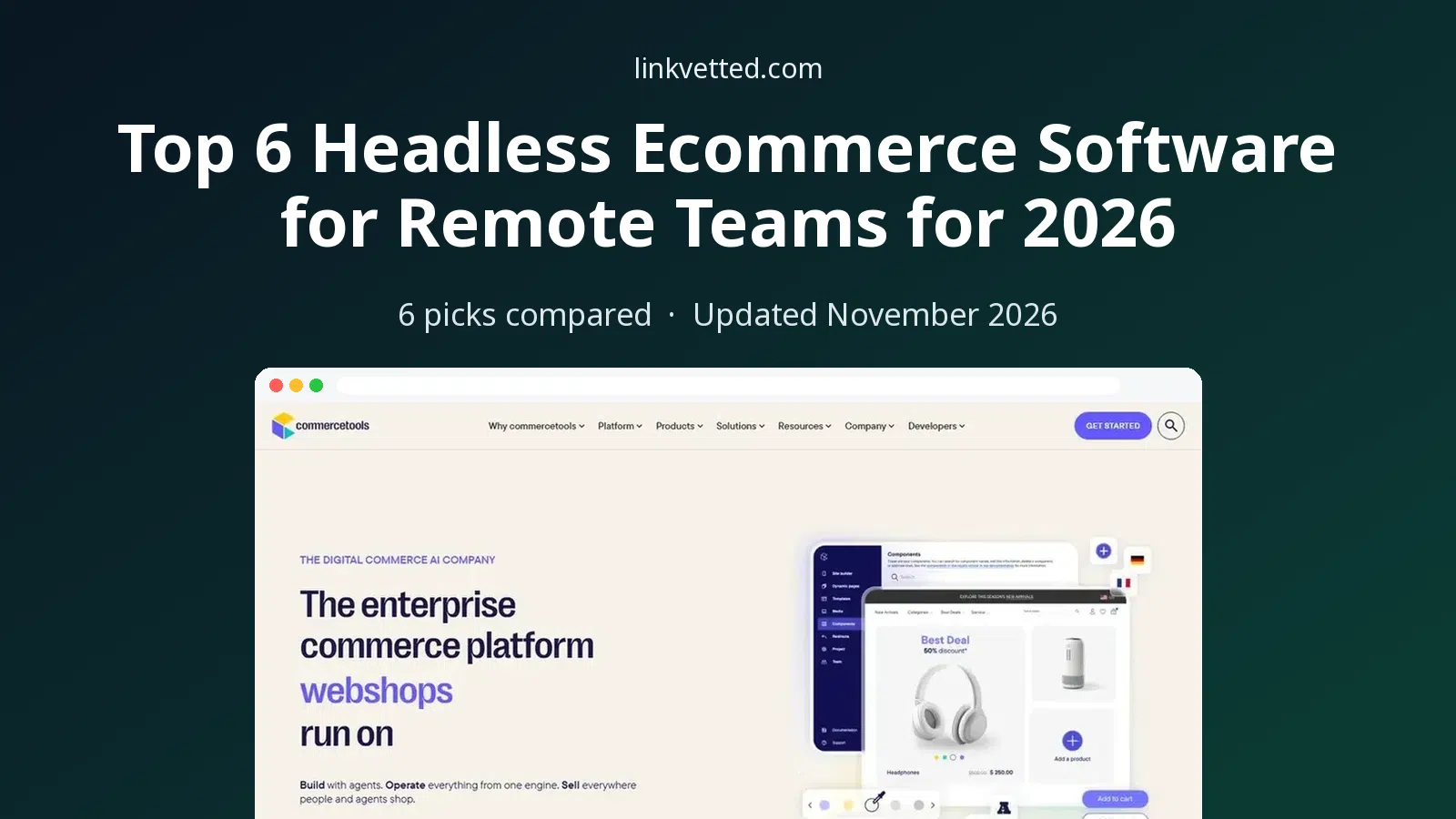
 commercetools
Enterprise teams building API-first commerce
Starts atPricing on requestVisit commercetools.comFull review
Direct answer
Adobe Commerce is the first pick on this list for B2B and B2C teams needing composable experiences. Shopware fits teams building configurable responsive storefronts; commercetools fits enterprise teams building API-first commerce. The other 3 tools in the list cover narrower or pricier cases. None of these vendors publish plan prices, so pricing is on request for every option.
TL;DR:
- Number one here is Adobe Commerce, a fit for B2B and B2C teams needing composable experiences.
- No starting price is shown for any of the 6 tools, Adobe Commerce and Shopify Hydrogen included, so plan time for sales calls.
- Just one of the 6 tools, Shopware, has a free plan.
- Before buying BigCommerce, weigh this: headless setups need developer resources.
Last checked November 2026. Pricing on request: vendors did not publish plan prices when this guide was last checked (November 2026), so ask each vendor for a written quote.
Quick comparison
| Tool | Best for | Starts at | Free plan? | |
|---|---|---|---|---|
| Adobe Commerce | B2B and B2C teams needing composable experiences | Pricing on request | Not stated | Visit |
| Shopware | Teams building configurable responsive storefronts | Pricing on request | Yes | Visit |
| commercetools | Enterprise teams building API-first commerce | Pricing on request | Free trial | Visit |
 BigCommerce | Multi-brand and multi-channel commerce teams | Pricing on request | Not stated | Visit |
 Fabric | Teams optimizing for AI-driven product discovery | Pricing on request | Not stated | Visit |
 Shopify Hydrogen | Remote teams using modern frontend frameworks | Pricing on request | Not stated | Visit |
Headless Ecommerce Software for Remote Teams, one by one
This LinkVetted guide covers 6 headless ecommerce software for remote teams. Each profile lists a starting price, free plan details, strengths and drawbacks, so you can drop poor fits quickly.
For B2B and B2C teams needing composable experiences, Adobe Commerce is a natural candidate. Adobe Commerce, formerly known as Magento, is described as an AI-powered composable ecommerce product for B2B and B2C that gives personalized experiences at global scale. Beyond that, Adobe Commerce can be demanding to implement and maintain, so smaller remote teams may find it heavy.
Limits to weigh: Implementation can be resource-intensive.
It rewards teams with dedicated product expertise. Those wanting a lighter framework-first choice should look at Shopify Hydrogen, whereas teams prioritizing API-first enterprise infrastructure may prefer commercetools. In daily use, the composable approach lets teams pair commerce with other services. Adobe Commerce shows no starting price here, so confirm the cost on the vendor site. Trial and free access: Not stated.
- Serves B2B and B2C
- Personalization at global scale
- Needs continuing product expertise
In short, Shopware is for teams building configurable responsive storefronts. Distributed teams can collaborate on a responsive storefront whereas keeping commerce features in place. As for the details, going headless with Shopware needs technical planning, and teams should verify regional ecosystem support.
Those needs point toward Shopify Hydrogen, whereas enterprise API-first requirements suggest commercetools. Beyond that, Shopware is described as a trendsetting ecommerce product for building and customizing a completely responsive online store with a blend of design and functionality. Pricing for Shopware is not stated here, so ask the vendor for current figures. Shopware offers a free plan.
What to check first: Headless setups need technical work.
- Responsive storefront building
- Design and functionality blend
- Ecosystem may vary by region
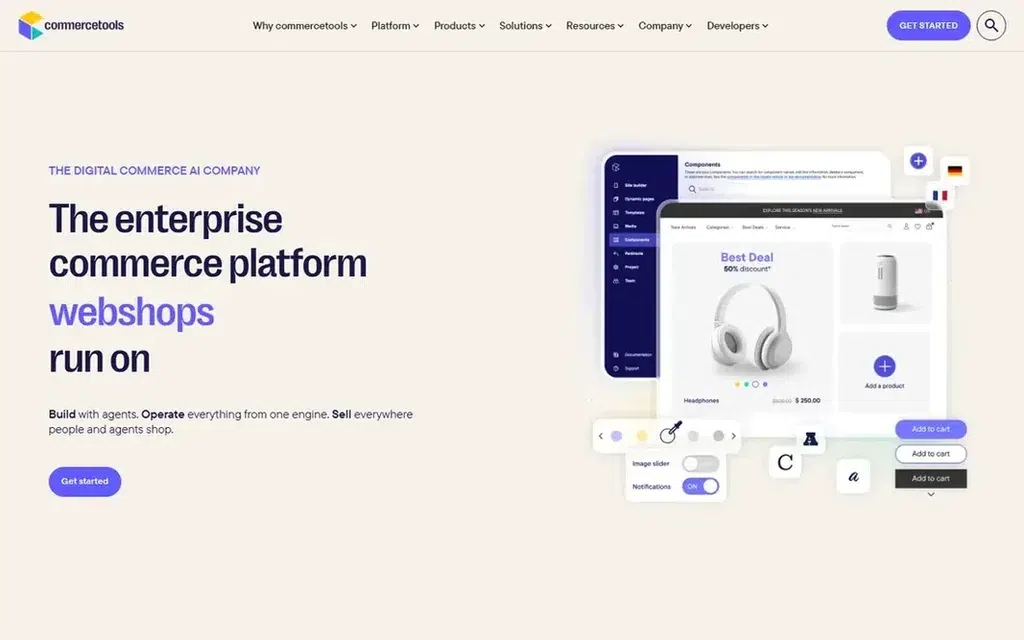
commercetools is a good fit for enterprise teams building API-first commerce. It suits remote teams with dedicated engineering and architecture resources that require a composable, API-first foundation.
Where it shines: Supports online, in-store.
Trade-offs to know: Needs capable technical planning.
It also demands careful upfront modeling. Check the vendor site for commercetools pricing; none is listed in this comparison. Trial and free access: Free trial.
- Designed for agent-to-agent commerce
- Unified commerce engine
- Enterprise-oriented complexity

Choose BigCommerce for multi-brand and multi-channel commerce teams. BigCommerce presents itself as commerce aimed at momentum, powering modern buying experiences across brands, regions, and channels from a single, scalable foundation. Going headless with BigCommerce still needs engineering effort, and the product's adaptability means teams must plan their architecture carefully.
It may be more than a small remote team needs. On top of that, teams that want a lighter framework-first approach should look at Shopify Hydrogen, whereas enterprise API-first needs point toward commercetools. Check the vendor site for BigCommerce pricing; none is listed in this comparison. Free options: Not stated.
Where it is weaker: Headless setups need developer resources.
- Modern buying experiences
- Single scalable foundation
- Feature depth varies by configuration
Fabric is a good fit for teams optimizing for AI-driven product discovery. Fabric's emphasis is narrower than a full headless commerce platform. So teams needing complete storefront and checkout infrastructure will likely pair it with another system.
Its value relies on how much of your audience uses AI answer engines. Teams wanting an all-in-one framework should start with Shopify Hydrogen or BigCommerce. Beyond that, Fabric concentrates on reimagining merchandising for AI shopping, enriching your product catalog so answer engines like ChatGPT, Gemini, and Perplexity recommend your brand, and tracking AI visibility. Fabric does not show a starting price in this comparison, so check the vendor site for current pricing. Free plan details: Not stated.
Where it is weaker: Value relies on AI shopping relevance.
- Enriches product catalogs
- Tracks AI visibility
- Narrower focus than full commerce suites
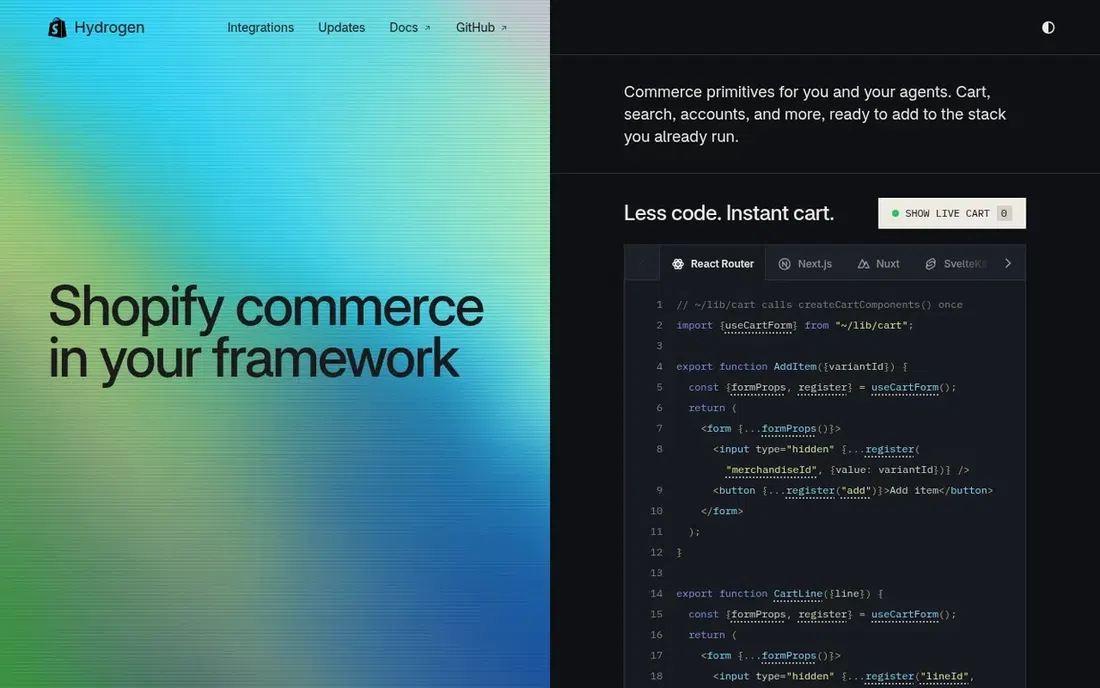
Shopify Hydrogen is aimed squarely at remote teams using modern frontend frameworks. The primary limit is that Hydrogen assumes comfort with code and a modern JavaScript workflow.
Limits to weigh: Best fit mainly for Shopify-centric teams.
So teams without frontend developers may find it heavy. Teams that require a broader multi-brand or enterprise API-first foundation should compare commercetools or BigCommerce instead. Pricing for Shopify Hydrogen is not stated here, so ask the vendor for current figures. Free access: Not stated.
- Commerce primitives aimed at your framework
- Designed for agent-friendly storefronts
- Needs frontend development skills
How we built this list
Pre-purchase checklist
- Request quotes from Adobe Commerce, Shopify Hydrogen and the others; the list shows no fixed prices.
- Test the free plan from Shopware against your real workload before relying on it.
- Take the trial from commercetools and push a live task through it before you pay.
- Read the limits listed for Adobe Commerce first: implementation can be resource-intensive.
- Confirm you can export your data from Shopware, so leaving later does not mean losing records.
- A short pilot of Fabric with your real workflow tells you more than a feature table.
FAQ
Can I try these tools before paying?
Often, yes. Shopware has a free plan and commercetools offers a free trial. Use your own data and a real task during the test, and check what the free tier or trial limits before you rely on it. All 6 picks in this headless ecommerce software for remote teams comparison list a starting price, free plan details and the main limits on their cards above.
How are the tools for headless ecommerce software for remote teams ordered?
Adobe Commerce sits first and Shopify Hydrogen last because the order follows typical fit for headless ecommerce software for remote teams, then price clarity and free access. It is a judgement call, so read each profile for fit and limits.
Which options for headless ecommerce software for remote teams have a free plan?
Shopware is the only tool in this list with a free plan. Free plans usually cap users, projects or features, so check the limits on the vendor page. One other tool offers a trial instead. For the full picture, the cards above cover all 6 entries of this headless ecommerce software for remote teams list, including price, free plan and limits.
How do I choose between Shopify Hydrogen and commercetools?
Shopify Hydrogen is a framework-first choice tied to Shopify's commerce primitives, which fits teams already in that ecosystem. commercetools is an enterprise API-first engine for multi-channel and agent-to-agent commerce.
What makes a headless ecommerce product a good match for remote teams?
Remote teams benefit from capable APIs, clear documentation, and frontend flexibility so developers can work asynchronously across locations. Products like Shopify Hydrogen and commercetools emphasize API-first or framework-first approaches that support distributed work.
Do these tools publish their prices?
No. None of the tools, from Adobe Commerce to Shopify Hydrogen, shows a fixed starting price here, so budget time for quotes.
Sources
- https://business.adobe.com/products/magento/magento-commerce.html
- https://www.shopware.com
- https://commercetools.com
- https://www.bigcommerce.com
- https://fabric.inc
- https://hydrogen.shopify.dev