Top 6 AI Virtual Reality Marketplaces Software for 2026 (Prices and Free Plans)
Weighing the best AI virtual reality marketplaces software? We lined up 6 products by cost, free access and fit. With pricing notes and limits. No filler.
- Editor's choice
 Unity
Custom 3D and XR development
Starts at$210.00 per monthVisit unity.comFull review - Great alternativeAmazon Sumerian
Cloud-hosted 3D and VR scenes
Starts atSee websiteVisit aws.amazon.comFull review - Also considerSpatial
No-code immersive experiences and virtual classrooms
Starts atSee websiteVisit spatial.ioFull review
Direct answer
This list puts Unity first for custom 3D and XR development. Listed starting prices: Unity from $210.00 per month. If your case is different, Amazon Sumerian suits cloud-hosted 3D and VR scenes and Spatial suits no-code immersive experiences and virtual classrooms. The full list of 6 tools follows, with prices and free plan facts.
TL;DR:
- This list starts with Unity, which is built for custom 3D and XR development.
- Just one of the 6 tools, Amazon Sumerian, has a free plan.
- Virbela suits virtual offices, events, and education.
- What to know about Amazon Sumerian first: service availability and roadmap should be verified.
Last checked November 2026. Prices and plan details were read from the vendors' own pages in November 2026; vendors change plans often, so confirm the current price on the vendor site before you buy.
Quick comparison
| Tool | Best for | Starts at | Free plan? | |
|---|---|---|---|---|
| Unity | Custom 3D and XR development | $210.00 per month | Free trial | Visit |
| Amazon Sumerian | Cloud-hosted 3D and VR scenes | See website | Yes | Visit |
| Spatial | No-code immersive experiences and virtual classrooms | See website | Not stated | Visit |
| Engage | Virtual training, education, and meetings | See website | Not stated | Visit |
| VRChat | Social VR communities and user-generated worlds | See website | Not stated | Visit |
| Virbela | Virtual offices, events, and education | See website | Not stated | Visit |
Every option for AI virtual reality marketplaces software explained
This LinkVetted guide covers 6 options for AI virtual reality marketplaces software. Each profile lists a starting price, free plan details, strengths and drawbacks, so you can drop poor fits quickly.
Think of Unity for custom 3D and XR development. Unity is a 3D development engine for building and deploying interactive experiences across mobile, PC, console, and XR, plus industrial applications. For everyday use, if you have to launch rapidly without a technical team, a managed product may be a better choice.
More specifically, for virtual reality marketplaces, Unity can power custom storefronts, configurators, and immersive product experiences. It is a development tool, not a hosted marketplace, so you must build or integrate commerce and distribution yourself. It needs programming and design expertise, and projects take longer than no-code systems. Starting cost for Unity: $210.00 per month. On free options: Free trial.
Points against: Not a ready-made marketplace product.
- Builds for mobile, PC, console, XR
- Large asset ecosystem
- Needs programming and design skills
Amazon Sumerian
Best for: Cloud-hosted 3D and VR scenes
Amazon Sumerian makes the most sense for cloud-hosted 3D and VR scenes. Before committing, confirm current service availability and roadmap on the vendor site, as cloud offerings evolve. It is not a consumer social marketplace and has less community-generated content.
The main drawbacks: Less community content than social products.
Beyond that, Amazon Sumerian is a cloud service for building and running 3D, VR, and AR scenes in the browser. It integrates with other AWS services and is pitched at developers who want to host immersive experiences without managing infrastructure. Amazon Sumerian shows no starting price here, so confirm the cost on the vendor site. You can start on Amazon Sumerian without paying.
- Supports VR and AR deployment
- Browser-based authoring
- Service availability and roadmap should be verified
Spatial
Best for: No-code immersive experiences and virtual classrooms

Spatial serves no-code immersive experiences and virtual classrooms. Spatial is a product for building and publishing social games, brand experiences, virtual learning, galleries, onboarding, and training.
Trade-offs to know: Large-scale event performance relies on setup.
It gives you no-code tools plus Unity-based choices, and runs on web without a download, along with mobile and VR. On top of that, if you need a full game engine pipeline or console-grade rendering, a dedicated engine may be a better fit. Pricing for Spatial is not stated here, so ask the vendor for current figures. As for free access: Not stated.
- Supports mobile and VR
- Web access without download
- Advanced customization may need Unity skills
Engage
Best for: Virtual training, education, and meetings

Engage targets virtual training, education, and meetings. Engage is a virtual reality system geared toward training, education, and remote meetings.
Watch-outs: Less suited to consumer social worlds.
It supplies avatar-based spaces for presentations, classes, and collaborative sessions. This comparison lists no price for Engage; ask the vendor. Free access: Not stated.
- Avatar-based meetings and events
- Supports VR and desktop access
- Custom content may need development work
VRChat
Best for: Social VR communities and user-generated worlds
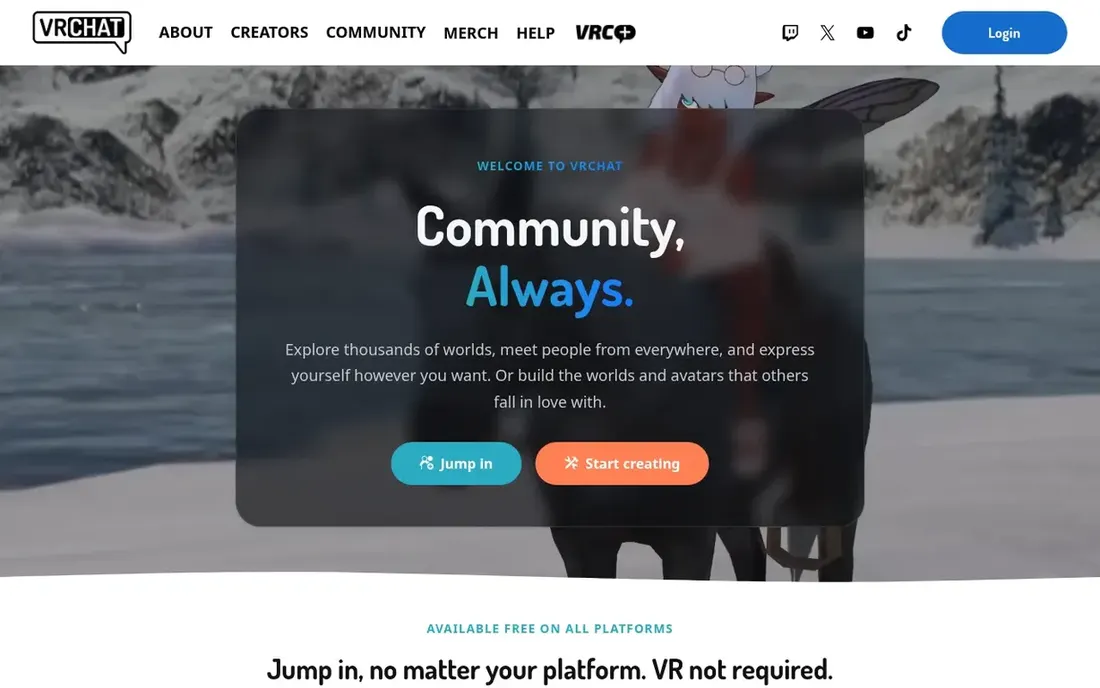
For social VR communities and user-generated worlds, VRChat is a natural candidate. It is widely known for community-driven events, meetups, and creative experiences. On top of that, for controlled corporate events, a dedicated business system may be preferable.
Trade-offs to know: Not a branded enterprise marketplace.
For everyday use, since content is mostly user-generated, moderation and safety need careful planning, and the environment may not match strict enterprise branding. It is less suited to structured training or commerce-focused marketplaces. This comparison lists no price for VRChat; ask the vendor. Free plan details: Not stated.
- Supports VR and desktop modes
- User-generated content focus
- Moderation and safety need active management
Virbela
Best for: Virtual offices, events, and education
For virtual offices, events, and education, Virbela is a natural candidate. Virbela builds virtual worlds for work, education, and events, aiming to bring in-person experiences online and help remote teams link.
Worth adding: if you need a large public creator economy or rapid no-code publishing, another system may fit better. No starting price is listed for Virbela here; confirm pricing on the vendor site. On free options: Not stated.
Honest limits: Customization may need vendor support.
- Purpose-built for remote work
- Supports events and education
- Less concentrated on user-generated marketplaces
How the list was put together
Selection started from tools commonly considered for AI virtual reality marketplaces software, then narrowed to 6 that have clear pricing information or a clear quote process. Seat minimums, billing terms and add-ons can move the real cost, so the starting prices here are a guide and not a quote. Order on the page follows fit for the typical buyer first, then price transparency and free access. Your own requirements should decide the final pick.
What to check before you buy
- Get a written quote from Amazon Sumerian, Spatial, Engage and others; the list shows no starting price for them.
- Look at the free plan from Amazon Sumerian closely: its caps decide whether it is usable for real work.
- Run a trial of Unity with real work before paying for a year; your own workflow is the best test.
- Before choosing Unity, weigh its main limit: needs programming and design skills.
- Test the integrations you rely on with VRChat before committing; some connectors sit on upper tiers.
- Verify that exporting from Spatial is possible on your plan and covers all your records.
FAQ
Which choice is a good match for enterprise training?
Unity is the pick this page puts first, mainly for custom 3D and XR development. If your situation differs, Amazon Sumerian suits cloud-hosted 3D and VR scenes, and Spatial suits no-code immersive experiences and virtual classrooms. Compare price and limits before you decide.
Which options for AI virtual reality marketplaces software have a free plan?
Amazon Sumerian is the only tool in this list with a free plan. Free plans usually cap users, projects or features, so check the limits on the vendor page. One other tool offers a trial instead.
Do these tools publish their prices?
Not all of them. Amazon Sumerian, Spatial, Engage and others publish no starting price, so expect a quote request for those. The rest, Unity included, show a starting price, though seats and billing terms still change the final cost.
How are the tools for AI virtual reality marketplaces software ordered?
Unity sits first and Virbela last because the order follows typical fit for AI virtual reality marketplaces software, then price clarity and free access. It is a judgement call, so read each profile for fit and limits.
What is the cheapest option for AI virtual reality marketplaces software in this list?
On published monthly entry prices, Unity is the lowest here at $210.00 per month. Entry price is only part of the cost, because seats, add-ons and billing terms can change the total.
What is an AI virtual reality marketplace?
Some systems add AI-assisted tools for content generation or personalization. As for the details, the category spans social worlds, enterprise training spaces, and 3D capture services.
Sources
- https://unity.com
- https://aws.amazon.com/sumerian
- https://www.spatial.io
- https://engagevr.io
- https://hello.vrchat.com
- https://www.virbela.com