Top 5 Workflow Automation Software for Retail Stores for 2026 (Prices and Free Plans)
Weighing the best workflow automation software for retail stores? We lined up 5 products by cost, free access and fit. Limits and pricing notes included.
- Editor's choice
 Appian
Process orchestration without system replacement
Starts atSee websiteVisit appian.comFull review - Great alternative
 Pega
Enterprise transformation and legacy modernization
Starts atSee websiteVisit pega.comFull review - Also consider
 Make
No-code visual workflow building
Starts atSee websiteVisit make.comFull review
Direct answer
Start with Appian if you need process orchestration without system replacement. Listed starting prices: UiPath from $25 a month. For a different need, Pega covers enterprise transformation and legacy modernization and Make covers no-code visual workflow building. Prices, free plans and limits for all 5 tools follow.
TL;DR:
- Appian sits first on this list: process orchestration without system replacement.
- One limit worth knowing about Pega: enterprise focus, steep ramp-up time.
- Make, UiPath: these are the 2 tools out of 5 that offer a free plan.
- Nintex fits end-to-end process management.
- For the cheapest start, look at UiPath: $25 per month.
Last checked November 2026. Prices and plan details were read from the vendors' own pages in November 2026; vendors change plans often, so confirm the current price on the vendor site before you buy.
Quick comparison
| Tool | Best for | Starts at | Free plan? | |
|---|---|---|---|---|
| Appian | Process orchestration without system replacement | See website | Not stated | Visit |
| Pega | Enterprise transformation and legacy modernization | See website | Not stated | Visit |
| Make | No-code visual workflow building | See website | Yes | Visit |
 UiPath | Robotic process automation at scale | $25 a month | Yes | Visit |
 Nintex | End-to-end process management | See website | Free trial | Visit |
The 5 tools in detail
LinkVetted compared 5 workflow automation software for retail stores. The goal is a practical shortlist: published prices, free plan facts, best-fit use cases and honest limits for every entry.
Appian works best for process orchestration without system replacement. Appian offers AI-powered process orchestration across the enterprise, automating critical processes and orchestrating AI agents, systems and people without replacing existing systems. That matters for retailers with established point-of-sale or inventory tools they want to keep.
Where it is weaker: Enterprise product needs expertise.
As for the details, teams without technical resources should compare lower-code choices. From a buyer's view, the system is pitched at critical enterprise processes, so straightforward store-level tasks may not justify it. No starting price is listed for Appian here; confirm pricing on the vendor site. As for free access: Not stated. What works well: systems and people.
- Concentrated on critical processes
- Orchestrates AI agents
- Overkill for simple store tasks
Choose Pega for enterprise transformation and legacy modernization. The transformation scale means a steep ramp-up time and heavy implementation for small teams. Pega describes an AI-powered system for enterprise transformation, used to reimagine work by automating workflows, personalizing customer experiences and modernizing legacy systems.
Strengths: Modernizes legacy systems.
Honest limits: Enterprise focus, steep ramp-up time.
On top of that, retailers with older systems and large customer operations may see a fit. It targets organizations pursuing wide transformation instead of single-process fixes. As for the details, keeps wanting quick, contained automations should start with a no-code builder and revisit Pega as needs grow. Pega shows no starting price here, so confirm the cost on the vendor site. Free plan details: Not stated.
- Automates workflows across the business
- Personalizes customer experiences
- Small teams may find it heavy
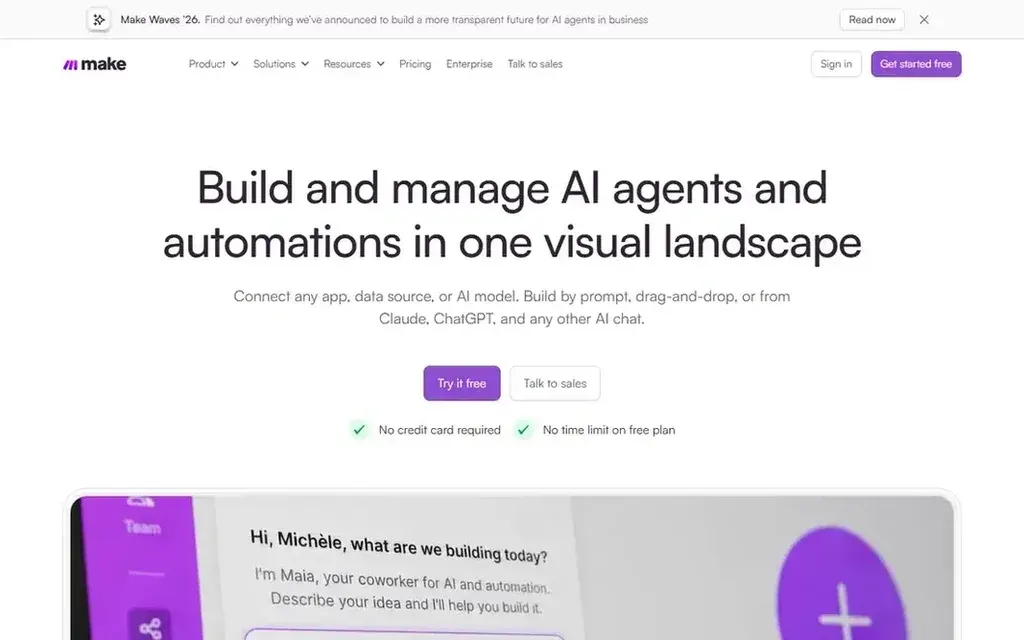
Pick Make if this describes you: no-code visual workflow building. The visual approach can become hard to handle once scenarios grow large, and governance needs may outstrip what a no-code builder provides.
As for the details, Make is a no-code integration and automation tool where you visually build, scale and automate AI and agentic workflows. Staff can assemble flows on a visual canvas, which fits operations leads who require to react rapidly to process changes. Make does not show a starting price in this comparison, so check the vendor site for current pricing. A free plan is available with Make.
The main drawbacks: Less suited to deep enterprise governance.
- Scales from straightforward to complicated automations
- Supports AI and agentic workflows
- Complicated scenarios can get hard to trace
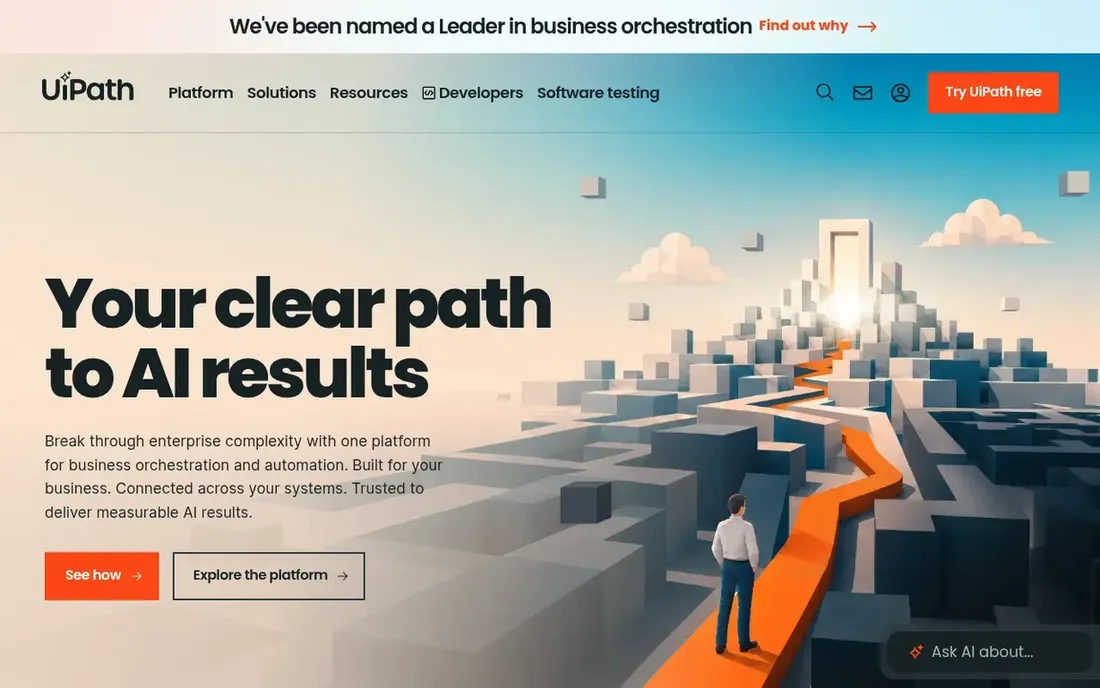
UiPath was built for Robotic process automation at scale. The emphasis on compliance and scale fits bigger retail organizations with dedicated automation teams.
Teams without automation specialists should weigh more straightforward no-code choices first. UiPath starts at: $25 per month. UiPath includes a free tier.
The main drawbacks: Can be heavy for small store teams.
- Compliant outcomes
- Business orchestration across operations
- Needs automation skills to run well
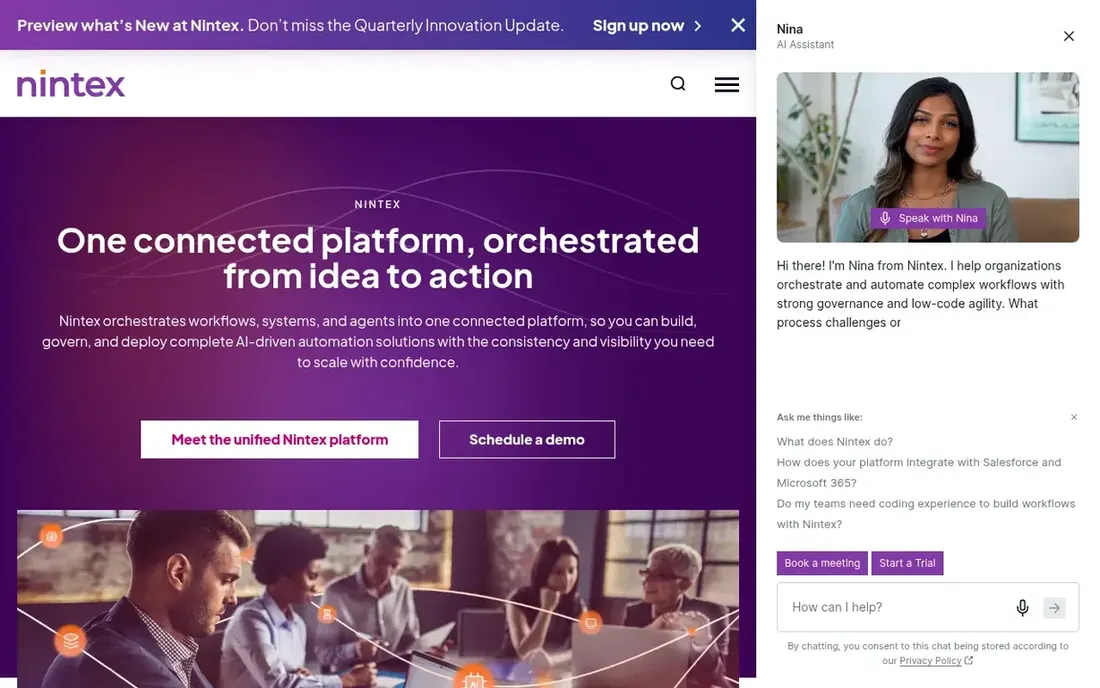
Think of Nintex for end-to-end process management. Nintex describes itself around end-to-end process and workflow automation, with custom app development for integrated workflow automation.
What to check first: Best value for process-heavy teams.
More specifically, the process-centric scope can feel wide for teams that only need straightforward app connections, and learning the product takes time. For everyday use, retailers mapping processes like approvals, store requests and supplier steps may find the process-first framing handy. Pricing for Nintex is not stated here, so ask the vendor for current figures. Free access: Free trial.
- Process and workflow automation focus
- Custom app development included
- Breadth can mean a ramp-up time
How we chose
We compared the tools on published pricing, free plan or trial availability, feature coverage for workflow automation software for retail stores, and the limits each vendor documents. Plan names, prices and limits change often. Treat the figures here as a starting point and verify them with the vendor. The order reflects how well each tool fits the most common buying scenario for workflow automation software for retail stores, then price clarity, then free plan access. It is a starting point, not a verdict.
Pre-purchase checklist
- Confirm the entry price on the vendor page. For Appian, Pega, Make and Nintex that means a quote rather than a fixed price.
- Check what the free option really includes: Make and UiPath offer a free plan, and usage caps differ.
- Run a trial of Nintex with real work before paying for a year; your own workflow is the best test.
- Read the limits listed for Appian first: enterprise system requires expertise.
- Check the integration list for UiPath against the tools you run today, and note which ones need a higher plan.
- A short pilot of Appian with your real workflow tells you more than a feature table.
FAQ
Which options for workflow automation software for retail stores have a free plan?
Make and UiPath offer a free plan in this list. Free plans usually cap users, projects or features, so check the limits on the vendor page. One other tool offers a trial instead.
How are the tools for workflow automation software for retail stores ordered?
The order follows typical fit for workflow automation software for retail stores, with Appian first and Nintex last, then price clarity and free access. It is editorial judgement, not a score, so another team could rank the tools differently.
Do these tools publish their prices?
Not all of them. Appian, Pega, Make and Nintex publish no starting price, so expect a quote request for those. The rest, UiPath included, show a starting price, though seats and billing terms still change the final cost.
Is Appian the right pick for everyone comparing workflow automation software for retail stores?
No single tool suits every team. Appian comes first because it fits process orchestration without system replacement, while Pega suits enterprise transformation and legacy modernization and Make suits no-code visual workflow building. Match the tool to your own size, budget and workflow before deciding.
What should a retail store automate first?
Start with repetitive, rule-based tasks for example order routing, inventory alerts or staff request approvals. These are simple to define and present results rapidly, which helps build support for wider automation.
Sources
- https://appian.com
- https://www.pega.com
- https://www.make.com
- https://www.uipath.com
- https://www.nintex.com