Best Dropshipping Automation Software in 2026: 8 Tools Compared
Compare the best dropshipping automation software in 2026, with product import, order fulfilment, pricing rules and tools for Shopify and other stores.
- Editor's choice
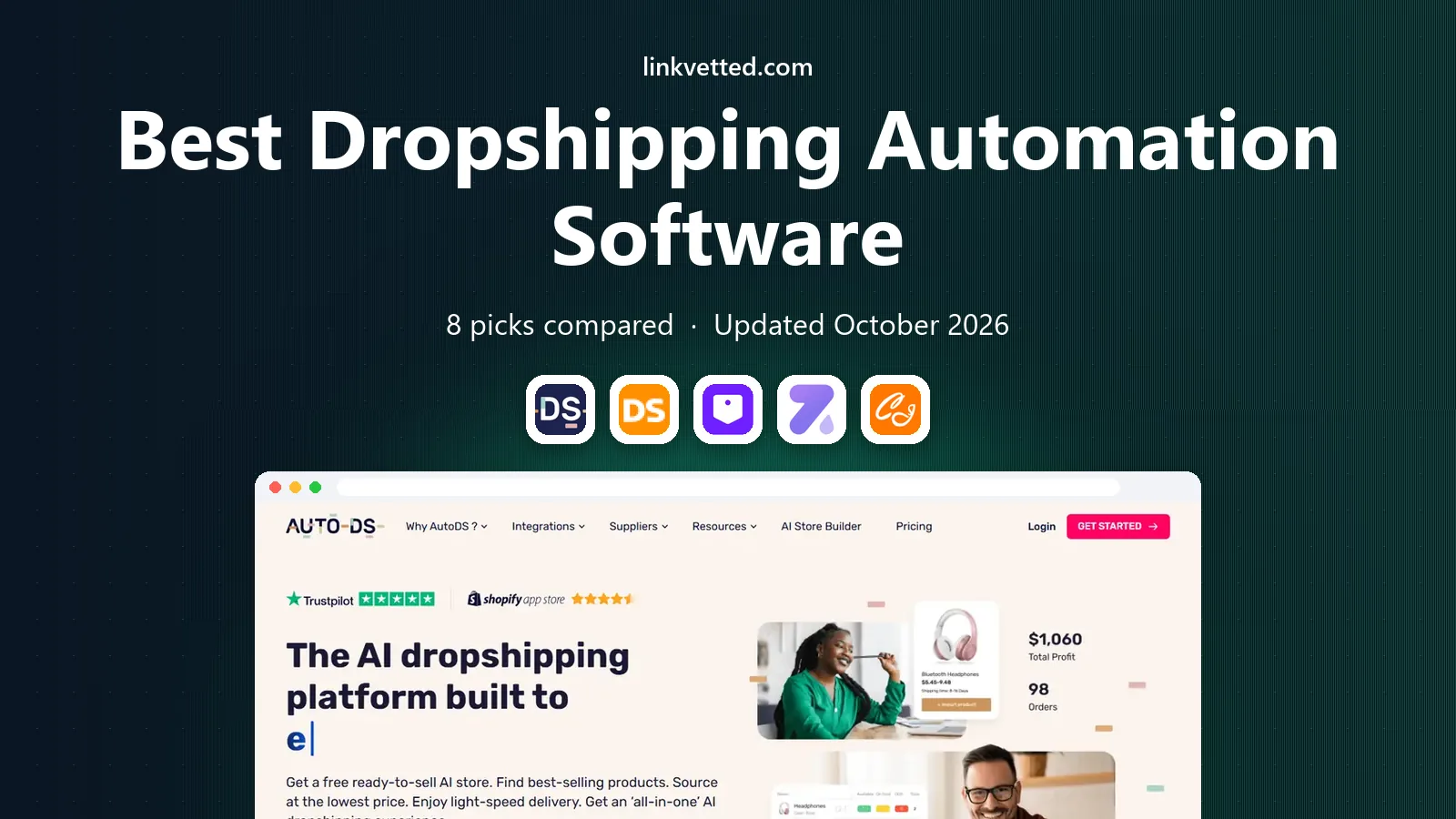
 AutoDS
Broad Shopify automation
Starts atSee websiteVisit autods.comFull review - Great alternative
 DSers
AliExpress order automation
Starts atSee websiteVisit dsers.comFull review - Also consider
 Spocket
US and EU suppliers
Starts atSee websiteVisit spocket.coFull review
TL;DR:
- AutoDS and DSers suit Shopify sellers who want broad supplier coverage and automated order handling.
- Spocket and Zendrop suit sellers who prioritise US and EU suppliers and faster shipping times.
- CJ Dropshipping suits sellers who want warehousing, custom packaging and fulfilment in one place.
- Dropified and Sell The Trend help with product research as well as automation.
- Always check supplier reliability, shipping times and return terms before scaling any product.
Quick comparison
| Tool | Best for | Starts at | Free plan? | |
|---|---|---|---|---|
| AutoDS | Broad Shopify automation | See website | Free trial | Visit |
| DSers | AliExpress order automation | See website | Yes | Visit |
| Spocket | US and EU suppliers | See website | Free trial | Visit |
 Zendrop | Branded fulfilment | See website | Free trial | Visit |
 CJ Dropshipping | Warehousing and fulfilment | See website | Yes | Visit |
 Dropified | Product research plus automation | See website | Free trial | Visit |
 Sell The Trend | Trend research | See website | Free trial | Visit |
 AliDropship | WordPress dropshipping | See website | No | Visit |
The best dropshipping automation software
We compared official feature pages, supplier coverage and pricing models to find the best dropshipping automation tool and the best dropshipping automation tools for Shopify, WooCommerce and WordPress sellers.

AutoDS is a strong all-round automation tool for Shopify sellers. It imports products from many suppliers, updates prices and stock automatically, and handles order fulfilment with limited manual work. That breadth suits sellers testing many products at once.
The pricing structure takes time to understand, since limits on products and orders vary by tier. Sellers should start with a trial, test a small product set, and check supplier shipping times before scaling.
- Supports many suppliers and marketplaces
- Automated price and stock updates
- One-click order fulfilment
- Pricing tiers can be confusing
- Advanced features sit on higher plans
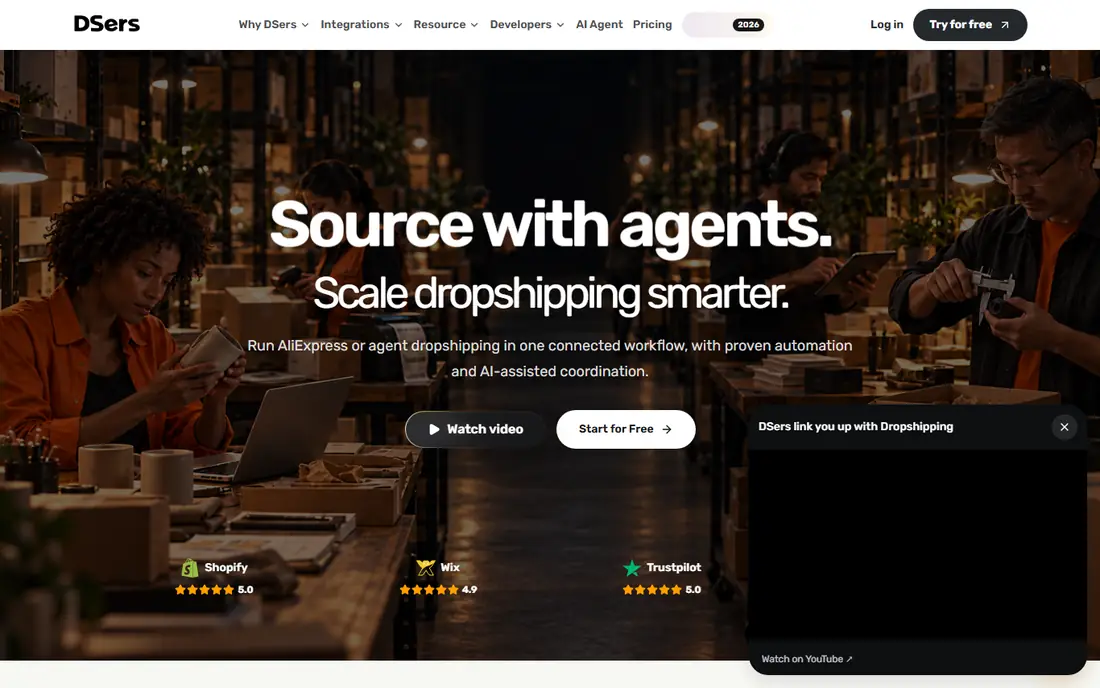
DSers is the natural pick for sellers sourcing mainly from AliExpress. It was built to place bulk orders, map product variants and track fulfilment from one dashboard. The free tier lets new sellers learn the workflow without an upfront subscription.
Its main limit is scope. Sellers who want US or EU suppliers will need another tool alongside DSers. For AliExpress-focused stores, it remains one of the most efficient automation options.
- Official AliExpress partner tool
- Bulk order handling
- Free tier for small sellers
- Focused mainly on AliExpress
- Shipping times depend on the supplier chosen
Spocket suits sellers who want to promise faster delivery and higher product quality. Its suppliers are vetted and based mainly in the US and EU, which often means shipping in days rather than weeks. Branded invoicing also helps stores look more professional.
The product catalogue is smaller than AliExpress, so niche products may be harder to find. For general consumer goods with a focus on delivery speed, Spocket is a strong choice.
- Suppliers mainly in the US and EU
- Faster shipping than many overseas options
- Branded invoicing
- Product range is narrower than AliExpress tools
- Paid plans needed for higher order volumes
Zendrop focuses on making a dropshipping store feel like a real brand. Sellers can add custom packaging, thank-you cards and branded labels, while Zendrop handles sourcing and fulfilment. That branding edge helps repeat purchases and reviews.
The subscription cost is higher than simpler tools, so low-volume sellers should check the maths first. For stores with steady sales, the branded experience can justify the price.
- Custom packaging and branding options
- Automated fulfilment
- Product sourcing help
- Monthly cost is higher than basic tools
- Best value needs steady order volume
CJ Dropshipping acts as both supplier and fulfilment partner. Sellers can source products, store stock in CJ warehouses, request quality checks and ship orders from one platform. That range suits sellers moving from pure dropshipping toward holding some stock.
The platform is large, and new users may need time to learn its workflows. Shipping speed depends on warehouse location and destination, so test orders are essential. For sellers who want fulfilment depth, CJ is a strong option.
- Free to join
- Warehousing and quality checks
- Custom packaging and print on demand
- Shipping times vary by warehouse location
- Interface takes time to learn
Dropified combines product discovery with automation, which suits sellers who want one tool for finding and fulfilling products. It can import products, update prices and place orders automatically, and it supports both Shopify and WooCommerce stores.
Its supplier range is narrower than the broadest tools, and the design feels less modern. For sellers who value research features and a single workflow, Dropified still offers good value.
- Product research tools included
- Automated order placement
- Works with Shopify and WooCommerce
- Interface feels dated in places
- Supplier coverage is narrower than AutoDS
Sell The Trend suits sellers who start with research, not with a fixed product idea. Its dashboards track trending products, store data and supplier options, then link to automation for fulfilment. That research-first approach helps sellers avoid saturated products.
Fulfilment automation is lighter than AutoDS or DSers, so high-volume sellers may need a second tool. For product discovery with basic automation, it is a useful choice.
- Trend and product research dashboards
- Supplier links
- Automation for Shopify stores
- Research focus means fulfilment features are lighter
- Subscription needed for full access
AliDropship is the best pick in this list for WordPress sellers who do not want a monthly Shopify fee. Its plugin turns a WordPress site into a dropshipping store, imports AliExpress products and automates orders. A one-time payment option appeals to cost-focused sellers.
It is tied mainly to AliExpress, so supplier diversity is limited. WordPress maintenance, hosting and security also fall to the seller. For WordPress users comfortable with that work, AliDropship offers strong value.
- One-time payment option for the plugin
- Built for WordPress and WooCommerce
- Automated order handling
- Focused on AliExpress
- No monthly SaaS support model for some buyers
How we picked these
We compared official feature pages, supplier coverage and pricing models for dropshipping automation tools that work with Shopify, WooCommerce or WordPress in 2026. We did not claim hands-on testing, and we used See website for prices, since many vendors price by product and order limits that change often.
How to choose dropshipping automation software
Start with your store platform and supplier type. Shopify sellers have the widest tool choice, WooCommerce sellers need plugin support, and WordPress sellers may prefer AliDropship. Then list your must-have automation: product import, price updates, stock sync, order placement and tracking updates.
Supplier quality and shipping
Order samples before scaling any product. Check packaging, delivery time, tracking quality and return handling, and read recent supplier reviews. A tool cannot fix a poor supplier, so supplier vetting matters more than automation features alone.
Costs and margins
Add tool fees, product cost, shipping, payment processing and ad costs to find your true margin. Many new sellers overestimate margin because they forget fees and returns. Start with a small product set, prove margin on real orders, and only then increase ad spend.
Returns, refunds and customer trust
Returns decide whether a dropshipping store keeps customers. State return windows, who pays return shipping and how long refunds take, in plain language on your store. Test the return process yourself with a sample order, so you know what customers actually experience when something arrives damaged or late.
Keep a small reserve for refunds and lost parcels, and track return reasons by product and supplier. If one product generates repeated returns, pause it and check quality before spending more on ads. Honest delivery estimates and clear return terms reduce complaints far more than a polished product page alone.
Build trust with real photos where possible, accurate sizing or specifications, and prompt replies to order questions. Customers forgive a delay when they get a clear update, but they rarely forgive silence. A simple weekly check of open orders and unanswered messages prevents many disputes.
Testing products before you scale ads
Run a small test order for every product you plan to promote, and check packaging, quality and delivery time yourself. Photograph the unboxing, note any defects, and ask the supplier about replacements for damaged items. A product that looks good in a supplier photo but arrives poorly packed will cost more in refunds than it earns in sales.
Start ads with a modest daily budget, and increase spend only after real orders show acceptable margins and delivery times. Track profit per order after all fees, not just revenue, and pause products that need constant customer service to stay viable.
FAQ
What is the best dropshipping automation tool?
AutoDS suits broad Shopify automation, DSers suits AliExpress sellers, and Spocket suits US and EU suppliers. The best tool depends on your platform and supplier mix. Start with a trial and test real orders before committing.
What are the best dropshipping automation tools for beginners?
DSers and CJ Dropshipping offer free entry points, while Spocket offers a free trial with vetted suppliers. Beginners should start with few products, order samples and learn fulfilment before scaling. Avoid tools that promise instant profits.
Is dropshipping still profitable in 2026?
It can be, but margins are tight and depend on product choice, shipping speed and ad costs. Sellers who offer faster shipping, better branding and reliable suppliers have a better chance than sellers competing only on price. Treat it as a real retail business, not passive income.
Do I need Shopify to use these tools?
No, although most tools focus on Shopify. Dropified and AliDropship support WooCommerce and WordPress, and CJ Dropshipping works with several platforms. Check platform support on the vendor page before buying.
How do I avoid long shipping times?
Choose suppliers with warehouses near your customers, such as US or EU suppliers on Spocket, or CJ warehouses in your target region. Order samples, confirm tracking, and state realistic delivery times on your store. Faster shipping often costs more, but it reduces refunds and complaints.