Best Virtual Reality Marketplaces Software for Startups (2026): 5 Picks Checked on Vendor Pages
5 best virtual reality marketplaces software for startups, with entry costs, free tiers and the buyer each one serves. Plus the drawbacks of each tool.
- Editor's choice
 Salesforce Commerce Cloud
Commerce inside the Salesforce ecosystem
Starts atSee websiteVisit salesforce.comFull review - Great alternative
 WooCommerce
Open-source control for developers
Starts at$29 per monthVisit woocommerce.comFull review - Also consider
 Wix
Quick, guided site building
Starts atSee websiteVisit wix.comFull review
Direct answer
Salesforce Commerce Cloud is the first pick on this list for Commerce inside the Salesforce ecosystem. Listed starting prices: WooCommerce from $29 per month, Squarespace from $12 per month and Shopify from $19 per month. For a different need, WooCommerce covers open-source control for developers and Wix covers fast, guided site building. All 5 tools are compared below on price, free plan and limits.
TL;DR:
- Salesforce Commerce Cloud is the opening pick, best for Commerce inside the Salesforce ecosystem.
- Shopify is the one to check for all-in-one marketplace storefronts.
- The lowest published monthly entry price here is $12 per month, from Squarespace.
- Squarespace comes with a trade-off: restricted deep marketplace features.
- Neither Salesforce Commerce Cloud nor Shopify, nor any of the other 3 tools, has a permanent free plan; trials and quotes are the norm.
Last checked November 2026. Prices and plan details were read from the vendors' own pages in November 2026; vendors change plans often, so confirm the current price on the vendor site before you buy.
Quick comparison
| Tool | Best for | Starts at | Free plan? | |
|---|---|---|---|---|
| Salesforce Commerce Cloud | Commerce inside the Salesforce ecosystem | See website | Not stated | Visit |
| WooCommerce | Open-source control for developers | $29 per month | Not stated | Visit |
| Wix | Quick, guided site building | See website | Not stated | Visit |
 Squarespace | Design-led storefronts and content | $12 per month | Free trial | Visit |
 Shopify | All-in-one marketplace storefronts | $19 per month | Free trial | Visit |
Tool-by-tool breakdown
If you are comparing virtual reality marketplaces software for startups, this page covers 5 tools in one place: what each is best for, what it costs to start, whether it has a free plan, and the main limit to know about.
Salesforce Commerce Cloud works best for Commerce inside the Salesforce ecosystem. For startups without existing Salesforce investment, the system's enterprise orientation and configuration depth may be more than an early marketplace needs.
Where it falls short: Best value only within Salesforce.
Worth adding: lighter commerce tools are commonly a more practical first step. Salesforce Commerce Cloud does not show a starting price in this comparison, so check the vendor site for current pricing. Trial and free access: Not stated.
- Enterprise commerce focus
- Suits Salesforce-centric stacks
- Can be complicated to configure
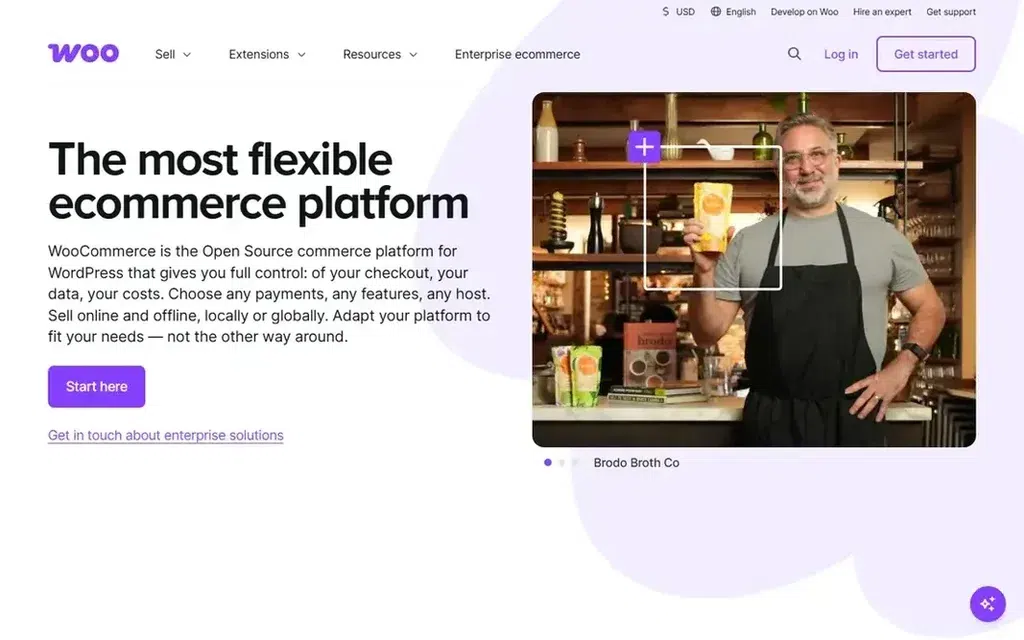
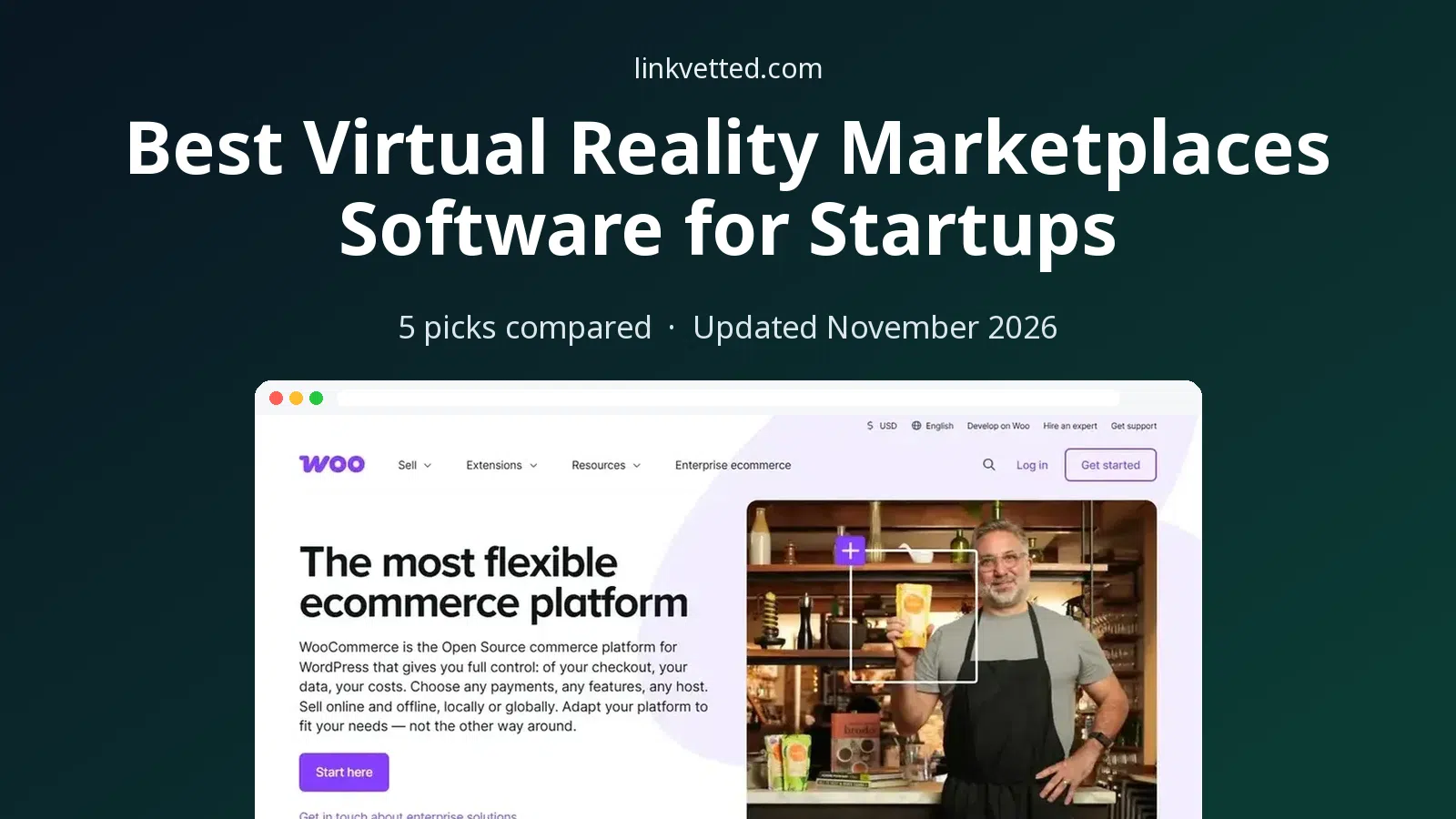
WooCommerce is a good fit for open-source control for developers. WooCommerce is the open-source ecommerce platform that helps merchants and developers build successful firms for the long term. Founders without technical support should consider a completely hosted system instead.
Where it falls short: Needs more technical upkeep.
For a virtual reality marketplace startup with in-house development skill, the open-source model gives you freedom to shape catalog structure, checkout flow and integrations around specialized hardware or digital goods. That freedom includes responsibility: hosting, updates and security are mostly in the team's hands, which can stretch a lean startup. Entry price for WooCommerce: $29 per month. Free access: Not stated.
- Long-term ownership focus
- Made for merchants and developers
- Hosting and maintenance are on you
Wix makes the most sense for quick, guided site building. Wix is a website system that bundles hosting, business tools, domains and marketing, positioning itself as a place to build the business you have in mind.
Teams planning complicated multi-vendor features should evaluate dedicated commerce systems. Pricing for Wix is not stated here, so ask the vendor for current figures. As for free access: Not stated.
Watch-outs: Less adaptable for complicated logic.
- Business and marketing tools included
- Hosting and domains built in
- Migration can be limiting later
Pick Squarespace if this describes you: design-led storefronts and content. Squarespace supplies a website builder with configurable templates, AI website builder tools and domain choices for creating a site and expanding a business. For a virtual reality marketplace startup that leads with brand and content, for example showcasing VR hardware or experiences, its design-forward templates can produce a credible storefront rapidly.
Trade-offs to know: Restricted deep marketplace features.
Squarespace is oriented toward websites and straightforward selling instead of complicated multi-vendor marketplaces, so advanced catalog or vendor management may fall short. On top of that, startups with heavy marketplace logic should look at dedicated commerce systems. Entry price for Squarespace: $12 per month. Free plan details: Free trial.
- Domain and trial options
- Refined configurable templates
- Fewer advanced commerce controls

Shopify makes the most sense for all-in-one marketplace storefronts. For a startup building a virtual reality marketplace, that breadth means storefront setup, hosting and marketing tools sit in one place, which cuts the number of systems to stitch together early on.
Where it is weaker: Less open-source control.
Also, startups with capable developer resources or unusual marketplace logic should weigh open-source or composable alternatives before committing. Shopify cost at the entry level: $19 per month. As for free access: Free trial.
- Large app ecosystem
- AI-assisted store building
- App extras can raise complexity
Our selection method
LinkVetted used vendor pricing pages and product documentation as the base, then compared plans, free access and documented limits for 5 tools. Where a price is missing, the vendor does not list one publicly or ties it to a quote. Always confirm before budgeting. Tools are placed by general fit for virtual reality marketplaces software for startups, with price clarity and free access as tie-breakers. A different team can reasonably rank them differently.
A buyer's checklist
- Ask Salesforce Commerce Cloud and Wix for a written quote, since no starting price is shown.
- Take the trial from Squarespace and Shopify and push a live task through it before you pay.
- Read the limits listed for Salesforce Commerce Cloud first: best value only within Salesforce.
- Work out what Squarespace costs with your real seat count, add-ons and usage, not just the entry price.
- List the apps you already depend on and check that Wix supports each one on the plan you would buy.
FAQ
Does any tool for virtual reality marketplaces software for startups here have a free plan?
A permanent free plan is not offered by Salesforce Commerce Cloud, Shopify or the other tools here. Squarespace, Shopify offer a trial. Plan a short evaluation period instead. Prices, free plan details and limits for all 5 tools in this virtual reality marketplaces software for startups roundup sit on the individual cards above.
Is Salesforce Commerce Cloud the right pick for everyone comparing virtual reality marketplaces software for startups?
No single tool suits every team. Salesforce Commerce Cloud comes first because it fits Commerce inside the Salesforce ecosystem, while WooCommerce suits open-source control for developers and Wix suits fast, guided site building. Match the tool to your own size, budget and workflow before deciding.
Do these tools publish their prices?
Not all of them. Salesforce Commerce Cloud and Wix publish no starting price, so expect a quote request for those. The rest, WooCommerce included, show a starting price, though seats and billing terms still change the final cost. Each of the 5 options in this virtual reality marketplaces software for startups guide has its own card above with the price, free plan and limits.
How are the tools for virtual reality marketplaces software for startups ordered?
Salesforce Commerce Cloud sits first and Shopify last because the order follows typical fit for virtual reality marketplaces software for startups, then price clarity and free access. It is a judgement call, so read each profile for fit and limits.
Sources
- https://www.salesforce.com/commerce
- https://woocommerce.com
- https://www.wix.com
- https://www.squarespace.com
- https://www.shopify.com
Related guides
- Top 6 AI Virtual Reality Marketplaces Software for 2026 (Prices and Free Plans)
- Best E-Commerce Platforms for Startups in 2026: 9 Platforms Compared
- Best Ecommerce Platforms for Startups in 2026: 9 Options Compared
- Choosing API Rate Limiting Tools for Marketplace Platforms in 2026: 5 Options Compared