The 6 Best Enterprise Kubernetes Management Software for Startups in 2026, Ranked
Best enterprise Kubernetes management software for startups: 6 tools compared on price, free plans and fit. Verdicts stay brief and factual. Prices checked.
- Editor's choiceAmazon Elastic Kubernetes Service
Managed Kubernetes within AWS
Starts atPricing on requestVisit aws.amazon.comFull review - Great alternative
 Google Kubernetes Engine
Completely managed Kubernetes on Google Cloud
Starts atPricing on requestVisit cloud.google.comFull review - Also consider
 Rancher
Open-source multi-cluster orchestration
Starts atPricing on requestVisit rancher.comFull review
Direct answer
Amazon Elastic Kubernetes Service leads the list, best for managed Kubernetes within AWS. For a different need, Google Kubernetes Engine covers completely managed Kubernetes on Google Cloud and Rancher covers open-source multi-cluster orchestration. The full list of 6 tools follows, with free plan facts. None of these vendors publish plan prices, so pricing is on request for every option.
TL;DR:
- Amazon Elastic Kubernetes Service sits first on this list: managed Kubernetes within AWS.
- The main caution on Rancher: needs operational Kubernetes knowledge.
- Neither Amazon Elastic Kubernetes Service nor Azure Kubernetes Service, nor any of the other 4 tools, has a permanent free plan; trials and quotes are the norm.
- Azure Kubernetes Service is the one to check for managed Kubernetes on Microsoft Azure.
Last checked November 2026. Pricing on request: vendors did not publish plan prices when this guide was last checked (November 2026), so ask each vendor for a written quote.
Quick comparison
| Tool | Best for | Starts at | Free plan? | |
|---|---|---|---|---|
| Amazon Elastic Kubernetes Service | Managed Kubernetes within AWS | Pricing on request | Not stated | Visit |
| Google Kubernetes Engine | Completely managed Kubernetes on Google Cloud | Pricing on request | Not stated | Visit |
| Rancher | Open-source multi-cluster orchestration | Pricing on request | Not stated | Visit |
| SUSE Rancher | Enterprise-supported Rancher distribution | Pricing on request | Not stated | Visit |
 Red Hat OpenShift | Full application system with built-in tooling | Pricing on request | Not stated | Visit |
 Azure Kubernetes Service | Managed Kubernetes on Microsoft Azure | Pricing on request | Not stated | Visit |
6 enterprise Kubernetes management software for startups in detail
Choosing enterprise Kubernetes management software for startups usually comes down to price, fit and limits. This LinkVetted guide sets 6 tools side by side on those three points, with the facts kept short and checkable.
Amazon Elastic Kubernetes Service
Best for: Managed Kubernetes within AWS
Amazon Elastic Kubernetes Service is designed for managed Kubernetes within AWS. EKS leaves considerable cluster configuration, for example networking and extras, to the team, so it rewards engineers with Kubernetes familiarity.
Honest limits: Networking and extras need configuration.
Amazon Elastic Kubernetes Service shows no starting price here, so confirm the cost on the vendor site. Free options: Not stated.
- Suits teams already on AWS
- Managed and certified Kubernetes conformant
- AWS-centric operational model
Google Kubernetes Engine
Best for: Completely managed Kubernetes on Google Cloud
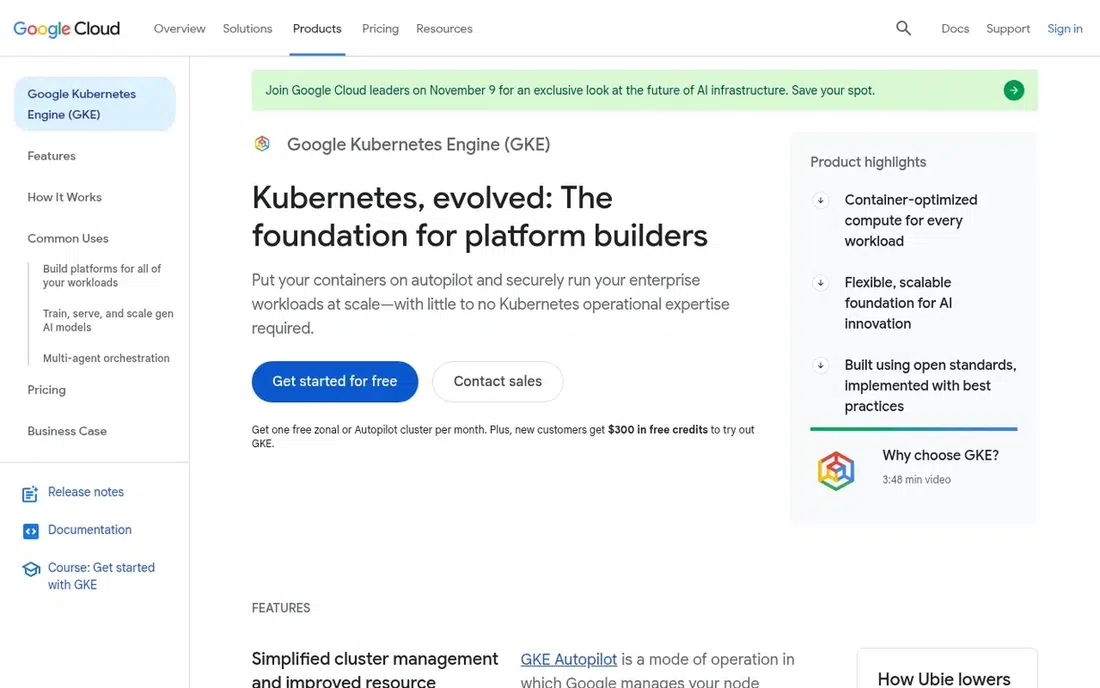
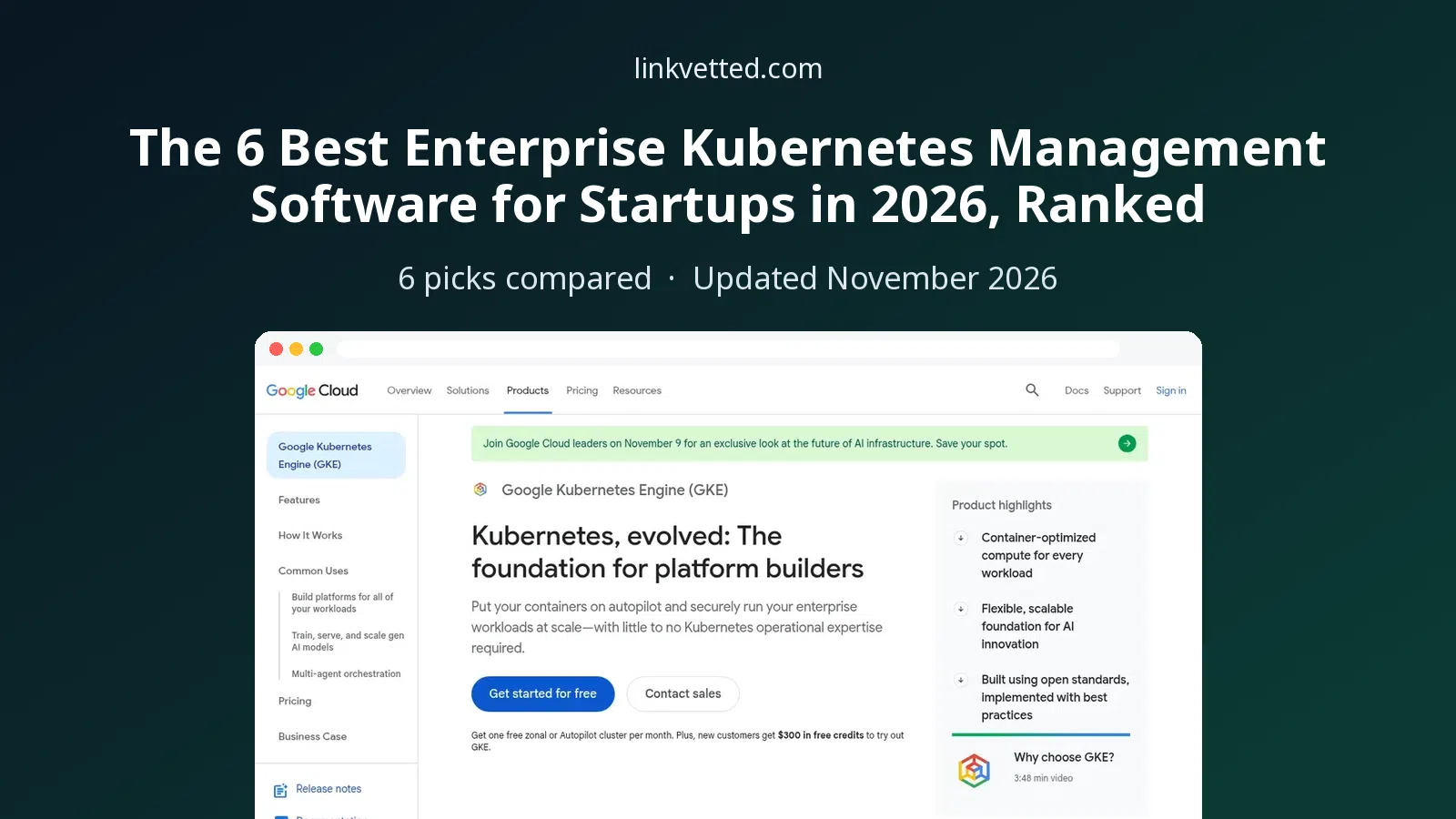
Choose Google Kubernetes Engine for completely managed Kubernetes on Google Cloud. Google Kubernetes Engine is described as a completely managed Kubernetes service with the full Kubernetes API, four-way autoscaling, release channels and multi-cluster support.
Drawbacks to consider: Tied closely to Google Cloud.
Google Kubernetes Engine shows no starting price here, so confirm the cost on the vendor site. Free plan details: Not stated.
Best features of Google Kubernetes Engine: multi-cluster support.
- Full Kubernetes API support
- Release channels
- Managed abstraction can limit low-level control
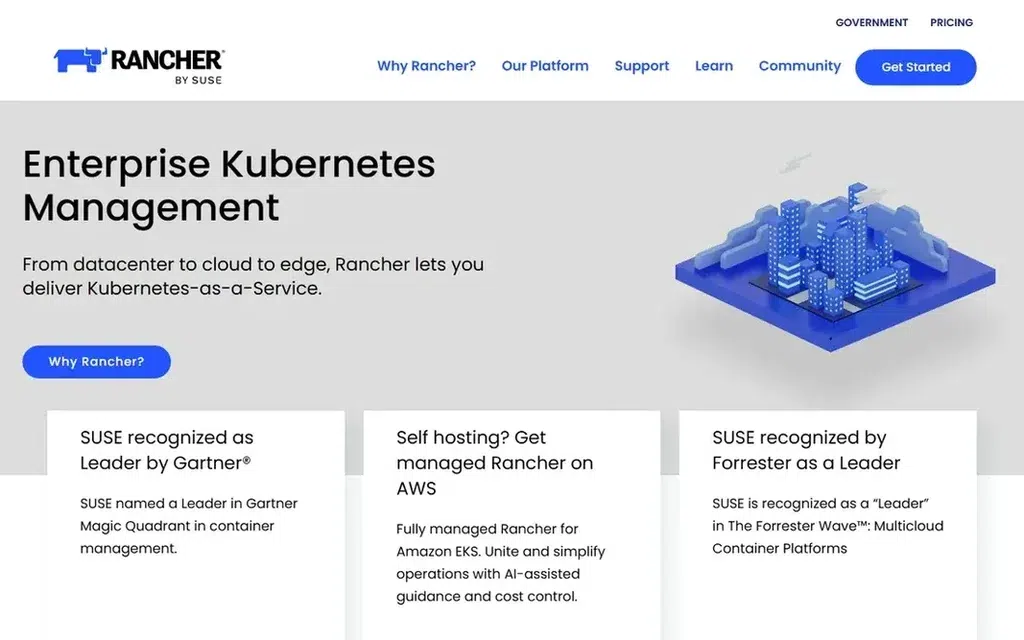
Think of Rancher for open-source multi-cluster orchestration. Startups without dedicated operations staff may prefer a managed cloud offering, whereas teams with system experience can gain flexibility across clusters.
Since Rancher is orchestration software instead of a hosted service, teams carry the responsibility for running and maintaining it. Rancher presents itself as an open-source multi-cluster orchestration system that lets operations teams deploy, handle and secure enterprise Kubernetes. Pricing for Rancher is not stated here, so ask the vendor for current figures. Free access: Not stated.
What Rancher does well: Deploy. Downsides: Self-managed footprint layers on overhead.
- Designed for operations teams
- Run and secure Kubernetes
- Needs operational Kubernetes knowledge
SUSE Rancher
Best for: Enterprise-supported Rancher distribution
Choose SUSE Rancher for enterprise-supported Rancher distribution. SUSE Rancher Prime is the enterprise offering built around Rancher, targeted at organizations that want the multi-cluster management approach with vendor backing from SUSE. As for the details, startups comfortable self-supporting open source may not need it yet.
Drawbacks to consider: Support-oriented value over raw features.
Startups that like Rancher's orchestration model but expect to need commercial support as they grow may find this variant a natural step up from the open-source project. As for the details, the distinction from community Rancher is mostly about support and enterprise packaging instead of a different core model. So teams must judge whether that backing matters for them. No starting price is listed for SUSE Rancher here; confirm pricing on the vendor site. Free plan details: Not stated.
- Enterprise-supported Rancher offering
- Suited to organizations wanting vendor support
- Needs Kubernetes operations experience
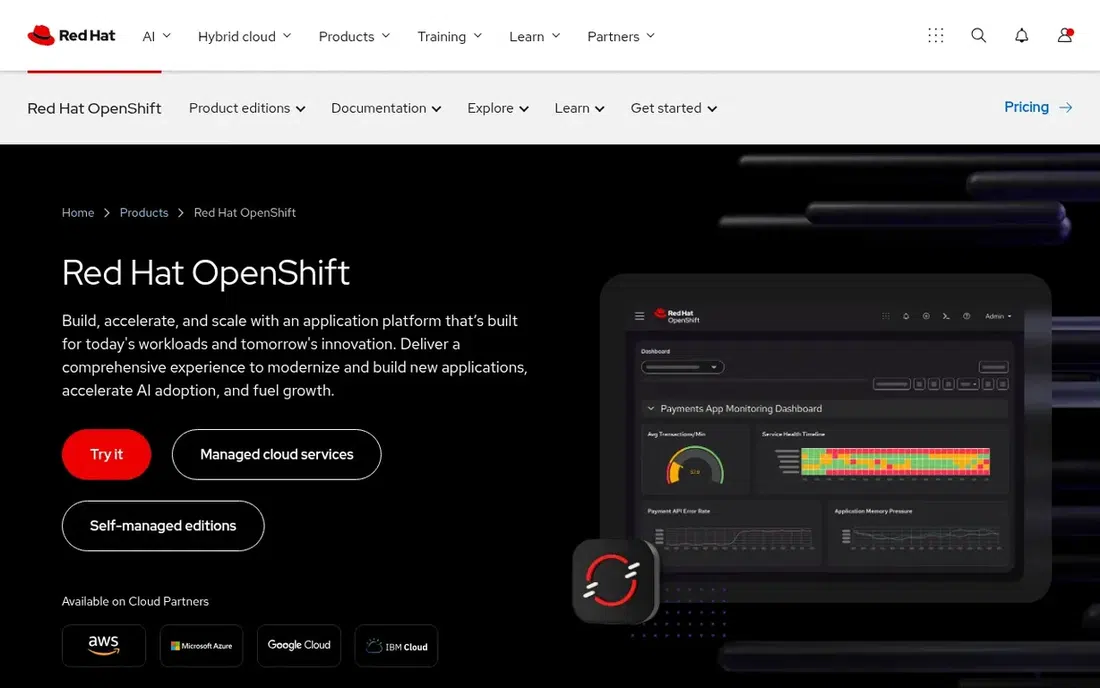
Red Hat OpenShift was built for full application system with built-in tooling. For startups, it suits teams that want more than raw cluster management and prefer an integrated platform where application development, modernization and emerging AI workloads share one environment.
This comparison lists no price for Red Hat OpenShift; ask the vendor. As for free access: Not stated.
Watch-outs: Wide system can be complicated for small teams.
- Tools for modernizing and building apps
- Thorough application innovation system
- Enterprise orientation may exceed early needs
Azure Kubernetes Service makes the most sense for managed Kubernetes on Microsoft Azure. Azure Kubernetes Service is positioned for secure, scalable containerized application deployment and management with quick delivery on managed Kubernetes clusters. From a buyer's view, startups on other clouds should weigh whether cross-cloud consistency or native integration matters more.
The main drawbacks: Cluster configuration still needs expertise.
More specifically, as with other cloud-managed offerings, the deepest integration is within its own ecosystem. Teams still need Kubernetes skills to configure workloads and networking. Azure Kubernetes Service does not show a starting price in this comparison, so check the vendor site for current pricing. As for free access: Not stated.
- Secure
- Quick delivery on Azure
- Best value inside Azure
How the list was put together
What to confirm before you sign up
- Confirm the entry price with every vendor: no tool from Amazon Elastic Kubernetes Service to Azure Kubernetes Service shows a fixed starting price.
- Read the limits listed for Amazon Elastic Kubernetes Service first: AWS-centric operational model.
- Get the contract term, renewal terms and any onboarding fees from Rancher in writing.
- Involve the people who will use Azure Kubernetes Service daily; a short pilot beats a long feature checklist.
- Read the plan comparison for Google Kubernetes Engine carefully; key features often start on a higher tier.
FAQ
What should a small team check before adopting enterprise Kubernetes software?
Confirm the operational work your team keeps, the Kubernetes versions supported, upgrade paths and security controls. Also verify how the tool manages multi-cluster management if growth may bring extra environments.
Can I try these tools before paying?
Not by default. None of the tools, from Amazon Elastic Kubernetes Service to Azure Kubernetes Service, lists a free plan or a free trial here, so ask each vendor for a demo before committing.
Do these tools publish their prices?
No. None of the tools, from Amazon Elastic Kubernetes Service to Azure Kubernetes Service, shows a fixed starting price here, so budget time for quotes.
Is Amazon Elastic Kubernetes Service the right pick for everyone comparing enterprise Kubernetes management software for startups?
No single tool suits every team. Amazon Elastic Kubernetes Service comes first because it fits managed Kubernetes within AWS, while Google Kubernetes Engine suits fully managed Kubernetes on Google Cloud and Rancher suits open-source multi-cluster orchestration. Match the tool to your own size, budget and workflow before deciding.
How are the tools for enterprise Kubernetes management software for startups ordered?
Amazon Elastic Kubernetes Service sits first and Azure Kubernetes Service last because the order follows typical fit for enterprise Kubernetes management software for startups, then price clarity and free access. It is a judgement call, so read each profile for fit and limits.
Sources
- https://aws.amazon.com/eks
- https://cloud.google.com/kubernetes-engine
- https://www.rancher.com
- https://www.suse.com/products/rancher
- https://www.redhat.com/en/technologies/cloud-computing/openshift
- https://azure.microsoft.com/en-us/products/kubernetes-service