Best Enterprise Kubernetes Management Software for 2026: Our 5 Vetted Picks
Best enterprise Kubernetes management software: 5 contenders ranked by fit, with entry costs and free tiers. Each pick lists its main limit. Start here.
- Editor's choice
 Google Kubernetes Engine
Completely managed Kubernetes on Google Cloud
Starts atSee websiteVisit cloud.google.comFull review - Great alternativeAmazon Elastic Kubernetes Service
Managed Kubernetes on AWS and on-premises
Starts atSee websiteVisit aws.amazon.comFull review - Also consider
 Red Hat OpenShift
Full application innovation product
Starts atSee websiteVisit redhat.comFull review
Direct answer
This list puts Google Kubernetes Engine first for completely managed Kubernetes on Google Cloud. Listed starting prices: Portainer from $1,045 a year. For a different need, Amazon Elastic Kubernetes Service covers managed Kubernetes on AWS and on-premises and Red Hat OpenShift covers thorough application innovation system. Prices, free plans and limits for all 5 tools follow.
TL;DR:
- Number one here is Google Kubernetes Engine, a fit for completely managed Kubernetes on Google Cloud.
- Google Kubernetes Engine, Amazon Elastic Kubernetes Service, Red Hat OpenShift and Mirantis Kubernetes Engine: pricing is by quote only, so plan time for a sales conversation.
- Neither Google Kubernetes Engine nor Mirantis Kubernetes Engine, nor any of the other 3 tools, has a permanent free plan; trials and quotes are the norm.
- A fair warning about Google Kubernetes Engine: tied closely to Google Cloud.
Last checked November 2026. Prices and plan details were read from the vendors' own pages in November 2026; vendors change plans often, so confirm the current price on the vendor site before you buy.
Quick comparison
| Tool | Best for | Starts at | Free plan? | |
|---|---|---|---|---|
| Google Kubernetes Engine | Completely managed Kubernetes on Google Cloud | See website | Not stated | Visit |
| Amazon Elastic Kubernetes Service | Managed Kubernetes on AWS and on-premises | See website | Not stated | Visit |
| Red Hat OpenShift | Full application innovation product | See website | Not stated | Visit |
 Portainer | Single control plane across a fleet | $1,045 a year | Free trial | Visit |
 Mirantis Kubernetes Engine | Private and managed container orchestration | See website | Not stated | Visit |
Tool-by-tool breakdown
Short on time? The summary and table above give the quick view of 5 tools for enterprise Kubernetes management software, and the profiles that follow give the detail behind each entry.
Google Kubernetes Engine
Best for: Completely managed Kubernetes on Google Cloud
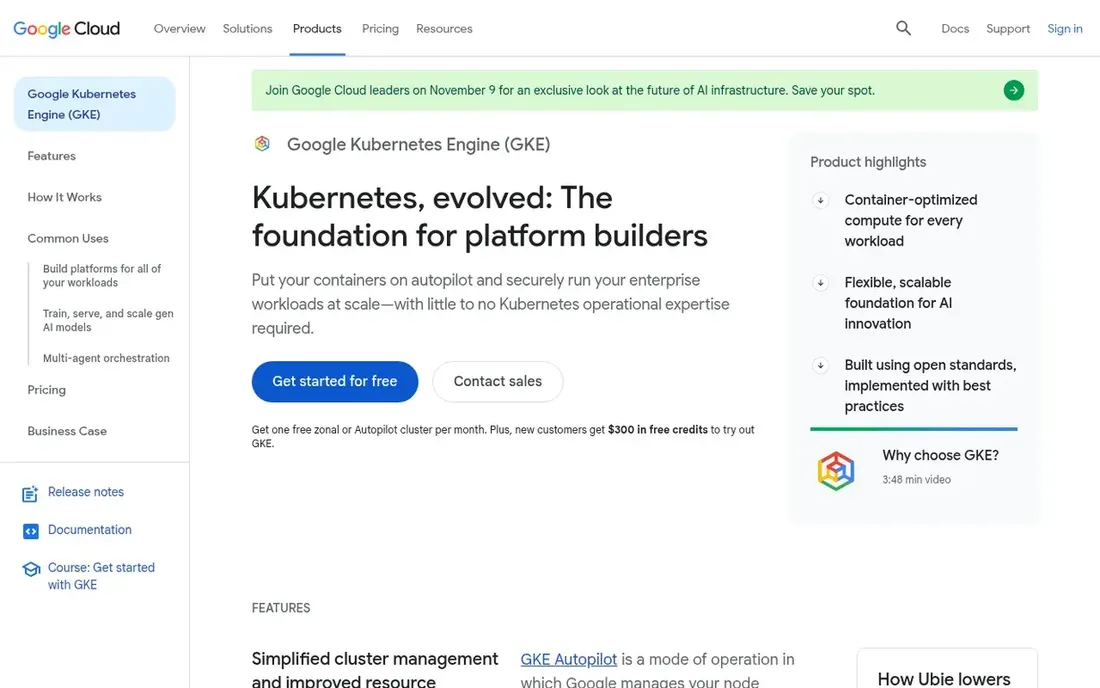
Google Kubernetes Engine makes the most sense for fully managed Kubernetes on Google Cloud. Evaluate how much operational control you need before committing.
Limits to weigh: Less suited to on-premises-only estates.
Google Kubernetes Engine is described as a completely managed Kubernetes service with the full Kubernetes API, autoscaling, release channels and multi-cluster support. Its strengths are closely tied to Google Cloud, so organizations with a different primary cloud or strict on-premises requirements may prefer a platform-neutral orchestrator. Pricing for Google Kubernetes Engine is not stated here, so ask the vendor for current figures. On free options: Not stated.
- Completely managed Kubernetes service
- Full Kubernetes API with autoscaling
- Tied closely to Google Cloud
Amazon Elastic Kubernetes Service
Best for: Managed Kubernetes on AWS and on-premises
Amazon Elastic Kubernetes Service is aimed squarely at managed Kubernetes on AWS and on-premises. Amazon Elastic Kubernetes Service is a managed service and certified Kubernetes conformant offering to run Kubernetes on AWS and on-premises.
Points against: AWS-centric operational model.
For everyday use, the service is designed around AWS, so teams on other clouds may find the fit less natural. Those wanting a vendor-neutral multi-cluster layer on top of any infrastructure might look at a dedicated orchestration system instead. Pricing for Amazon Elastic Kubernetes Service is not stated here, so ask the vendor for current figures. As for free access: Not stated.
- Runs Kubernetes on AWS and on-premises
- Links up with the AWS ecosystem
- Needs familiarity with AWS services
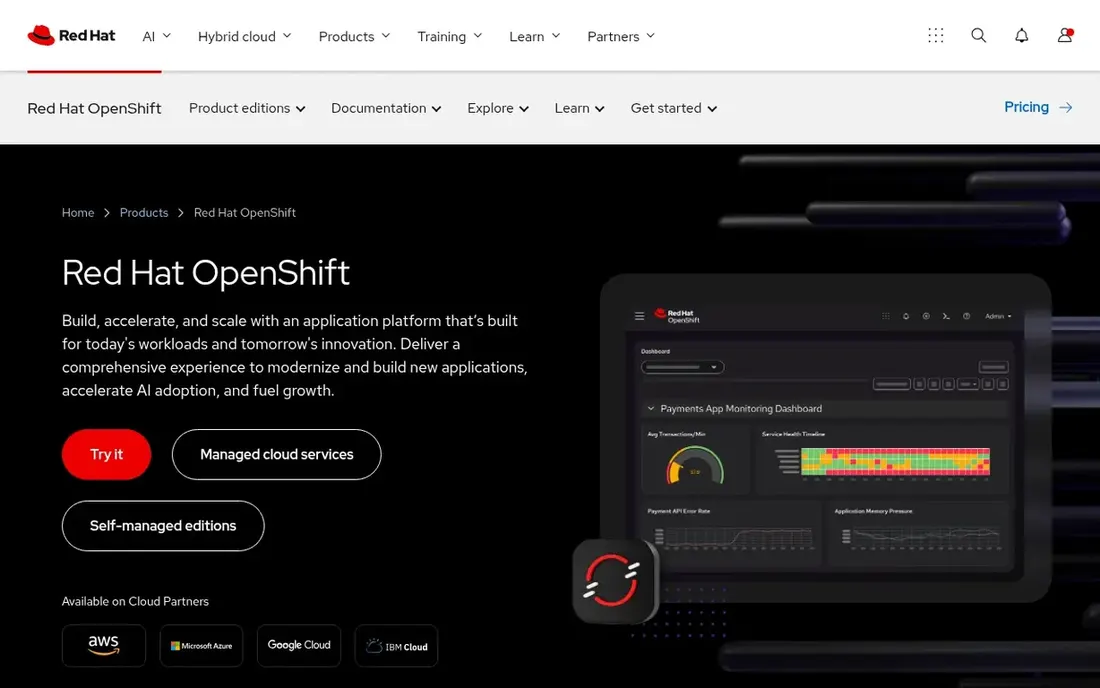
Think of Red Hat OpenShift for full application innovation system. Red Hat OpenShift is described as an application innovation system that gives a thorough experience with tools to enable organizations to modernize and build new applications, accelerate AI adoption and fuel growth.
Watch-outs: May be more than small teams need.
On top of that, teams seeking only entry-level cluster orchestration, or those already standardized on a cloud provider's native offering, may find a more straightforward choice a better match. The product's breadth can mean a steeper ramp-up time and more moving parts than a focused managed service. No starting price is listed for Red Hat OpenShift here; confirm pricing on the vendor site. On free options: Not stated.
- Aims to modernize and build new applications
- Backed by Red Hat enterprise support
- Wide system scope can be complicated to adopt
Pick Portainer if this describes you: single control plane across a fleet. Portainer concentrates on management and governance, so organizations needing broad developer tooling or AI services may pair it with other systems.
Confirm how it suits your existing cluster estate before standardizing. Entry price for Portainer: $1,045 per year. On free options: Free trial.
Drawbacks to consider: Advanced system features come from elsewhere.
- Eases daily cluster operations
- Secure and govern Kubernetes
- Focused on management instead of full product services
Think of Mirantis Kubernetes Engine for private and managed container orchestration. Mirantis Kubernetes Engine is presented as managed enterprise container management with private and managed container orchestration for Kubernetes, Docker and more.
Honest limits: May need vendor engagement to evaluate.
Beyond that, since it is a specialized product, buyers should confirm integration details and support terms straight with the vendor. Mirantis Kubernetes Engine does not show a starting price in this comparison, so check the vendor site for current pricing. Free options: Not stated.
- Private and managed deployment choices
- Supports Kubernetes and Docker orchestration
- Less known than the major cloud services
Our selection method
We compared the tools on published pricing, free plan or trial availability, feature coverage for enterprise Kubernetes management software, and the limits each vendor documents. Treat prices as a snapshot: vendors change plans often, so check the vendor site for the figure that applies today. Position on the page reflects fit for a typical buyer first, with price clarity and free access breaking ties. Treat it as a guide, not a ruling.
Questions to settle before buying
- Confirm the entry price on the vendor page. For Google Kubernetes Engine, Amazon Elastic Kubernetes Service, Red Hat OpenShift and Mirantis Kubernetes Engine that means a quote rather than a fixed price.
- Use real work to test the free trial from Portainer, rather than a demo project.
- Read the limits listed for Google Kubernetes Engine first: tied closely to Google Cloud.
- Before you load data into Red Hat OpenShift, check what an export looks like and who can run it.
- Ask Amazon Elastic Kubernetes Service which support channels and response times come with the plan you would buy.
FAQ
Does any tool for enterprise Kubernetes management software here have a free plan?
No tool in this list, Google Kubernetes Engine and Mirantis Kubernetes Engine included, has a permanent free plan. Portainer offer a trial. Trials and quotes are the usual route, so plan a short evaluation period.
What should enterprises look for in Kubernetes management software?
Focus on the operational model, for example completely managed compared with self-managed, and on multi-cluster governance, security integration and support terms. Match the product to your cloud strategy and the skills of your platform team.
Can I try these options before paying?
Often, yes. Portainer offers a free trial. Use your own data and a real task during the test, and check what the free tier or trial limits before you rely on it. All 5 picks in this enterprise Kubernetes management software comparison list a starting price, free plan details and the main limits on their cards above.
How are the tools for enterprise Kubernetes management software ordered?
The order follows typical fit for enterprise Kubernetes management software, with Google Kubernetes Engine first and Mirantis Kubernetes Engine last, then price clarity and free access. It is editorial judgement, not a score, so another team could rank the tools differently.
Do these tools publish their prices?
Not all of them. Google Kubernetes Engine, Amazon Elastic Kubernetes Service, Red Hat OpenShift and Mirantis Kubernetes Engine publish no starting price, so expect a quote request for those. The rest, Portainer included, show a starting price, though seats and billing terms still change the final cost.
Sources
- https://cloud.google.com/kubernetes-engine
- https://aws.amazon.com/eks
- https://www.redhat.com/en/technologies/cloud-computing/openshift
- https://www.portainer.io
- https://www.mirantis.com/software/mirantis-kubernetes-engine