The 6 Best Database Websites for NoSQL in 2026, Ranked
6 options for the best database websites for NoSQL, with entry costs, free tiers and the buyer each one serves. With pricing notes and limits. No hype.
- Editor's choiceGoogle Cloud Firestore
Serverless document database on Google Cloud
Starts atSee websiteVisit cloud.google.comFull review - Great alternative
 DataStax Astra DB
Enterprise gen AI data needs
Starts at$1.00 per resource unitVisit datastax.comFull review - Also consider
 Azure Cosmos DB
Managed NoSQL vector database on Azure
Starts atSee websiteVisit azure.microsoft.comFull review
Direct answer
Google Cloud Firestore is the first pick on this list for serverless document database on Google Cloud. Listed starting prices: DataStax Astra DB from $1.00 per resource unit. DataStax Astra DB fits enterprise gen AI data needs; Azure Cosmos DB fits managed NoSQL vector database on Azure. The full list of 6 tools follows, with prices and free plan facts.
TL;DR:
- This list starts with Google Cloud Firestore, which is built for serverless document database on Google Cloud.
- No starting price is published for Google Cloud Firestore, Azure Cosmos DB, Redis Cloud and others; expect a quote.
- Couchbase Capella fits multi-service operational data product.
- One limit worth knowing about Google Cloud Firestore: best fit for teams already on Google Cloud.
- Neither Google Cloud Firestore nor Couchbase Capella, nor any of the other 4 tools, has a permanent free plan; trials and quotes are the norm.
Last checked November 2026. Prices and plan details were read from the vendors' own pages in November 2026; vendors change plans often, so confirm the current price on the vendor site before you buy.
Quick comparison
| Tool | Best for | Starts at | Free plan? | |
|---|---|---|---|---|
| Google Cloud Firestore | Serverless document database on Google Cloud | See website | Not stated | Visit |
| DataStax Astra DB | Enterprise gen AI data needs | $1.00 per resource unit | Free trial | Visit |
| Azure Cosmos DB | Managed NoSQL vector database on Azure | See website | Not stated | Visit |
| Redis Cloud | Live apps and caching | See website | Not stated | Visit |
 MongoDB Atlas | Managed document database for general apps | See website | Not stated | Visit |
| Couchbase Capella | Multi-service operational data system | See website | Not stated | Visit |
The 6 tools in detail
This LinkVetted guide covers 6 options for database websites for NoSQL. Each profile lists a starting price, free plan details, strengths and drawbacks, so you can drop poor fits quickly.
Google Cloud Firestore
Best for: Serverless document database on Google Cloud
For serverless document database on Google Cloud, Google Cloud Firestore is a natural candidate. It is aimed at rich application development on Google Cloud and fits teams that want a document store without provisioning servers. Its serverless model appeals to projects with variable or unpredictable traffic.
If you need full MongoDB feature parity or run primarily on another cloud, compare alternatives before standardizing. In daily use, Firestore is most natural inside the Google Cloud ecosystem. The MongoDB compatibility layer should be tested against your specific queries and drivers. No starting price is listed for Google Cloud Firestore here; confirm pricing on the vendor site. Trial and free access: Not stated.
Where it falls short: Compatibility layer may not include every MongoDB feature.
- MongoDB compatibility noted by the vendor
- Completely managed and serverless
- Best fit for teams already on Google Cloud
DataStax Astra DB serves enterprise gen AI data needs. DataStax Astra DB is presented under IBM DataStax, with a homepage centred on deepening watsonx capabilities to address enterprise gen AI data needs.
It is a managed database offering pitched at organizations building AI-oriented applications and seeking a data system aligned with IBM's ecosystem. DataStax Astra DB pricing: $1.00 per resource unit. Trial and free access: Free trial.
What to check first: Positioning is enterprise and AI-focused, which may not fit straightforward apps.
- Associated with IBM DataStax and watsonx
- Managed Astra DB service
- Details should be confirmed on the vendor site
Choose Azure Cosmos DB for managed NoSQL vector database on Azure. Cosmos DB is tightly aligned with Azure, so organizations pursuing a multi-cloud or non-Azure strategy may find other managed databases more straightforward to adopt.
Where it is weaker: Azure-centric, which may limit multi-cloud adaptability.
Its range of configuration choices can also need careful tuning; confirm the right API and consistency settings on the vendor site. On top of that, Azure Cosmos DB is described as a completely managed serverless NoSQL vector database offering high availability, scalability, and low latency for modern app development. Azure Cosmos DB does not show a starting price in this comparison, so check the vendor site for current pricing. Free options: Not stated.
- High availability and low latency
- Completely managed and serverless
- Plenty of configuration choices can complicate tuning
Redis Cloud
Best for: Live apps and caching
Redis Cloud is aimed squarely at live apps and caching. Redis is primarily an in-memory data store, so teams needing a durable primary database with rich query capabilities should look at document or key-value databases instead. Redis Cloud is the official Redis-as-a-service offering, positioned for building quick apps and rich live experiences.
Honest limits: Durability expectations differ from disk-based databases; Primarily an in-memory data store.
Its homepage emphasizes speed and live delivery. From a buyer's view, Redis Cloud fits best as a complement to another database instead of a replacement for all persistence needs. Check the vendor site for Redis Cloud pricing; none is listed in this comparison. Free access: Not stated. Main advantages: Managed cloud delivery; Aimed at quick.
- Official Redis-as-a-service
- Live experiences
- Not a general-purpose database
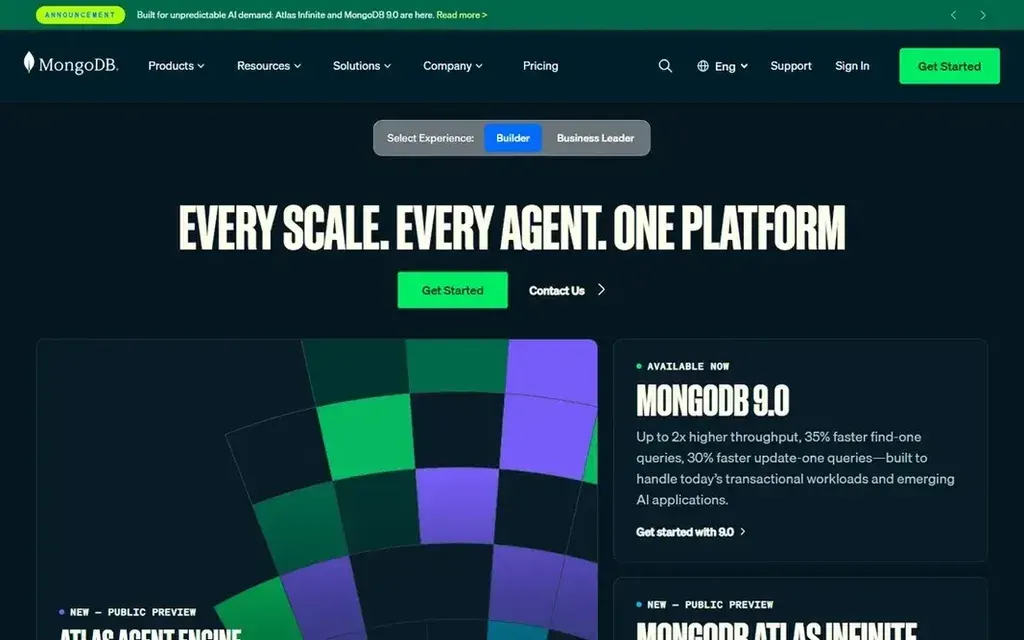
In short, MongoDB Atlas is for managed document database for general apps. The document approach can complicate reporting and transactions compared to relational systems, so teams with strict relational needs may prefer a SQL database.
No starting price is listed for MongoDB Atlas here; confirm pricing on the vendor site. As for free access: Not stated.
The main drawbacks: Advanced features may need deeper system knowledge.
- Document model cuts operational complexity
- Built-in resilience and scalability
- Document modeling needs careful schema design
Couchbase Capella
Best for: Multi-service operational data system
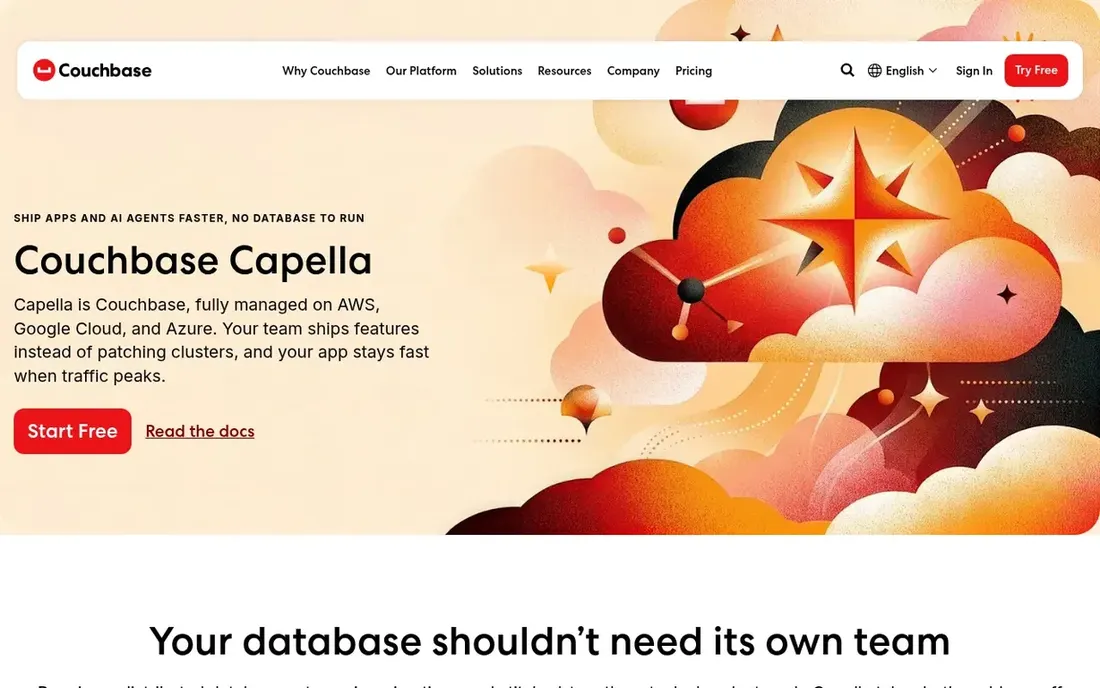
Couchbase Capella serves multi-service operational data system. The breadth of Capella can be excessive for small projects that only need an entry-level key-value store.
Watch-outs: May be more than straightforward key-value workloads need.
Teams should verify how each service is configured and supported. Couchbase Capella is described as an operational data product for AI that runs completely managed on AWS, Google Cloud, and Azure. Check the vendor site for Couchbase Capella pricing; none is listed in this comparison. Trial and free access: Not stated.
- Mobile sync
- Vector search, analytics
- Wide feature set can mean a steeper ramp-up time
How we chose
Selection started from tools commonly considered for database websites for NoSQL, then narrowed to 6 that have clear pricing information or a clear quote process. Plan names, prices and limits change often. Treat the figures here as a starting point and verify them with the vendor. The ranking is editorial: typical fit first, then clear pricing, then free access. If your needs are unusual, read the profiles rather than relying on position.
What to confirm before you sign up
- Confirm the entry price on the vendor page. For Google Cloud Firestore, Azure Cosmos DB, Redis Cloud and others that means a quote rather than a fixed price.
- Use real work to test the free trial from DataStax Astra DB, rather than a demo project.
- Read the limits listed for Google Cloud Firestore first: best fit for teams already on Google Cloud.
- Before you load data into Couchbase Capella, check what an export looks like and who can run it.
- Find out what support MongoDB Atlas includes on your plan, and whether onboarding help costs extra.
FAQ
Can I try these tools before paying?
Often, yes. DataStax Astra DB offers a free trial. Use your own data and a real task during the test, and check what the free tier or trial limits before you rely on it.
How are the tools for database websites for NoSQL ordered?
The order follows typical fit for database websites for NoSQL, with Google Cloud Firestore first and Couchbase Capella last, then price clarity and free access. It is editorial judgement, not a score, so another team could rank the tools differently.
What should I check before committing to a managed NoSQL database?
Confirm supported data models, regional availability, backup and recovery behavior, and compatibility with your drivers and frameworks. Also review scaling limits and how the vendor describes security and replication.
Do these tools publish their prices?
Not all of them. Google Cloud Firestore, Azure Cosmos DB, Redis Cloud and others publish no starting price, so expect a quote request for those. The rest, DataStax Astra DB included, show a starting price, though seats and billing terms still change the final cost.
Is Google Cloud Firestore the right pick for everyone comparing database websites for NoSQL?
No single tool suits every team. Google Cloud Firestore comes first because it fits serverless document database on Google Cloud, while DataStax Astra DB suits enterprise gen AI data needs and Azure Cosmos DB suits managed NoSQL vector database on Azure. Match the tool to your own size, budget and workflow before deciding.
How do I choose between the major cloud providers' NoSQL services?
Start with the cloud system your team already uses, since services like DynamoDB, Firestore, and Cosmos DB integrate closely with their respective ecosystems. Then compare data models, vector search needs, and multi-region choices on the vendor pages. From a buyer's view, multi-cloud strategies may favor platform-neutral services.
Sources
- https://cloud.google.com/firestore
- https://www.datastax.com/products/datastax-astra
- https://azure.microsoft.com/en-us/products/cosmos-db
- https://redis.io/cloud
- https://www.mongodb.com/products/platform/atlas-database
- https://www.couchbase.com/products/capella