Best Companies for Database Software Maintenance in 2026: 8 Firms Compared
Find the best companies for database software maintenance for Oracle, SQL Server and open source systems, with support models and costs compared in 2026.
- Editor's choice
 Datavail
Broad managed database services
Starts atSee websiteVisit datavail.comFull review - Great alternative
 Pythian
Enterprise database managed services
Starts atSee websiteVisit pythian.comFull review - Also consider
 Percona
Open source database support
Starts atSee websiteVisit percona.comFull review
TL;DR:
- Datavail and Pythian offer broad managed database services across Oracle, SQL Server, MySQL and PostgreSQL.
- Percona is the strongest choice for open source databases, with deep MySQL, PostgreSQL and MongoDB expertise.
- Rimini Street and Spinnaker Support suit companies that want third-party support for Oracle and SAP database environments.
- Managed services differ from break-fix support, so confirm whether monitoring, patching and tuning are included.
- Always check response times, escalation paths and whether support covers your exact database version before signing.
Quick comparison
| Tool | Best for | Starts at | Free plan? | |
|---|---|---|---|---|
| Datavail | Broad managed database services | See website | No | Visit |
| Pythian | Enterprise database managed services | See website | No | Visit |
| Percona | Open source database support | See website | No | Visit |
 Rimini Street | Third-party Oracle support | See website | No | Visit |
 Spinnaker Support | Third-party Oracle and SAP support | See website | No | Visit |
 XTIVIA | SQL Server and Oracle consulting | See website | No | Visit |
 RDX | Remote database administration | See website | No | Visit |
 Fortified Data | SQL Server managed services | See website | No | Visit |
The best companies for database software maintenance
Database maintenance covers monitoring, patching, backups, performance tuning and emergency support. The firms below serve different database platforms and budgets.
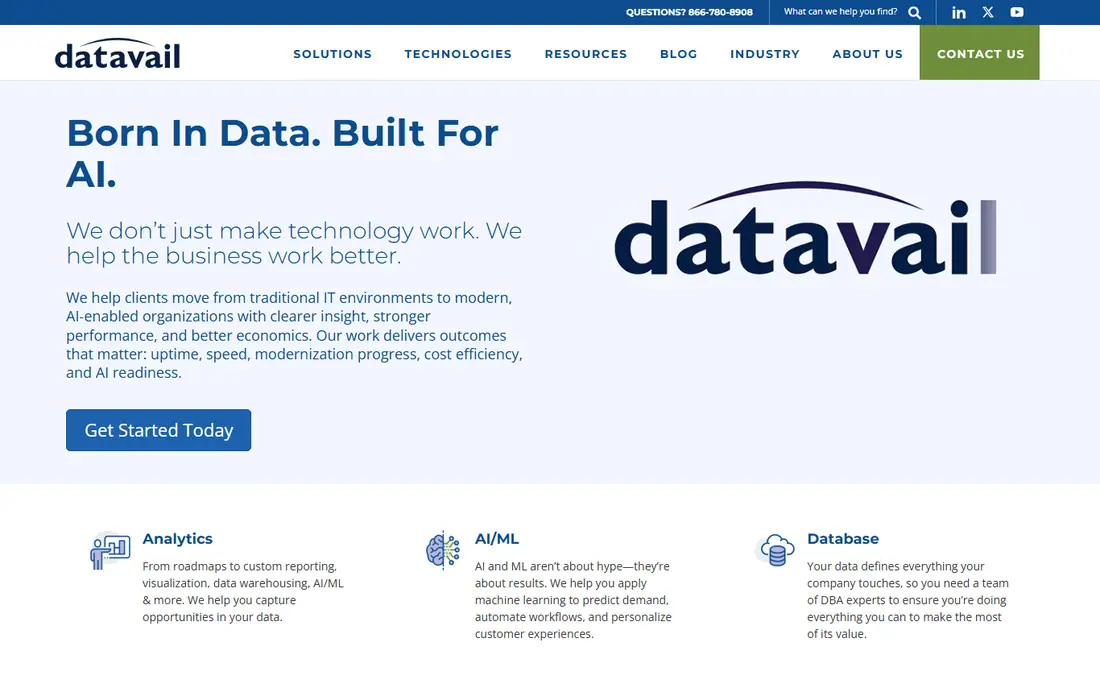
Datavail is our pick for most companies because its coverage is genuinely broad. It provides managed database services, remote administration and consulting across the major commercial and open source platforms, with around-the-clock monitoring and support. That breadth matters when a company runs more than one database type, since a single provider can handle the whole estate rather than splitting it across vendors.
The catch is that pricing and onboarding are tailored, so expect a discovery process before you get a firm quote. Complex environments with many instances take longer to document and hand over. If you want one accountable partner for a mixed database estate, Datavail is a solid first call.
- Covers Oracle, SQL Server, MySQL and PostgreSQL
- 24/7 monitoring
- Large DBA team
- Pricing is quote-based
- Onboarding can take time for complex estates
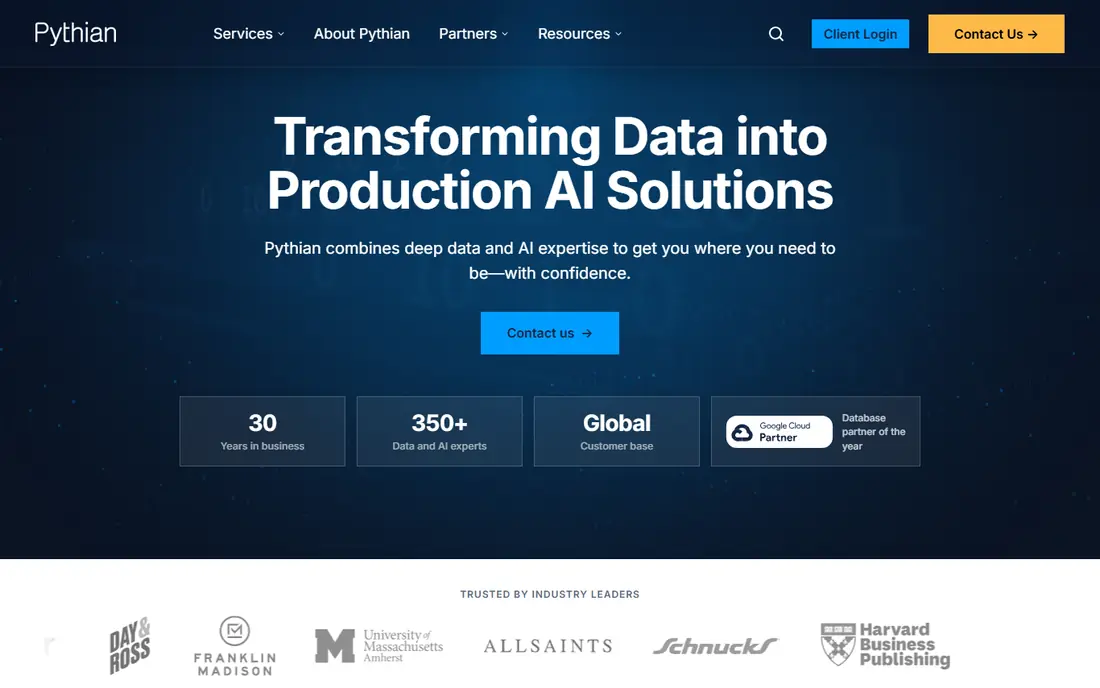
Pythian serves larger organizations with managed database services, data engineering and cloud data platform work. Its teams handle Oracle, SQL Server, MySQL, PostgreSQL and cloud databases, and its global support model suits companies with systems running across time zones. For enterprises modernizing a data platform while keeping older systems running, Pythian's mix of operations and engineering is useful.
Smaller companies may find Pythian's engagement model heavier than they need, and all pricing comes by quote. If your database estate is business-critical and large, Pythian's depth is worth the conversation. If you run a single small database, a smaller provider may fit better.
- Strong enterprise track record
- Data platform expertise
- Global support coverage
- Enterprise focus may price out small firms
- Services are quote-based
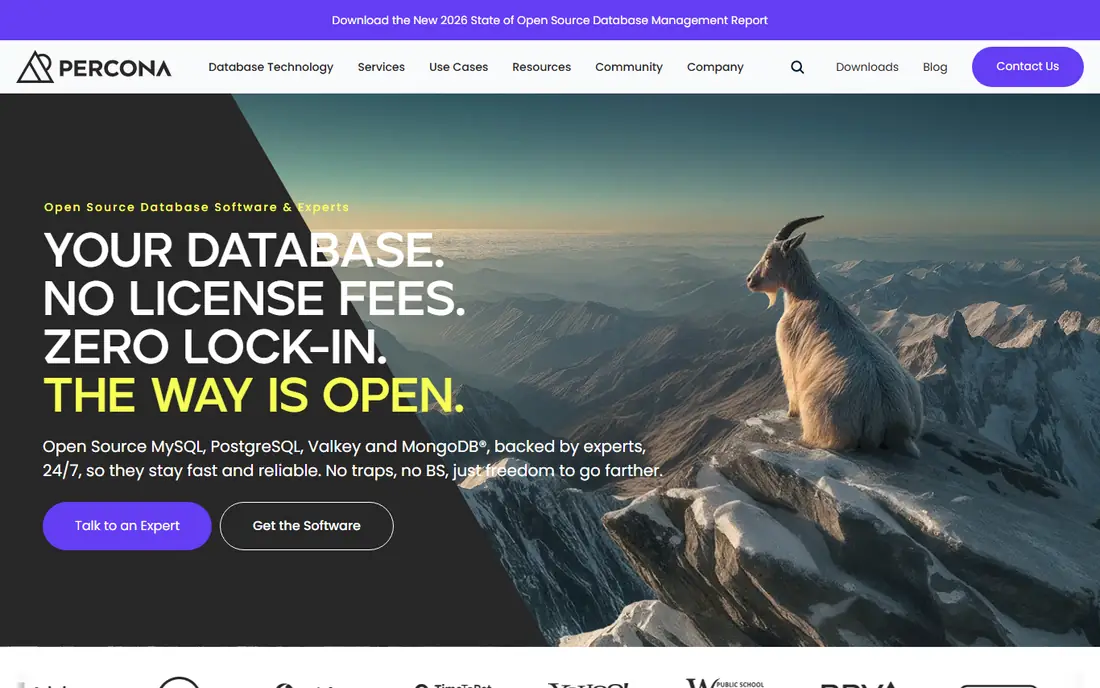
Percona is the specialist for open source databases. It supports MySQL, PostgreSQL, MongoDB and MariaDB, builds widely used open source tooling, and employs engineers who contribute to those projects. For companies that chose open source to avoid vendor lock-in, Percona offers support that understands the code itself, not just the manual.
Its commercial database coverage is thinner, so Oracle and SQL Server shops should look elsewhere. Support pricing is quoted based on environment size and service level. If your stack is open source, Percona is the first name most database professionals mention, and for good reason.
- Deep MySQL, PostgreSQL and MongoDB expertise
- Open source tools
- Respected community work
- Less focus on Oracle and SQL Server
- Enterprise pricing by quote
Rimini Street provides third-party support for Oracle database and enterprise software, offering an alternative to vendor maintenance for companies that want to keep stable systems running without forced upgrades. Clients often cite cost savings versus vendor support, plus support for customizations that vendor programs may exclude. Its model suits companies whose systems work well and do not need the latest release.
It cannot sell you new Oracle licenses, and the fit depends on your exact products and versions, so a scope review is essential. If your goal is to stabilize costs on a mature Oracle estate, Rimini Street is worth evaluating alongside vendor support. If you plan major upgrades, vendor support may still be needed.
- Alternative to vendor support for Oracle
- Can cut support costs
- Broad product coverage
- Not a vendor replacement for new licenses
- Scope depends on your Oracle estate
Spinnaker Support offers third-party support for Oracle and SAP environments, with a model that assigns named engineers who learn your systems over time. That continuity appeals to companies tired of repeating their history to a new support agent on every ticket. It also covers database and application layers together, which helps when a problem sits between the two.
As with any third-party model, coverage depends on your products, and companies planning vendor-led upgrades should check what remains covered. For stable Oracle or SAP estates where cost control and familiar engineers matter, Spinnaker Support is a credible alternative to vendor maintenance.
- Third-party support for Oracle and SAP
- Named engineer model
- Cost savings claims
- Scope varies by product
- Not suited to firms needing vendor upgrades
XTIVIA combines database consulting with managed services, with particular strength in Microsoft SQL Server and Oracle environments. It suits mid-size companies that need both project work, such as migrations or performance fixes, and ongoing maintenance from the same partner. A US-based team and a consulting mindset make it a good fit for firms that want advice, not just ticket handling.
Its scale is smaller than Datavail or Pythian, which can matter for very large global estates. Pricing is quoted per engagement. If you want a partner who can both fix a slow database and keep it healthy afterward, XTIVIA deserves a shortlist spot.
- Database consulting and managed services
- Microsoft and Oracle focus
- US-based team
- Smaller than the largest providers
- Pricing by quote
RDX provides remote database administration and managed services across Oracle, SQL Server, MySQL, PostgreSQL and cloud platforms. Its model suits companies that need DBA coverage without hiring a full in-house team, including overnight and weekend monitoring. Cloud database experience is a plus as more estates move partly to managed cloud services.
RDX has changed ownership over the years, so confirm the current service structure and team before signing. Pricing is quoted. For mid-size firms needing dependable remote DBA coverage, RDX remains a practical option.
- Remote DBA services across platforms
- 24/7 coverage
- Cloud database experience
- Acquired by a larger group, so check current service structure
- Quote-based pricing
Fortified Data focuses on Microsoft SQL Server, offering managed services, consulting and proactive monitoring for companies that run their business on that platform. Specialization brings depth: its engineers deal with SQL Server performance, availability and backup problems every day, and that focus shows in faster diagnosis for platform-specific issues.
The trade-off is range. Companies running Oracle or PostgreSQL alongside SQL Server will need another provider for those systems. If SQL Server is your core platform, Fortified Data's focused expertise is an advantage, not a limitation.
- SQL Server specialization
- Managed services and consulting
- Proactive monitoring
- Narrower platform range
- Smaller firm than enterprise providers
How we picked these
We compared official service pages, platform coverage, support models and public client information for established database support firms. We favored firms with verifiable 24/7 or extended coverage, named platform expertise and a track record in production environments. We did not claim hands-on use of each service; this ranking reflects public information available in October 2026.
What to check in a maintenance contract
Start with the service level agreement. Confirm response times for critical outages, who answers at night, and how escalations reach senior engineers. Ask whether patching, backup testing and performance tuning are included, or billed as projects, since that distinction changes the real annual cost.
Backups, patching and security
A maintenance provider should test restores regularly, not just confirm that backups ran. Ask for evidence of restore tests and for a patching schedule that matches your change windows. Security patching for databases deserves its own timeline, since database flaws can expose core business data. Get all of this in writing before you hand over access.
FAQ
What does database software maintenance include?
It usually includes monitoring, patching, backup management, performance tuning and emergency support. Some providers add consulting, migrations and cloud management, while others focus purely on keeping systems running. Confirm the exact scope in your contract, since the term maintenance alone guarantees little.
How much does database maintenance cost?
Most firms price by quote based on instance count, database size, platform mix and service level. A single small database costs far less than a large multi-platform estate with 24/7 coverage. Get quotes from at least two providers using the same inventory of systems.
Should I use vendor support or a third-party provider?
Vendor support is the safest choice if you plan upgrades or need new licenses. Third-party support can suit stable estates where cost control and customization coverage matter more. Compare scope, response times and upgrade implications before deciding, not price alone.
Can a provider support both cloud and on-premises databases?
Yes, most firms here support both, including managed cloud databases from major cloud providers. Confirm that your exact cloud service and version are covered, and ask how monitoring differs between cloud and on-premises systems. Hybrid estates are common, so this should not be an afterthought.
How do I hand over database access safely?
Use least-privilege accounts, dedicated provider logins, multi-factor authentication and audited access, and review permissions regularly. A good provider will propose this setup itself and will document every change it makes. Never share a shared admin password as a shortcut.