The 6 Best Database for Big Data Analysis in 2026, Ranked
Searching for the best database for big data analysis? Here are 6 options with prices and free plans. Includes honest limits for each tool. No filler.
- Editor's choiceDatabricks Lakehouse Platform
Unified data, analytics and AI work
Starts atSee websiteVisit databricks.comFull review - Great alternativeApache Druid
Open-source live analytics
Starts atSee websiteVisit druid.apache.orgFull review - Also consider
 SingleStore
Live transactions and analytics together
Starts atSee websiteVisit singlestore.comFull review
Direct answer
Databricks Lakehouse Platform comes first here, mainly for unified data, analytics and AI work. Listed starting prices: ClickHouse from $0.056 per unit per hour. For a different need, Apache Druid covers open-source real-time analytics and SingleStore covers live transactions and analytics together. All 6 tools are compared below on price, free plan and limits.
TL;DR:
- Databricks Lakehouse Platform is the opening pick, best for unified data, analytics and AI work.
- ClickHouse fits live, data-intensive analytics.
- What to know about Databricks Lakehouse Platform first: wide feature set has a ramp-up time.
- Expect to ask for a quote from Databricks Lakehouse Platform, Apache Druid, SingleStore and others; the other tools show a starting price.
Last checked November 2026. Prices and plan details were read from the vendors' own pages in November 2026; vendors change plans often, so confirm the current price on the vendor site before you buy.
Quick comparison
| Tool | Best for | Starts at | Free plan? | |
|---|---|---|---|---|
| Databricks Lakehouse Platform | Unified data, analytics and AI work | See website | Not stated | Visit |
| Apache Druid | Open-source live analytics | See website | Not stated | Visit |
| SingleStore | Live transactions and analytics together | See website | Not stated | Visit |
 Amazon Redshift | AWS-centric cloud data warehousing | See website | Not stated | Visit |
 Google BigQuery | Managed autonomous analytics at scale | See website | Not stated | Visit |
| ClickHouse | Live, data-intensive analytics | $0.056 per unit per hour | Free trial | Visit |
Our 6 picks for database for big data analysis
Short on time? The summary and table above give the quick view of 6 tools for database for big data analysis, and the profiles that follow give the detail behind each entry.
Databricks Lakehouse Platform
Best for: Unified data, analytics and AI work
Databricks Lakehouse Platform targets unified data, analytics and AI work. Costs depend heavily on workload design and cluster discipline. For pure SQL warehousing with minimal engineering, a more straightforward managed warehouse may be simpler to operate.
Databricks supplies a unified product for data, analytics and AI, with a data-centric approach and simplified ETL, data warehousing, governance and AI on its Data + AI Platform. For everyday use, organizations building AI on large datasets commonly find the lakehouse model appealing. No starting price is listed for Databricks Lakehouse Platform here; confirm pricing on the vendor site. On free options: Not stated.
Where it is weaker: Needs engineering maturity to run well.
- Data-centric approach to AI projects
- Warehousing and governance
- Broad feature set has a ramp-up time
Apache Druid
Best for: Open-source live analytics
Apache Druid is a good fit for open-source real-time analytics. Running Druid means operating a cluster, which takes real expertise in sizing, ingestion and tuning. It is not a drop-in replacement for a general-purpose warehouse.
Downsides: Configuration and tuning take expertise.
As for the details, Apache Druid is an open-source, column-oriented distributed data store designed for interactive analytics. It is widely known for powering dashboards and exploration over high-volume event streams. Apache Druid shows no starting price here, so confirm the cost on the vendor site. Free options: Not stated.
- Widely known for interactive analytics on event data
- Community-driven development model
- Needs practical cluster operations
SingleStore targets live transactions and analytics together. Serving both transactional and analytical workloads in one engine needs thoughtful schema and workload design.
In daily use, product teams building live features commonly find that combination handy. Its ecosystem is smaller than those of the major cloud providers, which can matter for tooling and hiring. No starting price is listed for SingleStore here; confirm pricing on the vendor site. Free options: Not stated.
Where it falls short: Hybrid workloads need careful design.
- Open data access
- One engine for transactions and analytics
- Smaller ecosystem than major cloud warehouses
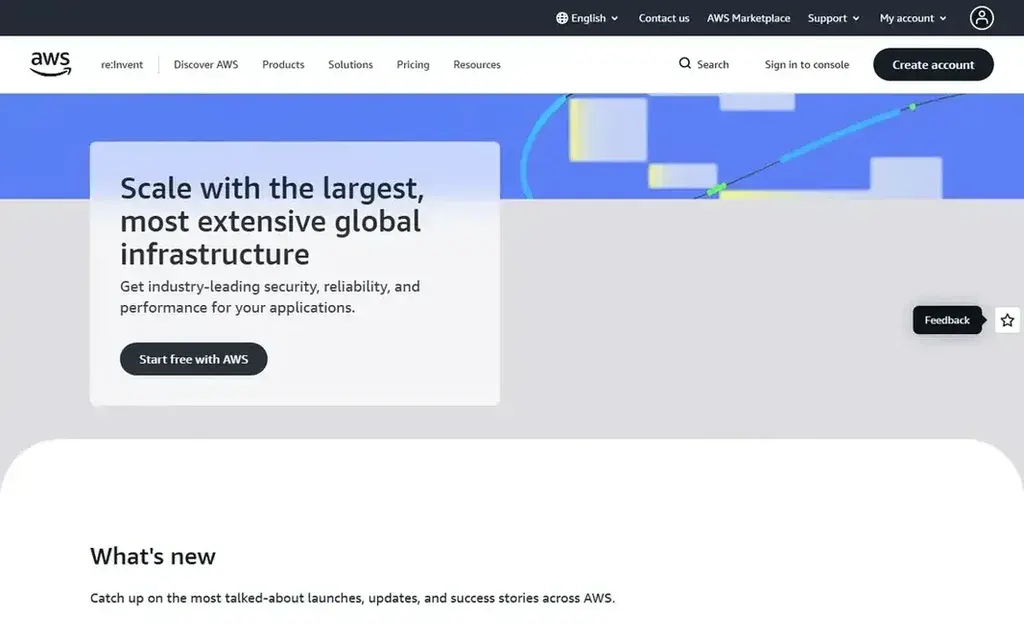
Think of Amazon Redshift for AWS-centric cloud data warehousing. Consider a live engine instead if you need very high concurrency on streaming data.
What works well: Straightforward.
Where it is weaker: Best value inside the AWS ecosystem.
Amazon Redshift is a quick, completely managed cloud data warehouse that AWS says makes it straightforward and economical to analyze all your data. Amazon Redshift shows no starting price here, so confirm the cost on the vendor site. Trial and free access: Not stated.
- Economical analysis of all data
- Suits existing AWS investments
- Tuning still needed for demanding workloads
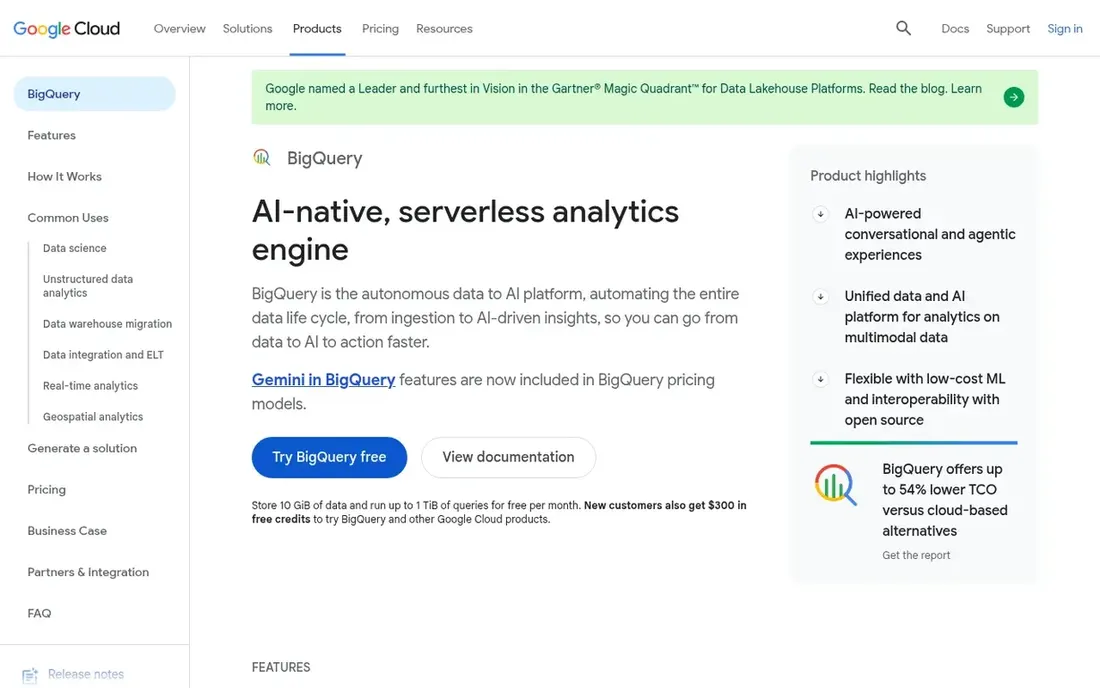
Google BigQuery was built for managed autonomous analytics at scale. Analysts and data engineers can query large datasets whereas system features deal with much of the operational overhead.
Where it shines: Positions data.
For everyday use, choose another warehouse if you need deep portability across clouds or prefer to handle your own engine. Query costs can also grow with heavy ad hoc usage, so governance matters. Pricing for Google BigQuery is not stated here, so ask the vendor for current figures. Free options: Not stated.
The main drawbacks: Cost control needs active query governance.
- Analytics and AI in one product
- Serverless-style managed operations
- Deep reliance on Google Cloud conventions
ClickHouse
Best for: Live, data-intensive analytics
ClickHouse makes the most sense for live, data-intensive analytics. ClickHouse is described as an open, composable system for data-intensive workloads, spanning live analytics and transactions to observability, security and AI engineering. Its open nature provides teams adaptability in how they deploy and integrate it.
Beyond that, self-managed deployments need operational attention, including tuning and capacity planning. It is optimized for analytical access patterns instead of being a general-purpose transactional system. More specifically, if your team lacks engineering capacity or needs wide managed services, a completely managed warehouse may be a better starting point. The starting price for ClickHouse: $0.056 per unit per hour. On free options: Free trial.
Where it is weaker: Operational care needed for self-managed use.
- Includes live analytics and observability
- Made for data-intensive workloads
- Not a general-purpose transactional database
Selection criteria
For each of the 6 tools we noted price, free plan or trial, fit for database for big data analysis and the main limit, using vendor pages and documentation. Where a vendor does not publish a price, the entry says quote. Where a price depends on seats or billing term, the entry says so. Position on the page reflects fit for a typical buyer first, with price clarity and free access breaking ties. Treat it as a guide, not a ruling.
What to check before you buy
- Get a written quote from Databricks Lakehouse Platform, Apache Druid, SingleStore and others; the list shows no starting price for them.
- Use real work to test the free trial from ClickHouse, rather than a demo project.
- Read the limits listed for Databricks Lakehouse Platform first: broad feature set has a ramp-up time.
- Map your must-have features to a specific Apache Druid plan before you compare prices.
- Confirm that Google BigQuery connects to the apps your team already uses, on the plan you would actually buy.
FAQ
How are the tools for database for big data analysis ordered?
The order follows typical fit for database for big data analysis, with Databricks Lakehouse Platform first and ClickHouse last, then price clarity and free access. It is editorial judgement, not a score, so another team could rank the tools differently.
Do these tools publish their prices?
Not all of them. Databricks Lakehouse Platform, Apache Druid, SingleStore and others publish no starting price, so expect a quote request for those. The rest, ClickHouse included, show a starting price, though seats and billing terms still change the final cost.
Is Databricks Lakehouse Platform the right pick for everyone comparing database for big data analysis?
No single tool suits every team. Databricks Lakehouse Platform comes first because it fits unified data, analytics and AI work, while Apache Druid suits open-source real-time analytics and SingleStore suits real-time transactions and analytics together. Match the tool to your own size, budget and workflow before deciding.
How do Databricks and Azure Synapse differ in focus?
Databricks emphasizes a unified system for data, analytics and AI, including ETL, warehousing and governance. Azure Synapse brings together enterprise SQL warehousing and big data analytics within Microsoft Azure.
When should I choose ClickHouse or Apache Druid?
Both are associated with quick analytics over high-volume event data for example logs, clickstreams and observability signals. Pick them when live exploration matters and you have engineering capacity.
Does any tool for database for big data analysis here have a free plan?
No tool in this list, Databricks Lakehouse Platform and ClickHouse included, has a permanent free plan. ClickHouse offer a trial. Trials and quotes are the usual route, so plan a short evaluation period.
Sources
- https://www.databricks.com
- https://druid.apache.org
- https://www.singlestore.com
- https://aws.amazon.com/redshift
- https://cloud.google.com/bigquery
- https://clickhouse.com