6 Best Container Software for 2026, Vetted and Compared
Shortlisting the best container software? 6 products compared on cost, free access and ideal buyer. Strengths and weak spots are spelled out. Details below.
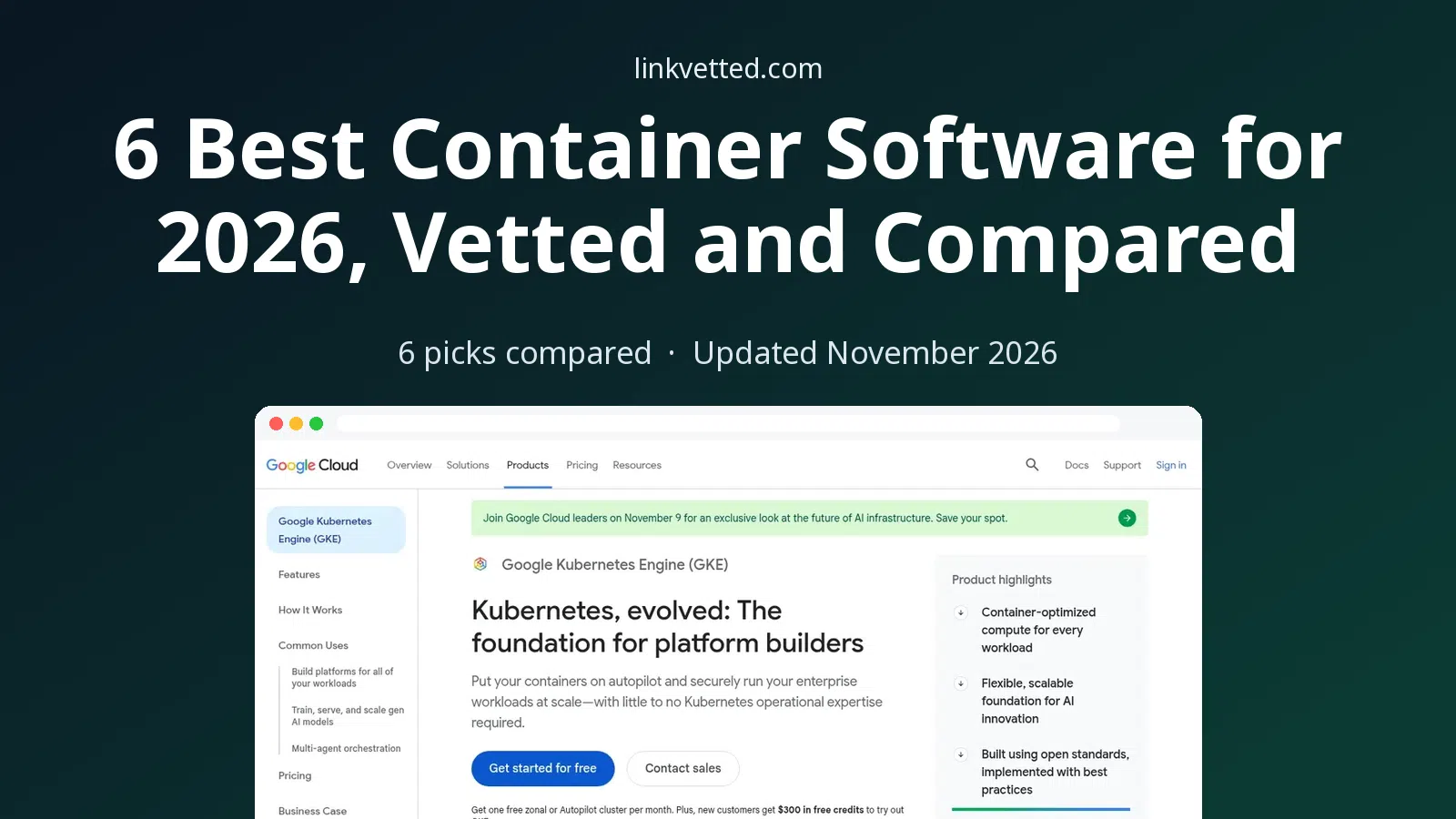
- Editor's choiceKubernetes Engine (Google Kubernetes Engine)
Completely managed Kubernetes on Google Cloud
Starts atPricing on requestVisit cloud.google.comFull review - Great alternative
 Azure Kubernetes Service
Managed Kubernetes on Microsoft Azure
Starts atPricing on requestVisit azure.microsoft.comFull review - Also consider
 Rancher
Multi-cluster Kubernetes management
Starts atPricing on requestVisit rancher.comFull review
Direct answer
For completely managed Kubernetes on Google Cloud, Kubernetes Engine (Google Kubernetes Engine) is where this list starts. For a different need, Azure Kubernetes Service covers managed Kubernetes on Microsoft Azure and Rancher covers multi-cluster Kubernetes management. The remaining 3 options are covered below with pricing notes and limits. None of these vendors publish plan prices, so pricing is on request for every option.
TL;DR:
- The list opens with Kubernetes Engine (Google Kubernetes Engine), aimed at completely managed Kubernetes on Google Cloud.
- What to know about Rancher first: centred on operations teams.
- For local developer container workflows, Docker Desktop is worth a look.
- Kubernetes Engine (Google Kubernetes Engine), Docker Desktop and the 4 others all sell by quote; expect sales conversations before you see a price.
Last checked November 2026. Pricing on request: vendors did not publish plan prices when this guide was last checked (November 2026), so ask each vendor for a written quote.
Quick comparison
| Tool | Best for | Starts at | Free plan? | |
|---|---|---|---|---|
| Kubernetes Engine (Google Kubernetes Engine) | Completely managed Kubernetes on Google Cloud | Pricing on request | Not stated | Visit |
| Azure Kubernetes Service | Managed Kubernetes on Microsoft Azure | Pricing on request | Not stated | Visit |
| Rancher | Multi-cluster Kubernetes management | Pricing on request | Not stated | Visit |
 Mirantis Kubernetes Engine | Enterprise container management | Pricing on request | Not stated | Visit |
 Red Hat OpenShift | Application modernization and innovation | Pricing on request | Not stated | Visit |
| Docker Desktop | Local developer container workflows | Pricing on request | Not stated | Visit |
Container Software compared in detail
This LinkVetted guide covers 6 options for container software. Each profile lists a starting price, free plan details, strengths and drawbacks, so you can drop poor fits quickly.
Kubernetes Engine (Google Kubernetes Engine)
Best for: Completely managed Kubernetes on Google Cloud
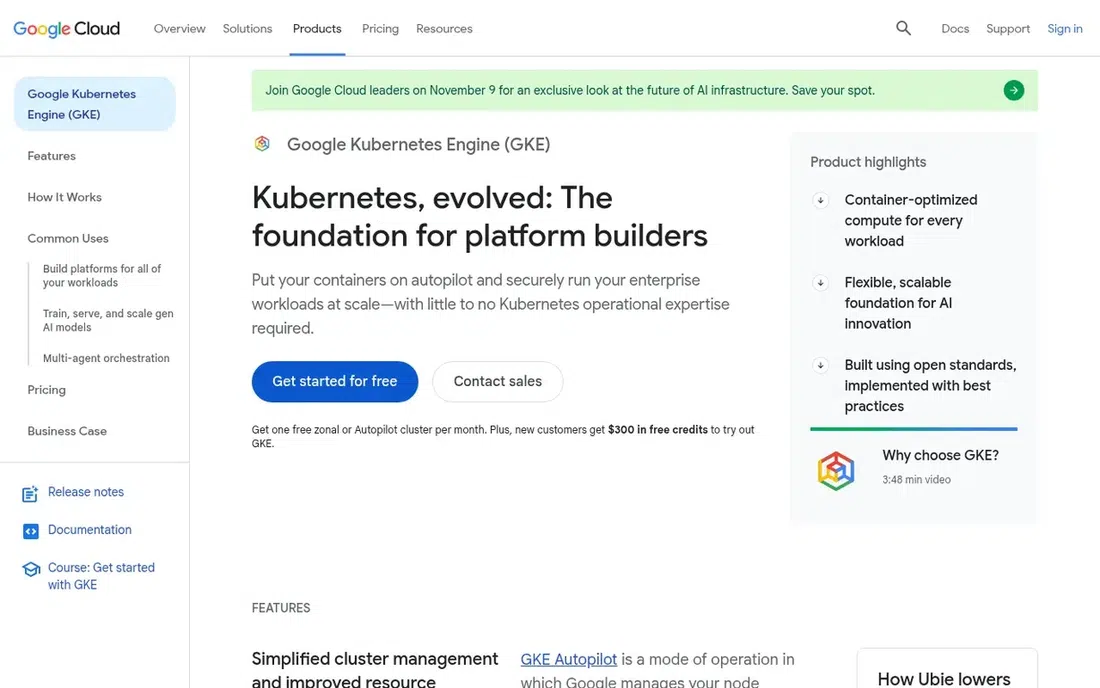
In short, Kubernetes Engine (Google Kubernetes Engine) is for completely managed Kubernetes on Google Cloud. Google Kubernetes Engine is presented as a completely managed Kubernetes service with the full Kubernetes API, four-way autoscaling, release channels, and multi-cluster support. Choose GKE when you want a managed Kubernetes control plane with autoscaling and multi-cluster features on Google Cloud.
Teams without Kubernetes experience should expect a ramp-up time. Since the managed service is built around Google Cloud, organizations standardized on another cloud may prefer a matching provider's Kubernetes service. Kubernetes Engine (Google Kubernetes Engine) shows no starting price here, so confirm the cost on the vendor site. Free plan details: Not stated.
Downsides: Needs Kubernetes familiarity.
- Autoscaling and multi-cluster support
- Full Kubernetes API support
- Tied to Google Cloud for the managed experience
In short, Azure Kubernetes Service is for managed Kubernetes on Microsoft Azure. Choose AKS when Azure is your cloud and you want managed Kubernetes clusters with an emphasis on secure, scalable delivery. The focus on secure and scalable deployment aligns with organizations standardizing container operations on Azure.
It also expects some Kubernetes familiarity. Beyond that, Azure Kubernetes Service is described as a way to deploy and run secure, scalable containerized applications with quick delivery on managed Kubernetes clusters. Azure Kubernetes Service does not show a starting price in this comparison, so check the vendor site for current pricing. Trial and free access: Not stated.
Limits to weigh: Kubernetes knowledge still required.
- Scalable deployment focus
- Quick delivery emphasis
- Azure-centric service
Rancher was built for multi-cluster Kubernetes management. Rancher is an open-source multi-cluster orchestration product that lets operations teams deploy, run, and secure enterprise Kubernetes.
What to check first: Centred on operations teams.
Organizations wanting a completely managed control plane may lean toward a cloud provider's Kubernetes service. In daily use, pick Rancher when central multi-cluster management and open-source adaptability are priorities. Rancher does not show a starting price in this comparison, so check the vendor site for current pricing. Trial and free access: Not stated.
- Secure Kubernetes
- Multi-cluster orchestration
- Needs Kubernetes background
Think of Mirantis Kubernetes Engine for enterprise container management. Mirantis Kubernetes Engine is presented as managed enterprise container management with private and managed container orchestration for Kubernetes, Docker, and more.
Where it is weaker: Enterprise-oriented complexity.
For everyday use, small teams or those with straightforward needs may find Docker Desktop or a cloud Kubernetes service simpler to adopt. As for the details, choose Mirantis Kubernetes Engine when you need enterprise container management across Kubernetes and Docker environments. Mirantis Kubernetes Engine shows no starting price here, so confirm the cost on the vendor site. Free access: Not stated.
- Enterprise container management
- Supports Kubernetes and Docker
- May be more than small teams need
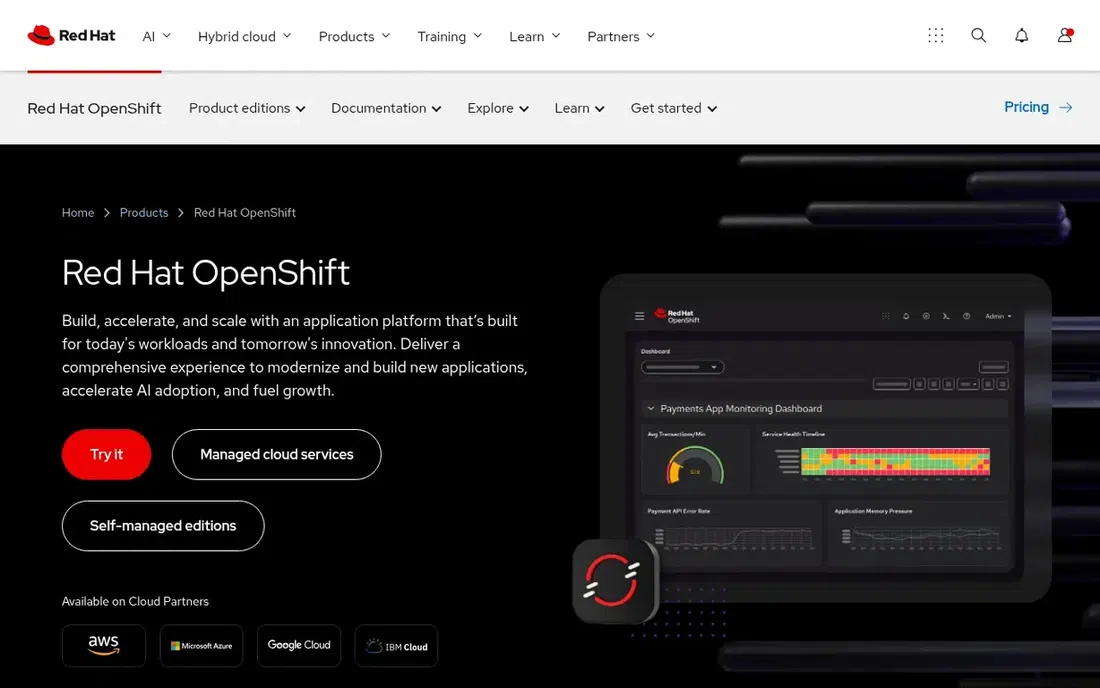
Red Hat OpenShift serves application modernization and innovation. It fits enterprises that want an integrated environment for containerized applications instead of a collection of separate components.
Where it is weaker: Wide system scope can mean a steeper ramp-up time.
Beyond that, smaller teams or those only running containers locally may find Docker Desktop a more straightforward starting point. Pricing for Red Hat OpenShift is not stated here, so ask the vendor for current figures. As for free access: Not stated.
- Supports building new applications
- Tools for modernizing existing apps
- May be more than small teams need
Docker Desktop
Best for: Local developer container workflows
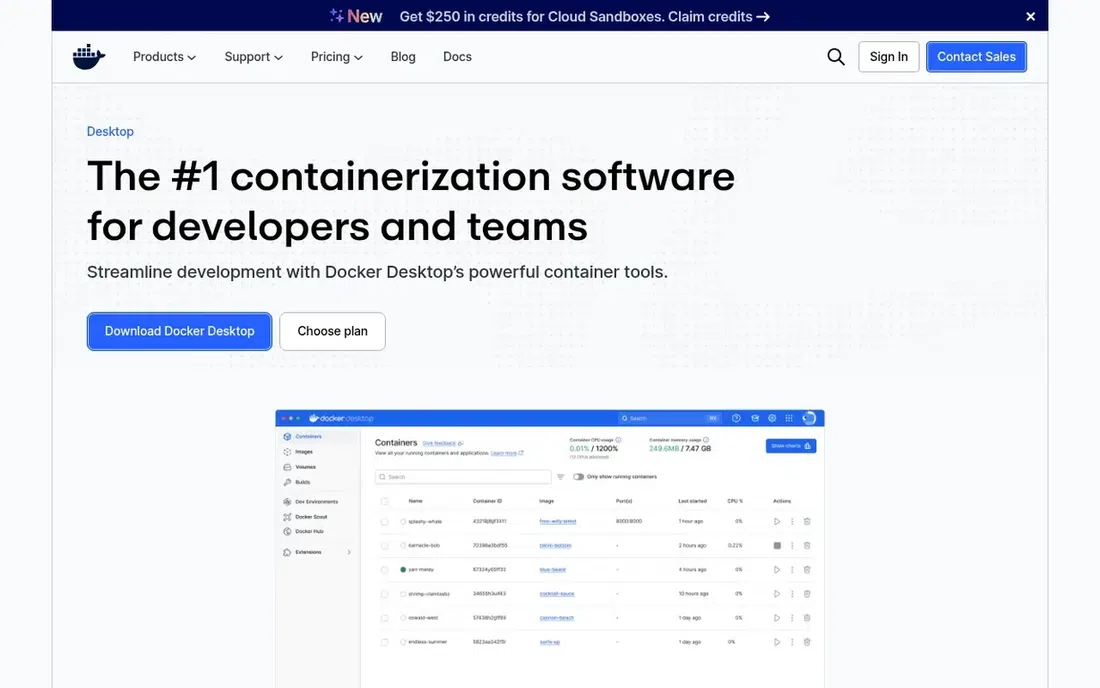
Docker Desktop is a good fit for local developer container workflows. Docker Desktop is collaborative containerization software made for developers, with downloads available for Mac, Windows, and Linux.
In daily use, choose Docker Desktop when local development speed and simplicity matter most. No starting price is listed for Docker Desktop here; confirm pricing on the vendor site. On free options: Not stated.
Downsides: Aimed primarily at individual developer machines.
- Straightforward download and setup
- Collaborative containerization focus
- Not a full multi-cluster orchestration platform
How these tools were picked
We compared the tools on published pricing, free plan or trial availability, feature coverage for container software, and the limits each vendor documents. Figures are shown as the vendors publish them. Billing terms, seat minimums and add-ons can change the real cost. We ordered the tools by general fit, then by how clearly pricing is shown, then by free access. A buyer with unusual needs may reorder them.
A buyer's checklist
- Request quotes from Kubernetes Engine (Google Kubernetes Engine), Docker Desktop and the others; the list shows no fixed prices.
- Read the limits listed for Kubernetes Engine (Google Kubernetes Engine) first: tied to Google Cloud for the managed experience.
- Run a one or two week pilot of Docker Desktop with the people who will use it every day.
- Work out what Mirantis Kubernetes Engine costs with your real seat count, add-ons and usage, not just the entry price.
- Look at which plan of Azure Kubernetes Service unlocks the features you need; entry tiers are often cut down.
FAQ
Does any tool for container software here have a free plan?
A permanent free plan is not offered by Kubernetes Engine (Google Kubernetes Engine), Docker Desktop or the other tools here. Plan a short evaluation period instead.
How are the tools for container software ordered?
The order follows typical fit for container software, with Kubernetes Engine (Google Kubernetes Engine) first and Docker Desktop last, then price clarity and free access. It is editorial judgement, not a score, so another team could rank the tools differently.
Do these tools publish their prices?
No. None of the tools, from Kubernetes Engine (Google Kubernetes Engine) to Docker Desktop, shows a fixed starting price here, so budget time for quotes.
Is Kubernetes Engine (Google Kubernetes Engine) the right pick for everyone comparing container software?
No single tool suits every team. Kubernetes Engine (Google Kubernetes Engine) comes first because it fits fully managed Kubernetes on Google Cloud, while Azure Kubernetes Service suits managed Kubernetes on Microsoft Azure and Rancher suits multi-cluster Kubernetes management. Match the tool to your own size, budget and workflow before deciding.
Which container software is a good match for multi-cluster management?
The first pick on this list is Kubernetes Engine (Google Kubernetes Engine), because it suits fully managed Kubernetes on Google Cloud. Azure Kubernetes Service is better for managed Kubernetes on Microsoft Azure, and Rancher for multi-cluster Kubernetes management. Check price and limits against your own needs before choosing.
Sources
- https://cloud.google.com/kubernetes-engine
- https://azure.microsoft.com/en-us/products/kubernetes-service
- https://www.rancher.com
- https://www.mirantis.com/software/mirantis-kubernetes-engine
- https://www.redhat.com/en/technologies/cloud-computing/openshift
- https://www.docker.com/products/docker-desktop