Choosing Container Engine Software for Enterprise in 2026: 6 Options Compared
6 tools for the best container engine software for enterprise, compared on pricing, free plans and best-fit use. Each listing flags where it falls short.
- Editor's choice
 Azure Kubernetes Service
Managed Kubernetes on Microsoft Azure
Starts atSee websiteVisit azure.microsoft.comFull review - Great alternative
 Mirantis Kubernetes Engine
Managing AI workload clusters across environments
Starts atSee websiteVisit mirantis.comFull review - Also consider
 Red Hat OpenShift
Application modernization on one system
Starts atSee websiteVisit redhat.comFull review
Direct answer
Azure Kubernetes Service is the first pick on this list for managed Kubernetes on Microsoft Azure. Listed starting prices: Docker Enterprise from $9 per user per month. Mirantis Kubernetes Engine is the stronger choice for managing AI workload clusters across environments, while Red Hat OpenShift suits application modernization on one product. The other 3 tools in the list cover narrower or pricier cases.
TL;DR:
- The list opens with Azure Kubernetes Service, aimed at managed Kubernetes on Microsoft Azure.
- Docker Enterprise is the lowest-priced starter here at $9 per user per month.
- Only Docker Enterprise offers a free plan among these 6 tools.
- Azure Kubernetes Service comes with a trade-off: most natural within Azure.
Last checked November 2026. Prices and plan details were read from the vendors' own pages in November 2026; vendors change plans often, so confirm the current price on the vendor site before you buy.
Quick comparison
| Tool | Best for | Starts at | Free plan? | |
|---|---|---|---|---|
| Azure Kubernetes Service | Managed Kubernetes on Microsoft Azure | See website | Not stated | Visit |
| Mirantis Kubernetes Engine | Managing AI workload clusters across environments | See website | Not stated | Visit |
| Red Hat OpenShift | Application modernization on one system | See website | Not stated | Visit |
| Docker Enterprise | Secure sandboxes and supply chain governance | $9 per user per month | Yes | Visit |
| Amazon Elastic Kubernetes Service | Managed Kubernetes on AWS and on-premises | See website | Not stated | Visit |
 Google Kubernetes Engine | Completely managed Kubernetes on Google Cloud | See website | Not stated | Visit |
The 6 tools in detail
If you are comparing container engine software for enterprise, this page covers 6 tools in one place: what each is best for, what it costs to start, whether it has a free plan, and the main limit to know about.
Azure Kubernetes Service targets managed Kubernetes on Microsoft Azure. The offering is most compelling inside Azure, so hybrid or multi-cloud strategies may call for extra tooling.
Azure Kubernetes Service does not show a starting price in this comparison, so check the vendor site for current pricing. As for free access: Not stated.
Trade-offs to know: Cluster governance still needs planning.
- Managed Kubernetes clusters
- Focus on secure
- Most natural within Azure
Mirantis Kubernetes Engine
Best for: Managing AI workload clusters across environments
Choose Mirantis Kubernetes Engine for managing AI workload clusters across environments. Mirantis Kubernetes Engine is presented as a straightforward and frictionless way to handle AI workload clusters across clouds, on-premises, hybrid, and edge environments.
Drawbacks to consider: Less known than major cloud services.
This comparison lists no price for Mirantis Kubernetes Engine; ask the vendor. Free plan details: Not stated.
- Straightforward
- Suits distributed infrastructure
- Edge scenarios add operational complexity
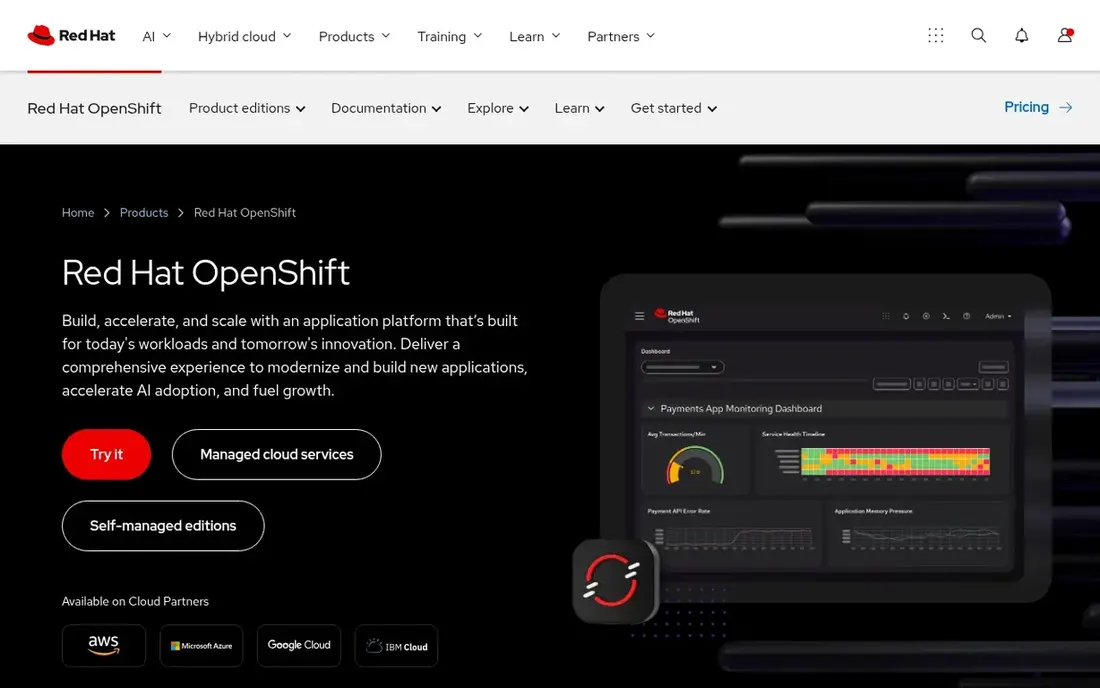
Red Hat OpenShift works best for application modernization on one system. It fits enterprises that want an integrated system rather than assembling separate container and developer tooling pieces.
Red Hat OpenShift does not show a starting price in this comparison, so check the vendor site for current pricing. Free options: Not stated.
Limits to weigh: Product breadth can add operational overhead.
- Supports AI adoption efforts
- Full application product experience
- Best value with Red Hat ecosystem familiarity
Docker Enterprise
Best for: Secure sandboxes and supply chain governance
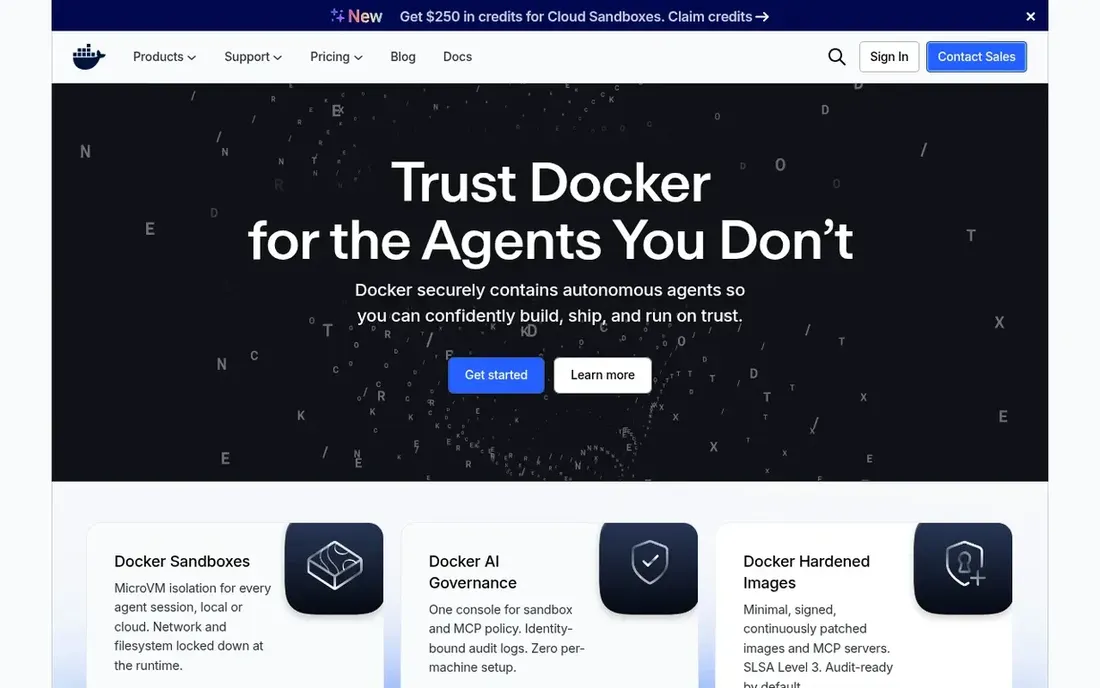
Pick Docker Enterprise if this describes you: secure sandboxes and supply chain governance. It suits teams that want a developer-friendly container foundation with security controls layered on top, notably where builders need isolated environments for experimentation and production alike.
Limits to weigh: Less emphasis on full cluster orchestration.
Its homepage emphasizes sandboxes and supply chain trust instead of wide multi-cluster orchestration. Docker Enterprise cost at the entry level: $9 per user per month. Free access exists with Docker Enterprise.
- Trusted sandboxes for containers and AI agents
- Works across environments
- Enterprise controls may need vendor guidance
Amazon Elastic Kubernetes Service
Best for: Managed Kubernetes on AWS and on-premises
Choose Amazon Elastic Kubernetes Service for managed Kubernetes on AWS and on-premises. Amazon Elastic Kubernetes Service is a managed service and certified Kubernetes conformant offering for running Kubernetes on AWS and on-premises.
It fits organizations already invested in AWS that want conformant Kubernetes without building control plane operations from scratch. Amazon Elastic Kubernetes Service shows no starting price here, so confirm the cost on the vendor site. Free plan details: Not stated.
Where it falls short: Configuration choices can be broad.
- Managed and certified Kubernetes conformant
- Runs on AWS and on-premises
- Cloud-native tooling knowledge helps
Google Kubernetes Engine
Best for: Completely managed Kubernetes on Google Cloud
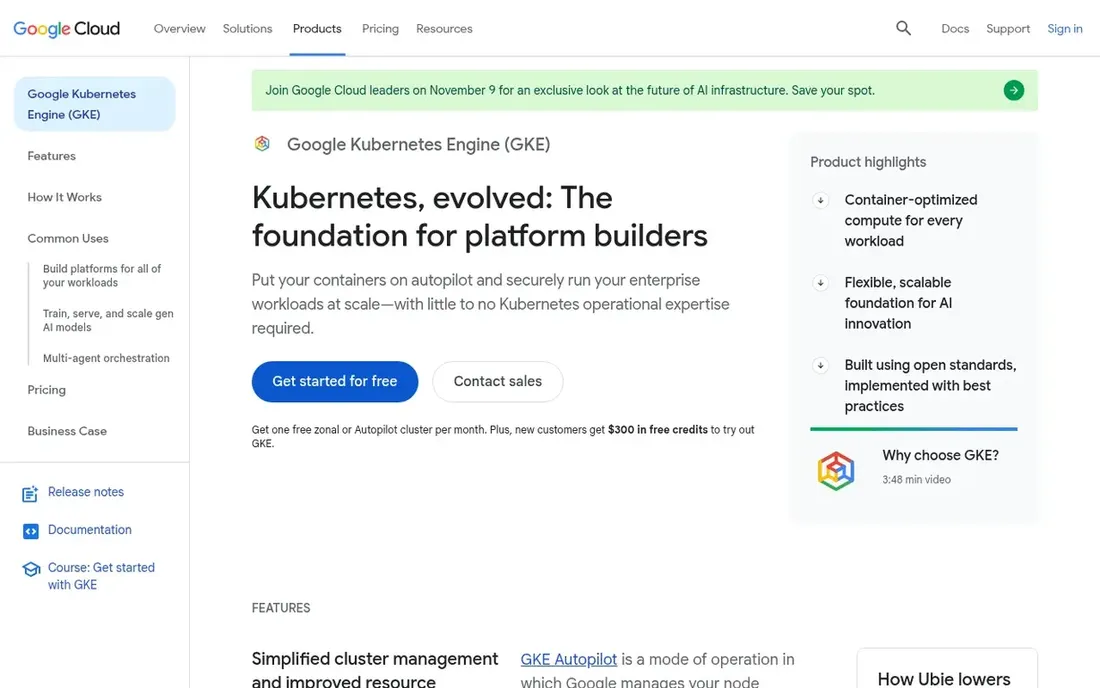
Google Kubernetes Engine makes the most sense for fully managed Kubernetes on Google Cloud. Teams new to Kubernetes should plan for a ramp-up time regardless of managed convenience.
The service is most natural inside Google Cloud, so multi-cloud or on-premises requirements may push teams toward a portable distribution or a multi-cluster manager. Google Kubernetes Engine does not show a starting price in this comparison, so check the vendor site for current pricing. Free options: Not stated.
What to check first: Needs Kubernetes familiarity.
- Full Kubernetes API with autoscaling
- Completely managed Kubernetes service
- Tied closely to Google Cloud
How we chose
The comparison looks at four things: starting price, free access, how well the feature set matches container engine software for enterprise, and the main limit of each tool. Prices and plan limits come from vendor pages and can change, so confirm them on the vendor site before you buy. The ranking is editorial: typical fit first, then clear pricing, then free access. If your needs are unusual, read the profiles rather than relying on position.
What to check before you buy
- Ask Azure Kubernetes Service, Mirantis Kubernetes Engine, Red Hat OpenShift and others for a written quote, since no starting price is shown.
- Test the free plan from Docker Enterprise against your real workload before relying on it.
- Read the limits listed for Azure Kubernetes Service first: most natural within Azure.
- The entry price of Azure Kubernetes Service is only the starting point; model the full cost with seats and extras.
- Ask Amazon Elastic Kubernetes Service which support channels and response times come with the plan you would buy.
FAQ
Is Azure Kubernetes Service the right pick for everyone comparing container engine software for enterprise?
No single tool suits every team. Azure Kubernetes Service comes first because it fits managed Kubernetes on Microsoft Azure, while Mirantis Kubernetes Engine suits managing AI workload clusters across environments and Red Hat OpenShift suits application modernization on one platform. Match the tool to your own size, budget and workflow before deciding.
Can I try these tools before paying?
Often, yes. Docker Enterprise has a free plan. Use your own data and a real task during the test, and check what the free tier or trial limits before you rely on it.
What is the cheapest option for container engine software for enterprise in this list?
On published monthly entry prices, Docker Enterprise is the lowest here at $9 per user per month. Entry price is only part of the cost, because seats, add-ons and billing terms can change the total.
Do these tools publish their prices?
Not all of them. Azure Kubernetes Service, Mirantis Kubernetes Engine, Red Hat OpenShift and others publish no starting price, so expect a quote request for those. The rest, Docker Enterprise included, show a starting price, though seats and billing terms still change the final cost.
Sources
- https://azure.microsoft.com/en-us/products/kubernetes-service
- https://www.mirantis.com
- https://www.redhat.com/en/technologies/cloud-computing/openshift
- https://www.docker.com
- https://aws.amazon.com/eks
- https://cloud.google.com/kubernetes-engine