Best Container Engine Software for Startups (2026): 5 Picks Checked on Vendor Pages
Best container engine software for startups: 5 tools compared on price, free plans and fit. Strengths and weak spots are spelled out. Reviewed in November 2026.
- Editor's choice
 Azure Kubernetes Service
Managed Kubernetes on Microsoft Azure
Starts atPricing on requestVisit azure.microsoft.comFull review - Great alternative
 Red Hat OpenShift
Application product with modernization tools
Starts atPricing on requestVisit redhat.comFull review - Also consider
 Google Kubernetes Engine
Completely managed Kubernetes on Google Cloud
Starts atPricing on requestVisit cloud.google.comFull review
Direct answer
This list puts Azure Kubernetes Service first for managed Kubernetes on Microsoft Azure. If your case is different, Red Hat OpenShift suits application system with modernization tools and Google Kubernetes Engine suits completely managed Kubernetes on Google Cloud. The other 2 tools in the list cover narrower or pricier cases. None of these vendors publish plan prices, so pricing is on request for every option.
TL;DR:
- Azure Kubernetes Service sits first on this list: managed Kubernetes on Microsoft Azure.
- The main caution on Rancher: adds a layer to learn.
- No starting price is shown for any of the 5 tools, Azure Kubernetes Service and Docker Desktop included, so plan time for sales calls.
- None of the 5 tools, from Azure Kubernetes Service to Docker Desktop, has a free plan, so budget for a subscription or use a trial.
- For local developer container workflow, Docker Desktop is worth a look.
Last checked November 2026. Pricing on request: vendors did not publish plan prices when this guide was last checked (November 2026), so ask each vendor for a written quote.
Quick comparison
| Tool | Best for | Starts at | Free plan? | |
|---|---|---|---|---|
| Azure Kubernetes Service | Managed Kubernetes on Microsoft Azure | Pricing on request | Not stated | Visit |
| Red Hat OpenShift | Application product with modernization tools | Pricing on request | Not stated | Visit |
| Google Kubernetes Engine | Completely managed Kubernetes on Google Cloud | Pricing on request | Not stated | Visit |
 Rancher | Multi-cluster Kubernetes management | Pricing on request | Not stated | Visit |
| Docker Desktop | Local developer container workflow | Pricing on request | Not stated | Visit |
Container Engine Software for Startups, one by one
This LinkVetted guide covers 5 container engine software for startups. Each profile lists a starting price, free plan details, strengths and drawbacks, so you can drop poor fits quickly.
Pick Azure Kubernetes Service if this describes you: managed Kubernetes on Microsoft Azure. As with other managed Kubernetes offerings, teams still have to understand workloads, networking and scaling, and the experience is smoothest inside Azure. Beyond that, Select Azure Kubernetes Service when Azure is your product and you want managed clusters there.
For everyday use, the managed model lets a small team focus on applications rather than control plane upkeep. It pairs naturally with other Azure services a startup may already depend on. Azure Kubernetes Service does not show a starting price in this comparison, so check the vendor site for current pricing. As for free access: Not stated.
Where it is weaker: Most natural within Azure.
- Managed Kubernetes clusters
- Scalable container deployment
- Cluster management skills needed
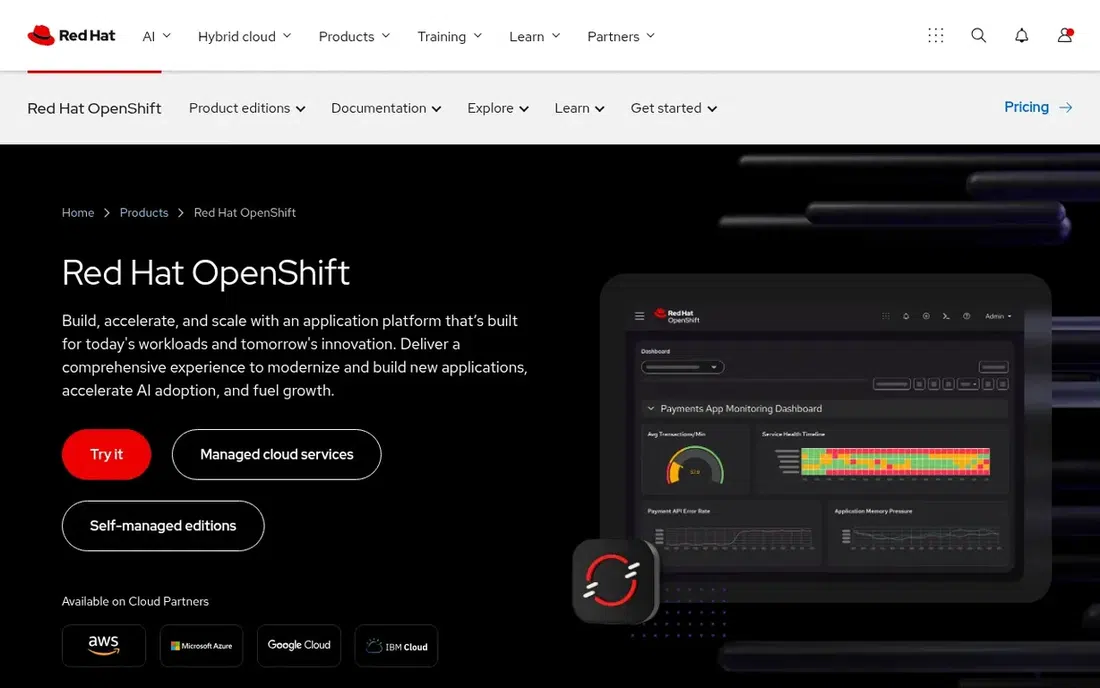
Red Hat OpenShift works best for application platform with modernization tools. Red Hat OpenShift is described as an application innovation system that provides a thorough experience with tools to help organizations modernize, build new applications and support AI adoption.
Honest limits: System breadth can feel heavy for small teams.
Teams with a platform-minded engineer frequently find the integrated approach cuts the number of separate pieces they must assemble. In practice, the breadth of the product means more concepts to learn, which can slow a very small team that only needs to run a handful of containers. Check the vendor site for Red Hat OpenShift pricing; none is listed in this comparison. Free plan details: Not stated.
- Supports AI adoption efforts
- Wide application innovation product
- Needs Kubernetes familiarity
Google Kubernetes Engine
Best for: Completely managed Kubernetes on Google Cloud
Google Kubernetes Engine is built with completely managed Kubernetes on Google Cloud in mind. Pick Google Kubernetes Engine when managed Kubernetes on Google Cloud is the goal and your engineers are comfortable with cluster concepts.
Teams on other clouds may prefer their provider's managed offering. Google Kubernetes Engine does not show a starting price in this comparison, so check the vendor site for current pricing. As for free access: Not stated.
Honest limits: Best fit inside Google Cloud.
- Completely managed Kubernetes service
- Full Kubernetes API support
- Kubernetes concepts still required
Rancher targets multi-cluster Kubernetes management. Rancher is an operations layer instead of a replacement for the underlying clusters, so it brings concepts a very small team may not need yet.
More specifically, consider Rancher when multi-cluster management becomes a real daily need. No starting price is listed for Rancher here; confirm pricing on the vendor site. Trial and free access: Not stated.
What to check first: Layers on a layer to learn. What Rancher does well: Open-source orchestration platform.
- Works across several clusters
- Deploy
- Pitched at operations teams
Docker Desktop
Best for: Local developer container workflow
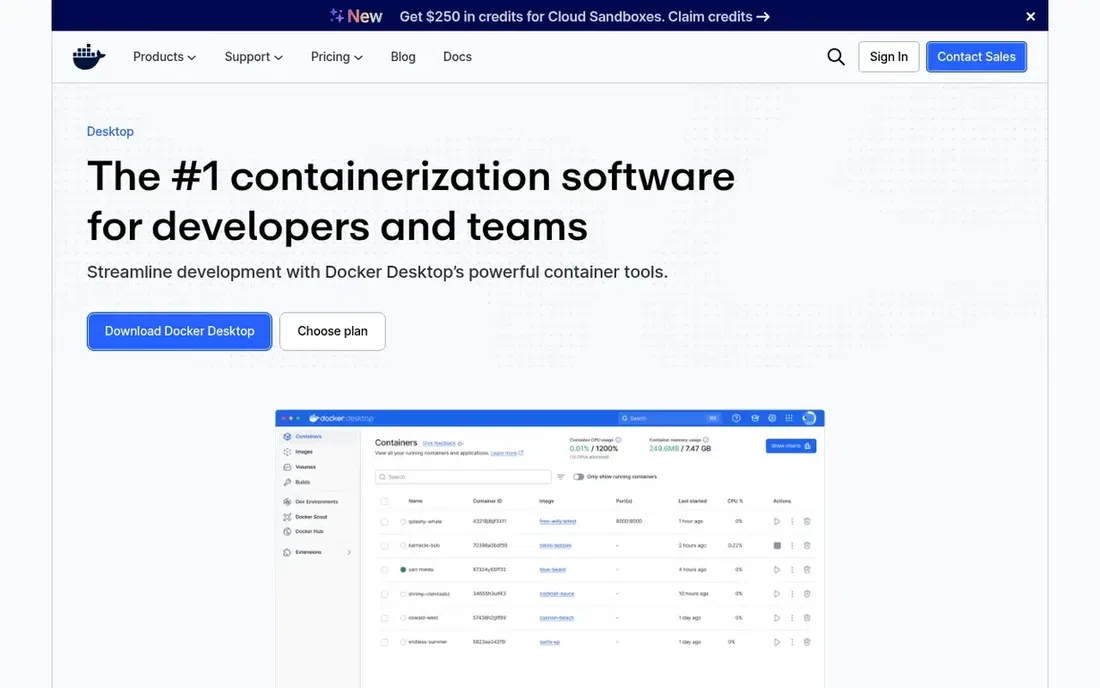
Docker Desktop is aimed squarely at local developer container workflow. Its scope is the developer desktop instead of fleet-wide orchestration, so teams running plenty of production clusters will need a separate platform.
In daily use, pick Docker Desktop when the priority is a smooth local experience, and look to managed Kubernetes or a multi-cluster management layer once production operations become the primary concern. Check the vendor site for Docker Desktop pricing; none is listed in this comparison. Free access: Not stated.
Honest limits: Restricted as a multi-cluster operations product.
What works well: Windows and Linux.
- Collaborative containerization tooling
- Runs on Mac
- Concentrated on the developer desktop
How we compared the tools
Each tool was reviewed on what its vendor publishes: price, plan limits, core features and stated drawbacks. We did not run hands-on tests. Treat prices as a snapshot: vendors change plans often, so check the vendor site for the figure that applies today. Tools are placed by general fit for container engine software for startups, with price clarity and free access as tie-breakers. A different team can reasonably rank them differently.
Before you commit
- Request quotes from Azure Kubernetes Service, Docker Desktop and the others; the list shows no fixed prices.
- Read the limits listed for Azure Kubernetes Service first: most natural within Azure.
- Run a one or two week pilot of Rancher with the people who will use it every day.
- Make sure Red Hat OpenShift lets you export your data in a format another tool can read.
- Map your must-have features to a specific Azure Kubernetes Service plan before you compare prices.
FAQ
How are the tools for container engine software for startups ordered?
The order follows typical fit for container engine software for startups, with Azure Kubernetes Service first and Docker Desktop last, then price clarity and free access. It is editorial judgement, not a score, so another team could rank the tools differently.
Does any tool for container engine software for startups here have a free plan?
A permanent free plan is not offered by Azure Kubernetes Service, Docker Desktop or the other tools here. Plan a short evaluation period instead.
Do these tools publish their prices?
No. None of the tools, from Azure Kubernetes Service to Docker Desktop, shows a fixed starting price here, so budget time for quotes.
Do startups need Kubernetes or just a container engine?
Numerous startups begin with a local container tool for example Docker Desktop and add Kubernetes only when deployment complexity grows. Managed Kubernetes services cut operational overhead when that time comes, but they still need cluster knowledge.
Can I try these tools before paying?
Not by default. None of the tools, from Azure Kubernetes Service to Docker Desktop, lists a free plan or a free trial here, so ask each vendor for a demo before committing.
Sources
- https://azure.microsoft.com/en-us/products/kubernetes-service
- https://www.redhat.com/en/technologies/cloud-computing/openshift
- https://cloud.google.com/kubernetes-engine
- https://www.rancher.com
- https://www.docker.com/products/docker-desktop