Best Container Engine Software for Remote Teams in 2026: Prices, Free Plans and 6 Picks
Best container engine software for remote teams in 2026: 6 contenders with entry costs and free tiers. Weaknesses are named for every tool. Decide faster.
- Editor's choice
 Mirantis Kubernetes Engine
Enterprise container management across environments
Starts atPricing on requestVisit mirantis.comFull review - Great alternative
 Rancher
Multi-cluster Kubernetes orchestration and security
Starts atPricing on requestVisit rancher.comFull review - Also consider
 Red Hat OpenShift
Enterprise application product and modernization
Starts atPricing on requestVisit redhat.comFull review
Direct answer
Mirantis Kubernetes Engine is the first pick on this list for enterprise container management across environments. Rancher is the stronger choice for multi-cluster Kubernetes orchestration and security, while Red Hat OpenShift suits enterprise application product and modernization. The remaining 3 options are covered below with pricing notes and limits. None of these vendors publish plan prices, so pricing is on request for every option.
TL;DR:
- This list starts with Mirantis Kubernetes Engine, which is built for enterprise container management across environments.
- For local container development across operating systems, Docker Desktop is worth a look.
- A fair warning about Red Hat OpenShift: product scope can be heavy for small teams.
- No starting price is shown for any of the 6 tools, Mirantis Kubernetes Engine and Docker Desktop included, so plan time for sales calls.
- None of the 6 tools, from Mirantis Kubernetes Engine to Docker Desktop, has a free plan, so budget for a subscription or use a trial.
Last checked November 2026. Pricing on request: vendors did not publish plan prices when this guide was last checked (November 2026), so ask each vendor for a written quote.
Quick comparison
| Tool | Best for | Starts at | Free plan? | |
|---|---|---|---|---|
| Mirantis Kubernetes Engine | Enterprise container management across environments | Pricing on request | Not stated | Visit |
| Rancher | Multi-cluster Kubernetes orchestration and security | Pricing on request | Not stated | Visit |
| Red Hat OpenShift | Enterprise application product and modernization | Pricing on request | Not stated | Visit |
| Amazon Elastic Kubernetes Service | Managed Kubernetes on AWS | Pricing on request | Not stated | Visit |
 Google Kubernetes Engine | Completely managed Kubernetes on Google Cloud | Pricing on request | Not stated | Visit |
| Docker Desktop | Local container development across operating systems | Pricing on request | Not stated | Visit |
Container Engine Software for Remote Teams compared in detail
LinkVetted compared 6 container engine software for remote teams. The goal is a practical shortlist: published prices, free plan facts, best-fit use cases and honest limits for every entry.
Mirantis Kubernetes Engine
Best for: Enterprise container management across environments
Points against: Setup and governance need planning.
More specifically, teams wanting a light local tool or a single cloud's managed service may find a more straightforward choice quicker to adopt. In daily use, the enterprise focus can mean more configuration and governance work than a small remote team needs. Check the vendor site for Mirantis Kubernetes Engine pricing; none is listed in this comparison. Free plan details: Not stated.
- Enterprise container management focus
- Supports Kubernetes and Docker
- Enterprise orientation may overwhelm small teams Mirantis Kubernetes Engine if this describes you: enterprise container management across environments. Mirantis Kubernetes Engine is positioned as managed enterprise container management, with private and managed orchestration for Kubernetes, Docker, and more.
Rancher is designed for multi-cluster Kubernetes orchestration and security. Rancher is an open-source multi-cluster orchestration product that lets operations teams deploy, run, and secure enterprise Kubernetes.
It suits remote system teams that run clusters across environments and want a single place to run them instead of juggling separate provider consoles. Pricing for Rancher is not stated here, so ask the vendor for current figures. Free options: Not stated.
Limits to weigh: Layers on a layer to run alongside clusters.
- Deploy
- Open-source multi-cluster orchestration
- Assumes Kubernetes operations skills
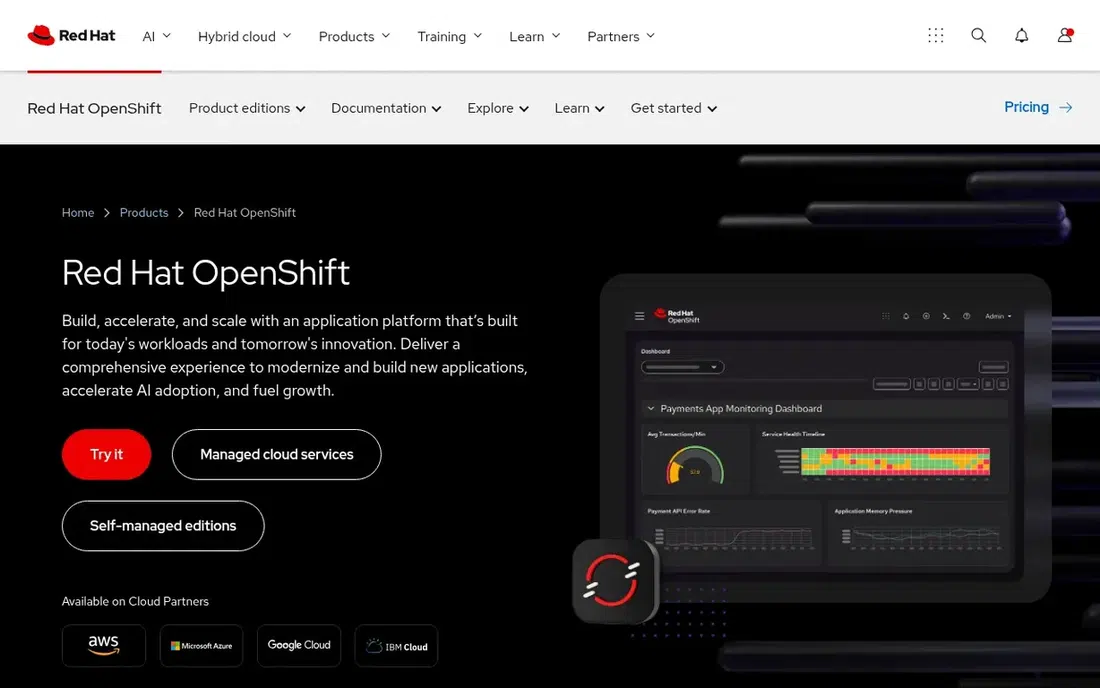
Red Hat OpenShift targets enterprise application system and modernization. Smaller remote teams or those without dedicated product staff may prefer a lighter managed Kubernetes service or a developer-focused desktop tool.
In practice, Red Hat OpenShift is an application innovation system that provides tools to help organizations modernize, build new applications, and support AI adoption. More specifically, the breadth of the system means more operational overhead than a straightforward local container engine. Red Hat OpenShift shows no starting price here, so confirm the cost on the vendor site. Free plan details: Not stated.
Watch-outs: Needs system expertise.
- Tools for modernizing and building apps
- Broad application innovation product
- Product scope can be heavy for small teams
Amazon Elastic Kubernetes Service
Best for: Managed Kubernetes on AWS
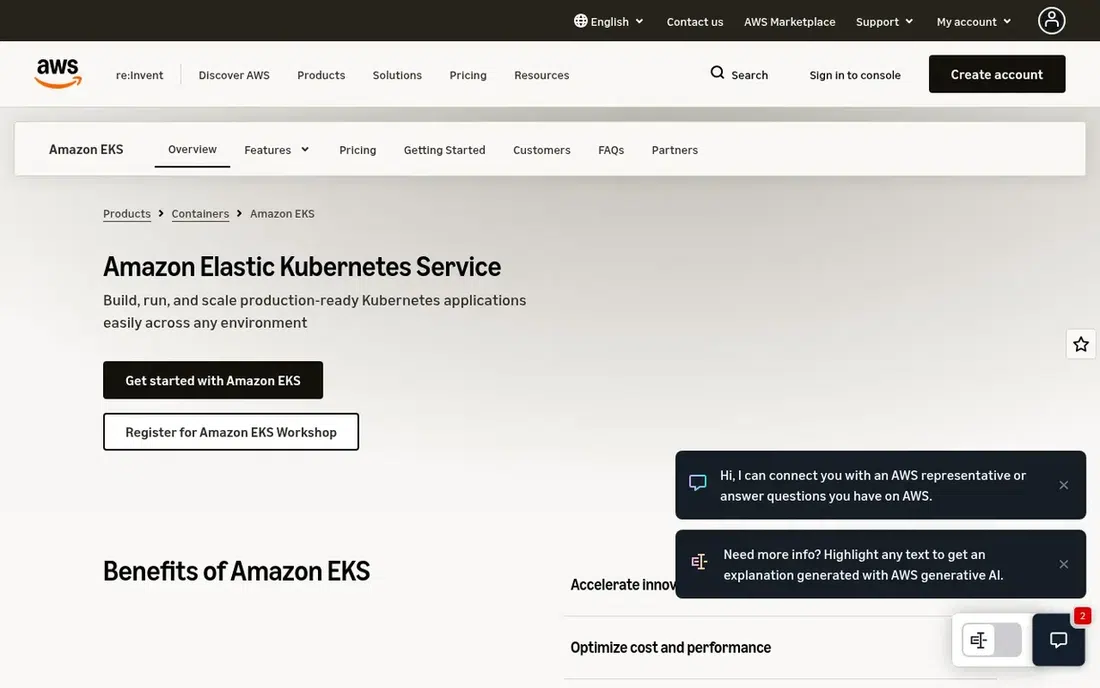
Amazon Elastic Kubernetes Service is built with managed Kubernetes on AWS in mind. Amazon Elastic Kubernetes Service is a managed Kubernetes service and certified Kubernetes conformant, letting teams run Kubernetes on AWS and on-premises.
Watch-outs: Cluster operations still need attention.
In daily use, consider a multi-cloud management product or another cloud provider's managed service if your infrastructure is spread differently. More specifically, teams outside AWS may find the surrounding tooling and skills less familiar, and managed service does not remove all cluster operational work. No starting price is listed for Amazon Elastic Kubernetes Service here; confirm pricing on the vendor site. Free access: Not stated.
- Certified Kubernetes conformant
- Runs on AWS and on-premises
- Tied closely to AWS tooling and skills
Google Kubernetes Engine
Best for: Completely managed Kubernetes on Google Cloud
Google Kubernetes Engine works best for completely managed Kubernetes on Google Cloud. Organizations on other clouds or wanting a single cross-cloud control plane may prefer a dedicated multi-cluster management system.
It fits remote teams standardizing on Google Cloud that want managed clusters with customizable release and scaling behavior across distributed environments. Pricing for Google Kubernetes Engine is not stated here, so ask the vendor for current figures. Trial and free access: Not stated.
Trade-offs to know: Best fit inside Google Cloud.
- Full Kubernetes API support
- Completely managed Kubernetes service
- Needs Kubernetes familiarity
Docker Desktop
Best for: Local container development across operating systems
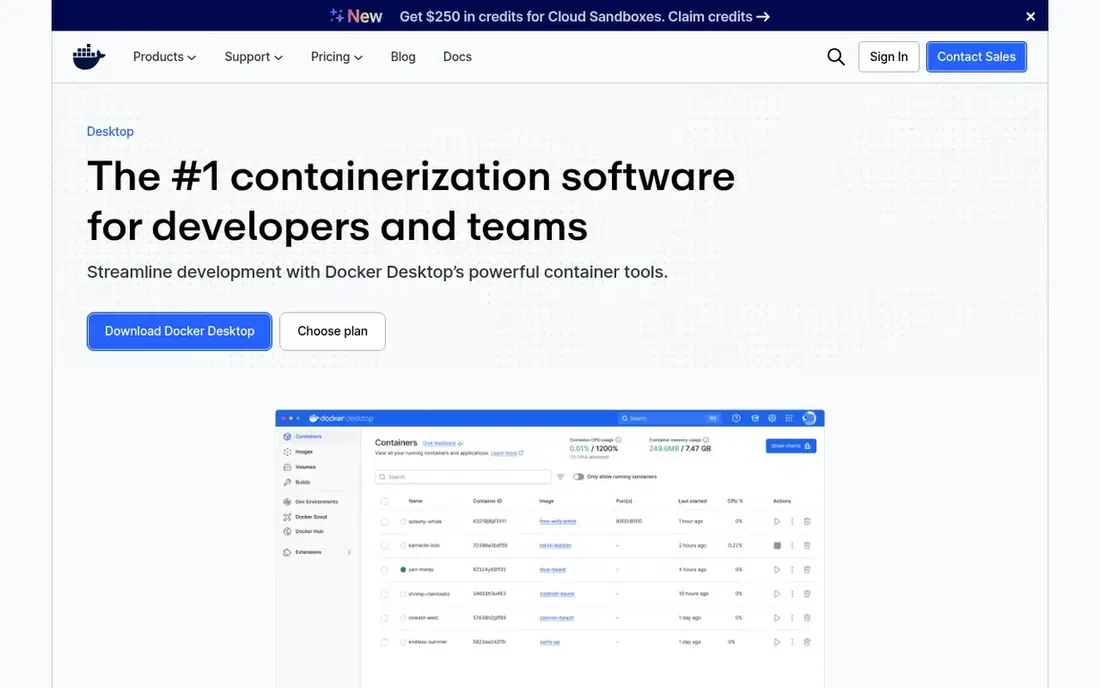
Docker Desktop was built for local container development across operating systems. It suits individual developers and small teams building and testing containerized applications before deploying them to shared environments.
Limits to weigh: Large orchestration needs a separate system.
Teams that require multi-cluster orchestration, policy, or enterprise system features should look at a Kubernetes management product or a managed cloud service instead. No starting price is listed for Docker Desktop here; confirm pricing on the vendor site. Free access: Not stated.
- Runs on Mac
- Collaborative containerization focus
- Desktop-centric instead of cluster management
Our selection method
The comparison looks at four things: starting price, free access, how well the feature set matches container engine software for remote teams, and the main limit of each tool. Where a vendor does not publish a price, the entry says quote. Where a price depends on seats or billing term, the entry says so. The ranking is editorial: typical fit first, then clear pricing, then free access. If your needs are unusual, read the profiles rather than relying on position.
What to confirm before you sign up
- Ask each vendor, from Mirantis Kubernetes Engine to Docker Desktop, for a written quote; none of them publishes a starting price.
- Read the limits listed for Mirantis Kubernetes Engine first: enterprise orientation may overwhelm small teams.
- Confirm minimum seats and billing terms with Docker Desktop before you commit to an annual plan.
- The entry price of Rancher is only the starting point; model the full cost with seats and extras.
- Check how data leaves Amazon Elastic Kubernetes Service: formats, limits and whether exports are available on every plan.
FAQ
Does any tool for container engine software for remote teams here have a free plan?
A permanent free plan is not offered by Mirantis Kubernetes Engine, Docker Desktop or the other tools here. Plan a short evaluation period instead.
When should a team choose Rancher or Mirantis Kubernetes Engine?
These fit organizations that run Kubernetes across several clusters or environments and want centralized management and governance. They assume more operational maturity, so smaller teams with a single cluster may find a managed cloud service or Docker Desktop sufficient.
Do these tools publish their prices?
No. None of the tools, from Mirantis Kubernetes Engine to Docker Desktop, shows a fixed starting price here, so budget time for quotes.
How are the tools for container engine software for remote teams ordered?
Mirantis Kubernetes Engine sits first and Docker Desktop last because the order follows typical fit for container engine software for remote teams, then price clarity and free access. It is a judgement call, so read each profile for fit and limits.
Can I try these tools before paying?
Not by default. None of the tools, from Mirantis Kubernetes Engine to Docker Desktop, lists a free plan or a free trial here, so ask each vendor for a demo before committing.
Sources
- https://www.mirantis.com/software/mirantis-kubernetes-engine
- https://www.rancher.com
- https://www.redhat.com/en/technologies/cloud-computing/openshift
- https://aws.amazon.com/eks
- https://cloud.google.com/kubernetes-engine
- https://www.docker.com/products/docker-desktop