Best Container Management Software for Remote Teams in 2026: Prices, Free Plans and 5 Picks
Compare 5 best container management software for remote teams, with prices, free plans and who each fits. Pros and cons for every tool. Costs up front.
- Editor's choice
 Google Kubernetes Engine
Completely managed Kubernetes on Google Cloud
Starts atPricing on requestVisit cloud.google.comFull review - Great alternative
 Red Hat OpenShift
Enterprise Kubernetes application system
Starts atPricing on requestVisit redhat.comFull review - Also considerDocker Desktop
Local container development and collaboration
Starts atPricing on requestVisit docker.comFull review
Direct answer
If you need completely managed Kubernetes on Google Cloud, Google Kubernetes Engine is the first tool to look at here. Alternatives: Red Hat OpenShift for enterprise Kubernetes application system, and Docker Desktop for local container development and collaboration. Free plan facts and limits for all 5 tools follow. None of these vendors publish plan prices, so pricing is on request for every option.
TL;DR:
- Number one here is Google Kubernetes Engine, a fit for fully managed Kubernetes on Google Cloud.
- Google Kubernetes Engine, Amazon Elastic Kubernetes Service and the 3 others all sell by quote; expect sales conversations before you see a price.
- Neither Google Kubernetes Engine nor Amazon Elastic Kubernetes Service, nor any of the other 3 tools, has a permanent free plan; trials and quotes are the norm.
- Check the limits for Red Hat OpenShift before you commit: complicated setup and management.
- Amazon Elastic Kubernetes Service is the one to check for managed Kubernetes on AWS.
Last checked November 2026. Pricing on request: vendors did not publish plan prices when this guide was last checked (November 2026), so ask each vendor for a written quote.
Quick comparison
| Tool | Best for | Starts at | Free plan? | |
|---|---|---|---|---|
| Google Kubernetes Engine | Completely managed Kubernetes on Google Cloud | Pricing on request | Not stated | Visit |
| Red Hat OpenShift | Enterprise Kubernetes application system | Pricing on request | Not stated | Visit |
| Docker Desktop | Local container development and collaboration | Pricing on request | Not stated | Visit |
 Azure Kubernetes Service | Managed Kubernetes on Microsoft Azure | Pricing on request | Not stated | Visit |
| Amazon Elastic Kubernetes Service | Managed Kubernetes on AWS | Pricing on request | Not stated | Visit |
5 container management software for remote teams in detail
If you are comparing container management software for remote teams, this page covers 5 tools in one place: what each is best for, what it costs to start, whether it has a free plan, and the main limit to know about.
Google Kubernetes Engine
Best for: Completely managed Kubernetes on Google Cloud
Think of Google Kubernetes Engine for completely managed Kubernetes on Google Cloud. Google Kubernetes Engine (GKE) is a completely managed Kubernetes service with full Kubernetes API, autoscaling, release channels, and multi-cluster support. It eases cluster operations, allowing remote teams to focus on applications instead of infrastructure.
Where it falls short: Tied to Google Cloud.
From a buyer's view, GKE is a good fit for cloud-native teams seeking managed Kubernetes with minimal operational burden. GKE integrates with Google Cloud services and is well suited to teams already using or willing to adopt Google Cloud. Google Kubernetes Engine does not show a starting price in this comparison, so check the vendor site for current pricing. Free options: Not stated.
- Autoscaling and release channels
- Completely managed control plane
- Less control over infrastructure
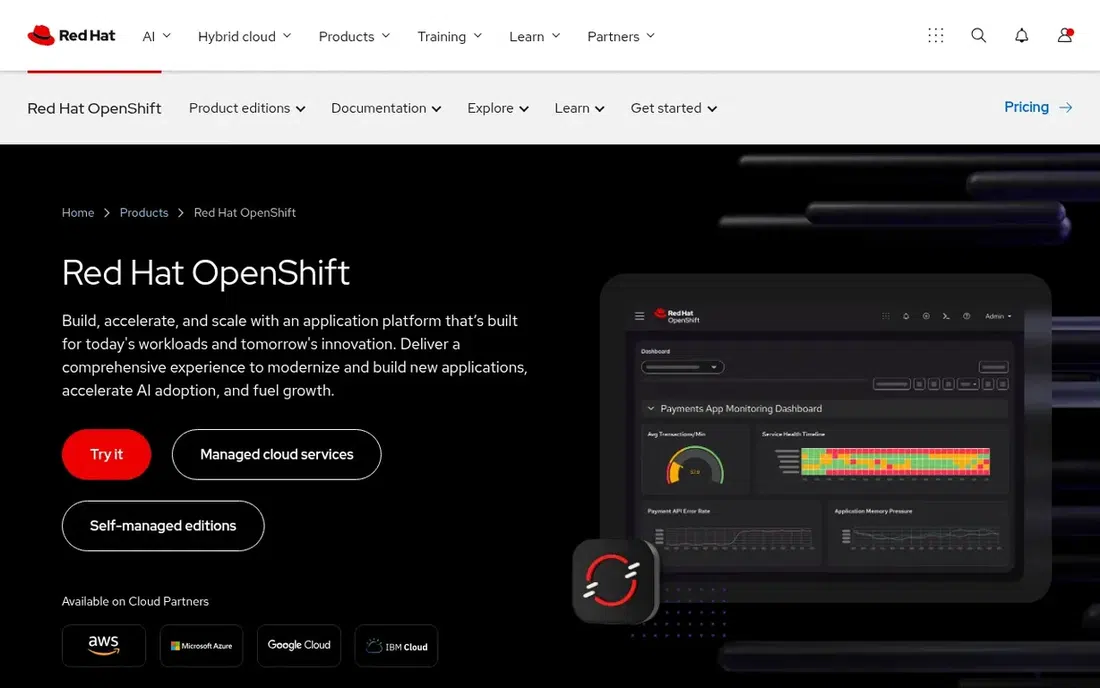
For enterprise Kubernetes application product, Red Hat OpenShift is a natural candidate. Red Hat OpenShift is an application innovation system that gives you tools to modernize and build new applications, accelerate AI adoption, and fuel growth. It supplies a full Kubernetes-based environment with integrated CI/CD and developer workflows.
Organizations seeking a more straightforward managed Kubernetes service might prefer Google Kubernetes Engine or Azure Kubernetes Service. Worth adding: OpenShift can be resource-intensive and has a steep ramp-up time, which may overwhelm smaller teams. Red Hat OpenShift does not show a starting price in this comparison, so check the vendor site for current pricing. On free options: Not stated.
Trade-offs to know: Complicated setup and management.
- Thorough developer and operations tools
- Supports hybrid cloud deployments
- Needs specialized knowledge
Docker Desktop
Best for: Local container development and collaboration
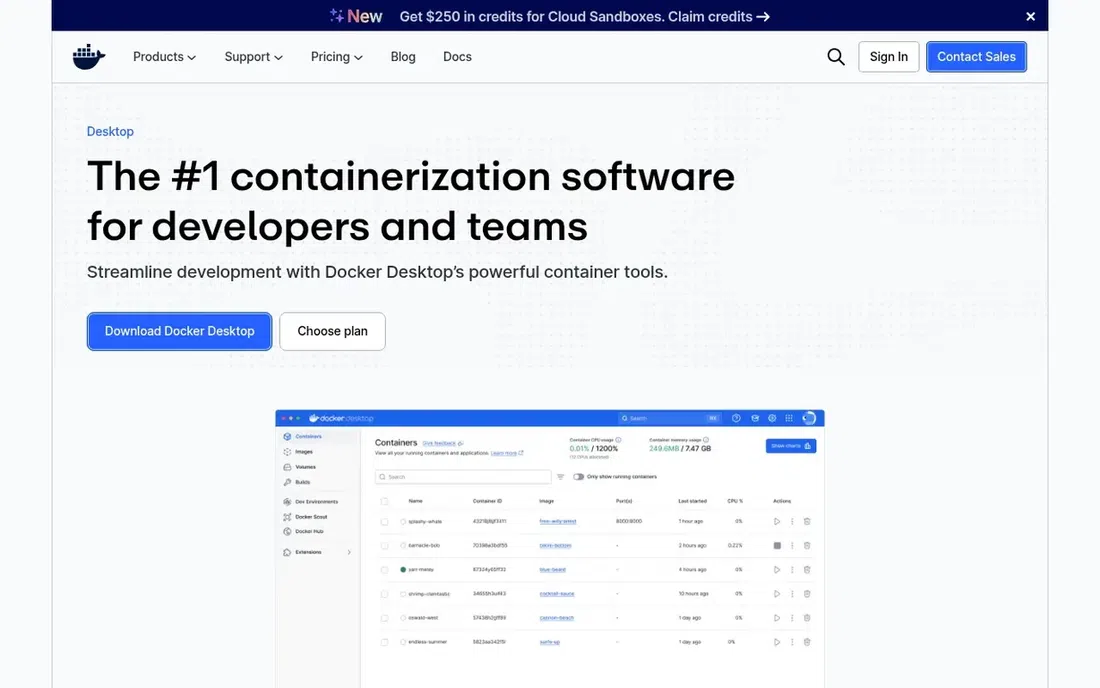
Docker Desktop is a good fit for local container development and collaboration. The tool plugs into Docker Hub and supports Kubernetes, fitting teams centred on application development instead of production orchestration.
Points against: Restricted to local development.
Beyond that, Docker Desktop is not built for production cluster management or multi-cluster orchestration. No starting price is listed for Docker Desktop here; confirm pricing on the vendor site. Free access: Not stated.
- Simple local Kubernetes and Docker setup
- Collaborative features for teams
- Needs per-user installation
Azure Kubernetes Service is aimed squarely at managed Kubernetes on Microsoft Azure. Azure Kubernetes Service (AKS) supplies secure, scalable containerized app deployment and management with quick delivery on managed Kubernetes clusters. It integrates deeply with Azure Active Directory and other Microsoft services, which benefits remote teams using the Azure system.
AKS eases cluster operations with built-in monitoring and scaling. The pricing can be complicated because of several extras. No starting price is listed for Azure Kubernetes Service here; confirm pricing on the vendor site. Free options: Not stated.
Where it falls short: Azure-specific ecosystem.
- Integrated with Azure services
- Secure and scalable
- Complicated pricing structure
Amazon Elastic Kubernetes Service
Best for: Managed Kubernetes on AWS
Amazon Elastic Kubernetes Service makes the most sense for managed Kubernetes on AWS. EKS supports hybrid deployments through EKS Anywhere. EKS is optimized for AWS, and teams using other clouds may find it less adaptable.
Limits to weigh: Extra cost for management.
It also involves extra management costs for the control plane. Worth adding: Amazon Elastic Kubernetes Service (EKS) is a managed service and certified Kubernetes conformant to run Kubernetes on AWS and on-premises. It offers a dependable control plane and integrates with AWS services, making it a good match for remote teams invested in the AWS ecosystem. Amazon Elastic Kubernetes Service does not show a starting price in this comparison, so check the vendor site for current pricing. Free options: Not stated.
- Certified Kubernetes conformant
- Runs on AWS and on-premises
- AWS-centric ecosystem
How we compared the tools
Things to verify first
- Confirm the entry price with every vendor: no tool from Google Kubernetes Engine to Amazon Elastic Kubernetes Service shows a fixed starting price.
- Read the limits listed for Google Kubernetes Engine first: tied to Google Cloud.
- Confirm the exact Docker Desktop plan that includes your must-have features.
- Check how data leaves Azure Kubernetes Service: formats, limits and whether exports are available on every plan.
- Find out what support Amazon Elastic Kubernetes Service includes on your plan, and whether onboarding help costs extra.
FAQ
What should remote teams consider for security?
Look for role-based access control, network policies, and compliance certifications. Managed services commonly contain built-in security features, whereas self-managed products need more configuration.
Is Google Kubernetes Engine the right pick for everyone comparing container management software for remote teams?
No single tool suits every team. Google Kubernetes Engine comes first because it fits fully managed Kubernetes on Google Cloud, while Red Hat OpenShift suits enterprise Kubernetes application platform and Docker Desktop suits local container development and collaboration. Match the tool to your own size, budget and workflow before deciding.
Do these tools publish their prices?
No. None of the tools, from Google Kubernetes Engine to Amazon Elastic Kubernetes Service, shows a fixed starting price here, so budget time for quotes.
Can I try these tools before paying?
Not by default. None of the tools, from Google Kubernetes Engine to Amazon Elastic Kubernetes Service, lists a free plan or a free trial here, so ask each vendor for a demo before committing.
Does any tool for container management software for remote teams here have a free plan?
No tool in this list, Google Kubernetes Engine and Amazon Elastic Kubernetes Service included, has a permanent free plan. Trials and quotes are the usual route, so plan a short evaluation period.
Sources
- https://cloud.google.com/kubernetes-engine
- https://www.redhat.com/en/technologies/cloud-computing/openshift
- https://www.docker.com/products/docker-desktop
- https://azure.microsoft.com/en-us/products/kubernetes-service
- https://aws.amazon.com/eks