Best Container Management Software for Small Business for 2026: Our 5 Vetted Picks
Searching for the best container management software for small business? Here are 5 options with prices and free plans. Short verdicts, no fluff. Details below.
- Editor's choice
 Rancher
Multi-cluster Kubernetes orchestration
Starts atSee websiteVisit rancher.comFull review - Great alternative
 Mirantis Kubernetes Engine
Managed enterprise container management
Starts atSee websiteVisit mirantis.comFull review - Also consider
 Portainer
Single control plane for Kubernetes fleets
Starts at$1,045 a yearVisit portainer.ioFull review
Direct answer
For multi-cluster Kubernetes orchestration, Rancher is where this list starts. Listed starting prices: Portainer from $1,045 a year. Mirantis Kubernetes Engine fits managed enterprise container management; Portainer fits single control plane for Kubernetes fleets. All 5 tools are compared below on price, free plan and limits.
TL;DR:
- This list starts with Rancher, which is built for multi-cluster Kubernetes orchestration.
- Check the limits for Mirantis Kubernetes Engine before you commit: enterprise focus may be more than small teams need.
- None of the 5 tools, from Rancher to Red Hat OpenShift, has a free plan, so budget for a subscription or use a trial.
- Pricing for Rancher, Mirantis Kubernetes Engine, Docker Desktop and Red Hat OpenShift is quote-based, which adds a sales step before you can compare cost.
- Red Hat OpenShift is the one to check for application innovation on Kubernetes.
Last checked November 2026. Prices and plan details were read from the vendors' own pages in November 2026; vendors change plans often, so confirm the current price on the vendor site before you buy.
Quick comparison
| Tool | Best for | Starts at | Free plan? | |
|---|---|---|---|---|
| Rancher | Multi-cluster Kubernetes orchestration | See website | Not stated | Visit |
| Mirantis Kubernetes Engine | Managed enterprise container management | See website | Not stated | Visit |
| Portainer | Single control plane for Kubernetes fleets | $1,045 a year | Free trial | Visit |
| Docker Desktop | Developer workstations and local container workflows | See website | Not stated | Visit |
 Red Hat OpenShift | Application innovation on Kubernetes | See website | Not stated | Visit |
Every option for container management software for small business explained
LinkVetted put together this guide to container management software for small business for readers who want a clear shortlist without reading every vendor page. It compares 5 tools on starting price, free plans, who each one suits and where each one falls short.
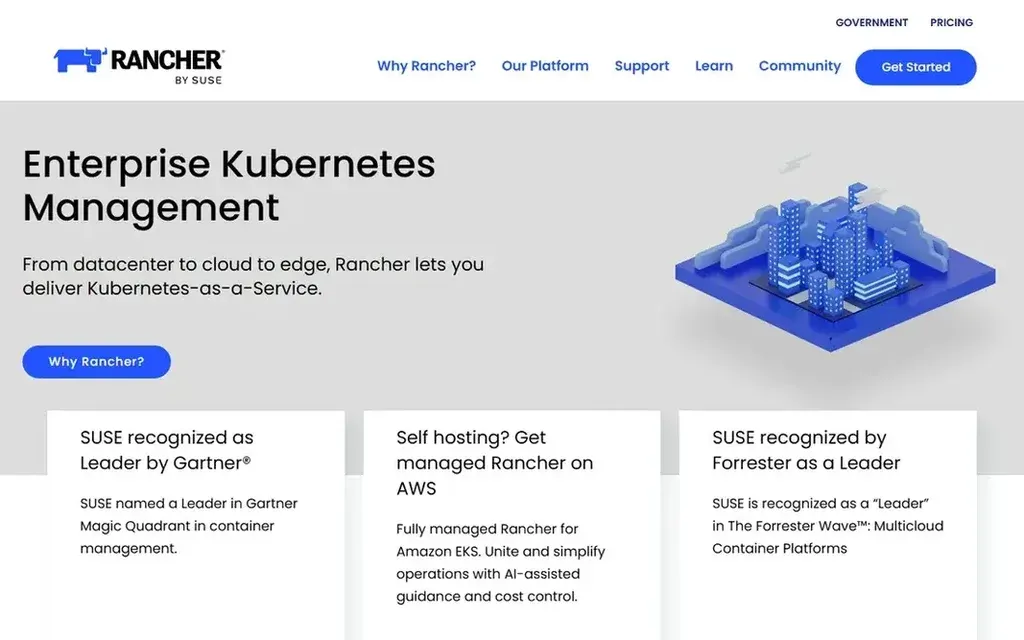
Rancher is built with multi-cluster Kubernetes orchestration in mind. Rancher is an open-source multi-cluster orchestration system that lets operations teams deploy, handle, and secure enterprise Kubernetes. From a buyer's view, if you prefer a managed service, Amazon EKS may be a better fit.
What Rancher does well: Made for operations teams.
Where it falls short: Can be complicated for small teams without Kubernetes skills. If you want a single control plane with less system overhead, consider Portainer. More specifically, Rancher can be heavy for a small team that only needs local development containers or a single straightforward cluster. It also needs continuing operational care. The platform is geared toward operations teams, so it fits best when someone on staff already understands Kubernetes concepts. Check the vendor site for Rancher pricing; none is listed in this comparison. As for free access: Not stated.
- Secure enterprise Kubernetes
- Deploy, run
- Needs continuing operational attention
Mirantis Kubernetes Engine works best for managed enterprise container management. Mirantis Kubernetes Engine is described as managed enterprise container management for organizations, with private and managed container orchestration for Kubernetes, Docker, and more. It is relevant for teams that run both Kubernetes and Docker workloads.
Adoption also needs planning. Choose Mirantis when managed enterprise container management is a priority. Check the vendor site for Mirantis Kubernetes Engine pricing; none is listed in this comparison. On free options: Not stated.
Watch-outs: Enterprise focus may be more than small teams need.
- Managed enterprise container management
- Supports Kubernetes and Docker orchestration
- Needs planning to adopt
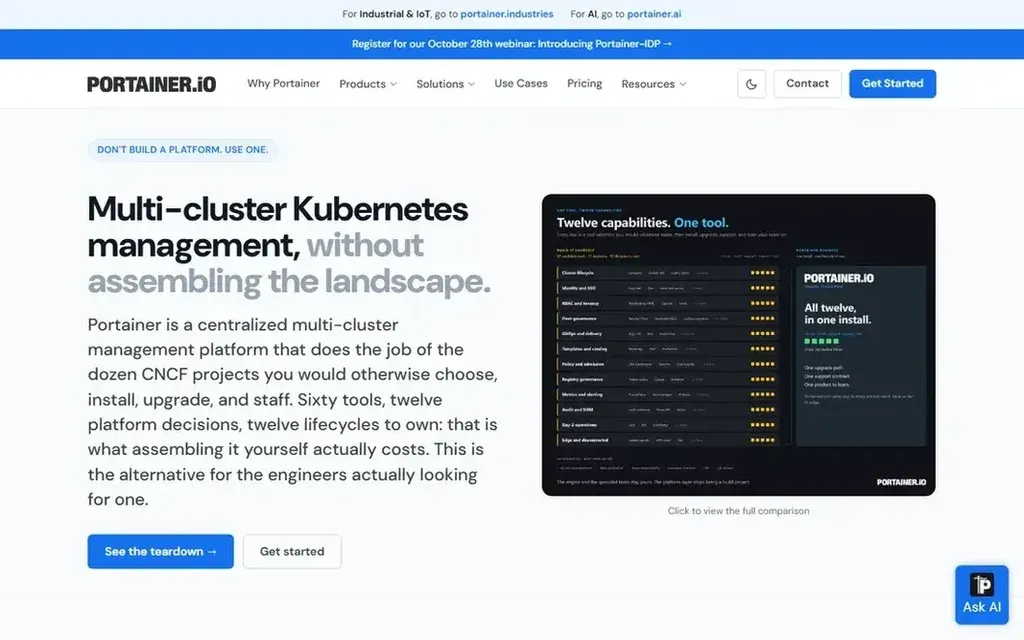
Where Portainer fits: single control plane for Kubernetes fleets. The single-pane approach can cut operational overhead for teams with restricted system staff.
Starting cost for Portainer: $1,045 per year. Free options: Free trial.
Reasons to shortlist it: govern Kubernetes.
Where it is weaker: May be more than a very small team needs initially.
- Positioned as one product rather than numerous tools
- Deploy, run, secure
- Needs some Kubernetes familiarity to use completely
Docker Desktop
Best for: Developer workstations and local container workflows
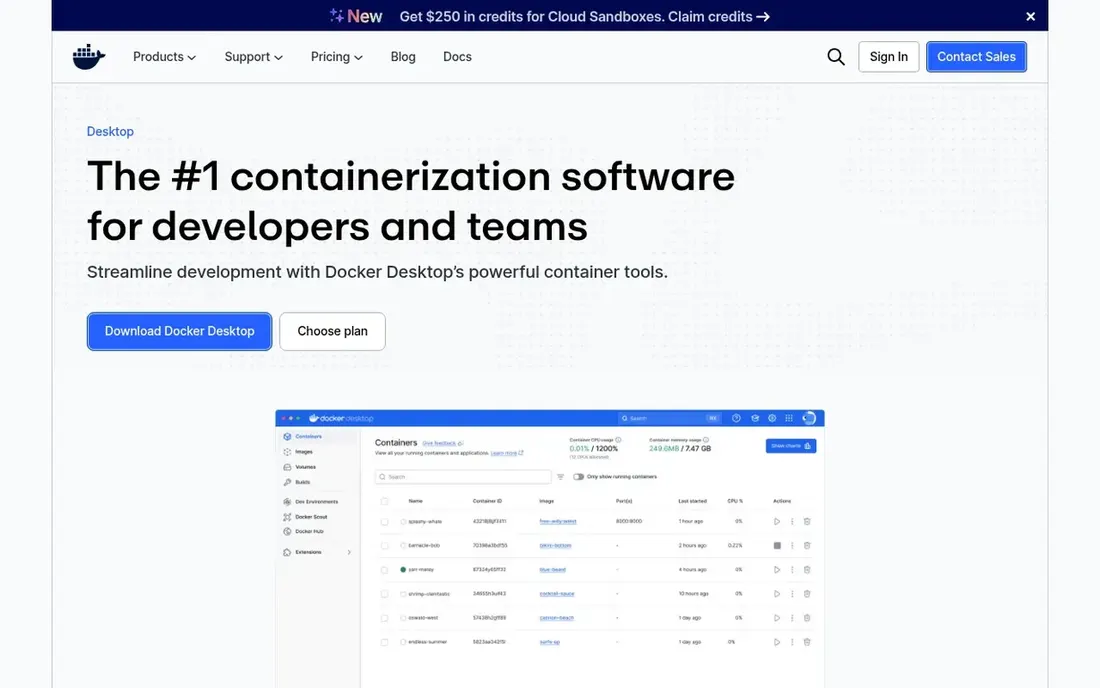
Docker Desktop was built for developer workstations and local container workflows. Choose Docker Desktop when the priority is a smooth developer experience on individual machines.
Points against: May need extra tools for multi-host management.
Also, teams that require to run Kubernetes across plenty of environments should consider a product for example Portainer or Rancher. Beyond that, Docker Desktop is collaborative containerization software for developers, available for Mac, Windows, and Linux. Docker Desktop shows no starting price here, so confirm the cost on the vendor site. Free access: Not stated.
- Runs on Mac, Windows, Linux
- Collaborative containerization for developers
- Centred on local development, not production orchestration
For application innovation on Kubernetes, Red Hat OpenShift is a natural candidate. It can also demand expertise to set up and operate.
The main drawbacks: Can need significant setup and expertise.
In practice, teams that chiefly need local containers should start with Docker Desktop, whereas those wanting more straightforward cluster governance might prefer Portainer. On top of that, choose OpenShift when application innovation is the primary goal. Red Hat OpenShift shows no starting price here, so confirm the cost on the vendor site. On free options: Not stated.
- Supports AI adoption and growth initiatives
- Tools to modernize and build applications
- Wide product that may exceed small business needs
How these tools were picked
The comparison looks at four things: starting price, free access, how well the feature set matches container management software for small business, and the main limit of each tool. Prices and plan limits come from vendor pages and can change, so confirm them on the vendor site before you buy. Tools are placed by general fit for container management software for small business, with price clarity and free access as tie-breakers. A different team can reasonably rank them differently.
Questions to settle before buying
- Ask Rancher, Mirantis Kubernetes Engine, Docker Desktop and Red Hat OpenShift for a written quote, since no starting price is shown.
- Use real work to test the free trial from Portainer, rather than a demo project.
- Before choosing Rancher, weigh its main limit: can be complex for small teams without Kubernetes skills.
- Involve the people who will use Mirantis Kubernetes Engine daily; a short pilot beats a long feature checklist.
- Check the integration list for Docker Desktop against the tools you run today, and note which ones need a higher plan.
FAQ
Does any tool for container management software for small business here have a free plan?
No tool in this list, Rancher and Red Hat OpenShift included, has a permanent free plan. Portainer offer a trial. Trials and quotes are the usual route, so plan a short evaluation period.
What is the best container management software for a small business new to containers?
The first pick on this list is Rancher, because it suits multi-cluster Kubernetes orchestration. Mirantis Kubernetes Engine is better for managed enterprise container management, and Portainer for single control plane for Kubernetes fleets. Check price and limits against your own needs before choosing.
Do these tools publish their prices?
Not all of them. Rancher, Mirantis Kubernetes Engine, Docker Desktop and Red Hat OpenShift publish no starting price, so expect a quote request for those. The rest, Portainer included, show a starting price, though seats and billing terms still change the final cost.
How are the tools for container management software for small business ordered?
The order follows typical fit for container management software for small business, with Rancher first and Red Hat OpenShift last, then price clarity and free access. It is editorial judgement, not a score, so another team could rank the tools differently.
Can I try these tools before paying?
Often, yes. Portainer offers a free trial. Use your own data and a real task during the test, and check what the free tier or trial limits before you rely on it.
Sources
- https://www.rancher.com
- https://www.mirantis.com/software/mirantis-kubernetes-engine
- https://www.portainer.io
- https://www.docker.com/products/docker-desktop
- https://www.redhat.com/en/technologies/cloud-computing/openshift