Best Container Management Software for Enterprise in 2026: Prices, Free Plans and 6 Picks
Best container management software for enterprise, compared. 6 tools with published prices, free plans and limits. Caveats come with every verdict. Facts only.
- Editor's choiceDocker Business
Developer workflow security and governance
Starts at$9 per user a monthVisit docker.comFull review - Great alternative
 Google Kubernetes Engine
Completely managed Kubernetes on Google Cloud
Starts atSee websiteVisit cloud.google.comFull review - Also considerMicrosoft Azure Kubernetes Service
Managed Kubernetes within Microsoft Azure
Starts atSee websiteVisit azure.microsoft.comFull review
Direct answer
Our first pick is Docker Business, best for developer workflow security and governance. Listed starting prices: Docker Business from $9 per user a month. If your case is different, Google Kubernetes Engine suits completely managed Kubernetes on Google Cloud and Microsoft Azure Kubernetes Service suits managed Kubernetes within Microsoft Azure. The full list of 6 tools follows, with prices and free plan facts.
TL;DR:
- Docker Business sits first on this list: developer workflow security and governance.
- The cheapest monthly starting price in the list is $9 per user per month, offered by Docker Business.
- Red Hat OpenShift is the one to check for integrated enterprise application product.
- Only Docker Business offers a free plan among these 6 tools.
- Google Kubernetes Engine comes with a trade-off: most natural for teams already on Google Cloud.
Last checked November 2026. Prices and plan details were read from the vendors' own pages in November 2026; vendors change plans often, so confirm the current price on the vendor site before you buy.
Quick comparison
| Tool | Best for | Starts at | Free plan? | |
|---|---|---|---|---|
| Docker Business | Developer workflow security and governance | $9 per user a month | Yes | Visit |
| Google Kubernetes Engine | Completely managed Kubernetes on Google Cloud | See website | Not stated | Visit |
| Microsoft Azure Kubernetes Service | Managed Kubernetes within Microsoft Azure | See website | Not stated | Visit |
 Mirantis Kubernetes Engine | Private and managed container orchestration | See website | Not stated | Visit |
 Rancher | Multi-cluster Kubernetes operations and security | See website | Not stated | Visit |
 Red Hat OpenShift | Integrated enterprise application system | See website | Not stated | Visit |
The best container management software for enterprise
LinkVetted compared 6 tools for container management software for enterprise. The goal is a practical shortlist: published prices, free plan facts, best-fit use cases and honest limits for every entry.
Docker Business
Best for: Developer workflow security and governance
In short, Docker Business is for developer workflow security and governance. Docker Business is described as a secure enterprise development platform for building, securing, governing and scaling containerized applications across developers, security, AI and product teams.
Price to start with Docker Business: $9 per user per month. Docker Business includes a free tier.
Watch-outs: Needs pairing with a cluster system for production operations.
- Enterprise development product orientation
- Securing and governing containerized apps
- Centers on developer tooling instead of cluster orchestration
Google Kubernetes Engine
Best for: Completely managed Kubernetes on Google Cloud
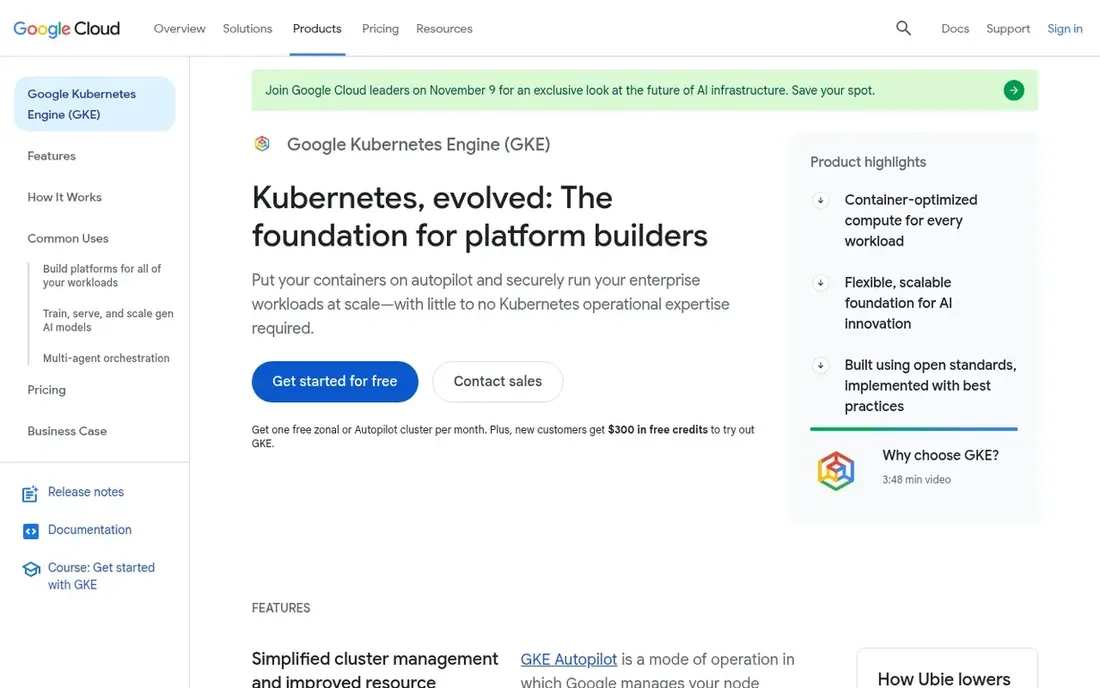
Google Kubernetes Engine serves completely managed Kubernetes on Google Cloud. GKE is most compelling when Google Cloud is already the primary environment; mixed or on-premises estates may need extra tooling.
Teams requiring deep control over cluster internals should confirm which settings the managed service exposes before committing. Google Kubernetes Engine does not show a starting price in this comparison, so check the vendor site for current pricing. Trial and free access: Not stated.
Where it falls short: Most natural for teams already on Google Cloud.
- Autoscaling and release channels for controlled upgrades
- Completely managed Kubernetes service with the full Kubernetes API
- Managed defaults can limit low-level customization
Microsoft Azure Kubernetes Service
Best for: Managed Kubernetes within Microsoft Azure
Where Microsoft Azure Kubernetes Service fits: managed Kubernetes within Microsoft Azure. Microsoft Azure Kubernetes Service is described as a way to deploy and handle secure, scalable containerized applications with quick delivery on managed Kubernetes clusters.
For everyday use, organizations running multi-cloud estates may want a cross-cluster management product on top, and should confirm networking, identity and governance details on the vendor page. On top of that, AKS assumes a degree of Kubernetes fluency, and its advantages are most solid inside Azure. Microsoft Azure Kubernetes Service does not show a starting price in this comparison, so check the vendor site for current pricing. Free options: Not stated.
Drawbacks to consider: Cluster operations still need Kubernetes expertise.
- Natural fit for Azure-centered organizations
- Emphasis on quick delivery of containerized applications
- Best value when Azure is the primary cloud
Mirantis Kubernetes Engine serves private and managed container orchestration. Mirantis Kubernetes Engine is positioned as managed enterprise container management, with private and managed container orchestration for Kubernetes, Docker and more.
From a buyer's view, teams completely committed to one hyperscaler managed service may find a more straightforward path, and should confirm supported environments and lifecycle commitments straight with the vendor. From a buyer's view, supporting several orchestration technologies means more design decisions and validation work at the start. This comparison lists no price for Mirantis Kubernetes Engine; ask the vendor. As for free access: Not stated.
Drawbacks to consider: Mixed orchestration support can add configuration choices.
- Includes Kubernetes and Docker orchestration
- Private and managed container management choices
- Less suited to teams wanting only a cloud-managed service
Choose Rancher for multi-cluster Kubernetes operations and security. Rancher presumes a capable product team, since it coordinates clusters instead of replacing their operational needs.
Rancher does not show a starting price in this comparison, so check the vendor site for current pricing. Free plan details: Not stated.
Where it falls short: Needs in-house Kubernetes operations maturity.
- Geared toward enterprise Kubernetes management
- Open-source multi-cluster orchestration system
- Layers on a layer to learn alongside underlying clusters
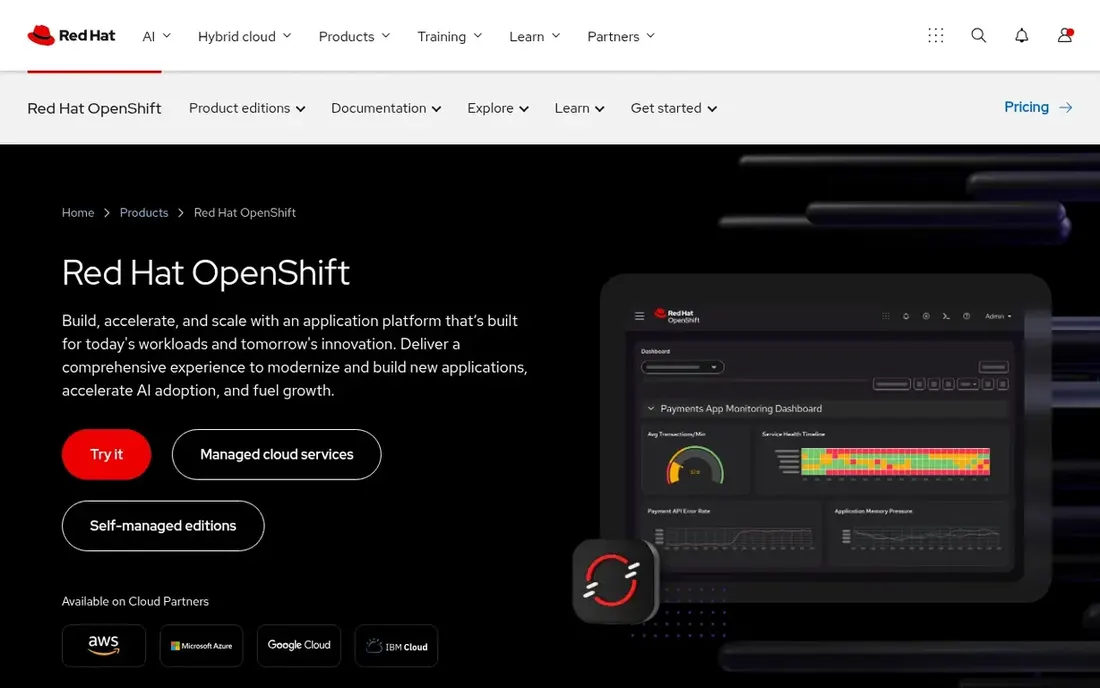
Red Hat OpenShift is a good fit for integrated enterprise application system. Organizations that only need managed Kubernetes clusters with minimal added tooling may find a cloud provider service more straightforward, and should weigh operational overhead against product breadth.
Downsides: Broader product scope can mean more to learn.
In practice, Red Hat OpenShift is described as an application innovation product that gives a thorough experience with tools to help organizations modernize, build new applications, accelerate AI adoption and support growth. In daily use, since OpenShift spans a broad product surface, teams may need dedicated system skills and a clear operating model. Red Hat OpenShift shows no starting price here, so confirm the cost on the vendor site. Free access: Not stated.
- Positioned for modernization and new application builds
- Vendor support behind the system
- Heavier footprint than a plain managed service
How we compared the tools
LinkVetted looked at what each vendor publishes: pricing, plan limits, feature coverage for container management software for enterprise and stated drawbacks. No hands-on testing is claimed. Plan names, prices and limits change often. Treat the figures here as a starting point and verify them with the vendor. The sequence is a judgement call: typical use case first, then pricing transparency, then free access. Use the profiles to check fit.
Before you commit
- Get a written quote from Google Kubernetes Engine, Microsoft Azure Kubernetes Service, Mirantis Kubernetes Engine and others; the list shows no starting price for them.
- Look at the free plan from Docker Business closely: its caps decide whether it is usable for real work.
- Before choosing Docker Business, weigh its main limit: centers on developer tooling instead of cluster orchestration.
- Ask the daily users to test Docker Business on a live task before you roll it out to everyone.
- Check whether Rancher bills monthly or annually, and what cancelling early costs.
FAQ
Do these tools publish their prices?
Not all of them. Google Kubernetes Engine, Microsoft Azure Kubernetes Service, Mirantis Kubernetes Engine and others publish no starting price, so expect a quote request for those. The rest, Docker Business included, show a starting price, though seats and billing terms still change the final cost.
How are the tools for container management software for enterprise ordered?
Docker Business sits first and Red Hat OpenShift last because the order follows typical fit for container management software for enterprise, then price clarity and free access. It is a judgement call, so read each profile for fit and limits.
Is Red Hat OpenShift a solid fit for organizations new to containers?
The broader surface generally needs dedicated platform skills. Buyers should weigh that ramp-up time against the convenience of a single supported product.
Is Docker Business the right pick for everyone comparing container management software for enterprise?
No single tool suits every team. Docker Business comes first because it fits developer workflow security and governance, while Google Kubernetes Engine suits fully managed Kubernetes on Google Cloud and Microsoft Azure Kubernetes Service suits managed Kubernetes within Microsoft Azure. Match the tool to your own size, budget and workflow before deciding.
What should buyers verify before committing to a container platform?
Confirm supported environments, the split between vendor-managed and self-managed operations, security and policy controls, and integration with existing pipelines. Also check support terms and version lifecycle commitments on the vendor site, since these vary by product.
Which options for container management software for enterprise have a free plan?
Docker Business is the only tool in this list with a free plan. Free plans usually cap users, projects or features, so check the limits on the vendor page.
Sources
- https://www.docker.com/products/business
- https://cloud.google.com/kubernetes-engine
- https://azure.microsoft.com/en-us/products/kubernetes-service
- https://www.mirantis.com/software/mirantis-kubernetes-engine
- https://www.rancher.com
- https://www.redhat.com/en/technologies/cloud-computing/openshift