Best Continuous Deployment Software in 2026: 8 Tools Compared
Best continuous deployment software for faster, safer releases? We compare 8 tools for Kubernetes, multi-cloud, and enterprise delivery teams in 2026.
- Editor's choice
 Argo CD
Kubernetes GitOps teams
Starts atFreeVisit argoproj.github.ioFull review - Great alternative
 Harness
Enterprise delivery governance
Starts atSee websiteVisit harness.ioFull review - Also consider
 GitLab CI/CD
Integrated DevSecOps teams
Starts atSee websiteVisit about.gitlab.comFull review
TL;DR:
- Argo CD is our pick for Kubernetes teams that want GitOps delivery with clear state and easy rollbacks.
- Harness suits enterprises that need governance, approvals, and automated verification across many services.
- GitLab and GitHub Actions work well when teams want build, test, and deploy in one platform.
- Octopus Deploy is a strong choice for teams that build elsewhere and need controlled multi-environment releases.
- Open source tools save licence fees but need staff time for setup, upgrades, and support.
Quick comparison
| Tool | Best for | Starts at | Free plan? | |
|---|---|---|---|---|
| Argo CD | Kubernetes GitOps teams | Free | Yes | Visit |
| Harness | Enterprise delivery governance | See website | Free trial | Visit |
| GitLab CI/CD | Integrated DevSecOps teams | See website | Yes | Visit |
 GitHub Actions | GitHub centred teams | See website | Yes | Visit |
 Octopus Deploy | Controlled multi-environment releases | See website | Free trial | Visit |
 Spinnaker | Multi-cloud delivery at scale | Free | Yes | Visit |
 Codefresh | Kubernetes and GitOps delivery | See website | Free trial | Visit |
 Flux | Lightweight Kubernetes GitOps | Free | Yes | Visit |
The best continuous deployment software
Continuous deployment software moves tested code into production automatically, with rollout controls and rollback options. The best tool depends on your infrastructure, your team size, and how much governance you need.
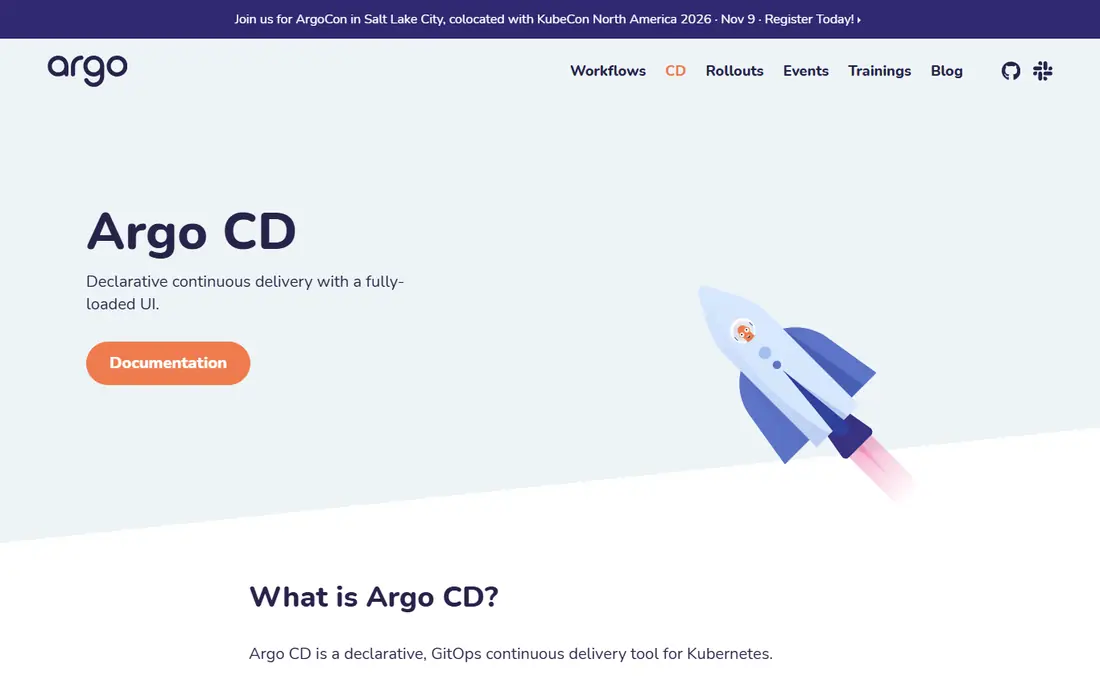
Argo CD watches a Git repository and keeps a Kubernetes cluster in sync with the desired state described there. That model makes deployments easy to review, because a change to production is a change to Git. Drift detection flags cases where live state differs from Git, which helps teams catch manual changes before they cause trouble.
The limit is scope. Argo CD is not a full build system, and it is not the right pick for non Kubernetes workloads. Teams also need to plan for high availability, upgrades, and access control. For Kubernetes first teams, though, it is the most widely adopted GitOps tool, and that community support matters.
- Declarative GitOps model with Git as source of truth
- Drift detection and sync status
- Large open source community
- Kubernetes only
- Setup, upgrades, and scaling need platform expertise
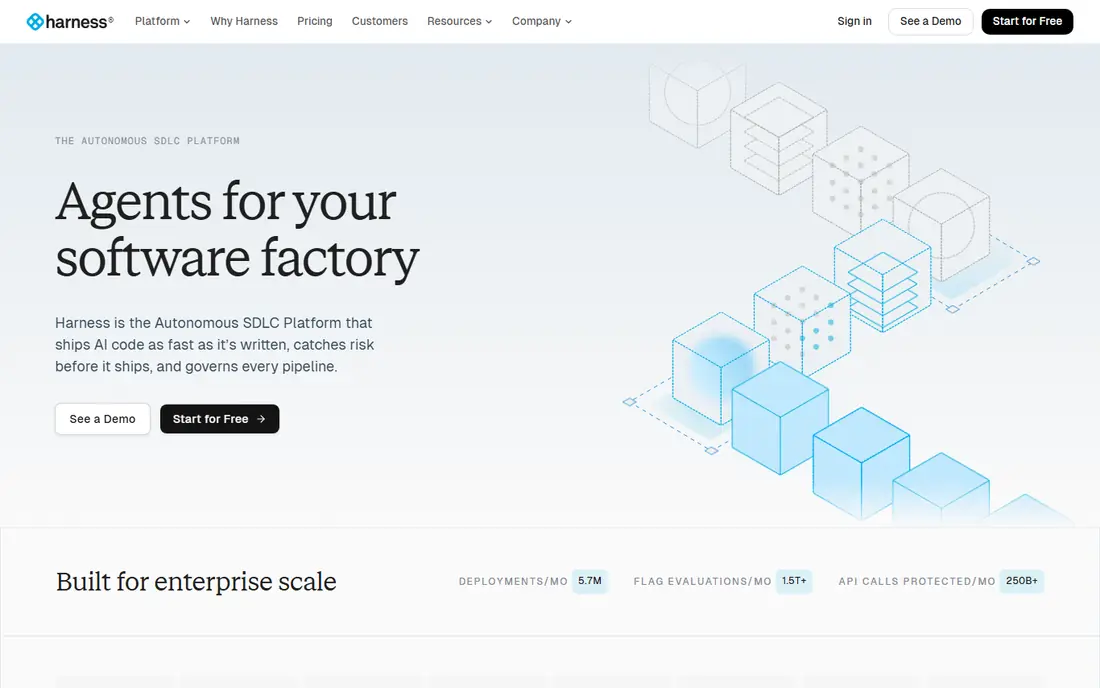
Harness is a commercial delivery platform built for organisations that ship many services with strict controls. It supports progressive delivery strategies, checks health signals during a rollout, and can roll back automatically when verification fails. Approvals, policies, and audit trails help regulated teams show who approved what and when.
That depth comes at a price. Smaller teams may find the platform and its pricing heavy for simple deployments. Larger teams, especially those with many services and compliance needs, often find the governance and verification tools save time and reduce failed releases. Start with one service and a canary strategy to judge the fit.
- Canary, blue green, and rolling strategies
- Automated verification and rollback
- Strong governance and approvals
- Enterprise pricing is quote based
- Full platform can be more than small teams need
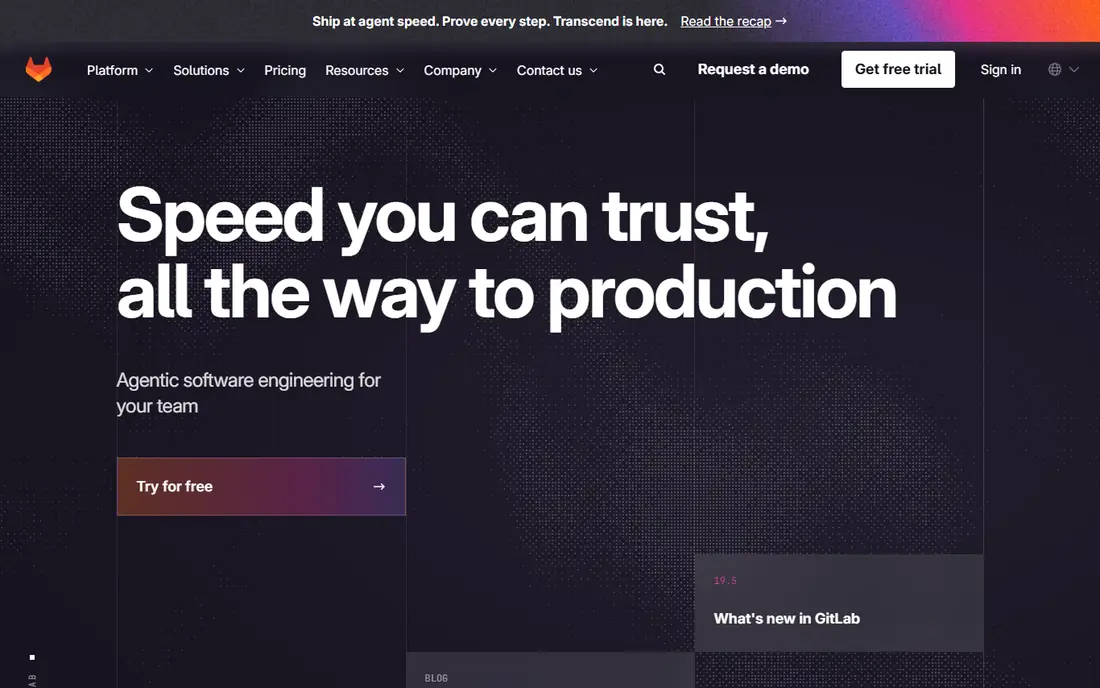
GitLab brings the full software lifecycle into one place, so teams do not need to connect separate tools for code, pipelines, and deployments. Pipelines can build, test, scan, and deploy with environments and review apps built in. That integration reduces handoffs and makes it easier to trace a production change back to a merge request.
The trade off is breadth. Teams that only want a deployment tool may find GitLab larger than needed, and its user based pricing adds up at scale. If you already use GitLab for code, using its deployment tools is a natural next step. If you use another code host, the case is weaker.
- Code, build, test, security scanning, and deploy in one platform
- Strong pipeline and environment tools
- Self managed option
- Broad platform can feel heavy for teams that only need deployment
- Advanced tiers are priced per user
GitHub Actions lets teams automate build, test, and deployment from the same repository that holds the code. The marketplace offers reusable actions for common deployment targets, which speeds up setup for standard stacks. Hosted runners reduce infrastructure work, while self hosted runners give control over environment and cost.
Deployment specific features such as environments, approvals, and secrets are solid, but teams with complex multi-cloud governance may need extra tooling. Cost also needs attention, since usage based billing can rise with parallel jobs and large matrices. For GitHub centred teams, the convenience is hard to beat.
- Native GitHub integration and large action marketplace
- Flexible workflows for build and deploy
- Hosted and self hosted runners
- Costs can grow with usage at scale
- Deployment governance needs extra configuration
Octopus Deploy focuses on the release side of delivery. Teams build artefacts elsewhere, then use Octopus to promote them through development, staging, and production with approvals, variables, and environment rules. That separation suits teams with varied targets, from cloud services to on premises servers.
The main limit is that Octopus does not replace a build system. You will still run CI in GitHub Actions, Jenkins, or another tool. Pricing also needs care, since it scales with targets and users. If controlled releases are your pain point, Octopus is one of the clearest tools for that job.
- Clear multi-environment promotion and approvals
- Strong support for varied deployment targets
- Good audit and release history
- Not a build tool, so you still need CI elsewhere
- Pricing is per deployment target and user in some tiers
Spinnaker was built for large scale, multi-cloud delivery, and it shows in its pipeline model. Teams can define complex pipelines with canary analysis, manual approvals, and automated rollbacks across AWS, Google Cloud, Azure, and Kubernetes. Its history at large technology companies gives it credibility for high scale use.
The cost is operational complexity. Spinnaker is not a quick install for a small team, and running it well needs dedicated staff. Smaller teams will usually get more value from Argo CD or a hosted platform. Large teams with multi-cloud needs and platform staff may find Spinnaker worth the investment.
- Multi-cloud deployment pipelines
- Canary analysis and manual judgement stages
- Open source with a long production history
- Complex setup and operations
- Needs dedicated platform staff for production use
Codefresh combines pipelines with GitOps delivery for Kubernetes, so teams can build, test, and deploy with a focus on cloud native workloads. Its hosted option reduces the operations burden compared with self hosting a GitOps controller, and its dashboards help teams track promotions across environments.
The community is smaller than the largest open source tools, which can matter for plugins and public examples. Teams should also check pricing at their real pipeline volume, since hosted GitOps pricing varies. If you want Kubernetes delivery without running the controller yourself, Codefresh is a good option to demo.
- GitOps and pipeline tools for Kubernetes
- Visual pipeline and promotion views
- Hosted option reduces operations work
- Smaller community than Argo CD or GitLab
- Pricing is quote based for larger use
Flux is a set of GitOps controllers for Kubernetes that sync cluster state from Git, Helm, and other sources. It is lightweight and composable, which appeals to platform teams that want to build their own delivery stack from focused parts. Its design fits teams that already run Kubernetes well and want a tool that stays out of the way.
The trade off is assembly. Flux gives you controllers, not a full delivery platform with dashboards, approvals, and reporting out of the box. Teams that want a polished UI and built in promotion workflows may prefer Argo CD. Teams that value a small footprint and composability will like Flux.
- Lightweight GitOps controllers for Kubernetes
- Git as source of truth
- Good fit for platform teams that want composable tools
- More assembly required than a full platform
- Less built in UI than Argo CD for some workflows
How we picked these
We compared official documentation, pricing pages, and public feature descriptions for deployment tools active in October 2026. We looked for real rollout strategies, rollback options, environment promotion, and governance or audit support. We included open source and commercial tools, Kubernetes and multi-cloud options, and full lifecycle platforms alongside deployment focused tools.
How to choose continuous deployment software
Start with your infrastructure. Kubernetes teams should shortlist GitOps tools first. Multi-cloud teams need a tool that handles varied targets well. Teams on a single cloud may get more value from that cloud's native tools plus a simple pipeline.
Decide how much automation you want
Continuous deployment means every passing change can go to production without a manual gate. Continuous delivery means changes are ready but a person approves release. Choose the model that fits your risk, compliance, and customer impact, then pick a tool that supports it clearly.
Test rollback before you trust rollout
A deployment tool is only as good as its rollback. Test canary, blue green, and rolling strategies with a real service, and check how fast you can revert when health checks fail. Also check how the tool handles database changes, since those often decide whether a rollback is safe.
Count the operations cost, not just the licence
Open source tools are free to download but need staff time for setup, upgrades, and incident response. Hosted tools cost more in fees but reduce that burden. Price both models at your team size and service count before you decide.
FAQ
What is the best continuous deployment software for Kubernetes?
Argo CD is the most widely used GitOps choice for Kubernetes, with Flux as a lighter alternative. Harness and Codefresh also support Kubernetes delivery with more managed features. Choose based on whether you want to self host, how much UI you need, and your governance requirements.
What are the best continuous deployment tools for small teams?
GitHub Actions and GitLab CI/CD suit small teams that want build and deploy in one place. Argo CD suits small Kubernetes teams with platform skills. Avoid heavy multi-cloud platforms until your service count and compliance needs justify them.
What is the difference between continuous delivery and continuous deployment?
Continuous delivery means code is always ready to release, but a person may approve the production step. Continuous deployment means every passing change goes to production automatically. Both need strong tests, monitoring, and rollback plans.
Is Argo CD a full CI/CD tool?
No, Argo CD is a continuous delivery tool for Kubernetes, not a build system. Teams pair it with a CI tool such as GitHub Actions, GitLab CI, or Jenkins to build and test code before Argo CD deploys it.
How do I choose between open source and commercial deployment tools?
Choose open source when you have platform expertise, want control, and can staff operations. Choose commercial tools when you need support, governance, audit trails, and managed hosting. Many teams mix both, with open source GitOps plus a commercial platform for governance.