5 Cloud-Native Oracle Database Alternatives Worth Switching To in 2026
Cloud-Native Oracle Database alternatives: 5 tools compared on price, free plans and fit. Each profile ends with a plain caveat. Reviewed in November 2026.
- Editor's choice
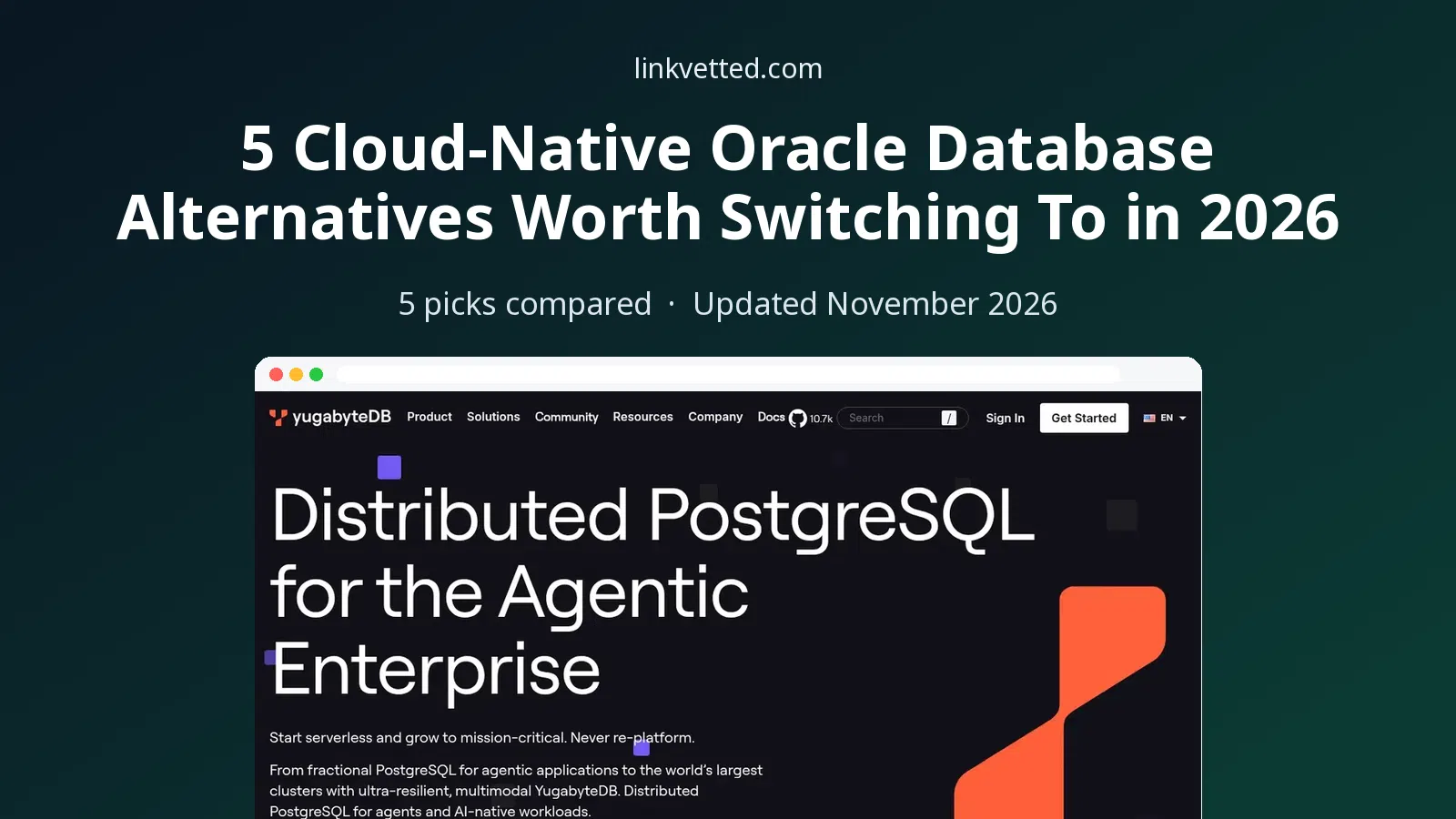
 YugabyteDB
PostgreSQL-compatible distributed deployments
Starts at$125 / vCPU / monthVisit yugabyte.comFull review - Great alternative
 Google BigQuery
Analytics and AI data product needs
Starts atSee websiteVisit cloud.google.comFull review - Also consider
 MongoDB Atlas
Document and AI application data
Starts atSee websiteVisit mongodb.comFull review
Direct answer
Start with YugabyteDB if you need PostgreSQL-compatible distributed deployments. Listed starting prices: YugabyteDB from $125 / vCPU / month. Google BigQuery is better for analytics and AI data platform needs, and MongoDB Atlas is better for document and AI application data. The other 2 tools in the list cover narrower or pricier cases.
TL;DR:
- This list starts with YugabyteDB, which is built for PostgreSQL-compatible distributed deployments.
- MongoDB Atlas stands alone as the one tool in this list with a free plan.
- Google Cloud Spanner suits always-on globally distributed relational workloads.
- YugabyteDB is the lowest-priced starter here at $125 / vCPU / month.
Last checked November 2026. Prices and plan details were read from the vendors' own pages in November 2026; vendors change plans often, so confirm the current price on the vendor site before you buy.
Quick comparison
| Tool | Best for | Starts at | Free plan? | |
|---|---|---|---|---|
| YugabyteDB | PostgreSQL-compatible distributed deployments | $125 / vCPU / month | Free trial | Visit |
| Google BigQuery | Analytics and AI data product needs | See website | Not stated | Visit |
| MongoDB Atlas | Document and AI application data | See website | Yes | Visit |
 CockroachDB | Resilient distributed SQL across regions | See website | Free trial | Visit |
 Google Cloud Spanner | Always-on globally distributed relational workloads | See website | Not stated | Visit |
The 5 tools in detail
LinkVetted compared 5 tools for Cloud-Native Oracle Database. The goal is a practical shortlist: published prices, free plan facts, best-fit use cases and honest limits for every entry.
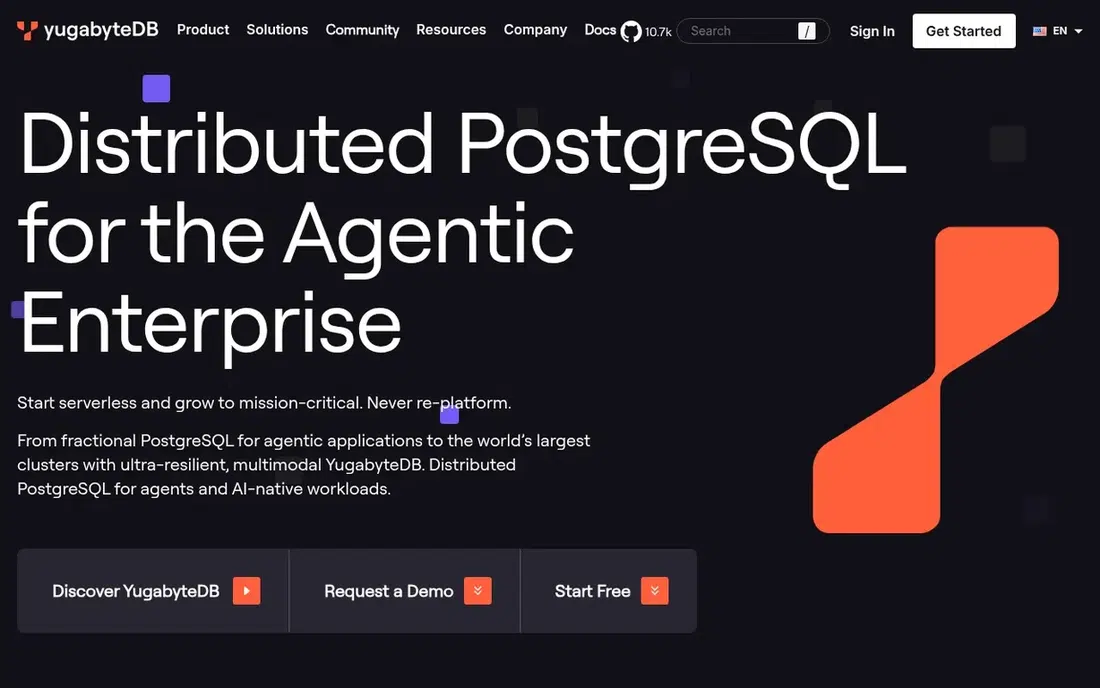
In short, YugabyteDB is for PostgreSQL-compatible distributed deployments. YugabyteDB is presented as an AI-native, distributed, PostgreSQL-compatible database for agents and AI-native workloads. In daily use, the vendor says teams can start serverless and grow to mission-critical use without re-platforming.
Trade-offs to know: Distributed tuning takes effort.
That makes it appealing to organizations already invested in PostgreSQL tooling and skills who want horizontal scale and resilience without abandoning familiar interfaces. Beyond that, choose it when PostgreSQL familiarity is a priority and you can absorb some operational complexity in exchange for scale. On top of that, distributed tuning also demands more attention than a single-node setup. YugabyteDB starts at: $125 / vCPU / month. Trial and free access: Free trial.
- PostgreSQL compatibility
- Serverless start with room to grow
- Compatibility gaps can appear in edge cases
Google BigQuery targets analytics and AI data product needs. Organizations consolidating warehouses and AI workloads in Google Cloud will find it a natural centerpiece. Reach for it when analytical scale and integrated AI tooling are the goal, and keep transactional systems elsewhere.
Worth adding: BigQuery is not made for high-volume transactional workloads, so it complements instead of replaces an operational database. Its consumption-based query model also rewards teams that monitor usage carefully. Check the vendor site for Google BigQuery pricing; none is listed in this comparison. Trial and free access: Not stated.
Trade-offs to know: Not designed for OLTP transactions.
- Serverless analytical model
- Automates the data life cycle
- Query costs need active monitoring
Pick MongoDB Atlas if this describes you: document and AI application data. Teams with heavy transactional SQL dependencies may prefer a distributed relational engine instead.
Pricing for MongoDB Atlas is not stated here, so ask the vendor for current figures. MongoDB Atlas offers a free plan.
Watch-outs: Document model differs from relational SQL.
- Run anywhere managed product
- Live data plus intelligent retrieval
- Migration from Oracle needs schema rework
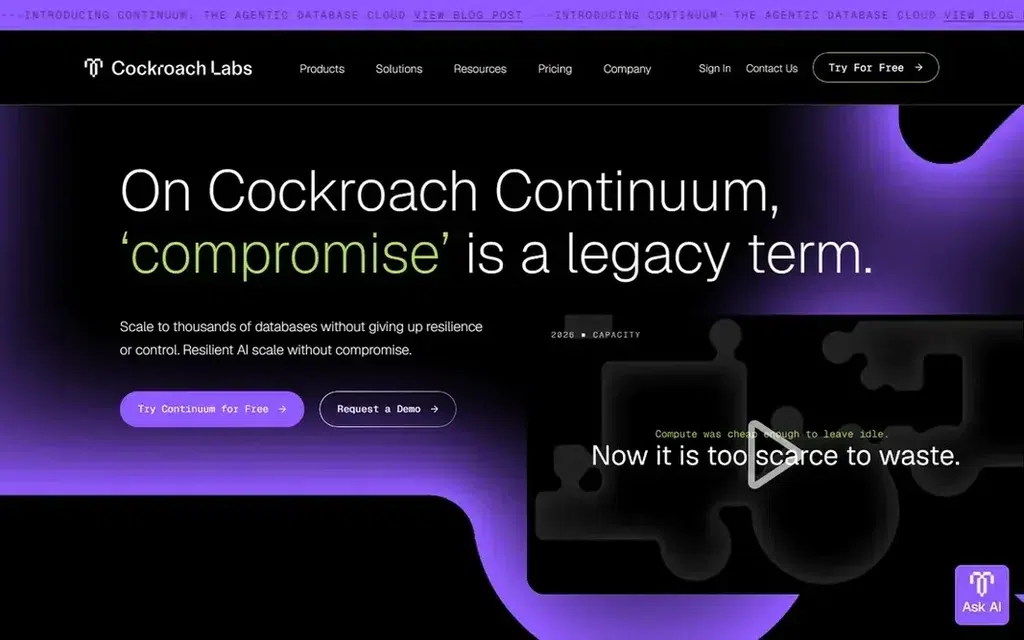
CockroachDB serves resilient distributed SQL across regions. Workloads that stay in one region and modest in size may not need its resilience machinery. Beyond that, pick it when uptime across locations is a core requirement instead of an afterthought.
Limits to weigh: Feature set differs from legacy engines.
Also, the vendor also references Cockroach Continuum, an agentic distributed cloud database. As for the details, the distributed design introduces a ramp-up time, and behavior can differ from what teams expect from a legacy relational engine. CockroachDB does not show a starting price in this comparison, so check the vendor site for current pricing. Free access: Free trial.
- Smooth horizontal scaling
- Global deployment support
- Distributed model brings operational learning
Google Cloud Spanner
Best for: Always-on globally distributed relational workloads
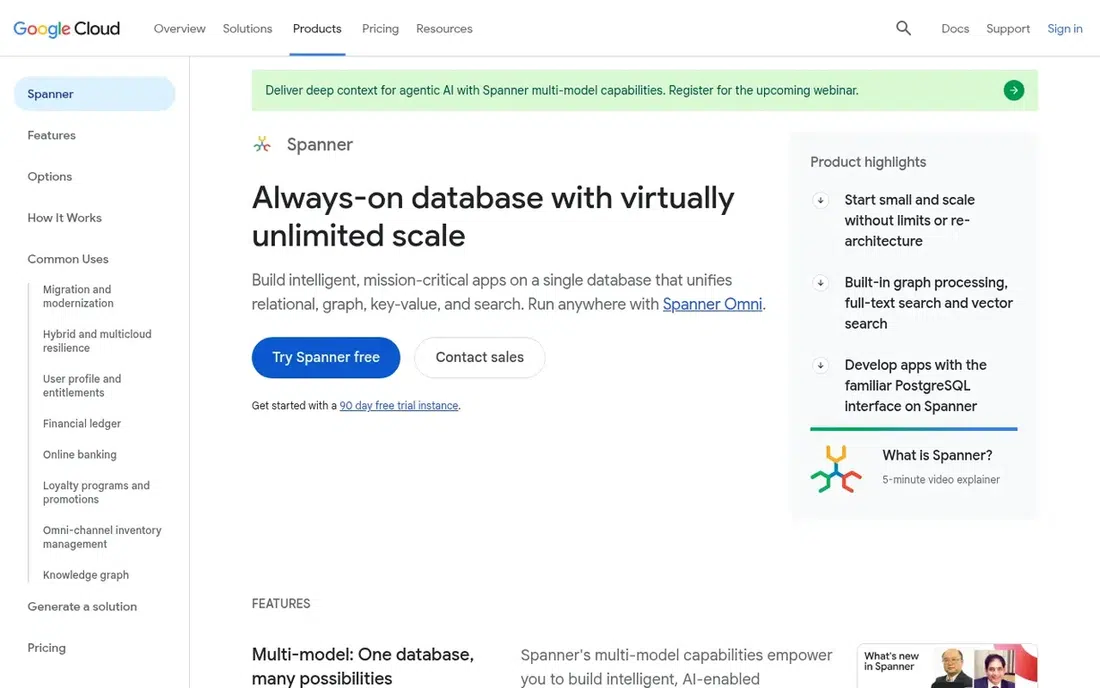
Google Cloud Spanner is built with always-on globally distributed relational workloads in mind. Consider it when global scale and uninterrupted availability matter more than portability. Google Cloud Spanner is a completely managed database that brings relational, graph, key value and search models together in a single system.
Its homepage emphasizes always-on operation with no maintenance windows, so applications keep running during scaling or upkeep. Spanner is tightly tied to Google Cloud, so organizations running primarily on another cloud may find it a poor fit. Its distributed design also brings conceptual overhead for small, single-region applications that a more straightforward managed relational database could deal with. No starting price is listed for Google Cloud Spanner here; confirm pricing on the vendor site. Free access: Not stated.
Honest limits: Deep Google Cloud coupling.
- Virtually unlimited scale
- Key value and search
- Complicated for straightforward single-region apps
How we chose
Questions to settle before buying
- Confirm the entry price on the vendor page. For Google BigQuery, MongoDB Atlas, CockroachDB and Google Cloud Spanner that means a quote rather than a fixed price.
- Look at the free plan from MongoDB Atlas closely: its caps decide whether it is usable for real work.
- Take the trial from YugabyteDB and CockroachDB and push a live task through it before you pay.
- Read the limits listed for YugabyteDB first: compatibility gaps can appear in edge cases.
- Ask whether Google BigQuery integrates with your current software, and whether that comes standard or as an add-on.
- Find out whether the entry plan of CockroachDB covers your must-haves or only a trimmed-down version.
FAQ
How do I evaluate compatibility before migrating off Oracle?
Inventory your schemas, stored procedures and application queries, then map each against the target engine's documented support. Pay attention to extensions, data types and transaction semantics.
Which options for Cloud-Native Oracle Database have a free plan?
MongoDB Atlas is the only tool in this list with a free plan. Free plans usually cap users, projects or features, so check the limits on the vendor page. Several others offer a trial instead.
Can I try these tools before paying?
Often, yes. MongoDB Atlas has a free plan and YugabyteDB and CockroachDB offer a free trial. Use your own data and a real task during the test, and check what the free tier or trial limits before you rely on it.
How are the tools for Cloud-Native Oracle Database ordered?
The order follows typical fit for Cloud-Native Oracle Database, with YugabyteDB first and Google Cloud Spanner last, then price clarity and free access. It is editorial judgement, not a score, so another team could rank the tools differently.
What is the cheapest option for Cloud-Native Oracle Database in this list?
On published monthly entry prices, YugabyteDB is the lowest here at $125 / vCPU / month. Entry price is only part of the cost, because seats, add-ons and billing terms can change the total.
Sources
- https://www.yugabyte.com
- https://cloud.google.com/bigquery
- https://www.mongodb.com/atlas
- https://www.cockroachlabs.com
- https://cloud.google.com/spanner