5 Cloud Platform As a Service Software for Enterprise Worth Shortlisting in 2026
Best cloud platform as a service software for enterprise in 2026: 5 contenders with entry costs and free tiers. Every tool lists pros and cons. See which fits.
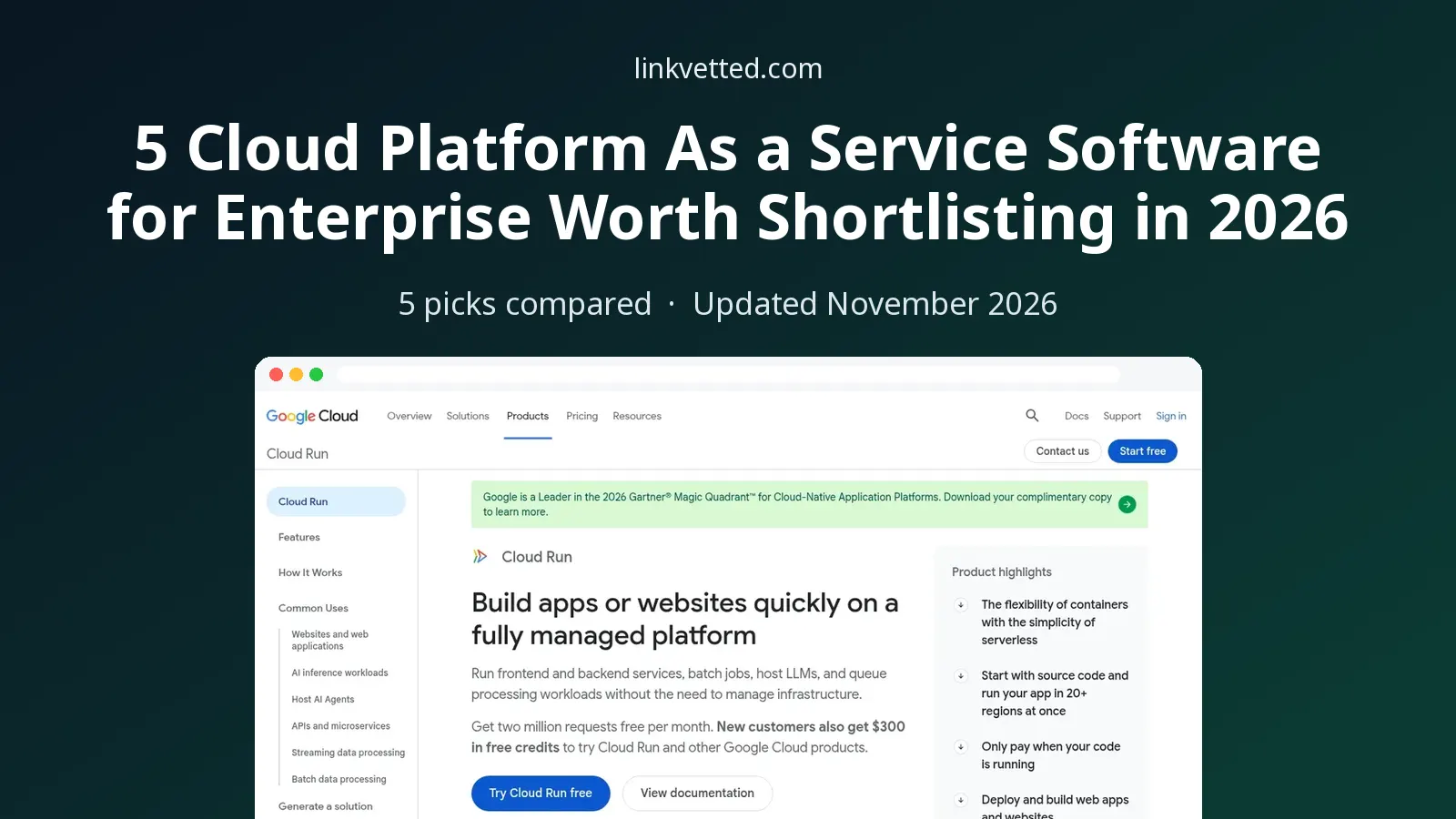
- Editor's choice
 Google Cloud Run
Containerized apps in any language
Starts atSee websiteVisit cloud.google.comFull review - Great alternative
 IBM Cloud
Mixed infrastructure and development services
Starts atSee websiteVisit ibm.comFull review - Also consider
 Heroku
Developer-friendly managed app hosting
Starts at$5 per monthVisit heroku.comFull review
Direct answer
For Containerized apps in any language, Google Cloud Run is where this list starts. Listed starting prices: Heroku from $5 per month. Alternatives: IBM Cloud for mixed infrastructure and development services, and Heroku for developer-friendly managed app hosting. All 5 tools are compared below on price, free plan and limits.
TL;DR:
- Top of the list is Google Cloud Run, which targets Containerized apps in any language.
- Starting prices begin at $5 per month with Heroku.
- Red Hat OpenShift fits Kubernetes-based application modernization.
- Google Cloud Run, Red Hat OpenShift and the 3 others all need a premium plan or a trial, since no free plan is listed.
- Microsoft Azure App Service comes with a trade-off: deep features assume Azure familiarity.
Last checked November 2026. Prices and plan details were read from the vendors' own pages in November 2026; vendors change plans often, so confirm the current price on the vendor site before you buy.
Quick comparison
| Tool | Best for | Starts at | Free plan? | |
|---|---|---|---|---|
| Google Cloud Run | Containerized apps in any language | See website | Not stated | Visit |
| IBM Cloud | Mixed infrastructure and development services | See website | Free trial | Visit |
| Heroku | Developer-friendly managed app hosting | $5 per month | No | Visit |
| Microsoft Azure App Service | Managed web apps and APIs on Azure | See website | Not stated | Visit |
 Red Hat OpenShift | Kubernetes-based application modernization | See website | Not stated | Visit |
The best cloud platform as a service software for enterprise
Short on time? The summary and table above give the quick view of 5 tools for cloud platform as a service software for enterprise, and the profiles that follow give the detail behind each entry.
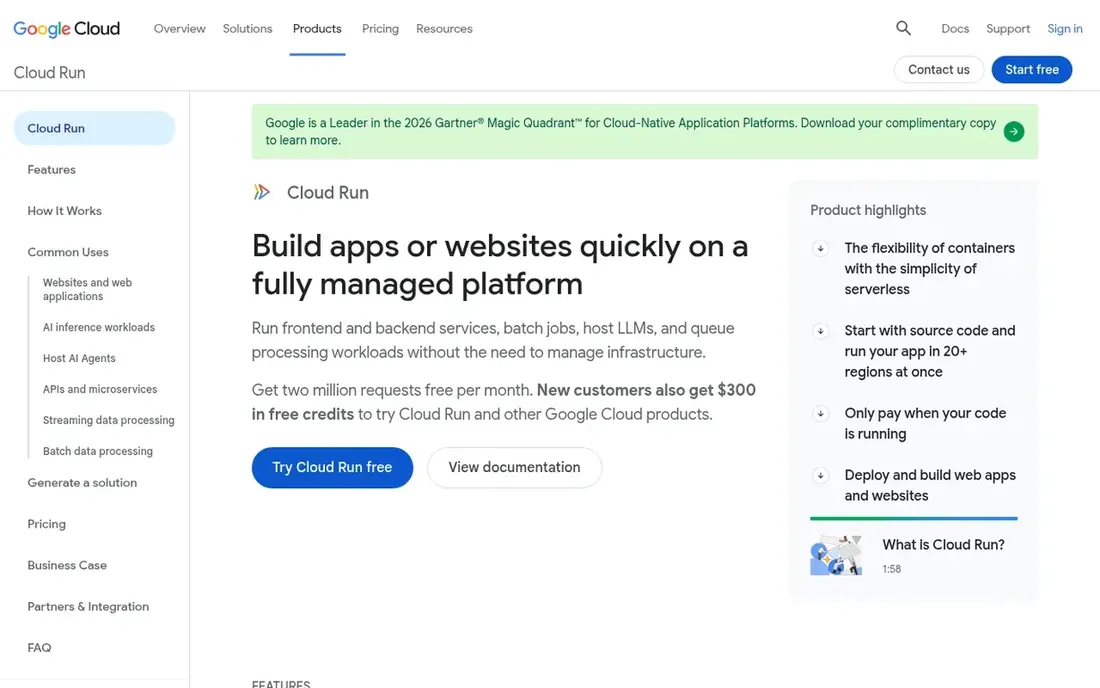
In short, Google Cloud Run is for Containerized apps in any language. Google Cloud Run lets teams build and deploy scalable containerized applications written in languages like Go, Python, Java, Node.js,.NET and Ruby on a completely managed product.
Honest limits: Less suited to traditional VM-style hosting.
Where it shines: Completely managed. Also, the container-centric model means teams without container experience face a ramp-up time, and some legacy application patterns map less cleanly. In practice, pick a broader application system when you need a more traditional hosting abstraction. Google Cloud Run shows no starting price here, so confirm the cost on the vendor site. Trial and free access: Not stated.
- Runs containers written in numerous languages
- Decent fit for container-first teams
- Container knowledge is expected
IBM Cloud is a good fit for mixed infrastructure and development services. It suits enterprises, often in regulated or hybrid settings, that want infrastructure adaptability alongside development tooling from a single vendor.
No starting price is listed for IBM Cloud here; confirm pricing on the vendor site. On free options: Free trial.
The main drawbacks: Service selection can take effort.
- Broad range of business services
- Wide infrastructure choices
- Portfolio breadth needs careful scoping
Choose Heroku for developer-friendly managed app hosting. The managed model trades infrastructure control for convenience, which can limit highly customized environments.
What to check first: Less control over infrastructure.
Reasons to shortlist it: Completely managed app hosting. It fits teams that prioritize a straightforward developer workflow and want to avoid managing servers straight. Heroku cost at the entry level: $5 per month. Heroku does not include a free plan.
- Long-standing developer product
- Deploy and scale flow
- Best fit for standard app patterns
Microsoft Azure App Service
Best for: Managed web apps and APIs on Azure
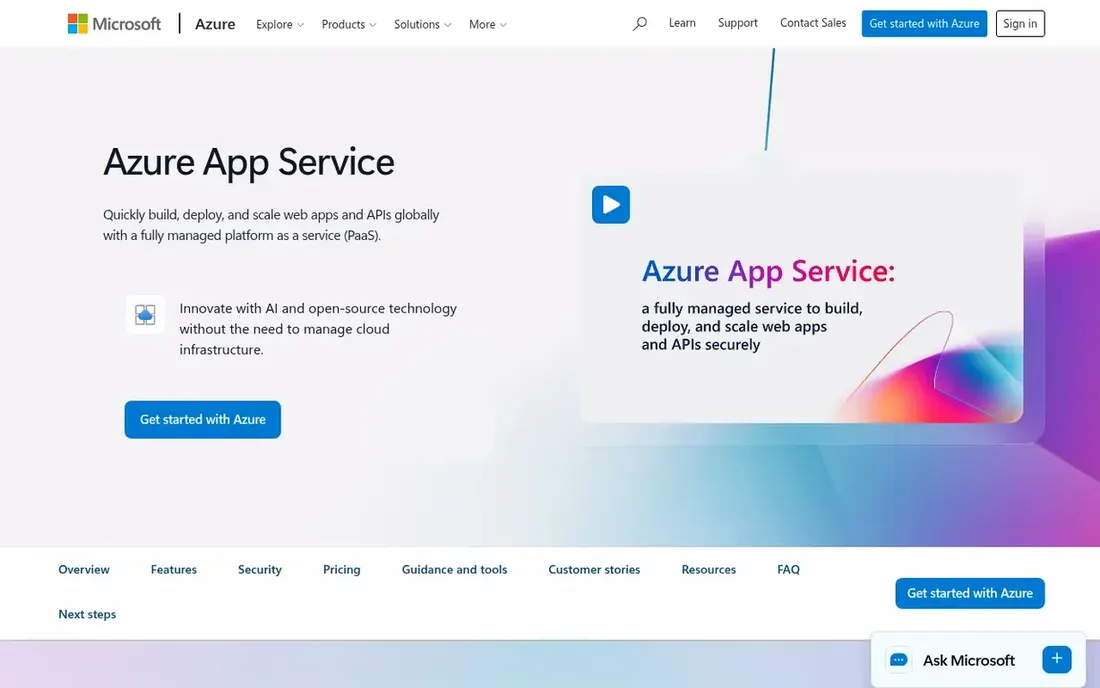
Microsoft Azure App Service is built with managed web apps and APIs on Azure in mind. Its value relies on comfort with the Azure ecosystem; teams standardized elsewhere may find the surrounding tooling heavier than needed.
Trade-offs to know: Less natural for rival cloud stacks.
From a buyer's view, consider alternatives when portability across clouds or pure container control is the priority. No starting price is listed for Microsoft Azure App Service here; confirm pricing on the vendor site. Free options: Not stated.
- Capable fit for Microsoft-centric estates
- Global scale with AI-ready positioning
- Deep features assume Azure familiarity
Red Hat OpenShift serves Kubernetes-based application modernization. The product's breadth assumes teams have or will build Kubernetes competence, and smaller groups may find it heavy.
Points against: Product breadth can add complexity.
More straightforward managed PaaS choices may suit teams that do not need cluster-level control. Check the vendor site for Red Hat OpenShift pricing; none is listed in this comparison. As for free access: Not stated.
- Supports modernization and new builds
- Aims to accelerate AI adoption
- Kubernetes skills are important
How we compared the tools
Selection started from tools commonly considered for cloud platform as a service software for enterprise, then narrowed to 5 that have clear pricing information or a clear quote process. Prices and plan limits come from vendor pages and can change, so confirm them on the vendor site before you buy. Position on the page reflects fit for a typical buyer first, with price clarity and free access breaking ties. Treat it as a guide, not a ruling.
Questions to settle before buying
- Get a written quote from Google Cloud Run, IBM Cloud, Microsoft Azure App Service and Red Hat OpenShift; the list shows no starting price for them.
- Use real work to test the free trial from IBM Cloud, rather than a demo project.
- Read the limits listed for Google Cloud Run first: container knowledge is expected.
- Check the integration list for Google Cloud Run against the tools you run today, and note which ones need a higher plan.
- Total up the real monthly cost of Red Hat OpenShift, including add-ons, extra users and usage-based fees.
FAQ
What is the cheapest option for cloud platform as a service software for enterprise in this list?
On published monthly entry prices, Heroku is the lowest here at $5 per month. Entry price is only part of the cost, because seats, add-ons and billing terms can change the total.
Do these tools publish their prices?
Not all of them. Google Cloud Run, IBM Cloud, Microsoft Azure App Service and Red Hat OpenShift publish no starting price, so expect a quote request for those. The rest, Heroku included, show a starting price, though seats and billing terms still change the final cost.
Can I try these tools before paying?
Often, yes. IBM Cloud offers a free trial. Use your own data and a real task during the test, and check what the free tier or trial limits before you rely on it.
Is Google Cloud Run the right pick for everyone comparing cloud platform as a service software for enterprise?
No single tool suits every team. Google Cloud Run comes first because it fits Containerized apps in any language, while IBM Cloud suits mixed infrastructure and development services and Heroku suits developer-friendly managed app hosting. Match the tool to your own size, budget and workflow before deciding.
How do I evaluate enterprise fit before committing?
Start with your runtime needs, container strategy and integration requirements, then confirm regional availability and governance features on vendor pages. A short pilot with a representative workload reveals operational fit better than feature lists alone.
Sources
- https://cloud.google.com/run
- https://www.ibm.com/cloud
- https://www.heroku.com
- https://azure.microsoft.com/en-us/products/app-service
- https://www.redhat.com/en/technologies/cloud-computing/openshift