Choosing XML Databases for Startups in 2026: 6 Options Compared
Best XML databases for startups: 6 contenders ranked by fit, with entry costs and free tiers. The weak spots sit next to the strengths. Refreshed for 2026.
- Editor's choiceAmazon DocumentDB
Managed MongoDB-compatible document database
Starts atSee websiteVisit aws.amazon.comFull review - Great alternativeBaseX
Light open source XML processing
Starts atSee websiteVisit basex.orgFull review - Also consider
 Microsoft SQL Server
Enterprise data with XML support
Starts atSee websiteVisit microsoft.comFull review
Direct answer
Amazon DocumentDB is the first pick on this list for managed MongoDB-compatible document database. Listed starting prices: Couchbase from $0.15 per hour per node. If your case is different, BaseX suits light open source XML processing and Microsoft SQL Server suits enterprise data with XML support. The other 3 tools in the list cover narrower or pricier cases.
TL;DR:
- Top of the list is Amazon DocumentDB, which targets managed MongoDB-compatible document database.
- Pricing for Amazon DocumentDB, BaseX, Microsoft SQL Server and others is quote-based, which adds a sales step before you can compare cost.
- Only 3 of the 6 tools have a free plan (Amazon DocumentDB, Couchbase, MongoDB), so check the caps.
- Before buying Microsoft SQL Server, weigh this: licensing costs can be high.
Last checked November 2026. Prices and plan details were read from the vendors' own pages in November 2026; vendors change plans often, so confirm the current price on the vendor site before you buy.
Quick comparison
| Tool | Best for | Starts at | Free plan? | |
|---|---|---|---|---|
| Amazon DocumentDB | Managed MongoDB-compatible document database | See website | Yes | Visit |
| BaseX | Light open source XML processing | See website | Not stated | Visit |
| Microsoft SQL Server | Enterprise data with XML support | See website | Not stated | Visit |
| Couchbase | Operational data product with sync | $0.15 per hour per node | Yes | Visit |
| MarkLogic | Complicated multi-model data challenges | See website | Free trial | Visit |
 MongoDB | Adaptable document database for AI era | See website | Yes | Visit |
The 6 tools in detail
This LinkVetted guide covers 6 XML databases for startups. Each profile lists a starting price, free plan details, strengths and drawbacks, so you can drop poor fits quickly.
Amazon DocumentDB
Best for: Managed MongoDB-compatible document database
In short, Amazon DocumentDB is for managed MongoDB-compatible document database. Amazon DocumentDB is a serverless, completely managed, MongoDB API-compatible document database service. It permits startups to run document workloads without managing infrastructure, using the AWS ecosystem for scalability and reliability.
Trade-offs to know: Restricted to AWS ecosystem.
It is compatible with MongoDB tools and drivers, easing migration for teams familiar with MongoDB. Like MongoDB, DocumentDB is not aimed at native XML storage, so XML data would need conversion. It is also tied to AWS, which may be a limitation for multi-cloud strategies. Amazon DocumentDB shows no starting price here, so confirm the cost on the vendor site. Free access exists with Amazon DocumentDB.
- Completely managed service
- MongoDB API-compatible
- Not native XML storage
BaseX
Best for: Light open source XML processing
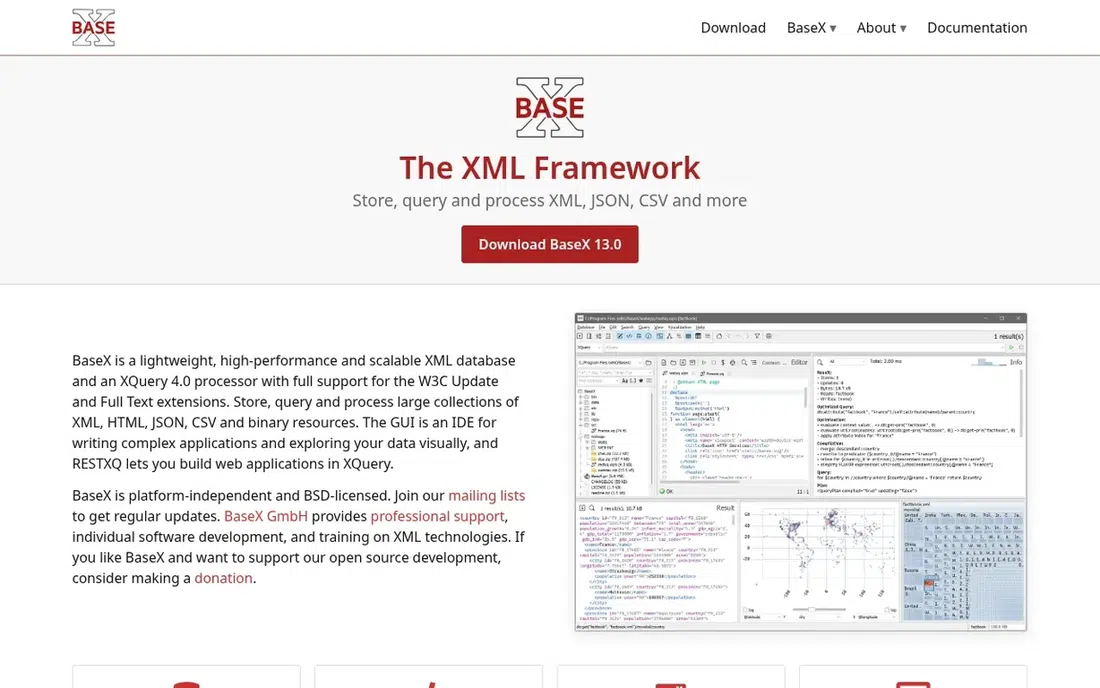
BaseX is a good fit for light open source XML processing. BaseX may not offer the advanced scaling or enterprise features of commercial systems. For everyday use, startups anticipating rapid growth or requiring deep multi-model support might outgrow it.
On top of that, BaseX is an open source XML framework that comes with a XML database and XQuery 4.0 processor. It can store, query, and process XML, JSON, CSV, and more, with a focus on speed and a light footprint. This makes it a solid fit for startups that require a straightforward, economical option for XML data without heavy infrastructure. Pricing for BaseX is not stated here, so ask the vendor for current figures. Trial and free access: Not stated.
What to check first: May lack advanced scaling.
- XQuery 4.0 processor
- Open source and light
- Restricted enterprise features
Pick Microsoft SQL Server if this describes you: enterprise data with XML support. It comes with XML data type support and query capabilities, making it a viable choice for startups that require a relational database with XML handling and advanced analytics.
Where it falls short: Licensing costs can be high.
As for the details, startups with XML-centric workloads might find dedicated XML databases like MarkLogic or BaseX more efficient. Microsoft SQL Server does not show a starting price in this comparison, so check the vendor site for current pricing. Trial and free access: Not stated.
- Analytics and AI integration
- Developer-first features
- Primarily relational model
Couchbase
Best for: Operational data product with sync
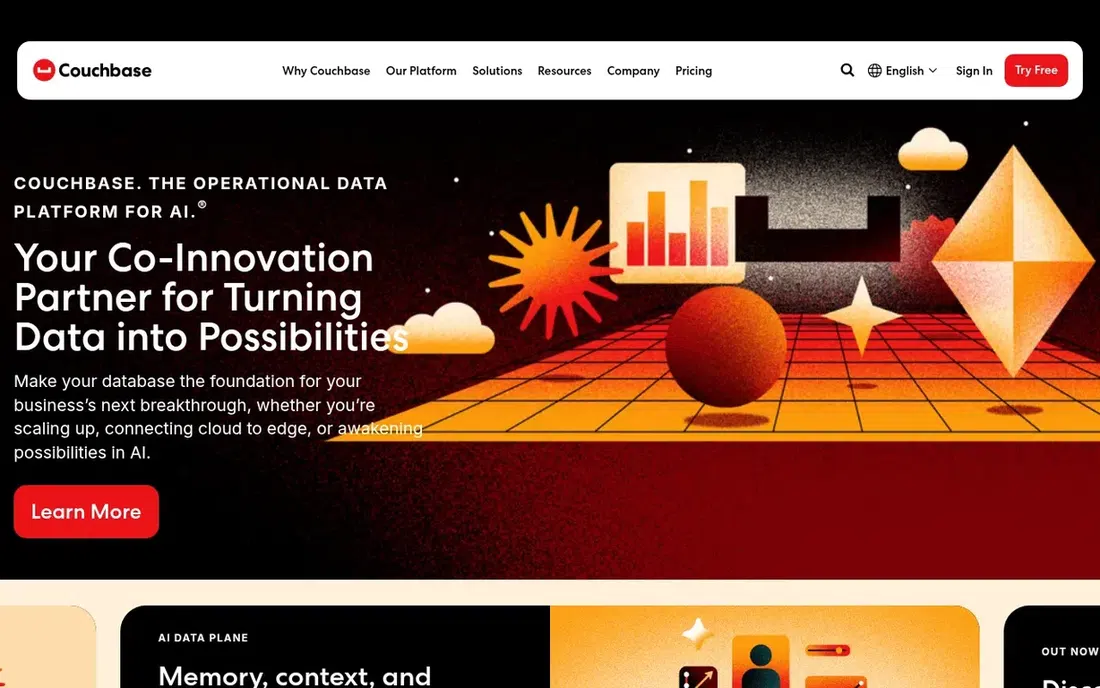
In short, Couchbase is for operational data product with sync. It is aimed at demanding operational workloads and can deal with JSON documents, making it a good match for startups that require a scalable, high-performance database with synchronization across environments.
More specifically, consider Couchbase if you need a solid operational product with sync and AI capabilities. Starting cost for Couchbase: $0.15 per hour per node. Free access exists with Couchbase.
Where it is weaker: May be complex for straightforward XML needs.
- Sub-millisecond performance
- Cloud-to-edge sync
- Needs operational expertise
MarkLogic
Best for: Complicated multi-model data challenges
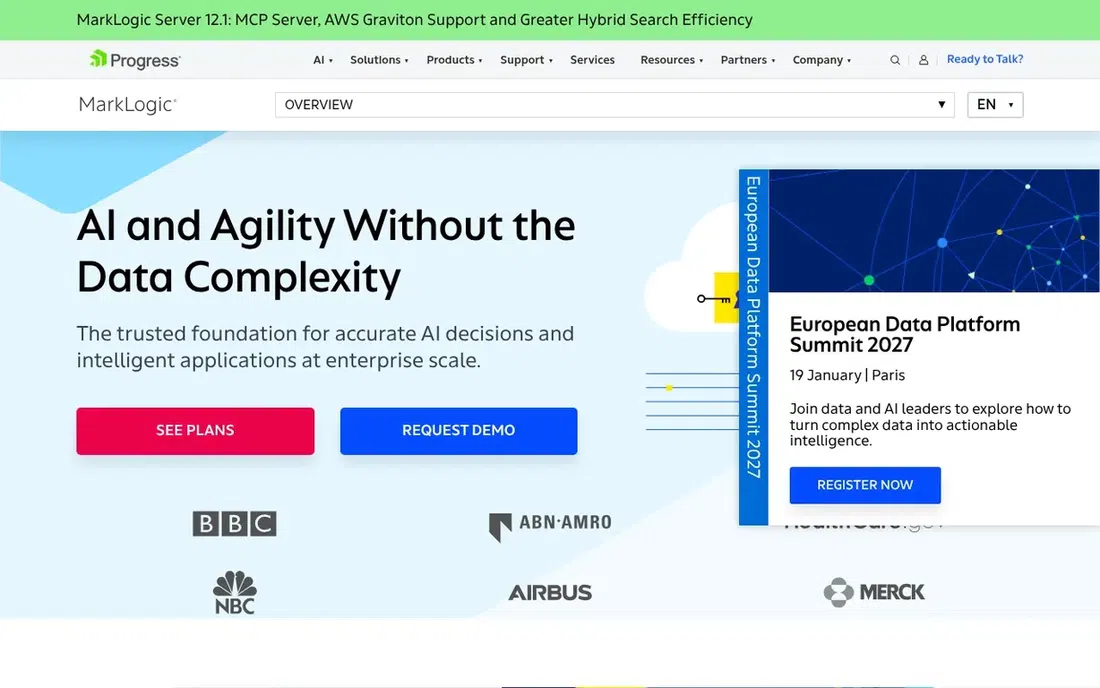
For complicated multi-model data challenges, MarkLogic is a natural candidate. MarkLogic is a multi-model data management system meant to solve complicated data challenges and unlock more value from data. It supports AI-ready workloads and adaptable data modeling, making it right for startups with diverse or evolving data requirements.
In practice, startups with restricted technical resources might find it overkill. The system is made for organizations that require to integrate several data types and query them efficiently. However, MarkLogic may involve a steeper ramp-up time and higher operational complexity than more straightforward XML databases. MarkLogic shows no starting price here, so confirm the cost on the vendor site. Free plan details: Free trial.
Limits to weigh: May need specialized skills.
- Deals with complicated data challenges
- Adaptable multi-model system
- Potentially complicated setup
MongoDB works best for flexible document database for AI era. MongoDB is an intelligent data system for the AI era, meant to help teams get ideas to market quicker with flexible, live data that scales across any cloud. If native XML support is critical, consider MarkLogic or BaseX instead.
On top of that, MongoDB does not natively store or query XML, so startups with heavy XML workloads may have to transform data or use supplementary tools. It shines for general-purpose document storage and scalability. This comparison lists no price for MongoDB; ask the vendor. MongoDB includes a free tier.
Downsides: May need extra tools for XML. Where it shines: Scales across any cloud.
- Adaptable
- Live data
- Document model, not native XML
How we compared the tools
Selection started from tools commonly considered for XML databases for startups, then narrowed to 6 that have clear pricing information or a clear quote process. Where a vendor does not publish a price, the entry says quote. Where a price depends on seats or billing term, the entry says so. We ordered the tools by general fit, then by how clearly pricing is shown, then by free access. A buyer with unusual needs may reorder them.
Questions to settle before buying
- Ask Amazon DocumentDB, BaseX, Microsoft SQL Server and others for a written quote, since no starting price is shown.
- Read the fine print on the free plans from Amazon DocumentDB, Couchbase and MongoDB; seat, project and feature caps differ.
- Take the trial from MarkLogic and push a live task through it before you pay.
- Read the limits listed for Amazon DocumentDB first: not native XML storage.
- Look at the renewal terms for Amazon DocumentDB: auto-renewal, notice periods and price changes can matter more than the first-year price.
- See whether Microsoft SQL Server offers onboarding or training, and whether it is included in the price.
FAQ
Which options for XML databases for startups have a free plan?
On this list, Amazon DocumentDB, Couchbase and MongoDB include a free plan. Caps on seats, usage or features are common, so test the free plan against your real workload. One other tool offers a trial instead.
What is a XML database and why would a startup use one?
A XML database is meant to store and query XML data efficiently, commonly using XQuery. Startups might use one to handle semi-structured data, integrate with XML-based systems, or deal with document-centric workloads without forcing data into a relational model.
Can I try these tools before paying?
Often, yes. Amazon DocumentDB, Couchbase and MongoDB have a free plan and MarkLogic offers a free trial. Use your own data and a real task during the test, and check what the free tier or trial limits before you rely on it.
How are the tools for XML databases for startups ordered?
Amazon DocumentDB sits first and MongoDB last because the order follows typical fit for XML databases for startups, then price clarity and free access. It is a judgement call, so read each profile for fit and limits.
Do these tools publish their prices?
Not all of them. Amazon DocumentDB, BaseX, Microsoft SQL Server and others publish no starting price, so expect a quote request for those. The rest, Couchbase included, show a starting price, though seats and billing terms still change the final cost.
Sources
- https://aws.amazon.com/documentdb
- https://basex.org
- https://www.microsoft.com/sql-server
- https://www.couchbase.com
- https://www.marklogic.com
- https://www.mongodb.com