Best SaaS Database Management Systems in 2026: Prices, Free Plans and 5 Picks
5 best SaaS database management systems, compared on pricing, free plans and best-fit use. Strengths and weak spots are spelled out. Jump to the table.
- Editor's choice
 Amazon RDS
Managed relational databases on AWS
Starts atPricing on requestVisit aws.amazon.comFull review - Great alternative
 MongoDB Atlas
Document database with global distribution
Starts atPricing on requestVisit mongodb.comFull review - Also consider
 SingleStore
Live transactions and analytics
Starts atPricing on requestVisit singlestore.comFull review
Direct answer
For managed relational databases on AWS, Amazon RDS is where this list starts. MongoDB Atlas fits document database with global distribution; SingleStore fits live transactions and analytics. Details and limits for the rest of the 5 tools are below. None of these vendors publish plan prices, so pricing is on request for every option.
TL;DR:
- Amazon RDS sits first on this list: managed relational databases on AWS.
- Free plans exist at 2 of 5 tools (Amazon RDS, MongoDB Atlas).
- Google BigQuery fits autonomous analytics and AI platform.
- Every tool from Amazon RDS to Google BigQuery works by quote, with no list price shown.
Last checked November 2026. Pricing on request: vendors did not publish plan prices when this guide was last checked (November 2026), so ask each vendor for a written quote.
Quick comparison
| Tool | Best for | Starts at | Free plan? | |
|---|---|---|---|---|
| Amazon RDS | Managed relational databases on AWS | Pricing on request | Yes | Visit |
| MongoDB Atlas | Document database with global distribution | Pricing on request | Yes | Visit |
| SingleStore | Live transactions and analytics | Pricing on request | Not stated | Visit |
| Microsoft Azure SQL Database | Completely managed relational database | Pricing on request | Not stated | Visit |
 Google BigQuery | Autonomous analytics and AI system | Pricing on request | Not stated | Visit |
The best SaaS database management systems
LinkVetted put together this guide to SaaS database management systems for readers who want a clear shortlist without reading every vendor page. It compares 5 tools on starting price, free plans, who each one suits and where each one falls short.
Amazon RDS is a good fit for managed relational databases on AWS. RDS is well-suited for teams that want a managed relational database without the operational overhead. As for the details, RDS may not be the best fit for applications requiring extreme scalability or custom configurations, as it abstracts away some control.
Drawbacks to consider: Restricted to AWS.
It is also AWS-specific, which can be a limitation for multi-cloud deployments. Amazon RDS is a completely managed, open source cloud database service that lets you to easily operate and scale your relational database of choice, including Amazon Aurora, PostgreSQL, MySQL, MariaDB, Oracle, and SQL Server. It manages routine tasks like backups, patching, and scaling, so you can focus on applications. This comparison lists no price for Amazon RDS; ask the vendor. You can start on Amazon RDS without paying.
- Supports several database engines
- Scalable and dependable
- Some engines have version constraints
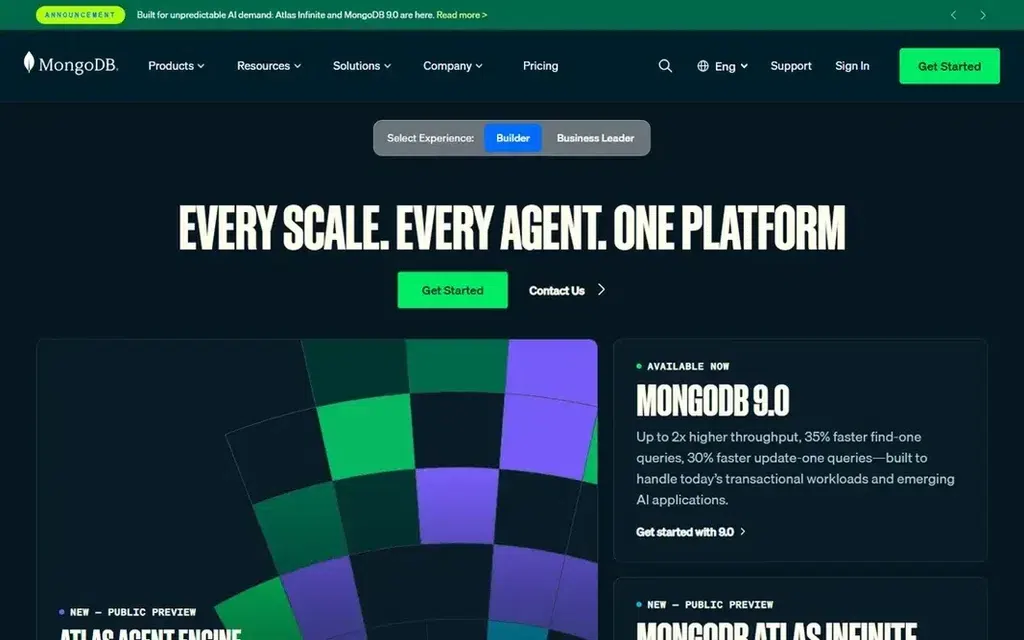
MongoDB Atlas is designed for document database with global distribution. MongoDB Atlas is a completely managed cloud database service for the MongoDB document database, offering live data, intelligent retrieval, and governed action. Beyond that, Atlas fits developers who require a modern, run-anywhere product for applications with rapidly evolving requirements.
Trade-offs to know: Can need NoSQL expertise.
In daily use, if you need a traditional relational database, consider Azure SQL Database or Amazon RDS. Atlas may not be right for applications requiring complicated multi-table transactions or strict relational integrity. MongoDB Atlas does not show a starting price in this comparison, so check the vendor site for current pricing. MongoDB Atlas includes a free tier.
- Run anywhere across clouds
- Managed service with automation
- Not well suited to complicated transactions
Pick SingleStore if this describes you: real-time transactions and analytics. It is made for workloads that need both high-speed transactions and live analytics, making it a good match for modern applications that demand low latency. SingleStore may not be as widely adopted as some traditional databases, which could affect community support and hiring.
It also needs careful tuning to achieve optimal performance for mixed workloads. More specifically, SingleStore suits teams looking to consolidate transactional and analytical processing in a single system. No starting price is listed for SingleStore here; confirm pricing on the vendor site. Trial and free access: Not stated.
Points against: Less established than some competitors.
- One engine for transactions and analytics
- Live reads and writes
- May need specialized tuning
Microsoft Azure SQL Database
Best for: Completely managed relational database
Microsoft Azure SQL Database is built with fully managed relational database in mind. If you need a database-agnostic option, consider Amazon RDS or MongoDB Atlas.
It is based on SQL Server and supports familiar T-SQL, making it a natural choice for organizations already using Microsoft technologies. No starting price is listed for Microsoft Azure SQL Database here; confirm pricing on the vendor site. Free options: Not stated.
Where it is weaker: Needs SQL Server knowledge.
- Completely managed with automation
- High performance and reliability
- Restricted to Azure cloud
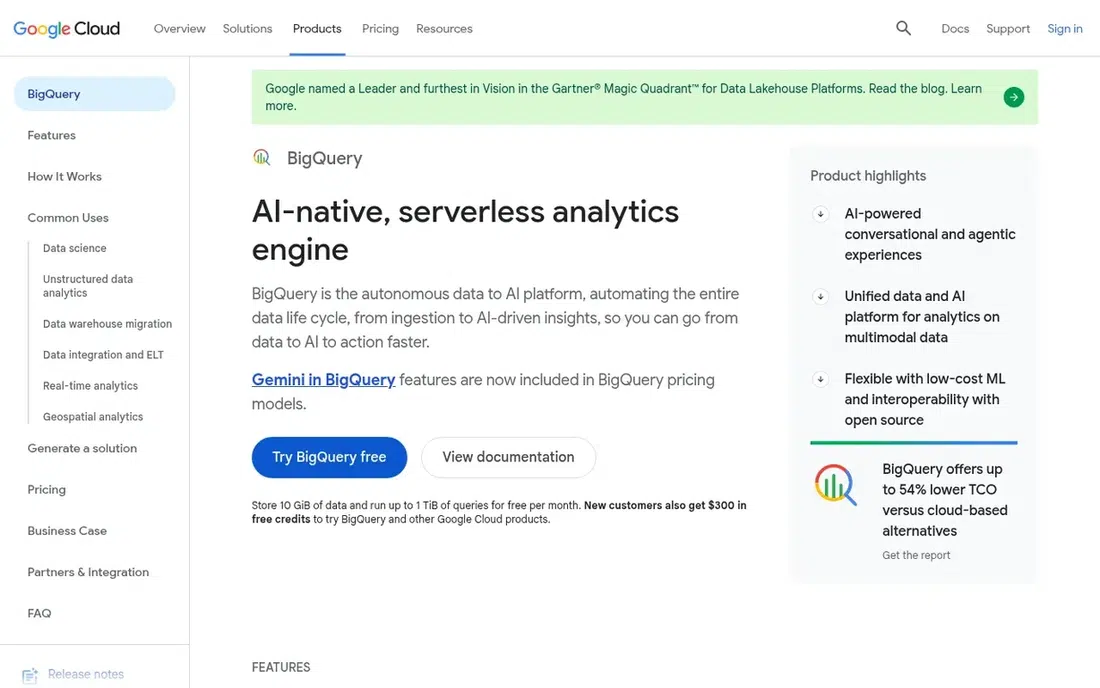
In short, Google BigQuery is for autonomous analytics and AI product. Google BigQuery is a completely managed, serverless data warehouse that automates the data life cycle, enabling you to move from data to AI to action rapidly. It is made for organizations that require to analyze large datasets without managing infrastructure, and it supports standard SQL for querying.
From a buyer's view, consider alternatives if you need solid relational features or are locked into another ecosystem. For everyday use, BigQuery suits teams looking for an autonomous data and AI product that scales automatically and plugs into other Google Cloud services. Even so, BigQuery may not be a strong match for transactional workloads or for teams already deeply invested in other cloud providers. Check the vendor site for Google BigQuery pricing; none is listed in this comparison. On free options: Not stated.
Trade-offs to know: Needs familiarity with Google Cloud.
- Links up with Google Cloud ecosystem
- Automates the whole data life cycle
- Can become expensive with heavy usage
How we chose
What to confirm before you sign up
- Request quotes from Amazon RDS, Google BigQuery and the others; the list shows no fixed prices.
- Read the fine print on the free plans from Amazon RDS and MongoDB Atlas; seat, project and feature caps differ.
- Read the limits listed for Amazon RDS first: restricted to AWS.
- Ask SingleStore whether prices are locked for the first term and what happens at renewal.
- Confirm the exact Microsoft Azure SQL Database plan that includes your must-have features.
FAQ
Can I try these options before paying?
Often, yes. Amazon RDS and MongoDB Atlas have a free plan. Use your own data and a real task during the test, and check what the free tier or trial limits before you rely on it. Prices, free plan details and limits for all 5 tools in this SaaS database management systems roundup sit on the individual cards above.
Which options for SaaS database management systems have a free plan?
Amazon RDS and MongoDB Atlas offer a free plan in this list. Free plans usually cap users, projects or features, so check the limits on the vendor page.
Is Amazon RDS the right pick for everyone comparing SaaS database management systems?
No single tool suits every team. Amazon RDS comes first because it fits managed relational databases on AWS, while MongoDB Atlas suits document database with global distribution and SingleStore suits real-time transactions and analytics. Match the tool to your own size, budget and workflow before deciding.
How are the tools for SaaS database management systems ordered?
Amazon RDS sits first and Google BigQuery last because the order follows typical fit for SaaS database management systems, then price clarity and free access. It is a judgement call, so read each profile for fit and limits.
What is a SaaS database management system?
A SaaS database management system is a cloud-based service that manages database operations like provisioning, scaling, and maintenance. It permits you to use databases without managing infrastructure, generally on a subscription basis.
Sources
- https://aws.amazon.com/rds
- https://www.mongodb.com/atlas
- https://www.singlestore.com
- https://azure.microsoft.com/en-us/products/azure-sql/database
- https://cloud.google.com/bigquery