Best Relational Databases for Enterprise (2026): 5 Picks Checked on Vendor Pages
Searching for the best relational databases for enterprise? Here are 5 options with prices and free plans. Trade-offs are spelled out for each entry. No hype.
- Editor's choice
 MySQL
Web applications and read-heavy workloads
Starts atPricing on requestVisit mysql.comFull review - Great alternative
 IBM Db2
Autonomous operations and hybrid cloud
Starts atPricing on requestVisit ibm.comFull review - Also consider
 Microsoft SQL Server
Microsoft ecosystem integration
Starts atPricing on requestVisit microsoft.comFull review
Direct answer
Start with MySQL if you need web applications and read-heavy workloads. IBM Db2 fits autonomous operations and hybrid cloud; Microsoft SQL Server fits Microsoft ecosystem integration. Free plan facts and limits for all 5 tools follow. None of these vendors publish plan prices, so pricing is on request for every option.
TL;DR:
- Top of the list is MySQL, which targets web applications and read-heavy workloads.
- A fair warning about Microsoft SQL Server: tied to Windows commonly.
- SAP HANA fits in-memory analytics and SAP integration.
- None of the 5 tools, from MySQL to SAP HANA, has a free plan, so budget for a subscription or use a trial.
- MySQL, SAP HANA and the 3 others all sell by quote; expect sales conversations before you see a price.
Last checked November 2026. Pricing on request: vendors did not publish plan prices when this guide was last checked (November 2026), so ask each vendor for a written quote.
Quick comparison
| Tool | Best for | Starts at | Free plan? | |
|---|---|---|---|---|
| MySQL | Web applications and read-heavy workloads | Pricing on request | Not stated | Visit |
| IBM Db2 | Autonomous operations and hybrid cloud | Pricing on request | Not stated | Visit |
| Microsoft SQL Server | Microsoft ecosystem integration | Pricing on request | Not stated | Visit |
 Oracle Database | AI-driven critical workloads | Pricing on request | Not stated | Visit |
| SAP HANA | In-memory analytics and SAP integration | Pricing on request | Not stated | Visit |
Tool-by-tool breakdown
Short on time? The summary and table above give the quick view of 5 tools for relational databases for enterprise, and the profiles that follow give the detail behind each entry.
Choose MySQL for web applications and read-heavy workloads. MySQL is a popular open source relational database management system known for its reliability and simplicity. It is often used for web applications and online transaction processing, and it benefits from a large community and extensive documentation.
The main drawbacks: Restricted advanced features.
Also, MySQL may lack some advanced features found in enterprise-grade databases, for example sophisticated analytics or high-availability clustering. It is less a good match for complicated analytical workloads. Consider other choices if you need advanced features or dedicated enterprise support. MySQL shows no starting price here, so confirm the cost on the vendor site. On free options: Not stated.
- Simple to start
- Open source
- Less solid for complicated analytics
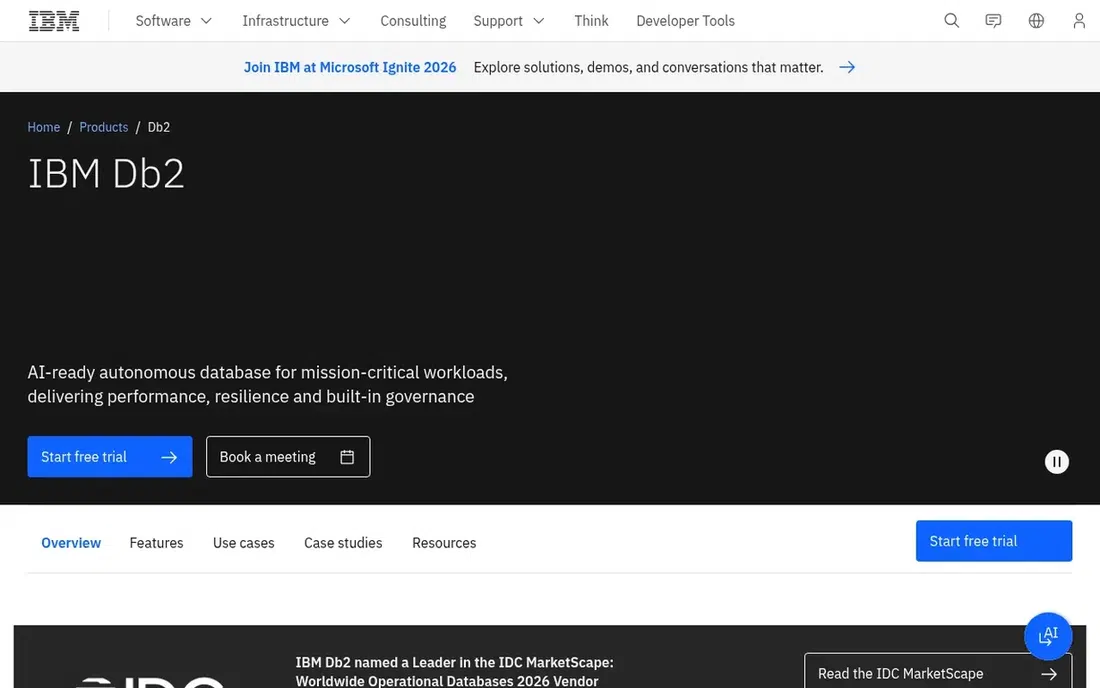
IBM Db2 is built with autonomous operations and hybrid cloud in mind. It is built to ease operations and protect critical data, making it right for enterprises that require dependable performance across diverse environments.
This comparison lists no price for IBM Db2; ask the vendor. Free options: Not stated.
Watch-outs: Complicated tuning.
- Hybrid cloud support
- AI-powered automation
- Higher cost
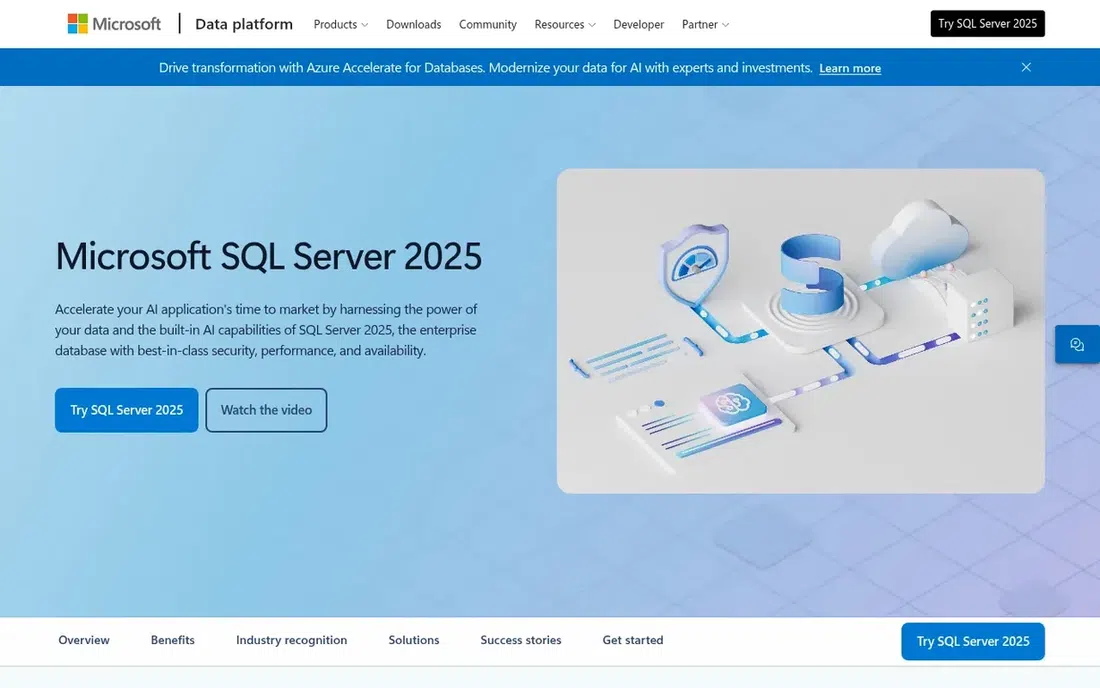
Microsoft SQL Server is aimed squarely at Microsoft ecosystem integration. Microsoft SQL Server is a relational database management system that integrates closely with Microsoft's ecosystem, including Azure and Windows Server. It supplies developer-first features and built-in analytics and AI capabilities, making it a solid choice for organizations already using Microsoft technologies.
Watch-outs: Licensing costs.
Licensing can be costly, particularly for large-scale deployments. SQL Server is most often deployed on Windows, which may limit adaptability for Linux-centric teams. No starting price is listed for Microsoft SQL Server here; confirm pricing on the vendor site. Free options: Not stated.
- AI and analytics integration
- Developer-friendly tools
- Tied to Windows frequently
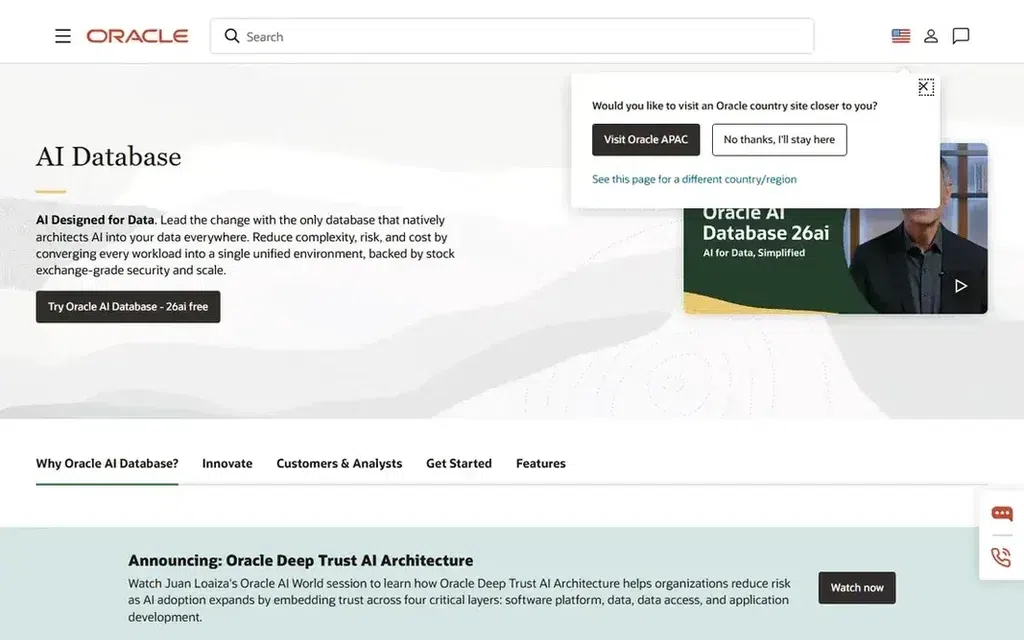
Oracle Database works best for AI-driven critical workloads. It supports many different workloads, from transaction processing to analytics, and contains AI capabilities to enhance data operations.
Trade-offs to know: Complicated licensing.
Oracle Database can be complicated to administer and may need specialized skills. As for the details, licensing can be expensive and intricate, making it less a good match for smaller budgets. Oracle Database shows no starting price here, so confirm the cost on the vendor site. On free options: Not stated.
- Proven reliability
- AI integration
- Steep ramp-up time
SAP HANA
Best for: In-memory analytics and SAP integration
Where SAP HANA fits: in-memory analytics and SAP integration. It is optimized for in-memory processing and integrates tightly with SAP's application suite, making it a strong match for organizations heavily invested in SAP.
It may not be economical for general-purpose database needs. SAP HANA shows no starting price here, so confirm the cost on the vendor site. Free access: Not stated.
Points against: High cost.
- Integrated with SAP
- High-speed analytics
- Complex implementation
How these tools were picked
The comparison looks at four things: starting price, free access, how well the feature set matches relational databases for enterprise, and the main limit of each tool. Treat prices as a snapshot: vendors change plans often, so check the vendor site for the figure that applies today. The order reflects how well each tool fits the most common buying scenario for relational databases for enterprise, then price clarity, then free plan access. It is a starting point, not a verdict.
Before you commit
- Confirm the entry price with every vendor: no tool from MySQL to SAP HANA shows a fixed starting price.
- Read the limits listed for MySQL first: restricted advanced features.
- The entry price of Oracle Database is only the starting point; model the full cost with seats and extras.
- Confirm minimum seats and billing terms with MySQL before you commit to an annual plan.
- Let daily users try Microsoft SQL Server on real work; their feedback beats any feature checklist.
FAQ
Is MySQL the right pick for everyone comparing relational databases for enterprise?
No single tool suits every team. MySQL comes first because it fits web applications and read-heavy workloads, while IBM Db2 suits autonomous operations and hybrid cloud and Microsoft SQL Server suits Microsoft ecosystem integration. Match the tool to your own size, budget and workflow before deciding.
How do I choose between Oracle Database and Microsoft SQL Server?
Consider your existing technology stack and team skills. Oracle Database is recognised for its solid features and AI capabilities, whereas SQL Server integrates smoothly with Microsoft tools. Evaluate licensing costs and support needs to make a decision.
What is the best relational database for enterprise use?
The first pick on this list is MySQL, because it suits web applications and read-heavy workloads. IBM Db2 is better for autonomous operations and hybrid cloud, and Microsoft SQL Server for Microsoft ecosystem integration. Check price and limits against your own needs before choosing.
Do these tools publish their prices?
No. None of the tools, from MySQL to SAP HANA, shows a fixed starting price here, so budget time for quotes.
Does any tool for relational databases for enterprise here have a free plan?
No tool in this list, MySQL and SAP HANA included, has a permanent free plan. Trials and quotes are the usual route, so plan a short evaluation period.
How are the tools for relational databases for enterprise ordered?
The order follows typical fit for relational databases for enterprise, with MySQL first and SAP HANA last, then price clarity and free access. It is editorial judgement, not a score, so another team could rank the tools differently.
Sources
- https://www.mysql.com
- https://www.ibm.com/products/db2
- https://www.microsoft.com/en-us/sql-server
- https://www.oracle.com/database
- https://www.sap.com/products/technology-platform/hana.html