Best Reliable Database Software in 2026: 8 Tools Compared
Compare detailed the best reliable database software for apps and teams, with open-source and commercial options for SQL, documents and scale in 2026.
- Editor's choice
 PostgreSQL
Default reliable open-source database
Starts atFreeVisit postgresql.orgFull review - Great alternative
 MySQL
Web apps and broad hosting support
Starts atFreeVisit mysql.comFull review - Also consider
 Microsoft SQL Server
Windows and enterprise workloads
Starts atSee websiteVisit microsoft.comFull review
TL;DR:
- PostgreSQL is the best default for most new applications, thanks to its reliability, features and open licence.
- MySQL and MariaDB suit web applications that need fast, simple relational storage with wide hosting support.
- Microsoft SQL Server and Oracle Database fit enterprises with existing vendor stacks, compliance needs and large workloads.
- MongoDB and CockroachDB suit different scale problems, document data and distributed deployment, so match the data model before choosing.
Quick comparison
| Tool | Best for | Starts at | Free plan? | |
|---|---|---|---|---|
| PostgreSQL | Default reliable open-source database | Free | Yes | Visit |
| MySQL | Web apps and broad hosting support | Free | Yes | Visit |
| Microsoft SQL Server | Windows and enterprise workloads | See website | Free trial | Visit |
 Oracle Database | Large enterprise systems | See website | Free trial | Visit |
 MongoDB | Flexible document data | Free | Yes | Visit |
 MariaDB | Open-source MySQL-compatible database | Free | Yes | Visit |
 SQLite | Embedded and single-file storage | Free | Yes | Visit |
 CockroachDB | Distributed SQL at scale | Free | Yes | Visit |
The best reliable database software
Reliability in a database means data survives crashes, backups restore cleanly and performance holds as data grows. The tools below have long track records, active maintenance and clear documentation, with different strengths for web apps, enterprises and embedded use.
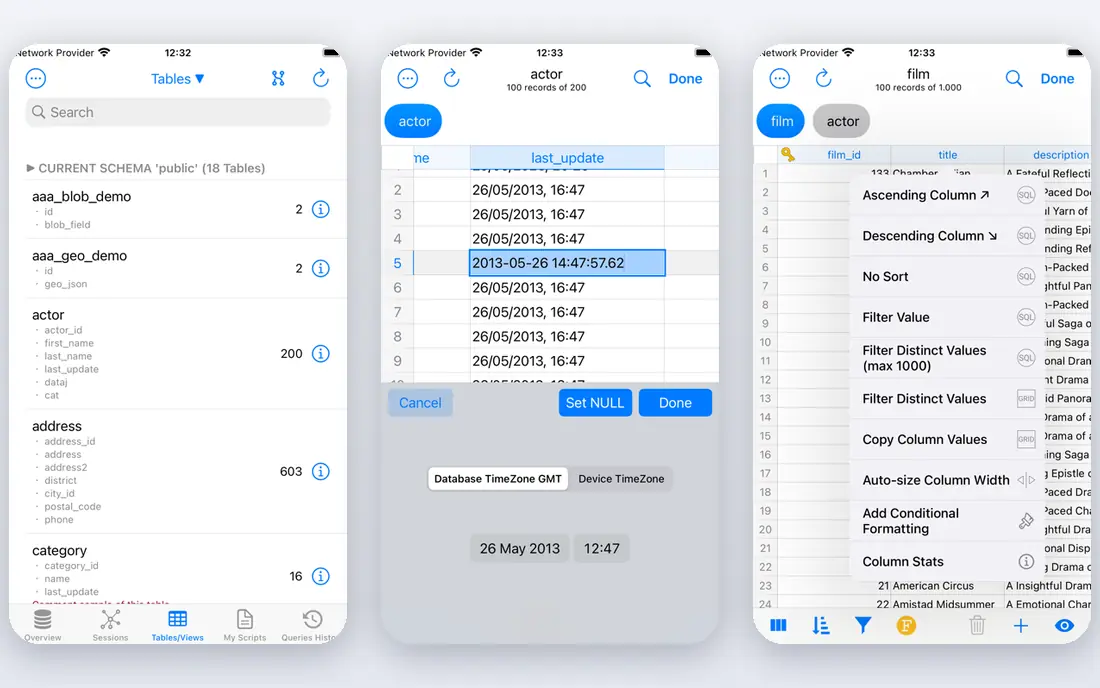
PostgreSQL, often called Postgres, is our default pick for most new applications. It is free, open source and maintained by a global community, with strong support for transactions, foreign keys, JSON data, full-text search and extensions such as PostGIS for location data. Developers trust it for finance, SaaS and internal tools where lost or corrupt data is not acceptable.
Tuning matters at scale. Default settings suit small apps, but large workloads need attention to indexes, vacuuming and connection pooling, and managed hosting adds cost. For teams that want a proven, flexible database without licence fees, PostgreSQL is hard to beat.
- Free and open source
- Strong data integrity
- Rich types, JSON and extensions
- Tuning takes skill at large scale
- Managed hosting costs extra
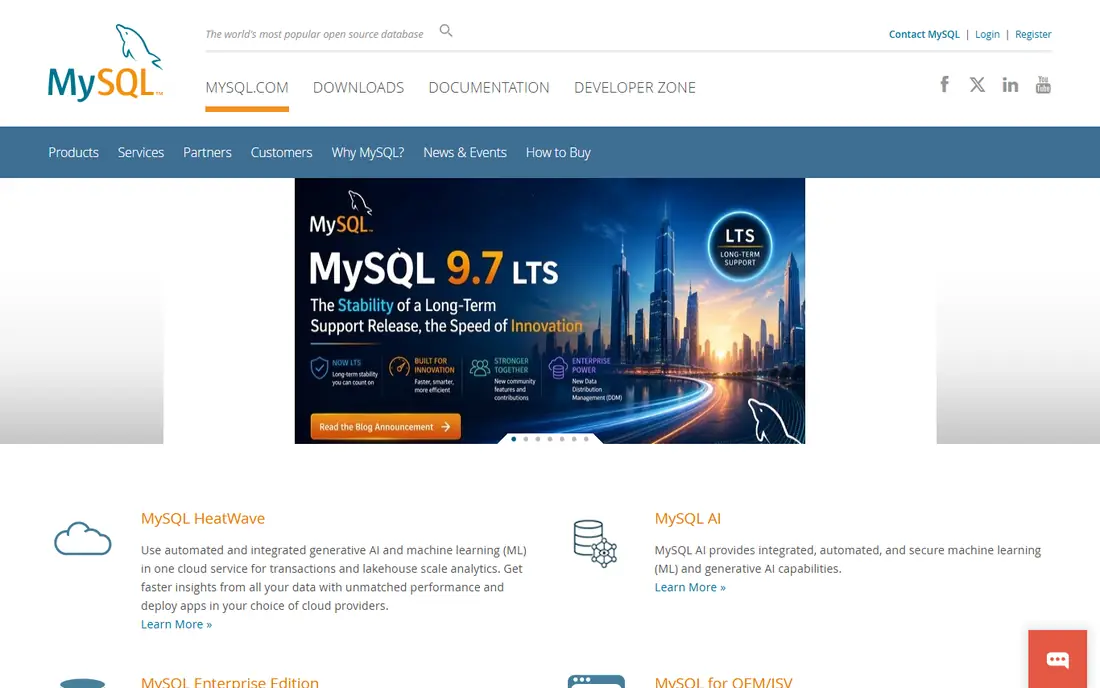
MySQL powers a vast share of the web, from blogs to large commerce sites, and almost every host and framework supports it out of the box. The community edition is free, replication and backup tools are mature, and developers find answers quickly because the ecosystem is so large. Read-heavy web workloads run well on modest hardware.
Oracle owns MySQL, and the gap between free community and paid enterprise editions matters for firms that need advanced monitoring, backup or security tools. Teams should check which features their edition includes. For standard web applications, MySQL remains a safe, well-supported choice.
- Free community edition
- Huge hosting and tool support
- Fast for read-heavy web work
- Community and enterprise editions differ
- Some advanced features sit in paid tiers
Microsoft SQL Server suits organisations already running Windows, Azure and Microsoft business tools. Management Studio, reporting services and integration tools give DBAs a polished workflow, and enterprise editions add high availability, encryption and advanced analytics. Firms in finance, health care and government use it for mission-critical systems.
Licensing is complex and can be costly, especially for core-based enterprise editions, so buyers should get a clear quote for their deployment. Linux support exists but is less central than Windows. For Microsoft-centred enterprises, SQL Server fits the stack cleanly.
- Deep Windows and Azure integration
- Strong tooling
- Enterprise security and reporting
- Licence costs can be high
- Linux support is narrower than native tools
Oracle Database has run some of the largest transactional systems in the world for decades, with strong clustering, partitioning, backup and security features. Banks, telecoms and large enterprises rely on it where downtime and data loss carry serious cost. The tooling for tuning, replication and multi-region deployment is deep.
Cost and complexity are the trade-offs. Licensing, support and DBA expertise are expensive, and smaller teams will find open-source options far simpler. Oracle fits where scale, compliance and vendor support justify enterprise pricing, not where a small app needs a quick database.
- Proven at very large scale
- Strong availability and security
- Deep enterprise tooling
- High licence and support costs
- Complex administration
MongoDB stores data as flexible JSON-like documents, which suits applications where records vary in shape, such as catalogues, content and user profiles. Developers can add fields without migrations, scale across servers, and use MongoDB Atlas for managed hosting with a free tier. The community edition is free for self-hosting.
Flexibility can become a weakness if teams skip schema discipline, leading to messy data and slow queries. Complex relational reporting is harder than in PostgreSQL. For document-shaped data and fast product iteration, MongoDB is a strong, proven choice.
- Flexible document model
- Easy scaling
- Free community and Atlas free tier
- Schema flexibility needs discipline
- Relational joins are weaker than SQL
MariaDB began as a community fork of MySQL and remains fully open source, with compatibility that lets many MySQL applications move over with little change. It adds its own storage engines and features, and suits teams that want MySQL-style behaviour without Oracle licensing questions. Hosting and tool support are broad, though slightly narrower than MySQL.
Differences from MySQL grow over time, so teams should test their application and replication setup before migrating. Commercial support options exist but are smaller than Oracle MySQL support. For open-source web apps that value community governance, MariaDB is a sound pick.
- Free and open source
- MySQL-compatible
- Community-led development
- Some MySQL enterprise features differ
- Smaller commercial ecosystem than MySQL
SQLite is the most widely deployed database in the world, running inside phones, browsers, apps and devices as a single-file library. It needs no server, setup or administration, and it is free and in the public domain. Developers use it for mobile apps, desktop tools, testing and local storage where a full server would be overkill.
It is not a server database. High-concurrency writes and large multi-user workloads belong on PostgreSQL or MySQL, since SQLite locks the file during writes. For embedded, local and single-user storage, SQLite is simple, fast and remarkably reliable.
- Free and tiny
- Single-file database
- Built into phones, browsers and apps
- Not for high-write multi-user servers
- Limited concurrent write support
CockroachDB is a distributed SQL database designed to stay available when servers or regions fail. It offers PostgreSQL-compatible SQL, strong consistency and automatic replication across nodes, which suits global SaaS products and services that cannot tolerate regional outages. A free core version and cloud options make it accessible for testing and growth.
Running a distributed cluster takes more skill and hardware than a single PostgreSQL server, and small apps gain little from that complexity. Teams should only choose CockroachDB when availability across regions is a real requirement. For that job, it is one of the most reliable options available.
- Distributed SQL with strong consistency
- Survives node failures
- PostgreSQL-compatible
- More complex to run than single-node Postgres
- Higher resource use
How we picked these
We compared official documentation, release history, backup and availability features, and real-world use across web, enterprise and embedded settings. We favoured databases still actively maintained in 2026 with clear licensing, and we used See website where commercial pricing is quote-based.
Reliability checks before production
Test backups by restoring them, not just by creating them. A backup that has never been restored is a hope, not a plan. Schedule restore tests, check point-in-time recovery where the business needs it, and document who restores data during an outage.
Match the data model to the workload
Relational data with strict rules suits PostgreSQL, MySQL or SQL Server, while varied document data suits MongoDB. Distributed availability suits CockroachDB, and local storage suits SQLite. Choosing the wrong model early creates painful migrations later, so prototype with realistic data first.
Plan backups, upgrades and monitoring from day one
Set up automated backups, test restores, and add basic monitoring for disk use, slow queries and replication lag before the database holds important data. Upgrades should be tested on a copy first, since a major version change can alter query plans or default behaviour. Small habits here prevent the most common database emergencies, and they cost far less than recovering from an untested backup.
Think about hosting and support before you scale
Decide early whether the database will run on your own servers, a managed cloud service or a vendor platform, since that choice affects backup, patching and on-call duties. Managed services cost more per month but remove much of the maintenance burden, while self-hosting gives control at the price of staff time. Check support options too, including community forums, vendor support and local expertise, before the database becomes critical to the business.
FAQ
What is the most reliable database for a new app?
PostgreSQL is the best default for most new apps, thanks to its integrity, features and open licence. MySQL is a close alternative for simple web apps, while SQLite suits local and mobile storage.
Is MySQL or MariaDB better?
Both are solid, and MariaDB is MySQL-compatible for many apps. Choose MySQL for the largest ecosystem and hosting support, and MariaDB for fully open-source governance and freedom from Oracle licensing.
Do I need Oracle or SQL Server for a small business?
Usually no. Open-source databases handle most small-business workloads well and cost nothing to licence. Oracle and SQL Server fit larger enterprises with compliance, scale or existing vendor-stack needs.
Can SQLite handle a website?
SQLite handles low-traffic sites and read-heavy workloads well, but high-write, multi-user sites should use PostgreSQL or MySQL. Check write concurrency and traffic before committing to SQLite in production.
What is the difference between MongoDB and PostgreSQL?
PostgreSQL is a relational database with strict schemas, joins and transactions, while MongoDB stores flexible documents that suit varied data shapes. PostgreSQL also handles JSON, so many teams use it for both relational and document-style data.