Best Relational Database Management System in 2026: Prices, Free Plans and 6 Picks
6 tools for the best relational database management system, compared on pricing, free plans and best-fit use. Plain-spoken summaries throughout. Numbers first.
- Editor's choice
 IBM Db2
Hybrid cloud enterprise data
Starts atPricing on requestVisit ibm.comFull review - Great alternative
 MySQL
Web applications and wide hosting support
Starts atPricing on requestVisit mysql.comFull review - Also consider
 MariaDB
Enterprise open source scalability
Starts atPricing on requestVisit mariadb.comFull review
Direct answer
This list puts IBM Db2 first for hybrid cloud enterprise data. For a different need, MySQL covers web applications and wide hosting support and MariaDB covers enterprise open source scalability. Free plan facts and limits for all 6 tools follow. None of these vendors publish plan prices, so pricing is on request for every option.
TL;DR:
- Top of the list is IBM Db2, which targets hybrid cloud enterprise data.
- Every tool from IBM Db2 to Oracle Database works by quote, with no list price shown.
- Before buying Microsoft SQL Server, weigh this: tied closely to Microsoft tooling.
- Oracle Database suits AI-driven enterprise workloads.
- IBM Db2, Oracle Database and the 4 others all need a premium plan or a trial, since no free plan is listed.
Last checked November 2026. Pricing on request: vendors did not publish plan prices when this guide was last checked (November 2026), so ask each vendor for a written quote.
Quick comparison
| Tool | Best for | Starts at | Free plan? | |
|---|---|---|---|---|
| IBM Db2 | Hybrid cloud enterprise data | Pricing on request | Not stated | Visit |
| MySQL | Web applications and wide hosting support | Pricing on request | Not stated | Visit |
| MariaDB | Enterprise open source scalability | Pricing on request | Not stated | Visit |
 Microsoft SQL Server | Microsoft-centric enterprise data systems | Pricing on request | Not stated | Visit |
| SAP HANA | In-memory analytics and SAP landscapes | Pricing on request | Not stated | Visit |
 Oracle Database | AI-driven enterprise workloads | Pricing on request | Not stated | Visit |
Relational Database Management System compared in detail
Short on time? The summary and table above give the quick view of 6 tools for relational database management system, and the profiles that follow give the detail behind each entry.
Where IBM Db2 fits: hybrid cloud enterprise data. Organizations already using IBM infrastructure frequently find it a natural fit for transactional and analytical workloads.
What to check first: Smaller community than open source choices.
Its community is also smaller than those around open source engines. Pricing for IBM Db2 is not stated here, so ask the vendor for current figures. On free options: Not stated.
- Hybrid cloud adaptability
- Autonomous database features
- Enterprise-oriented complexity
MySQL targets web applications and wide hosting support. MySQL is a widely used open source relational database known for powering web applications and content systems. Choose a more advanced system when you need deep analytics or specialized capabilities, and keep MySQL for conventional web and application data.
Also, numerous developers meet MySQL first, which makes it a practical choice for smaller projects and standard transactional workloads. It is less suited to heavy analytical workloads or very complicated query patterns, where other engines may perform better. Check the vendor site for MySQL pricing; none is listed in this comparison. On free options: Not stated.
Watch-outs: Some complicated queries need tuning.
- Large community of users and guides
- Widely supported by hosting providers
- Fewer advanced analytics features
Choose MariaDB for enterprise open source scalability. It suits organizations that want open source licensing with commercial support choices and a MySQL-compatible heritage.
Downsides: Compatibility differences from MySQL can surprise.
For everyday use, teams migrating from MySQL commonly evaluate MariaDB as a drop-in style alternative with enterprise backing. MariaDB does not show a starting price in this comparison, so check the vendor site for current pricing. Free access: Not stated.
- Enterprise open source model
- Made for mission-critical deployments
- Smaller ecosystem than PostgreSQL
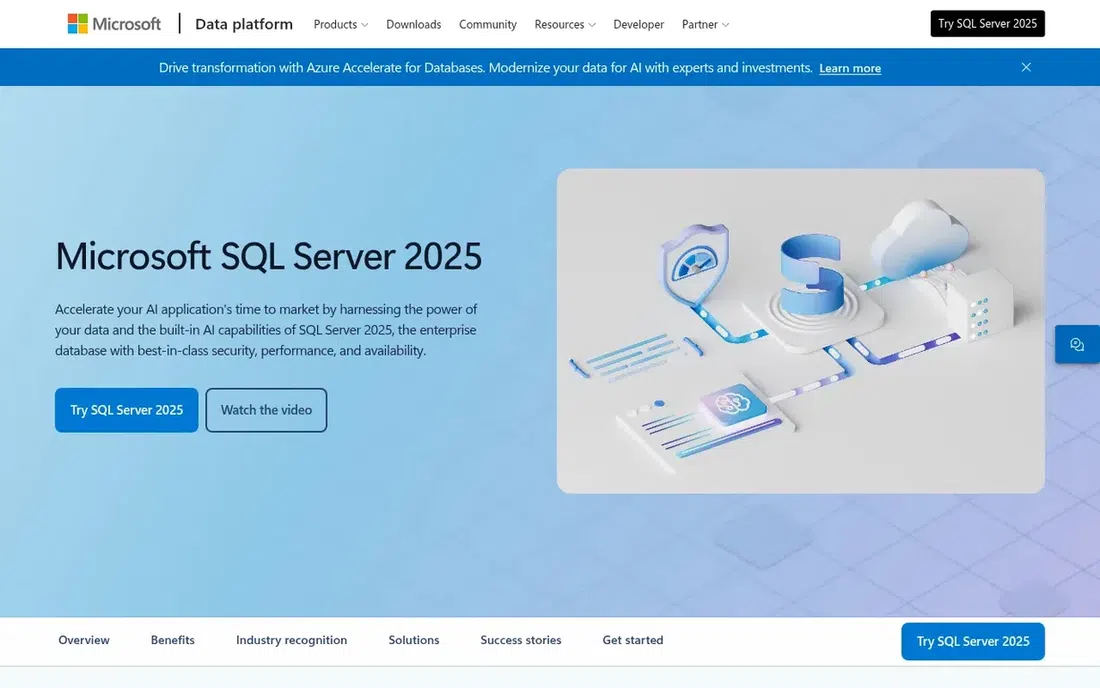
Think of Microsoft SQL Server for Microsoft-centric enterprise data systems. Microsoft SQL Server is a relational database that the vendor describes as redefining enterprise data, with developer-first features and integration with analytics and AI models. Its strengths are most apparent inside the Microsoft ecosystem, and teams on other stacks may prefer a vendor-neutral choice.
Consider alternatives when you want a purely open source engine or operate chiefly on Linux and non-Microsoft tooling. The broad feature set also takes time to learn. This comparison lists no price for Microsoft SQL Server; ask the vendor. Trial and free access: Not stated.
Points against: Wide feature set can overwhelm newcomers.
- Analytics and AI model integration
- Developer-first feature set
- Tied closely to Microsoft tooling
SAP HANA
Best for: In-memory analytics and SAP landscapes
SAP HANA serves in-memory analytics and SAP landscapes. SAP HANA Cloud is presented by SAP as a single database as a service foundation for modern applications and analytics across enterprise data.
Watch-outs: Specialized skill requirements.
Pick a general-purpose engine for standalone projects, and choose SAP HANA when integrated enterprise analytics and SAP alignment drive the decision. SAP HANA does not show a starting price in this comparison, so check the vendor site for current pricing. As for free access: Not stated.
- Takes care of enterprise data across sources
- Managed cloud database service
- Most solid value inside SAP environments
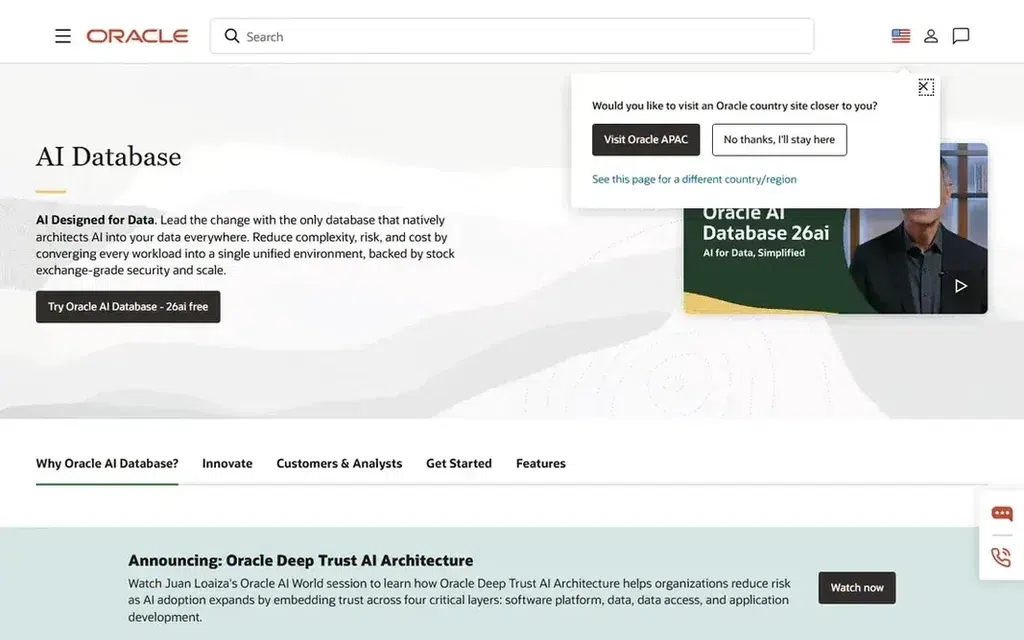
In short, Oracle Database is for AI-driven enterprise workloads. Teams planning AI-assisted applications or demanding transactional systems are the natural audience.
In practice, licensing and administration also need careful planning. No starting price is listed for Oracle Database here; confirm pricing on the vendor site. On free options: Not stated.
Trade-offs to know: Complicated for small teams.
- Aimed at critical
- Positions AI features around app development
- Configuration demands expertise
How these tools were picked
Pre-purchase checklist
- Request quotes from IBM Db2, Oracle Database and the others; the list shows no fixed prices.
- Read the limits listed for IBM Db2 first: enterprise-oriented complexity.
- Price MySQL for your actual team size; headline prices rarely include add-ons or overage.
- Read the plan comparison for SAP HANA carefully; key features often start on a higher tier.
- Involve the people who will use Microsoft SQL Server daily; a short pilot beats a long feature checklist.
FAQ
Does any tool for relational database management system here have a free plan?
A permanent free plan is not offered by IBM Db2, Oracle Database or the other tools here. Plan a short evaluation period instead.
How are the tools for relational database management system ordered?
The order follows typical fit for relational database management system, with IBM Db2 first and Oracle Database last, then price clarity and free access. It is editorial judgement, not a score, so another team could rank the tools differently.
Can I try these tools before paying?
Not by default. None of the tools, from IBM Db2 to Oracle Database, lists a free plan or a free trial here, so ask each vendor for a demo before committing.
Is IBM Db2 the right pick for everyone comparing relational database management system?
No single tool suits every team. IBM Db2 comes first because it fits hybrid cloud enterprise data, while MySQL suits web applications and broad hosting support and MariaDB suits enterprise open source scalability. Match the tool to your own size, budget and workflow before deciding.
Sources
- https://www.ibm.com/products/db2
- https://www.mysql.com
- https://mariadb.com
- https://www.microsoft.com/en-us/sql-server
- https://www.sap.com/products/technology-platform/hana.html
- https://www.oracle.com/database