Managed Cloud Database Platforms in 2026: The 5 Best Options Side by Side
Best managed cloud database platforms, compared. 5 tools with published prices, free plans and limits. Honest caveats for every entry. Costs up front.
- Editor's choiceAzure SQL Database
Microsoft-centric relational applications
Starts atPricing on requestVisit azure.microsoft.comFull review - Great alternative
 MongoDB Atlas
Document and AI application workloads
Starts atPricing on requestVisit mongodb.comFull review - Also consider
 Google Cloud SQL
Managed MySQL, PostgreSQL and SQL Server
Starts atPricing on requestVisit cloud.google.comFull review
Direct answer
This list puts Azure SQL Database first for Microsoft-centric relational applications. Alternatives: MongoDB Atlas for document and AI application workloads, and Google Cloud SQL for managed MySQL, PostgreSQL and SQL Server. The other 2 tools in the list cover narrower or pricier cases. None of these vendors publish plan prices, so pricing is on request for every option.
TL;DR:
- Azure SQL Database is the opening pick, best for Microsoft-centric relational applications.
- One limit worth knowing about MongoDB Atlas: different model from relational SQL.
- No starting price is shown for any of the 5 tools, Azure SQL Database and Amazon RDS included, so plan time for sales calls.
- For managed relational engines on AWS, Amazon RDS is worth a look.
- Free plans exist at 2 of 5 tools (MongoDB Atlas, Amazon RDS).
Last checked November 2026. Pricing on request: vendors did not publish plan prices when this guide was last checked (November 2026), so ask each vendor for a written quote.
Quick comparison
| Tool | Best for | Starts at | Free plan? | |
|---|---|---|---|---|
| Azure SQL Database | Microsoft-centric relational applications | Pricing on request | Not stated | Visit |
| MongoDB Atlas | Document and AI application workloads | Pricing on request | Yes | Visit |
| Google Cloud SQL | Managed MySQL, PostgreSQL and SQL Server | Pricing on request | Not stated | Visit |
 Amazon DynamoDB | Serverless key-value NoSQL at scale | Pricing on request | Not stated | Visit |
 Amazon RDS | Managed relational engines on AWS | Pricing on request | Yes | Visit |
Tool-by-tool breakdown
LinkVetted put together this guide to managed cloud database platforms for readers who want a clear shortlist without reading every vendor page. It compares 5 tools on starting price, free plans, who each one suits and where each one falls short.
Azure SQL Database
Best for: Microsoft-centric relational applications
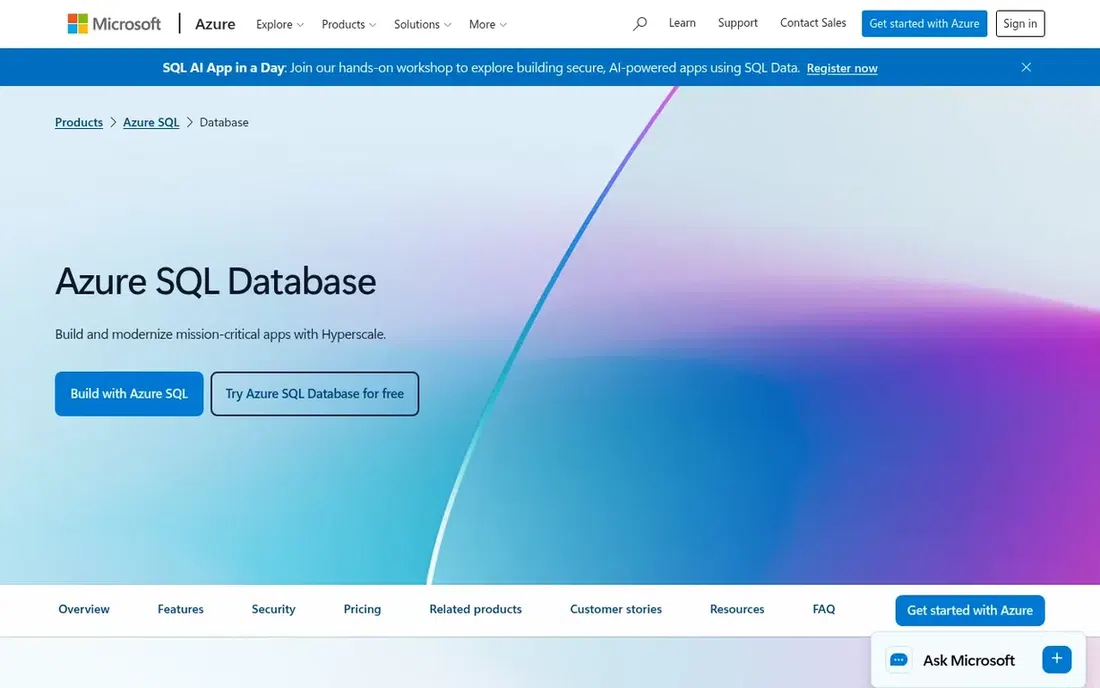
Think of Azure SQL Database for Microsoft-centric relational applications. Microsoft positions it around automation, letting teams build and scale applications without manual database administration. It also makes most sense within the Azure ecosystem.
Trade-offs to know: Best fit inside the Azure ecosystem.
Where it shines: Built-in automation for scaling. On top of that, if you run primarily on another cloud, a provider-native managed database may cut friction. As for the details, Azure SQL Database is a completely managed cloud relational database designed for high performance and reliability. Check the vendor site for Azure SQL Database pricing; none is listed in this comparison. Free options: Not stated.
- Completely managed relational engine
- Aimed at high performance and reliability
- Relational workloads only
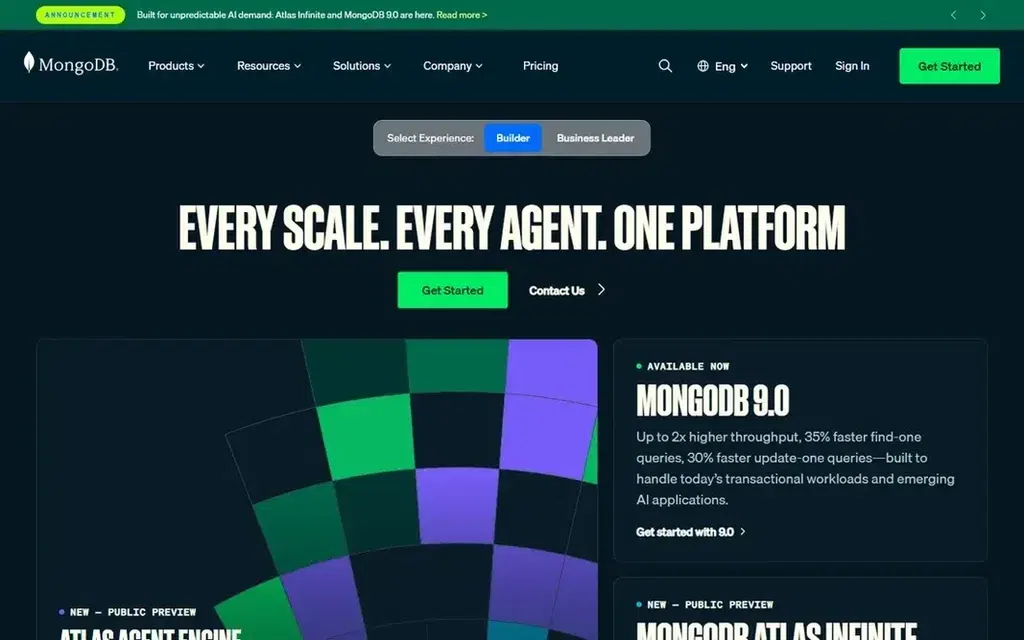
MongoDB Atlas is built with document and AI application workloads in mind. MongoDB Atlas is a managed system for document-oriented data, presented by MongoDB as a run-anywhere system that brings together live data, intelligent retrieval and governed action for AI applications and agents. It can run across several cloud providers instead of locking into one.
From a buyer's view, Atlas is not a drop-in replacement for relational systems. Teams without MongoDB experience face a ramp-up time in schema design and query patterns. In practice, if your workload is strictly relational with complicated joins, a managed SQL service may be more straightforward. MongoDB Atlas shows no starting price here, so confirm the cost on the vendor site. MongoDB Atlas offers a free plan.
Drawbacks to consider: Different model from relational SQL.
- Run-anywhere multi-cloud platform
- Document-oriented data model
- Needs MongoDB familiarity
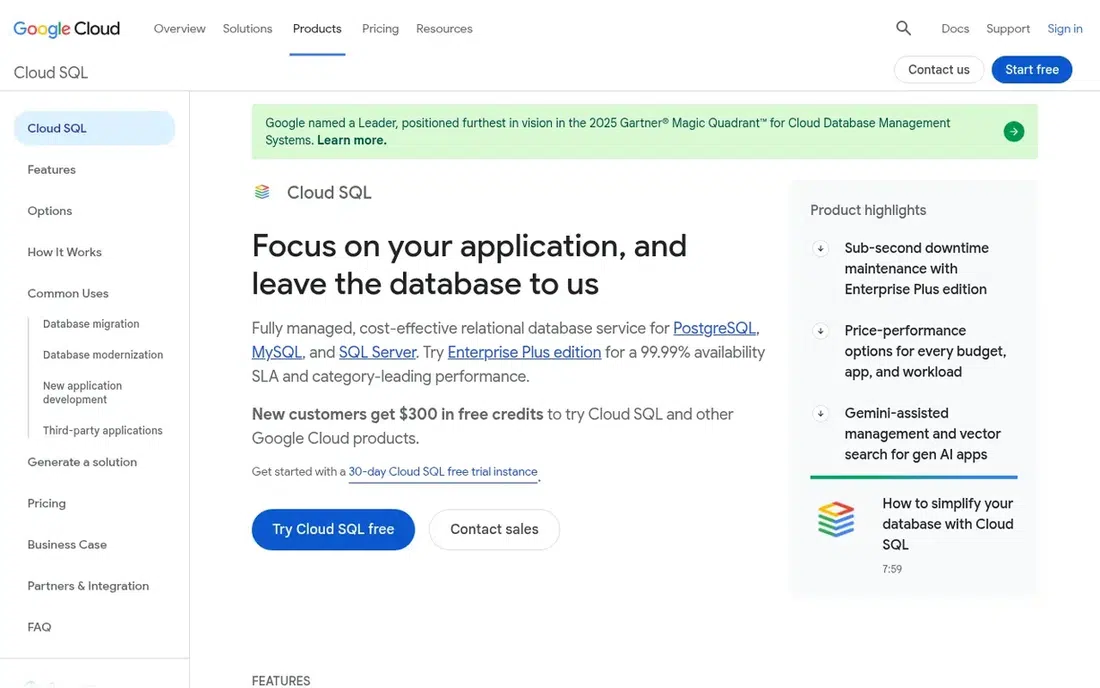
Google Cloud SQL is a good fit for managed MySQL, PostgreSQL and SQL Server. Google Cloud SQL is a completely managed relational database service for MySQL, PostgreSQL and SQL Server.
It also assumes you are comfortable operating inside Google Cloud. From a buyer's view, if your stack is built around another cloud provider or you need a NoSQL engine, compare the other choices before committing. Pricing for Google Cloud SQL is not stated here, so ask the vendor for current figures. Free access: Not stated.
Where it falls short: Relational model only.
- Suits existing relational application stacks
- Supports three widely used relational engines
- Tied to Google Cloud infrastructure
Choose Amazon DynamoDB for serverless key-value NoSQL at scale. It fits teams building applications that require predictable low-latency access to key-value data without managing servers.
Where it is weaker: Key-value model only.
It integrates naturally with other AWS services. Check the vendor site for Amazon DynamoDB pricing; none is listed in this comparison. Free plan details: Not stated.
- Built-in security and continuous backups
- Automated multi-region replication
- Needs access-pattern planning
Think of Amazon RDS for managed relational engines on AWS. Amazon RDS is a completely managed relational database service that lets you operate and scale a relational engine of your choice, including Amazon Aurora, PostgreSQL and SQL Server.
Watch-outs: Deepest integration is within AWS.
As for the details, organizations migrating existing relational applications frequently find the engine choice handy. It also assumes a degree of comfort with AWS operations and networking. No starting price is listed for Amazon RDS here; confirm pricing on the vendor site. Free access exists with Amazon RDS.
- Completely managed operations and scaling
- Contains Amazon Aurora as a choice
- Relational focus only
How we compared the tools
LinkVetted looked at what each vendor publishes: pricing, plan limits, feature coverage for managed cloud database platforms and stated drawbacks. No hands-on testing is claimed. Where a vendor does not publish a price, the entry says quote. Where a price depends on seats or billing term, the entry says so. The order reflects how well each tool fits the most common buying scenario for managed cloud database platforms, then price clarity, then free plan access. It is a starting point, not a verdict.
Before you commit
- Request quotes from Azure SQL Database, Amazon RDS and the others; the list shows no fixed prices.
- Look at free plan limits closely: MongoDB Atlas and Amazon RDS have one, and the caps decide whether it is usable for real work.
- Read the limits listed for Azure SQL Database first: Relational workloads only.
- Look at which plan of Amazon RDS unlocks the features you need; entry tiers are often cut down.
- Ask Amazon DynamoDB whether prices are locked for the first term and what happens at renewal.
FAQ
Can I try these options before paying?
Often, yes. MongoDB Atlas and Amazon RDS have a free plan. Use your own data and a real task during the test, and check what the free tier or trial limits before you rely on it. All 5 picks in this managed cloud database platforms comparison list a starting price, free plan details and the main limits on their cards above.
Do these tools publish their prices?
No. None of the tools, from Azure SQL Database to Amazon RDS, shows a fixed starting price here, so budget time for quotes.
Can these platforms run across multiple cloud providers?
Most choices here are tied to a specific provider: Cloud SQL and AlloyDB to Google Cloud, Azure SQL Database and Cosmos DB to Azure, and RDS and DynamoDB to AWS.
What is a managed cloud database system?
A managed cloud database system is a service where the provider manages routine administration like provisioning, patching and backups whereas you focus on schema and application logic.
How are the tools for managed cloud database platforms ordered?
Azure SQL Database sits first and Amazon RDS last because the order follows typical fit for managed cloud database platforms, then price clarity and free access. It is a judgement call, so read each profile for fit and limits.
Which options for managed cloud database platforms have a free plan?
On this list, MongoDB Atlas and Amazon RDS include a free plan. Caps on seats, usage or features are common, so test the free plan against your real workload.
Sources
- https://azure.microsoft.com/en-us/products/azure-sql/database
- https://www.mongodb.com/atlas
- https://cloud.google.com/sql
- https://aws.amazon.com/dynamodb
- https://aws.amazon.com/rds